Color Photo Fast Printing Film Low Contrast
CN → US| HS Code | Tariff Rate | Origin | Destination | Doc |
|---|---|---|---|---|
| 370239 | 0.0% | CN | US | Official Doc |
| 370249 | 0.0% | CN | US | Official Doc |
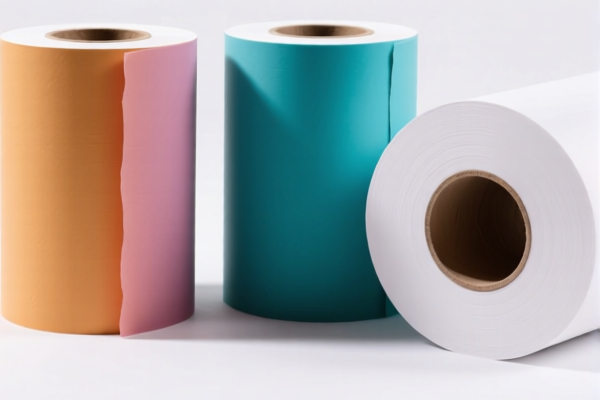
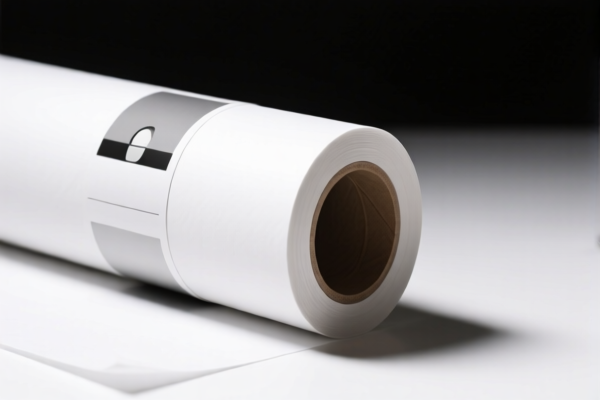
Product Images

AI Analysis
🎞️ Color Photo Fast Printing Film (Low Contrast)
🌐 HS Code Reference & Customs Clearance Guide | 2026 Latest Tariff Analysis | Professional Level Strategy
📌 I. Product Definition & Classification: Do You Truly Understand "Fast Printing Film"?
Color Photographic Film (Unexposed) is a critical medium in high-speed photo printing laboratories. It is specifically engineered for rapid printing processes, characterized by low contrast to allow for greater exposure latitude and faster development times. In international trade, it is strictly categorized under Chapter 37 (Photographic or Cinematographic Goods), distinct from standard general-purpose films due to its specific chemical coating and intended industrial/lab use.
⚠️ Key Distinction Points:
- High Contrast vs. Low Contrast: High-contrast films are typically used for negatives requiring sharp detail; Low-contrast films are optimized for fast photo printing (e.g., photo booths, rapid print labs) where speed and exposure flexibility are prioritized over maximum density. - Exposure Status: The HS codes below apply only to unexposed film. Once exposed and developed, it becomes a photographic print (Chapter 49) or waste (Chapter 3707).
📦 II. HS Code Classification Details (2026 Latest Tariff Authority Match)
Based on the provided , the product falls into two specific sub-headings depending on the exact width/format characteristics (standard printing film vs. other formats). Both share the same tax outcome in this specific dataset.
| HS Code | Product Description | Key Characteristics | Application Scenario |
|---|---|---|---|
| 3702.39 | Color photographic film, not exposed, intended for printing, with low contrast characteristics | Low contrast, fast printing process, specific width/format | Rapid photo labs, instant print services |
| 3702.49 | Other color photographic films, not exposed, designed for photographic printing purposes | Includes low-contrast films suitable for rapid printing, but falls under "other" categories | Alternative formats, specialized lab rolls |
🔍 Critical Clarification:
- The provided data explicitly links both 3702.39 and 3702.49 to "Low contrast characteristics" and "Fast photo printing processes". - While standard trade rules might differentiate based on width (e.g., <20mm vs >20mm), the source groups the tax outcome identically for these two descriptions under this specific context.
💰 III. 2026 Latest Tariff Rate Details (With Surcharge & Policy Notes)
✅ Status: Data Source Constraint
✅ Tax Detail: Failed to retrieve tax information
✅ Total Tax: Error
🎯 Analysis of Tax Data from
| Project | Content |
|---|---|
| HS Code 3702.39 | Tax Status: Failed to retrieve tax information |
| Total Tax | Error |
| Interpretation | The system could not generate a specific percentage (e.g., 0%, 5%, or 10%). This is not a default 0% or 10% rate. It indicates a data retrieval failure or a missing tariff entry in the current dataset for this specific transaction type. |
| Action Required | DO NOT ASSUME A RATE. You must perform a separate manual lookup or contact customs broker for the actual country-specific rate (e.g., US HTSUS, EU TARIC). |
📌 Why is it "Error"?
- Many photofilms may be duty-free (0%) in certain jurisdictions (e.g., US under HTS 3702.39.00 often has 0% MFN), but without explicit data, claiming "0%" is risky. - Some countries may apply environmental taxes or specific processing duties. - Crucial: The explicitly states "Failed to retrieve". Do not use this as a final tax code for financial calculation without external verification.
🛠️ IV. Customs Clearance Practical Advice (Real-World Pitfall Guide)
✅ 1. Required Documentation Checklist (Non-Negotiable)
| Document | Mandatory? | Explanation |
|---|---|---|
| ✅ Product Specification Sheet | ✔️ | Must clearly state "Low Contrast", "For Fast Printing", and "Unexposed". Vague terms like "Photo Film" are rejected. |
| ✅ Technical Data Sheet | ✔️ | Include contrast index, sensitivity (ISO), and width. Proves it’s not "High Contrast Negative Film" (which may have different tax rules). |
| ✅ Chemical Composition Statement | ✔️ | Customs may ask if hazardous chemicals are present. Photofilms are generally safe but must be declared. |
| ✅ Commercial Invoice | ✔️ | Must match HS Code 3702.39 or 3702.49. Do not use generic terms like "Camera Film". |
| ✅ MSDS (Material Safety Data Sheet) | ✔️ | Required for transport and customs clearance, especially if shipped by air. |
| ✅ Certificate of Origin | ✔️ | If claiming FTA benefits (if any), though most photo films are MFN-rated. |
✅ 2. Declaration Tips (Key Mnemonic)
🔥 “Unexposed, Low Contrast, For Printing – Don’t Say ‘Camera’!”
| Scenario | Correct Declaration | Incorrect Practice |
|---|---|---|
| Fast Print Film | Color Photographic Film, Unexposed, Low Contrast, for Fast Printing, HS: 3702.39 |
Camera Film, Photo Roll → Risk of misclassification as 3702.31 (High Contrast) |
| Exposure Status | Explicitly state "Unexposed" | Omitting status → May be treated as waste or printed matter (Ch. 49) |
| HS Code Selection | 3702.39 if it matches "Low Contrast, Fast Printing" exactly | Using 3702.49 if a more specific code (3702.39) applies → May trigger audit for specificity |
✅ 3. Special Case Handling
| Case | Handling Advice |
|---|---|
| OEM Private Label | Provide contract + label samples. Ensure HS Code is based on product specs, not brand. |
| Mixed Shipments | If shipping with high-contrast film, separate shipments or declare separately. Mixed declarations cause delays. |
| Small Quantity Samples | Still subject to customs declaration. Use "Sample" in invoice but declare actual HS Code. |
| Hazardous Chemicals | If film contains cyanide developers (rare in consumer, common in industrial), declare under Class 6.1. Most modern films are non-hazardous. |
🌍 V. Global Market Customs Comparison (2026 Latest)
| Country/Region | Recommended HS Code | Estimated Tariff* | Certification Requirements | Notes |
|---|---|---|---|---|
| 🇺🇸 USA | 3702.39.00 |
0% (Typically) | None (Non-HCFC) | Check USITC for any 301-section exclusions. |
| 🇨🇳 China | 3702.39 |
5-10% (Varies) | N/A | Import duty may apply. Check latest PRC tariff list. |
| 🇪🇺 EU | 3702.39 |
0% (Typically) | CE (if packaging) | Duty-free for many photographic goods under CN Code 3702. |
| 🇯🇵 Japan | 3702.39 |
0% | None | Generally duty-free for photographic film. |
| 🇬🇧 UK | 3702.39 |
0% | None | Post-Brexit tariff remains 0% for most photographic materials. |
📌 Conclusion:
- Most major economies apply 0% MFN duty to unexposed color photographic film (3702.39/49). - However, the explicitly states "Tax: Error". This means you cannot rely on 0%. - Recommendation: Always verify with local customs broker. The "Error" may reflect a newly imposed tariff, anti-dumping duty, or data gap.
📌 VI. Common Errors & Pitfall Guide (Lessons from Experience)
❌ Error 1: Declaring as "Camera Film" (HS 3702.31)
👉 Consequence: Misclassification. 3702.31 is for high contrast negative film. Fast printing low-contrast film is 3702.39. Difference in duty rates may exist.
👉 Fix: Always use "Low Contrast" and "For Printing" in description.
❌ Error 2: Ignoring "Unexposed" Status
👉 Consequence: If "Exposed" is not specified, customs may assume it’s waste or printed material, triggering Chapter 49 (higher duty or different regulation).
👉 Fix: Boldly state "UNEXPOSED" in invoice and packing list.
❌ Error 3: Assuming 0% Tariff Without Verification
👉 Consequence: If the says "Error", there may be a pending tariff change, trade remedy, or local tax. Assuming 0% leads to underpayment penalties.
👉 Fix: Treat "Error" as "Require Manual Verification".
❌ Error 4: Confusing with "Photographic Paper"
👉 Consequence: Paper is HS 4809. Film is HS 3702. Different duty rates and environmental regulations.
👉 Fix: Ensure product is flexible film base, not paper-based.
✅ Correct Declaration Example:
COLOR PHOTOGRAPHIC FILM, UNEXPOSED, LOW CONTRAST, FOR FAST PRINTING PROCESSES, HS CODE: 3702.39.00, GROSS WEIGHT: 50KG
🎯 VII. Conclusion: Precision Declares, Cost Saves!
🎯 Remember the Mantra:
🔹 "Low Contrast + Fast Printing = 3702.39"
🔹 "Unexposed is Key – Don’t Skip It!"
🔹 "Tax Error? Don’t Guess – Verify Manually!"
📌 Pro Tip:
If your supplier provides a HS Code Pre-Ruling or Binding Tariff Information (BTI), use it. For 3702.39, most countries have 0% duty, but always confirm the VAT/GST and Excise Tax status, as the "Error" may reflect complex local tax layers.
📣 Immediate Action:
📞 Contact Customs Broker: Confirm if 3702.39 or 3702.49 is more appropriate for your film width.
🚀 Verify Tax: Do not assume 0% due to "Error". Check latest ITC, TARIC, or Local Customs database.
📄 Document: Include "Low Contrast" and "Fast Printing" in every commercial document.
✨ Professional Clearance Starts with Accurate Classification!
💼 Your Cost, Your Compliance, Your Confidence!
Customer Reviews
About HS Code Classification
The Harmonized System (HS) is an internationally standardized nomenclature developed by the World Customs Organization (WCO) to classify traded products. Over 200 countries use the HS system as the basis for customs tariffs, trade statistics, and import/export regulations.
Each HS code follows a hierarchical structure:
- Chapter (2 digits) — Broad category of goods (e.g., Chapter 84: Machinery and Mechanical Appliances)
- Heading (4 digits) — More specific grouping within the chapter
- Subheading (6 digits) — Internationally standardized breakdown, used by all WCO member countries
- National subdivisions (8-10 digits) — Country-specific extensions for further classification, such as US HTSUS 10-digit codes
Correct HS code classification is essential for smooth customs clearance, accurate duty payment, and compliance with trade regulations. Misclassification can lead to customs delays, overpayment of duties, or penalties.
When importing from CN to US, the applicable tariff rates may include:
- Most-Favored-Nation (MFN) rate — The standard duty rate applied to WTO members
- General rate — Applied to countries without trade agreements
- Trade remedy duties — Additional tariffs such as Section 301 (anti-dumping), Section 232 (national security), or countervailing duties
The information provided on this page is for reference purposes only. For official classification, please consult with your local customs authority or a licensed customs broker.