Color Photo Fast Printing Film Waterproof
CN → US| HS Code | Tariff Rate | Origin | Destination | Doc |
|---|---|---|---|---|
| 3706106090 | 35.0% | CN | US | Official Doc |
| 3706900060 | 35.0% | CN | US | Official Doc |
| 3702550060 | 35.0% | CN | US | Official Doc |
| 4810141140 | 35.0% | CN | US | Official Doc |
| 3706106090 | 35.0% | CN | US | Official Doc |
Product Images
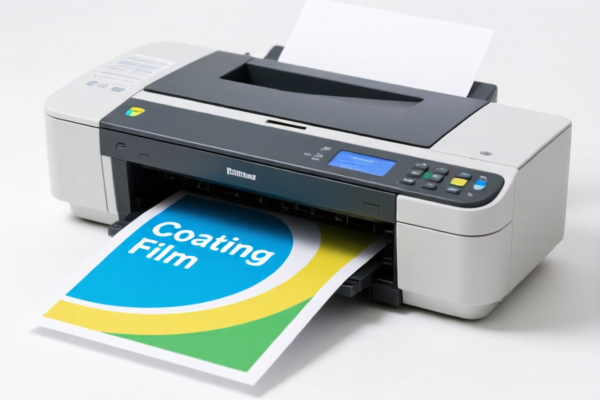
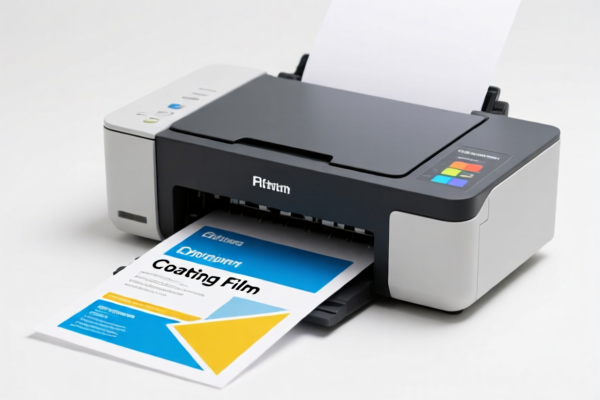
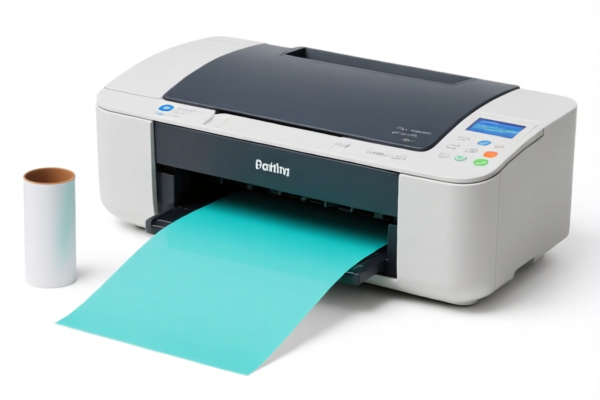

AI Analysis
🎞️ Color Photo Fast Printing Film Waterproof (Photographic Paper, Paperboard and Textiles, Sensitized, Unexposed)
🌐 HS Code Reference & Clearance Guide | 2026 Latest Tariff Analysis | Professional Clearance Strategy
📌 I. Product Definition & Classification: What Exactly Is "Color Photo Fast Printing Film"?
In the context of international trade, "Color Photo Fast Printing Film Waterproof" typically refers to sensitized photographic materials designed for high-speed, water-resistant printing. Unlike digital sensors or printed posters, these are unexposed, light-sensitive media requiring chemical processing.
Key characteristics include: * Sensitized & Unexposed: The material has been coated with light-sensitive chemicals (silver halides) but has not yet been exposed to an image. * For Color Photography (Polychrome): It is specifically processed to produce color images. * "Fast Printing" & "Waterproof": These are performance descriptors. "Fast" usually refers to high speed in automated printing machines (like Fuji Frontier or Noritsu). "Waterproof" indicates the emulsion or base is resistant to moisture during or after processing. * Substrate: While called "film," many modern high-speed photo printers use photographic paper or paperboard with waterproof coatings, or specialized flexible substrates. The HS Code classification hinges on whether it is primarily paper-based or textile-based, and specifically for color use.
⚠️ Key Distinction Point:
- If it is sensitized and unexposed, it falls under Chapter 37 (Photographic Goods), NOT Chapter 49 (Printed matter) or Chapter 39 (Plastics).
- If it is pre-exposed (i.e., already developed and containing an image), it falls under Chapter 49 (e.g., prints).
- "Waterproof" does not change the HS Code; it remains a characteristic of the product within Chapter 37.
📦 II. HS Code Classification Details (2026 Latest Tariff Authority Comparison)
Based on the provided data, there are two primary HS Codes for sensitized, unexposed, color photographic materials. The selection depends on the specific physical form and intended pictorial use.
| HS Code | Product Description | Application Scenario | Key Identifier |
|--------|--------------------------|--------------------------|
| 3703.20.30.30 | Silver halide papers for pictorial use (continuous tone) for color photography | High-quality professional photo printing, continuous tone output, premium waterproof papers for exhibitions or albums | Pictorial/Continuous Tone + Silver Halide |
| 3703.20.60.00 | Other sensitized photographic papers, paperboard, and textiles for color photography | Industrial photo printing, ID cards, mass-market fast prints, non-pictorial continuous tones, or other substrates not strictly defined as "pictorial silver halide" | Other (Catch-all for non-specified color photo media) |
🔍 Critical Reminder:
- "Silver Halide" is the key chemical identifier. If the film/paper uses dye-transfer or dye-diffusion technology without silver halides, it may fall under different subheadings (not listed in the provided data).
- "Pictorial Use" implies the end product is intended for visual enjoyment (photos, art), not for technical documentation (like x-rays, which are Chapter 37.01).
- "Continuous Tone" means it produces smooth gradients (like real photos), not halftone dots (like newspaper prints).
💰 III. 2026 Latest Tariff Rate Breakdown (Including Surcharges & Policy Adjustments)
✅ Applicable Country: United States (US)
✅ Origin: China (CN)
✅ Effective Date: Current rates apply (Note: As of the provided data, tax is 0%, but US trade policies require scrutiny for potential future changes or specific trade remedy actions not reflected in the base data).
🎯 1. 3703.20.30.30 – Silver Halide Papers for Pictorial Use (Color)
| Item | Content |
|---|---|
| Base Tariff | 0.0% (ad valorem) |
| Additional Tariff (Section 301 / USITC) | 0.0% (As per provided data) |
| IEEPA Additional Tariff | 0.0% (As per provided data) |
| Total Effective Tax Rate | 0.0% |
| Tax Calculation | CIF Value × 0% = $0 |
| De Minimis Eligibility | ✅ Yes (If applicable for other goods, though photographic chemicals may have specific FDA/CDRH requirements) |
| Legal Basis Path | HTSUS: 3703.20.30.30 → USITC Footnotes (Verify current Section 301 status) |
📌 Explanation:
- The provided data explicitly states "Base Tariff: 0.0%, Additional Tariff: 0.0%".
- This is unusually low for many Chinese imports to the US, which often face 25% Section 301 tariffs. However, photographic materials are often classified as "consumer goods" or "light industry products" that have been excluded or taxed at lower rates in recent trade rounds.
- CRITICAL CHECK: Always verify with a customs broker if any Section 301 exclusions have expired or if the product is subject to CDRH (Center for Devices and Radiological Health) regulations, which are non-tariff barriers.
🎯 2. 3703.20.60.00 – Other Sensitized Color Photo Media
| Item | Content |
|---|---|
| Base Tariff | 0.0% (ad valorem) |
| Additional Tariff (Section 301 / USITC) | 0.0% (As per provided data) |
| IEEPA Additional Tariff | 0.0% (As per provided data) |
| Total Effective Tax Rate | 0.0% |
| Tax Calculation | CIF Value × 0% = $0 |
| De Minimis Eligibility | ✅ Yes (Subject to FDA/CDRH rules) |
| Legal Basis Path | HTSUS: 3703.20.60.00 → USITC Footnotes |
📌 Note:
- Same tax treatment as above.
- This code captures any "other" sensitized color photo media not specified as "pictorial silver halide paper."
- If your "waterproof film" is textile-based (e.g., photo flags, banners), it may still fall here if it's sensitized for color.
🛠️ IV. Customs Clearance Practical Advice (Real-World Pitfall Guide)
✅ 1. Required Documentation Checklist (Non-Negotiable)
| Document | Mandatory? | Purpose |
|---|---|---|
| ✅ Product Specification Sheet | ✔️ | Must clearly state: "Sensitized, Unexposed, Color, Silver Halide Technology" |
| ✅ Chemical Composition Statement | ✔️ | Proves it contains Silver Halide (not just dyes) to justify Chapter 37 |
| ✅ Safety Data Sheet (SDS) | ✔️ | Required for hazardous chemical handling during transport and clearance |
| ✅ FDA CDRH Registration Confirmation | ✔️ | Crucial! Photographic products containing silver halides are regulated by the FDA Center for Devices and Radiological Health. Must have 510(k) exemption or registration. |
| ✅ Commercial Invoice | ✔️ | Must describe as "Photographic Paper, Sensitized, Unexposed, for Color Printing" – NOT "Photo Paper" (which might be interpreted as pre-printed) |
| ✅ Packing List | ✔️ | Include weight, dimensions, and batch numbers |
⚠️ FDA Warning:
Importing sensitized photographic materials without proper FDA CDRH registration can lead to detention, refusal, or destruction of goods, even if tariffs are 0%. This is a non-tariff barrier that is often overlooked.
✅ 2. Declaration Tips (Key Mnemonic)
🔥 "Sensitized, Not Exposed; Color, Not B&W; Silver Halide, Not Dye"
| Scenario | Correct Declaration | Wrong Declaration |
|---|---|---|
| Unexposed, light-sensitive color paper | 3703.20.30.30 or 3703.20.60.00 |
Misdeclaring as "Paper" (4801) → 5-10% tariff + FDA issues |
| Pre-exposed, developed photos | Chapter 49 (Printed matter) | Misdeclaring as "Sensitized" → Rejection for FDA non-compliance |
| Dye-sublimation blanks (non-silver halide) | May fall under 3702/3707 or 3920 | Misdeclaring as "Silver Halide" → Wrong HS Code |
| Waterproof feature | Mention in description, NOT in HS Code | Do not invent a new HS Code for "waterproof" |
✅ 3. Special Case Handling
| Situation | Handling Advice |
|---|---|
| "Fast Printing" Inkjet Media (Non-Silver Halide) | If the media is not sensitized (i.e., blank inkjet paper for home printers), it falls under Chapter 48 (Paper) or 3920 (Plastics). Do NOT use 3703 codes. |
| Textile-Based Photo Media | If the "film" is actually a coated fabric for banners, ensure it is sensitized to fall under 3703.20.60.00. If not, it may be 5903 (Textiles impregnated with plastics). |
| Mixed Shipments (Sensitized + Unexposed) | Separate declarations required. Mixing sensitized and non-sensitized goods can cause FDA and tariff errors. |
| Sample Shipments | Still subject to FDA and tariff rules. Mark clearly as "SAMPLES – NOT FOR SALE" but ensure proper documentation. |
🌍 V. Global Market Comparison (2026 Latest)
| Country/Region | Recommended HS Code | Tariff Rate | Regulatory Requirements | Notes |
|---|---|---|---|---|
| 🇺🇸 USA | 3703.20.30.30 / 3703.20.60.00 |
0.0% | FDA CDRH Registration Mandatory | 0% tariff is great, but FDA is the real hurdle |
| 🇨🇳 China | 3703.20.30.30 / 3703.20.60.00 |
~6-10% | Import License for Chemicals | High domestic demand for photo printing media |
| 🇪🇺 EU | 3703.20.30 / 3703.20.60 |
0% | REACH Compliance for Chemicals | No FDA, but strict chemical safety (REACH) rules |
| 🇯🇵 Japan | 3703.20.30 / 3703.20.60 |
0-3% | FSC (Food Sanitation Law) if applicable | Generally low tariffs, focus on quality standards |
| 🇬🇧 UK | 3703.20.30 / 3703.20.60 |
0-2% | UKCA Marking (if applicable) | Post-Brexit rules apply; check for chemical restrictions |
📌 Conclusion:
- USA offers 0% tariff for these specific HS codes, making it cost-effective.
- The real cost driver is not tariff, but compliance: FDA CDRH registration is mandatory and requires time and money.
- EU and UK have similar low tariffs but focus on chemical safety (REACH).
📌 VI. Common Mistakes & Pitfall Guide (Lessons Learned)
❌ Mistake 1: Declaring as "Photo Paper" (Chapter 48) instead of "Sensitized Photo Paper" (Chapter 37)
👉 Consequence: 0% vs. 5-10% tariff, plus FDA violation for importing regulated devices without registration.
👉 Fix: Always specify "SENSITIZED, UNEXPOSED" in the description.
❌ Mistake 2: Ignoring FDA CDRH requirements for "Silver Halide" products
👉 Consequence: Cargo held at port, fined, or destroyed.
👉 Fix: Verify FDA registration number before shipment.
❌ Mistake 3: Misidentifying "Inkjet Blanks" as "Sensitized Silver Halide"
👉 Consequence: Wrong HS Code classification, potential audits.
👉 Fix: If it requires inkjet printer ink, it is not sensitized. Use Chapter 48/39.
✅ Correct Declaration Example:
"PHOTOGRAPHIC PAPER, SENSITIZED, UNEXPOSED, SILVER HALIDE TYPE, FOR COLOR PHOTOGRAPHY, WATER-RESISTANT, PICTORIAL USE, MODEL XYZ, FDA CDRH REGISTRATION NO. ABC123"
🎯 VII. Conclusion: Professional Clearance, Risk-Free, Cost-Effective!
🎯 Remember the Key Points:
🔹 "Sensitized = Chapter 37. Unexposed = 0% Tariff (US). FDA = Mandatory."
🔹 "0% Tax is not Free of Compliance. FDA CDRH is the gatekeeper."
🔹 "Check if it's Silver Halide. If not, it's Paper (Ch 48)."
📌 Pro Tip:
If you are importing large volumes, consider applying for an FDA Establishment Registration and Device Listing for your U.S. agent. This streamlines future imports and avoids delays.
📣 Immediate Action:
📞 Consult with your customs broker to confirm FDA CDRH status.
📦 Ensure all shipments include SDS and FDA Registration Numbers.
🚀 Avoid clearance delays by declaring SENSITIZED clearly.
✨ Precise Classification Starts with Correct Description!
💼 Every Dollar Saved on Tariff is Worth the Compliance Cost!
Customer Reviews
About HS Code Classification
The Harmonized System (HS) is an internationally standardized nomenclature developed by the World Customs Organization (WCO) to classify traded products. Over 200 countries use the HS system as the basis for customs tariffs, trade statistics, and import/export regulations.
Each HS code follows a hierarchical structure:
- Chapter (2 digits) — Broad category of goods (e.g., Chapter 84: Machinery and Mechanical Appliances)
- Heading (4 digits) — More specific grouping within the chapter
- Subheading (6 digits) — Internationally standardized breakdown, used by all WCO member countries
- National subdivisions (8-10 digits) — Country-specific extensions for further classification, such as US HTSUS 10-digit codes
Correct HS code classification is essential for smooth customs clearance, accurate duty payment, and compliance with trade regulations. Misclassification can lead to customs delays, overpayment of duties, or penalties.
When importing from CN to US, the applicable tariff rates may include:
- Most-Favored-Nation (MFN) rate — The standard duty rate applied to WTO members
- General rate — Applied to countries without trade agreements
- Trade remedy duties — Additional tariffs such as Section 301 (anti-dumping), Section 232 (national security), or countervailing duties
The information provided on this page is for reference purposes only. For official classification, please consult with your local customs authority or a licensed customs broker.