Color Photo Film (Negatives)
CN → US| HS Code | Tariff Rate | Origin | Destination | Doc |
|---|---|---|---|---|
| 3705000000 | 35.0% | CN | US | Official Doc |
| 3701910060 | 38.7% | CN | US | Official Doc |
| 3701910030 | 38.7% | CN | US | Official Doc |
| 3702540060 | 38.7% | CN | US | Official Doc |
| 3702310100 | 38.7% | CN | US | Official Doc |
Product Images
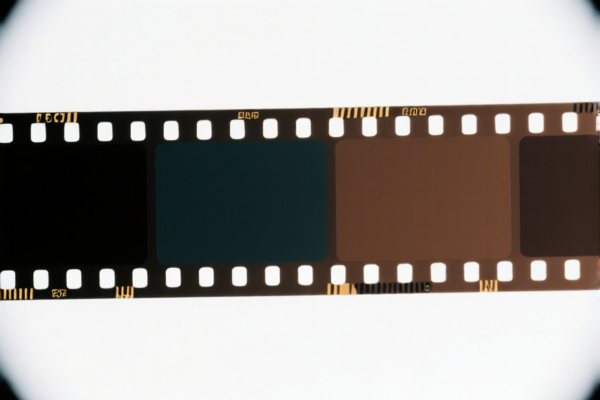
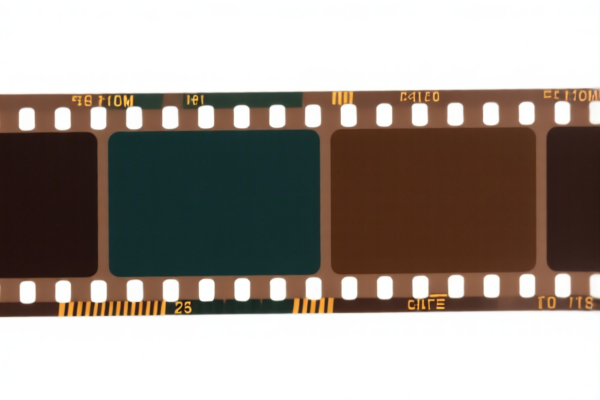
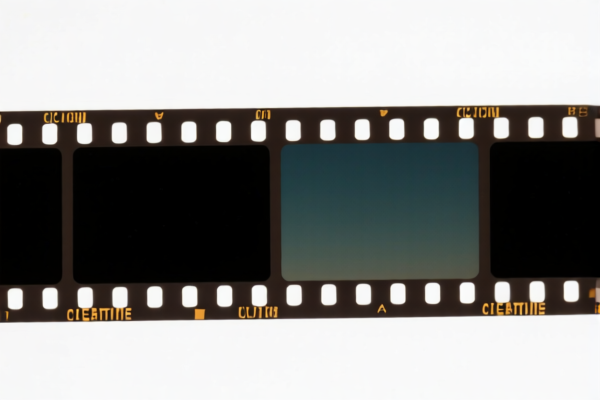

AI Analysis
🎞️ Color Photo Film & Negatives (Exposure Status Matters!)
🌐 HS Code Reference & Customs Clearance Guide | 2026 Latest Tariff Analysis | Professional Strategy for Photographic Materials
📌 I. Product Definition: Are You Shipping Unexposed Rolls or Developed Negatives?
"Color Photo Film" is a broad term that causes massive classification errors because customs duties depend entirely on the physical state of the film: * Unexposed Sensitized Material: Still in the canister/roll, ready to be shot. Highly sensitive chemical coating. * Exposed/Developed Negatives: Already processed by a lab. The image is fixed; the chemical sensitivity is gone.
⚠️ Critical Distinction:
- If it is unexposed and in roll/flat form → It falls under Chapter 37 (Photographic Chemicals/Materials), typically 3701 or 3702.
- If it is exposed and developed (negatives) → It falls under 3705, but NOT 3702.
- Note: If it is "Cinema Film," different rules apply, but standard photo negatives are 3705.00.00.00.
📦 II. HS Code Classification Matrix (2026 Authorized Data)
Based on the provided <DATA>, here are the only valid HS Codes for this product. Do not use generic photography codes.
| HS Code | Product Description (Summary from Data) | Tax Rate (Total) | Key Differentiator |
|---|---|---|---|
| 3702.31.01.00 | Color photographic rolls/film negatives form, non-paper/non-textile gelatin base. | 38.7% | Unexposed rolls/film strips. |
| 3705.00.00.00 | Exposed & Developed Color Photo Film. Non-cinema. | 35.0% | Already processed negatives. |
| 3701.91.00.60 | Flat sensitized materials for color photography, non-paper/non-textile base. | 38.7% | Flat sheets (plates), not rolls. |
| 3701.91.00.30 | Unexposed flat photographic negatives/film for color photography. | 38.7% | Unexposed flat sheets. |
| 3702.54.00.60 | Color photo film rolls, non-paper/non-textile sensitive film. | 38.7% | Specific roll variants (unexposed). |
🔍 Focus on the Two Main Categories: 1. Unexposed (Ready to Shoot):
3702.31.01.00,3701.91.00.60,3701.91.00.30,3702.54.00.60→ All carry 38.7% tax. 2. Exposing/Developed (Finished Negatives):3705.00.00.00→ Carries 35.0% tax.
💰 III. 2026 Tariff Rate Breakdown (Detailed Tax Clauses)
✅ Applicable Country: United States (US)
✅ Origin: China (CN) (Implied by the 25% Section 301 & 10% IEEPA structure in data)
✅ Effective Time: Current 2026 Tariff Structure
🎯 1. The "Unexposed" High-Tax Cluster (38.7%)
Applies to: 3702.31.01.00, 3701.91.00.60, 3701.91.00.30, 3702.54.00.60
| Tax Component | Rate | Legal Basis / Note |
|---|---|---|
| Base Duty | 3.7% | Standard MFN rate for sensitized photographic plates/film. |
| Section 301 (Added) | 25.0% | Section 301 Tariffs on Chinese goods (List 3/4B). |
| IEEPA (122 Clause) | 10.0% | International Emergency Economic Powers Act, Section 122 provisions (often applied to strategic/tech-adjacent goods). |
| TOTAL TAX | 38.7% | 3.7% + 25.0% + 10.0% |
📌 Explanation:
Unexposed film is classified as a "sensitized material" (chemically active). Customs views this as a high-tech industrial input. The 10% IEEPA adds a heavy penalty on top of the standard 25% Section 301 tariff.
Total Burden: Nearly 40% of CIF value is lost to tax alone.
🎯 2. The "Developed Negative" Category (35.0%)
Applies to: 3705.00.00.00
| Tax Component | Rate | Legal Basis / Note |
|---|---|---|
| Base Duty | 0.0% | Developed negatives are often considered "finished goods" or "waste" with no residual chemical sensitivity. |
| Section 301 (Added) | 25.0% | Section 301 Tariffs on Chinese goods. |
| IEEPA (122 Clause) | 10.0% | International Emergency Economic Powers Act, Section 122 provisions. |
| TOTAL TAX | 35.0% | 0.0% + 25.0% + 10.0% |
📌 Explanation:
Because the base duty drops to 0%, the total tax is 3.7% lower than unexposed film. However, the Section 301 and IEEPA taxes remain mandatory.
Note: This applies ONLY to film that has been exposed and chemically developed. Film that is exposed but not yet developed may still be challenged as "sensitized material."
🛠️ IV. Customs Clearance Practical Advice
✅ 1. Mandatory Documentation Checklist
| Document | Required? | Why? |
|---|---|---|
| Product Specification Sheet | ✅ Yes | Must explicitly state: "Exposure Status: Unexposed" OR "Exposure Status: Exposed & Developed." |
| Photo of Label/Canister | ✅ Yes | Visual proof of "For Color Photography" and sensitivity warnings. |
| Commercial Invoice | ✅ Yes | Must list HS Code 3702.31.01.00 or 3705.00.00.00 precisely. Do not use generic "Camera Film." |
| MSDS (Material Safety Data Sheet) | ✅ Yes | For unexposed film, customs may require MSDS to verify chemical composition (gelatin/silver halide). |
| Declaration of Non-Cinema Use | ✅ Yes | For 3705, you must declare it is NOT cinema film to avoid different subheading rules. |
✅ 2. Critical Classification Rules (The "Don't Mess Up" Guide)
🔥 Golden Rule: "Exposure Status Dictates HS Code!"
| Scenario | Correct HS Code | Tax Rate | Common Mistake |
|---|---|---|---|
| New Film in Shop | 3702.31.01.00 or 3702.54.00.60 |
38.7% | Using 3705 (Developed) → Smuggling/Undervaluation Alert! |
| Developed Negatives (Scanned/Archived) | 3705.00.00.00 |
35.0% | Using 3702 (Unexposed) → Overpaying tax unnecessarily. |
| Flat Sheets (Plate Film) | 3701.91.00.60 or .30 |
38.7% | Confusing with rolls → Delay for reclassification. |
✅ 3. Special Handling Tips
-
Define "Exposed" Clearly:
If you are shipping developed negatives (e.g., from a photo lab in China to a US editor), ensure the invoice states: "Color Photographic Negatives, Exposed and Developed, Non-Cinema." Use HS 3705.00.00.00. -
Avoid "Mixed" Shipments:
Do not pack unexposed rolls and developed negatives in the same box without clear separation and separate line items on the invoice. Customs will scrutinize the whole shipment. If they suspect undeclared exposed film inside a box of unexposed film, they may seize the entire lot. -
122 Clause (IEEPA 10%) is Non-Negotiable:
Unlike some Section 301 exclusions, the 10% IEEPA charge seen in the<DATA>is currently mandatory for these HS codes originating from China. There is no de minimis exemption (under $800) for these specific chemical/photographic goods if they are deemed strategic or restricted. Check current CBP enforcement levels.
🌍 V. Global Market Comparison (2026 Context)
| Region | HS Code Focus | Typical Duty | Note |
|---|---|---|---|
| 🇺🇸 USA | 3702 (Unexposed) / 3705 (Developed) |
35.0% - 38.7% | High due to Section 301 + IEEPA. |
| 🇪🇺 EU | 3702 / 3705 | ~0-6% | No Section 301/IEEPA equivalents. Much cheaper. |
| 🇨🇳 China (Import) | 3702 / 3705 | ~0-5% | Low duty, but strict environmental checks on chemicals. |
| 🇯🇵 Japan | 3702 / 3705 | ~3-5% | Standard MFN rates apply. |
📌 Strategic Insight:
If you are a US importer of unexposed color film, the 38.7% duty is brutal. Consider sourcing from Vietnam or Mexico if possible to avoid the 25% Section 301 and 10% IEEPA, potentially lowering total duty to <10%.
📌 VI. Common Pitfalls & Warnings (Blood & Tears)
❌ Mistake 1: Labeling "Color Film" without specifying "Unexposed" vs "Developed".
👉 Result: Customs officer guesses. If they guess wrong, you pay 38.7% instead of 35.0% or face penalties.
❌ Mistake 2: Using HS 3702 for Developed Negatives.
👉 Result: You overpay 3.7% unnecessarily. While small, it’s sloppy documentation that triggers audits.
❌ Mistake 3: Ignoring the 122 Clause (10%).
👉 Result: Many brokers miss this. The <DATA> clearly states this 10% is added to the 25%. Do not assume only 25%.
✅ Correct Declaration Example:
"Color Photographic Film Roll, 35mm, 400ASA, Unexposed, Gelatin Base. HS: 3702.31.01.00. Origin: China. Subject to Section 301 and IEEPA duties."
🎯 VII. Conclusion: Save Money by Getting the State Right!
🎯 Remember:
🔹 Unexposed = 38.7% (Base 3.7% + 25% + 10%)
🔹 Developed = 35.0% (Base 0.0% + 25% + 10%)
🔹 Difference = 3.7% per unit value.📌 Action Item:
1. Determine if your film is Shipped Unexposed (for future use) or Shipped Developed (archival/scanned).
2. Select3702series for Unexposed.
3. Select3705.00.00.00for Developed.
4. Budget for 35-39% total tax impact.
📣 Immediate Step:
📞 Verify the exposure status with your supplier.
📄 Ensure the Commercial Invoice explicitly states "Exposed/Developed" or "Unexposed/Sensitized" to match the HS Code.
🚀 Clearance Success = Precise Description + Correct HS Code!
✨ Professional Customs Clearance Starts with Accurate Classification!
💼 Don't let a 3.7% error cost you thousands on high-volume film shipments!
Customer Reviews
About HS Code Classification
The Harmonized System (HS) is an internationally standardized nomenclature developed by the World Customs Organization (WCO) to classify traded products. Over 200 countries use the HS system as the basis for customs tariffs, trade statistics, and import/export regulations.
Each HS code follows a hierarchical structure:
- Chapter (2 digits) — Broad category of goods (e.g., Chapter 84: Machinery and Mechanical Appliances)
- Heading (4 digits) — More specific grouping within the chapter
- Subheading (6 digits) — Internationally standardized breakdown, used by all WCO member countries
- National subdivisions (8-10 digits) — Country-specific extensions for further classification, such as US HTSUS 10-digit codes
Correct HS code classification is essential for smooth customs clearance, accurate duty payment, and compliance with trade regulations. Misclassification can lead to customs delays, overpayment of duties, or penalties.
When importing from CN to US, the applicable tariff rates may include:
- Most-Favored-Nation (MFN) rate — The standard duty rate applied to WTO members
- General rate — Applied to countries without trade agreements
- Trade remedy duties — Additional tariffs such as Section 301 (anti-dumping), Section 232 (national security), or countervailing duties
The information provided on this page is for reference purposes only. For official classification, please consult with your local customs authority or a licensed customs broker.