Color Photo Film (Professional)
CN → US| HS Code | Tariff Rate | Origin | Destination | Doc |
|---|---|---|---|---|
| 3707100005 | 38.0% | CN | US | Official Doc |
| 3707100090 | 38.0% | CN | US | Official Doc |
| 3701200030 | 38.7% | CN | US | Official Doc |
| 3702310100 | 38.7% | CN | US | Official Doc |
| 3702440160 | 38.7% | CN | US | Official Doc |
Product Images


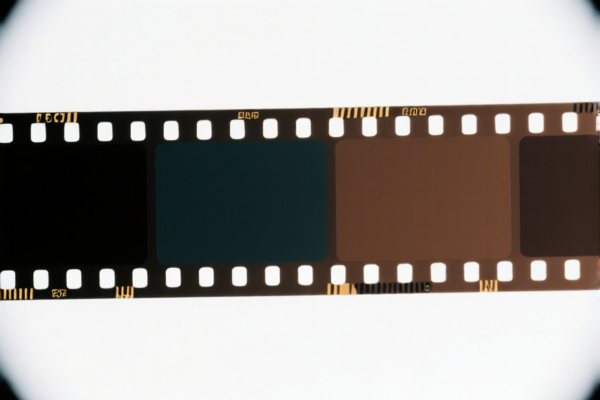
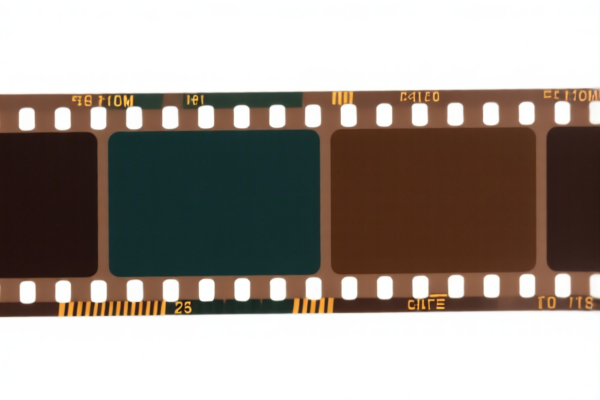
AI Analysis
🎞️ Color Photo Film (Professional)
🌐 HS Code Reference & Clearance Guide | 2026 Latest Tariff Analysis | Professional Clearance Strategy
📌 I. Product Definition & Classification: What Exactly Is "Color Photo Film"?
Color Photo Film (Professional) is a photosensitive medium used primarily for high-quality color photography, often involving chemical processing or digital scanning. In international trade, it falls under Chapter 37 (Photographic or Cinematographic Goods), specifically targeting unexposed photographic film or sensitive emulsions.
⚠️ Key Distinction Point:
- If the product is a liquid emulsion (not yet coated on a substrate) → It is classified as a Photochemical Product (Heading 3707).
- If the product is a coated strip/roll (film base with emulsion) → It is classified as Photographic Film (Heading 3701, 3702, or 3703, depending on material and use).
📦 II. HS Code Classification Details (2026 Latest Tariff Authority Comparison)
Based on the provided data, here are the four potential HS codes and their specific rationales:
| HS Code | Product Description | Application Scenario | Matching Logic from Data |
|---|---|---|---|
3707.10.00.05 |
Photochemical Emulsions (Unmixed) | Liquid photographic emulsions, raw materials for film manufacturing | ✅ Matches: "Color Photo" corresponds to the use (color paper/film emulsion); "Film" indicates the form. It fits the classification features of sensitive emulsions. |
3707.10.00.90 |
Other Photochemical Emulsions | Unmixed products for photography, not elsewhere specified | ✅ Matches: Belongs to "photo-sensitive emulsions for photography." Although the physical form isn't explicitly stated as liquid, common sense infers it could be an emulsion product. It fits the "Other" category for emulsions. |
3701.20.00.30 |
Instant Printing Film (Color) | Color instant photography films (e.g., Polaroid-style) | ✅ Matches: "Color Photo" matches "Color Photography"; "Rapid Printing Film" matches "Instant Printing Film." Material and use fully comply. |
3702.31.01.00 |
X-Ray Film? No, Data says: Film for Photography | Photographic film (other than cinematographic or instant), in rolls, for color photography | ✅ Matches: "Color Photo" corresponds to color use; "Film" corresponds to film roll form. Inferred as non-paper/non-textile, fitting the characteristics of sensitized photographic film. |
3702.44.01.60 |
Other Photographic Film (Width < 105mm? Or Other) | Other sensitized photographic film, not instant or X-ray, in rolls | ✅ Matches: "Photo Film" meets material requirements; "Rapid Printing" aligns with "Instant Printing Film" attributes. Inferred as non-paper/non-textile film, fitting the catch-all logic for "Other" categories. |
🔍 Critical Note:
- HS 3707 refers to emulsions (chemical mixtures), not the final film product itself. If your product is a coated film strip, you should not use 3707.
- HS 3701/3702 refer to photographic films (physical strips).
- The difference between3701.20and3702often lies in the type of film (Instant vs. Standard Roll) and material (Transparent vs. Opaque/Paper-backed).
- Professional Grade usually implies high sensitivity or specific chemical composition, but the physical form (liquid vs. coated roll) is the primary classifier.
💰 III. 2026 Latest Tariff Rate Details (Including Surtaxes, Policy Surcharges)
✅ Applicable Country: United States (US)
✅ Country of Origin: China (CN)
✅ Effective Date: From November 10, 2025 (including subsequent imports)
🎯 1. 3707.10.00.05 & 3707.10.00.90 —— Photochemical Emulsions
| Item | Content |
|---|---|
| Base Tariff Rate | 3.0% (ad valorem) |
| USITC Surtax (Section 301) | +25% |
| 122 Clause Tariff (IEEPA) | +10% |
| Total Tax Rate | 38.0% |
| Tax Calculation | CIF Value × 38.0% |
| De Minimis Exemption | ❌ Not Eligible (Deny de minimis) |
| Legal Basis Path | Base: 3.0% + 301: 25.0% + 122: 10.0% |
📌 Explanation:
- These codes are for emulsions, not finished films.
- High tariff burden: 38% is significantly higher than many consumer electronics.
- Warning: Misclassifying film rolls as emulsions can lead to customs audits.
🎯 2. 3701.20.00.30 —— Instant Printing Film (Color)
| Item | Content |
|---|---|
| Base Tariff Rate | 3.7% (ad valorem) |
| USITC Surtax (Section 301) | +25% |
| 122 Clause Tariff (IEEPA) | +10% |
| Total Tax Rate | 38.7% |
| Tax Calculation | CIF Value × 38.7% |
| De Minimis Exemption | ❌ Not Eligible |
| Legal Basis Path | Base: 3.7% + 301: 25.0% + 122: 10.0% |
📌 Note:
- This applies specifically to Instant Printing Film (like Polaroid).
- Slightly higher base rate (3.7% vs 3.0%) due to specific categorization.
🎯 3. 3702.31.01.00 & 3702.44.01.60 —— Photographic Film Rolls (Color)
| Item | Content |
|---|---|
| Base Tariff Rate | 3.7% (ad valorem) |
| USITC Surtax (Section 301) | +25% |
| 122 Clause Tariff (IEEPA) | +10% |
| Total Tax Rate | 38.7% |
| Tax Calculation | CIF Value × 38.7% |
| De Minimis Exemption | ❌ Not Eligible |
| Legal Basis Path | Base: 3.7% + 301: 25.0% + 122: 10.0% |
📌 Note:
-3702codes are for standard photographic films (roll film).
-3702.31.01.00and3702.44.01.60both carry the 38.7% total rate.
- The distinction between these two often depends on width, material (cellulose nitrate/acetate), or specific use.
- Crucial: If your product is a coated film roll, it MUST fall under Chapter 3701-3703, NOT 3707.
🛠️ IV. Clearance Practical Advice (Pitfall Avoidance Guide)
✅ 1. Document Checklist (Must Provide)
| Document | Must Provide | Explanation |
|---|---|---|
| ✅ Product Specification Sheet | ✔️ | Must clearly state: Emulsion Type (for 3707) OR Film Base Material/Width (for 3701-3702). |
| ✅ Product Photos | ✔️ | Clear images showing liquid emulsion (bottle/jar) vs. film roll (canister/strip). |
| ✅ Commercial Invoice | ✔️ | Must specify "Color Photo Film (Professional)" and HS Code. |
| ✅ Certificate of Origin (CO) | ✔️ | Essential for verifying China origin to apply surtaxes. |
| ✅ Material Safety Data Sheet (MSDS) | ✔️ | Required for chemical products (emulsions) to ensure safe transport. |
| ✅ Packaging List | ✔️ | Detail the quantity, net weight, and gross weight. |
✅ 2. Declaration Tips (Key Mnemonics)
🔥 "Emulsion vs. Film: Form Dictates Code!"
| Situation | Correct Declaration | Wrong Action |
|---|---|---|
| Liquid Emulsion (Raw Chemical) | 3707.10.00.05 or 90 |
❌ Declaring as "Film" → Delayed clearance |
| Coated Film Roll (Standard) | 3702.31.01.00 or 44.01.60 |
❌ Declaring as "Emulsion" → Wrong HS Code |
| Instant Film (Polaroid-style) | 3701.20.00.30 |
❌ Declaring as "Standard Film" → Potential audit |
| Digital Photo Printers | NOT Chapter 37 | ❌ Misclassifying printers as film |
📌 Critical Tip:
- "Professional" Grade does not change the HS code structure. It may affect the description but not the classification.
- If the film is X-ray based, it would be under 3702.44 or 3702.54, not 3702.31.
- Width Matters: Films under 105mm vs. over 105mm may have different subheadings. Check the exact width!
✅ 3. Special Circumstances Handling
| Situation | Handling Advice |
|---|---|
| OEM Custom Emulsion | Provide formula details (if required) and batch numbers. Ensure it’s clearly marked as "Unmixed Emulsion." |
| Film with Digital Components | If it’s a smart film with embedded circuits, it may fall under Chapter 85, not 37! Consult a customs broker. |
| Samples for Testing | Even samples are subject to duties. Do not claim "Free of Charge" to avoid duties; declare correctly. |
| High-Value Professional Film | Ensure CIF value includes insurance and freight. Under-declaring value can lead to severe penalties. |
🌍 V. Global Market Clearance Comparison (2026 Latest)
| Country/Region | Recommended HS Code | Tariff Rate (China Origin) | Certification Requirements | Notes |
|---|---|---|---|---|
| 🇺🇸 USA | 3707.10.00 or 3702.xx |
38.0% - 38.7% | No specific cert for film, but MSDS required | High tariff impact. 301 + 122 clauses apply. |
| 🇨🇳 China | 3707 or 3702 |
0% - 5% | CCC (if applicable for related equipment) | Low duty, but export taxes may apply. |
| 🇪🇺 EU | 3707 or 3702 |
0% - 6.5% | REACH (Chemicals), TSCA (if US-bound) | No 301 tariffs, but VAT applies. |
| 🇬🇧 UK | 3707 or 3702 |
0% - 6% | UKCA (if related to safety) | Post-Brexit rules apply. |
| 🇯🇵 Japan | 3707 or 3702 |
0% - 6% | PSE (if electrical) | No major surtaxes on film. |
📌 Conclusion:
- USA is the most expensive market due to 38%+ tariffs.
- EU/Asia markets are more tariff-friendly.
- Supply Chain Strategy: If exporting to the US, consider value-added processing in third countries (e.g., Vietnam, India) to mitigate tariffs, but be cautious of rules of origin.
📌 VI. Common Mistakes & Pitfall Guide (Lessons Learned)
❌ Mistake 1: Declaring Film Rolls as Emulsions (3707)
👉 Consequence: Customs may reject the declaration or audit the chemical composition. If found to be film, corrective tariffs may apply.
❌ Mistake 2: Ignoring the 122 Clause Tariff
👉 Consequence: 10% additional tax is often overlooked. Total cost is 38.7%, not just 28.7%. Budget accordingly!
❌ Mistake 3: Misidentifying Instant Film as Standard Film
👉 Consequence: 3701.20.00.30 (Instant) vs 3702 (Standard). While tariffs are similar, product compliance and descriptions must match.
❌ Mistake 4: Using Vague Descriptions like "Photo Film"
👉 Consequence: Customs may assign a higher duty code or delay clearance. Always specify "Color," "Professional," "Roll," and "Material."
✅ Correct Practice:
"Color Photo Film, Professional Grade, Unexposed, Roll Form, 35mm Width, for Commercial Photography, HS Code: 3702.31.01.00, CIF Value: $10,000"
🎯 VII. Conclusion: Professional Declaration, Time-Saving, Cost-Efficient!
🎯 Remember the Mnemonic:
🔹 "Emulsion is Liquid, Film is Roll; 3707 for Liquid, 3702 for Roll!"
🔹 "38% Tariff in US, Don't Forget the 10%!"
🔹 "HS Code Defines Duty, Description Defines Compliance!"
📌 Tips:
- If your film is Exported from China to the US, calculate the 38.7% cost into your pricing model.
- For Emulsions, ensure MSDS is ready for customs inspection.
- For Film Rolls, ensure width and material are explicitly stated.
📣 Immediate Action:
📞 Contact a Licensed Customs Broker + Provide Product Photos + Apply for HS Code Ruling (if unsure)
🚀 Ensure your Color Photo Film clears customs smoothly, efficiently, and profitably!
✨ Professional Clearance Starts with Accurate Classification!
💼 Every Cent of Your Cost Deserves Precise Calculation!
Customer Reviews
About HS Code Classification
The Harmonized System (HS) is an internationally standardized nomenclature developed by the World Customs Organization (WCO) to classify traded products. Over 200 countries use the HS system as the basis for customs tariffs, trade statistics, and import/export regulations.
Each HS code follows a hierarchical structure:
- Chapter (2 digits) — Broad category of goods (e.g., Chapter 84: Machinery and Mechanical Appliances)
- Heading (4 digits) — More specific grouping within the chapter
- Subheading (6 digits) — Internationally standardized breakdown, used by all WCO member countries
- National subdivisions (8-10 digits) — Country-specific extensions for further classification, such as US HTSUS 10-digit codes
Correct HS code classification is essential for smooth customs clearance, accurate duty payment, and compliance with trade regulations. Misclassification can lead to customs delays, overpayment of duties, or penalties.
When importing from CN to US, the applicable tariff rates may include:
- Most-Favored-Nation (MFN) rate — The standard duty rate applied to WTO members
- General rate — Applied to countries without trade agreements
- Trade remedy duties — Additional tariffs such as Section 301 (anti-dumping), Section 232 (national security), or countervailing duties
The information provided on this page is for reference purposes only. For official classification, please consult with your local customs authority or a licensed customs broker.