Color Photo Paper Barium Coated
CN → US| HS Code | Tariff Rate | Origin | Destination | Doc |
|---|---|---|---|---|
| 4810131120 | 35.0% | CN | US | Official Doc |
| 4810136000 | 35.0% | CN | US | Official Doc |
| 4823906700 | 35.0% | CN | US | Official Doc |
Product Images
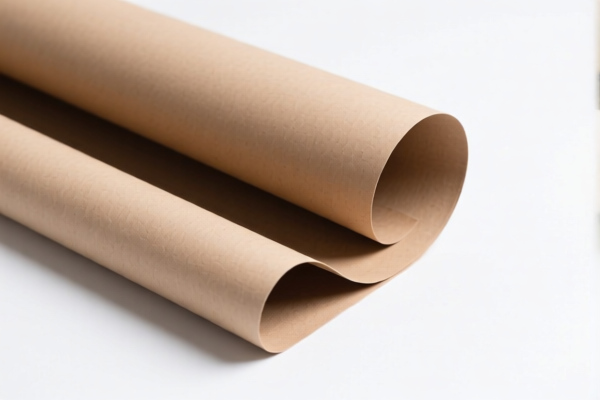
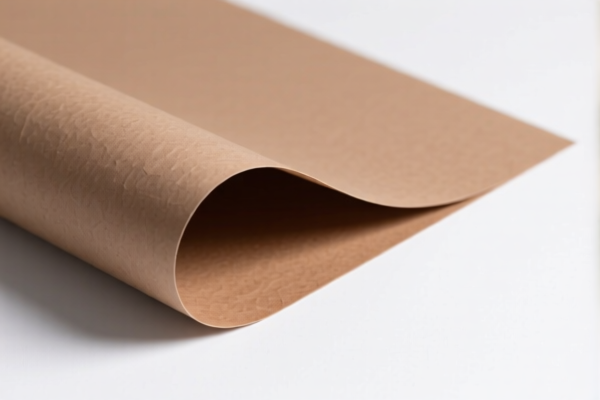

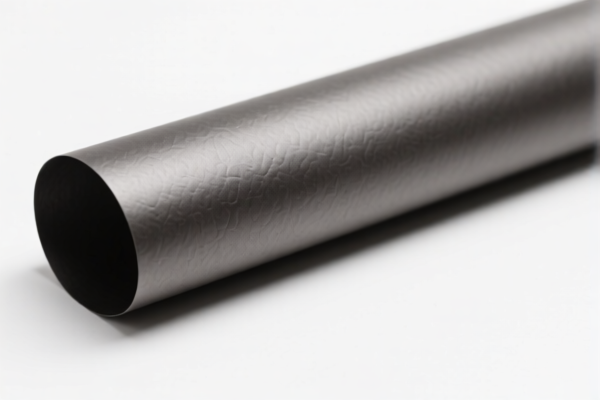
AI Analysis
🎨 Color Photo Paper: Barium Coated (Photographic Base Paper)
🌐 HS Code Reference & Customs Clearance Guide | 2026 Latest Tariff Analysis | Professional Strategy
📌 I. Product Definition & Classification: Do You Really Understand "Barium-Coated Photo Paper"?
Color photo paper, specifically Barium-Coated types, is the foundational medium for traditional photographic printing and high-quality image reproduction. In international trade, it is categorized not just as "paper," but as a specialized coated paper product with specific chemical treatments (Barium Sulfate coating) to enhance brightness, durability, and ink/photographic emulsion adherence.
In the context of current US-China trade policies, these products are subject to significant tariffs due to their origin (typically China) and specific chemical/coating characteristics.
⚠️ Key Classification Distinction:
- Photographic Base Paper: Paper intended solely for photographic emulsion coating (unexposed). → Classified under 4810.
- Coated Printing Paper: Paper coated for general printing, advertising, or artistic use, where the barium coating serves a structural or aesthetic purpose rather than strictly as a photographic light-sensitive base. → Classified under 4823.
📦 II. HS Code Classification Details (2026 Latest Tariff Authority对照)
| HS Code | Product Description | Application Scenario | Is it Photographic Base? |
|---|---|---|---|
4810.13.11.20 |
Color Photo Paper, Barium Coated: Matches the definition of baryta-coated photographic base paper | Traditional darkroom printing, fine art photo prints, professional photographic bases | ✅ Yes (Primary Purpose) |
4810.13.60.00 |
Color Photo Paper, Barium Coated: Meets coating requirements for photographic sensitized processing | High-end photographic papers, sensitive to light processing | ✅ Yes (Processing Ready) |
4823.90.67.00 |
Color Photo Paper, Barium Salt Coated: Classified as a coated paper product** | General purpose photo paper, artistic prints, non-sensitive photographic applications | ❌ No (Coated Paper Category) |
4823.90.86.80 |
Color Drawing/Art Paper: Classified as other paper products | Artistic sketching, decorative paper, general photography backdrops | ❌ No (General Paper) |
4823.90.10.00 |
Color Drawing Paper: Cut-sized paper products made of paper/pulp | Pre-cut photo albums pages, scrapbooking, general craft use | ❌ No (Cut-sized Paper) |
🔍 Key Reminder:
- If the paper is intended for further photographic emulsion coating (i.e., it will become photo paper later), it falls under 4810.
- If the paper is finished for direct printing (inkjet/laser) or artistic use with barium coating for whiteness/texture, it falls under 4823.
- Misclassification Risk: Declaring photographic base paper as "general coated paper" can lead to customs audits, as the tariff treatment (though similar in rate here) differs in regulatory oversight.
💰 III. 2026 Latest Tariff Rate Breakdown (Including Surtaxes & Policy Surcharges)
✅ Applicable Country: United States (US)
✅ Origin: China (CN)
✅ Effective Date: November 10, 2025 onwards (for subsequent imports)
🎯 1. 4810.13.11.20 & 4810.13.60.00 — Photographic Base Paper (Barium Coated)
| Item | Details |
|---|---|
| Base Duty Rate | 0.0% (ad valorem) |
| Section 301 Surtax | +25.0% (USITC Footnote 9903.88.01 / Trade Act Section 301) |
| Section 122 IEEPA Surtax | +10.0% (Specific to certain Chinese chemical/coated paper imports under IEEPA provisions) |
| Total Duty Rate | 35.0% |
| Tax Calculation | CIF Value × 35% |
| De Minimis Exemption | ❌ Not Applicable (deny_de_minimis) |
| Legal Basis Path | Base: 4810.13 → Section 301: 25% → IEEPA Sec 122: 10% → Total: 35% |
📌 Explanation:
- The 0% base duty reflects standard Most Favored Nation (MFN) treatment for paper products.
- The +25% is the standard Section 301 tariff for many Chinese goods.
- The +10% is a specific "Section 122" tariff applied to certain chemical or coated paper imports, reflecting specific US trade policy measures.
- Total 35% is a high tariff burden, significantly impacting cost competitiveness.
🎯 2. 4823.90.67.00, 4823.90.86.80, 4823.90.10.00 — Coated/Art/Cut-Size Paper
| Item | Details |
|---|---|
| Base Duty Rate | 0.0% (ad valorem) |
| Section 301 Surtax | +25.0% |
| Section 122 IEEPA Surtax | +10.0% |
| Total Duty Rate | 35.0% |
| Tax Calculation | CIF Value × 35% |
| De Minimis Exemption | ❌ Not Applicable (deny_de_minimis) |
| Legal Basis Path | Base: 4823 → Section 301: 25% → IEEPA Sec 122: 10% → Total: 35% |
📌 Note:
- All sub-headings under 4823 listed above carry the exact same tariff structure.
- Whether it is "barium-coated photo paper" or "color drawing paper," if it falls under these HS codes, the 35% total duty applies uniformly.
- No tariff differentiation exists between these HS codes for Chinese origin in the current policy framework.
🛠️ IV. Customs Clearance Practical Advice (Combat Pitfall Guide)
✅ 1. Required Documentation Checklist (Non-Negotiable)
| Document | Mandatory? | Description |
|---|---|---|
| ✅ Product Specification Sheet | ✔️ | Must clearly state: "Barium Sulfate Coated," "Photographic Base" vs. "Coated Printing Paper." |
| ✅ Coating Composition Report | ✔️ | Details of the barium coating process. Critical for distinguishing HS 4810 vs. 4823. |
| ✅ Product Photos (Labeled) | ✔️ | Show packaging, label, and paper texture. |
| ✅ Commercial Invoice | ✔️ | Must match HS Code description exactly. E.g., "Barium-Coated Photographic Base Paper" NOT just "Photo Paper." |
| ✅ Packing List | ✔️ | Weight and dimensions per carton. |
| ✅ Certificate of Origin (CO) | ✔️ | Proves Chinese origin, triggering the 35% duty. |
✅ 2. Declaration Tactics (Key Mnemonic)
🔥 "Be Specific: Coating Type + Intended Use = Correct HS Code!"
| Scenario | Correct Declaration | Common Error |
|---|---|---|
| Raw base for photo emulsion | 4810.13.11.20 or 4810.13.60.00Description: "Barium-coated photographic base paper, unexposed, for further sensitization" |
Declaring as "Printer Paper" → 4823 → Same tax, but potential customs scrutiny if intended use is proven otherwise. |
| Finished artistic/photo paper | 4823.90.67.00Description: "Barium-coated color photo paper for direct printing/art" |
Declaring as "Raw Base" → May be rejected if not intended for further coating. |
| Art/Sketch Paper | 4823.90.86.80 or 4823.90.10.00 |
Overcomplicating with "photo" terminology if not for photography. |
📌 Critical Warning:
- Do NOT use generic terms like "Paper" or "Cardstock."
- MUST include "Barium Coated" in the commercial invoice and packing list.
- Mismatched Use: If you declare4810(photographic base) but the product is clearly for direct inkjet printing, Customs may reclassify it to4823or penalize for misdeclaration. While the tax rate is the same (35%), the legal risk of misclassification remains.
✅ 3. Special Case Handling
| Scenario | Handling Advice |
|---|---|
| Mixed Shipments | If a shipment contains both 4810 (base) and 4823 (finished) paper, declare separately. Do not consolidate under one HS code. |
| White Paper vs. Color Tinted | Ensure the "Color" description matches the HS code summary. HS codes 4810.13 and 4823.90 cover both, but specific sub-headings may vary by color type. |
| Re-export from Third Country | If shipped from Vietnam/Mexico, provide Certificate of Origin proving substantial transformation. 35% US tariffs apply only to Chinese origin. |
| Samples | Even samples are subject to de minimis exemptions only if value < $800 AND not on the "denied" list. This product is likely denied from de minimis. Declare formally. |
🌍 V. Global Market Comparison (2026 Latest)
| Country/Region | Recommended HS Code | Duty Rate (China Origin) | Certification/Notes |
|---|---|---|---|
| 🇺🇸 United States | 4810.13 or 4823.90 |
35% (0% Base + 25% Sec 301 + 10% Sec 122) | High compliance risk. Detailed specs required. |
| 🇨🇳 China | 4810.13 or 4823.90 |
0-5% (Import Duty) | No Section 301/122. Low barrier. |
| 🇪🇺 European Union | 4810.13 or 4823.90 |
0-6% | No Section 301/122. REACH compliance may apply for chemicals. |
| 🇯🇵 Japan | 4810.13 or 4823.90 |
0-3% | No Section 301/122. FTA benefits if applicable. |
📌 Conclusion:
- The US market is significantly more expensive for Chinese barium-coated paper due to the 35% total duty.
- No tariff advantage exists between4810and4823sub-codes in the US currently.
- Focus on Supply Chain: Consider sourcing from non-China origins (e.g., Indonesia, Vietnam) if targeting the US market to avoid the 35% surcharge.
📌 VI. Common Mistakes & Pitfall Avoidance (Lessons Learned)
❌ Mistake 1: Declaring "Barium-Coated Photo Paper" as "Plain Copy Paper"
👉 Consequence: Customs audit, potential fraud penalties, and duty evasion charges.
👉 Reality: Even if the duty rate were lower (it's not here), the misdeclaration is illegal.
❌ Mistake 2: Ignoring the "122 Clause" Tariff
👉 Consequence: Budgeting only 25% duty, resulting in unexpected 35% liability.
👉 Reality: The 10% IEEPA surcharge is mandatory for these items from China.
❌ Mistake 3: Using De Minimis (Section 321) for B2B Shipments
👉 Consequence: Goods detained at border.
👉 Reality: This product category is explicitly excluded from de minimis exemption for Chinese goods.
❌ Mistake 4: Confusing "Photographic Base" (4810) with "Coated Paper" (4823)
👉 Consequence: Even though the tax rate is identical (35%), misdeclaration can lead to increased scrutiny, delays, and fines for incorrect documentation.
👉 Reality: Always match the physical product to the HS code description.
✅ Correct Approach:
"Barium-Coated Photographic Base Paper, Unexposed, 200gsm, White, for Professional Photography Use, Origin China"
🎯 VII. Conclusion: Precision in Classification Saves Money & Time
🎯 Remember the Mnemonic:
🔹 "Barium Coated = 35% Duty (US)"
🔹 "4810 vs 4823 = Same Tax, Different Intent"
🔹 "No De Minimis = Formal Entry Required"
🔹 "Think Twice, Declare Once = Avoid Delays"
📌 Pro Tip:
If your supply chain allows, consider sourcing from Indonesia or Malaysia, where HS codes for similar paper products may benefit from lower or zero tariffs under US trade agreements or general MFN treatment without the 301/122 surcharges.
Request an Advance Ruling from US Customs and Border Protection (CBP) if unsure about the 4810 vs. 4823 distinction for your specific product.
📣 Immediate Action:
📞 Consult a Licensed Customs Broker
📝 Prepare Detailed Product Specifications
🚀 Optimize Your Supply Chain to Mitigate 35% Duty Impact!
✨ Professional Customs Clearance Starts with Accurate Classification!
💼 Every Dollar of Duty Saved is a Dollar of Profit Gained!
Customer Reviews
About HS Code Classification
The Harmonized System (HS) is an internationally standardized nomenclature developed by the World Customs Organization (WCO) to classify traded products. Over 200 countries use the HS system as the basis for customs tariffs, trade statistics, and import/export regulations.
Each HS code follows a hierarchical structure:
- Chapter (2 digits) — Broad category of goods (e.g., Chapter 84: Machinery and Mechanical Appliances)
- Heading (4 digits) — More specific grouping within the chapter
- Subheading (6 digits) — Internationally standardized breakdown, used by all WCO member countries
- National subdivisions (8-10 digits) — Country-specific extensions for further classification, such as US HTSUS 10-digit codes
Correct HS code classification is essential for smooth customs clearance, accurate duty payment, and compliance with trade regulations. Misclassification can lead to customs delays, overpayment of duties, or penalties.
When importing from CN to US, the applicable tariff rates may include:
- Most-Favored-Nation (MFN) rate — The standard duty rate applied to WTO members
- General rate — Applied to countries without trade agreements
- Trade remedy duties — Additional tariffs such as Section 301 (anti-dumping), Section 232 (national security), or countervailing duties
The information provided on this page is for reference purposes only. For official classification, please consult with your local customs authority or a licensed customs broker.