Color Photo Paper Roll (Landscape Photography)
CN → US| HS Code | Tariff Rate | Origin | Destination | Doc |
|---|---|---|---|---|
| 3703103060 | 38.7% | CN | US | Official Doc |
| 3703103090 | 38.7% | CN | US | Official Doc |
| 4823906700 | 35.0% | CN | US | Official Doc |
| 4823908680 | 35.0% | CN | US | Official Doc |
| 4811908030 | 35.0% | CN | US | Official Doc |
Product Images
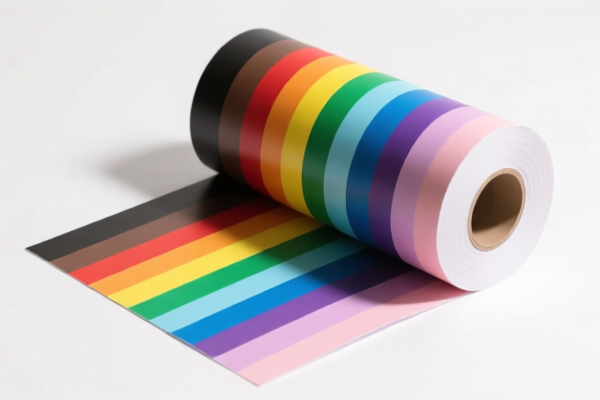
AI Analysis
🎨 Color Photo Paper Roll (Landscape Photography)
🌐 HS Code Reference & Customs Clearance Guide | 2026 Latest Tariff Analysis | Professional Clearance Strategy
📌 I. Product Definition & Classification: Do You Really Understand "Color Photo Paper"?
Large-format color photo paper rolls are specialized imaging media used primarily for artistic printing, landscape photography reproduction, and fine art display. In international trade, these products are not a single unified category but are split based on their chemical composition, coating technology, and intended use.
Misclassification is the #1 cause of customs delays and unexpected tax hikes for photographic media. You must determine whether your product is "Photochemical" (HS 37) or "Paper-Based" (HS 48).
⚠️ Key Distinction Point:
- HS 37 Category: Contains light-sensitive emulsions (silver halide) or is specifically designed for photographic image formation.
- HS 48 Category: Coated paper or cardboard that does not meet the strict chemical definitions of Chapter 37, or is classified as general office/art paper.
📦 II. HS Code Classification Details (2026 Latest Tariff Authority Mapping)
Based on the product summary "Large-format photo paper roll, material for halide paper/coated paper, roll form, for painting/artistic/non-continuous tone image use," here are the five most likely HS Codes and their rationale:
| HS Code | Product Description | Applicable Scenario | Material/Use Characteristic |
|---|---|---|---|
3703.10.30.60 |
Large-format photographic paper rolls, silver halide material, roll form, for painting/artistic use | Fine art prints, artistic photography using silver-based emulsions | ✅ Photochemical (Chapter 37) |
3703.10.30.90 |
Large-format photographic paper rolls, photosensitive material, roll form, for non-continuous tone imaging | High-end photographic output, inkjet/pigment prints on photosensitive media | ✅ Photochemical (Chapter 37) |
4823.90.67.00 |
Large-format photographic paper rolls, coated paper material, roll form, meeting coated paper/board classification | General commercial photo papers, coated inkjet media not fitting Ch. 37 | ❌ Paper-Based (Chapter 48) |
4823.90.86.80 |
Paper products, roll form, meeting classification for other paper/cardboard articles | Generic coated rolls, backup materials, or non-specific photographic supplies | ❌ Paper-Based (Chapter 48) |
4811.90.80.30 |
Photo paper, roll form, meeting characteristics of coated paper category | Specific coated paper lines categorized under general coating rules | ❌ Paper-Based (Chapter 48) |
🔍 Critical Reminder:
- If the paper contains silver halide or is explicitly defined as "photosensitive" for image formation, it MUST be classified under 3703.
- If it is merely coated paper for inkjet/dye-sublimation that does not meet the chemical definition of Chapter 37, it falls under 4811 or 4823.
- Do not arbitrarily choose HS 48 codes for products that clearly belong to HS 37 to avoid misdeclaration penalties.
💰 III. 2026 Latest Tariff Rate Details (Including Surtaxes & Policy Add-ons)
✅ Applicable Country: United States (US)
✅ Country of Origin: China (CN)
✅ Effective Time: 2025/2026 (Current Trade Restrictions)
🎯 1. 3703.10.30.60 & 3703.10.30.90 —— Photographic Papers (Silver Halide/Photosensitive)
| Item | Detail |
|---|---|
| Base Tariff Rate | 3.7% |
| Section 301 Surtax | +25.0% (Standard USITC Footnote) |
| IEEPA Surtax | +10.0% (China-specific Emergency Powers Act) |
| Total Effective Tax | 38.7% |
| Tax Calculation | CIF Value × 38.7% |
| De Minimis Exemption | ❌ Not Applicable |
| Legal Basis Path | USITC:3703.10.30 → FOOTNOTE:301 → IEEPA:ChinaSpecific |
📌 Explanation:
- These codes carry the highest tax burden (38.7%) because they are classified as high-value photochemical goods from China.
- The 25% is due to Section 301 tariffs on Chapter 37 products.
- The 10% is the additional IEEPA tariff applied to Chinese-origin goods.
🎯 2. 4823.90.67.00, 4823.90.86.80, 4811.90.80.30 —— Coated Paper / Other Paper Articles
| Item | Detail |
|---|---|
| Base Tariff Rate | 0.0% |
| Section 301 Surtax | +25.0% |
| IEEPA Surtax | +10.0% |
| Total Effective Tax | 35.0% |
| Tax Calculation | CIF Value × 35.0% |
| De Minimis Exemption | ❌ Not Applicable |
| Legal Basis Path | USITC:48xx.xx.xx → FOOTNOTE:301 → IEEPA:ChinaSpecific |
📌 Explanation:
- These codes have a 0% base rate but still incur the full 35% in surtaxes (25% + 10%).
- While slightly cheaper than HS 37 (35% vs 38.7%), the savings are marginal compared to the risk of misclassification.
- Warning: If customs audits and finds your "Coated Paper" is actually "Silver Halide Paper," you will face back-taxes, penalties, and potential seizure.
🛠️ IV. Customs Clearance Practical Advice (Real-World Pitfall Avoidance)
✅ 1. Documentation Checklist (Non-Negotiable)
| Document | Required? | Notes |
|---|---|---|
| ✅ Product Spec Sheet | ✔️ | Must specify: Emulsion type (Silver Halide vs. Inkjet Compatible), Coating thickness, Base material. |
| ✅ Material Safety Data Sheet (MSDS) | ✔️ | Crucial for Chapter 37 goods to prove chemical composition. |
| ✅ Commercial Invoice | ✔️ | Must state: "Color Photo Paper Roll, [HS Code], Material: [Specify]." Do not just write "Paper." |
| ✅ Packaging Photos | ✔️ | Show labels, barcodes, and any "Light Sensitive" warnings. |
| ✅ Certificate of Origin | ✔️ | To prove Chinese origin (triggers surtaxes). |
✅ 2. Declaration Strategy (Key Rules)
🔥 “Material Defines Code, Not Use! Don’t Guess!”
| Scenario | Correct Declaration | Wrong Practice |
|---|---|---|
| Silver Halide / Light-Sensitive | 3703.10.30.60 or 3703.10.30.90 |
Declaring as "Coated Paper" (48xx) → Risk of Penalty |
| Inkjet/Dye-Sublimation Coated Paper | 4811.90.80.30 or 4823.90.67.00 |
Declaring as "Photochemical" (37xx) → Overpaying Tax |
| Mixed Shipment | Separate lines for HS 37 and HS 48 | Mixed declaration → Customs Hold |
| Vague Name: "Art Paper" | Specific: "Color Photo Paper, Silver Halide Based" | Vague name → Audit Trigger |
✅ 3. Special Cases Handling
| Situation | Advice |
|---|---|
| Customs Questions "Is it Photosensitive?" | Provide a laboratory test report or manufacturer’s statement confirming the emulsion type. |
| "But I use it for Art" | Art use does not change the chemical classification. If it’s silver halide, it’s HS 37. |
| Supplier Claims "It’s Paper" | Verify the technical data sheet. If it has a light-sensitive layer, it’s Chapter 37. |
| High-Value Rolls | Consider applying for an Advance Ruling (Prelinary Ruling) from US CBP to lock in the HS Code and avoid retroactive taxes. |
🌍 V. Global Market Comparison (2026)
| Market | Recommended HS Code | Total Tax (China Origin) | Key Requirement |
|---|---|---|---|
| 🇺🇸 USA | 3703.10.30.60/90 or 48xx |
38.7% (Ch 37) or 35.0% (Ch 48) | Detailed MSDS, Material Spec |
| 🇪🇺 EU | 3703.10 or 4811/4823 |
~6.5% - 8% | CE (if applicable), REACH |
| 🇨🇳 China | 3703.10 or 4811/4823 |
0% - 6.5% | No surtaxes |
| 🇬🇧 UK | 3703.10 or 4811/4823 |
~6.5% - 8% | UKCA Mark (if applicable) |
📌 Conclusion:
- The US market is the most expensive due to the 35-38.7% effective tariff.
- No de minimis exemption applies to these goods from China.
- Accuracy is critical: Misclassifying HS 37 as HS 48 can lead to severe penalties.
📌 VI. Common Mistakes & Pitfall Guide (Lessons Learned)
❌ Mistake 1: Declaring "Silver Halide Paper" as "Coated Paper" (4811/4823)
👉 Consequence: 3.7% base tariff saved, but 3.7% difference is small. Risk of fraud investigation, back taxes, and seizure. The 25%+10% surtax applies to both, so you save almost nothing but gain huge risk.
❌ Mistake 2: Using generic name "Paper Roll" in Invoice
👉 Consequence: Customs cannot determine classification → Held for inspection → Demurrage charges accumulate.
❌ Mistake 3: Ignoring the "122 Clause" / IEEPA 10%
👉 Consequence: Underpaying by 10% → Debt collection + Interest + Penalties.
❌ Mistake 4: Confusing "Art Paper" (Drawing) with "Photo Paper" (Imaging)
👉 Consequence: Wrong HS Code → Incorrect Duty.
✅ Correct Practice:
"Color Photo Paper Roll, Silver Halide Based, 24 inch x 100 ft, for Landscape Photography, Model XYZ, MSDS Attached, HS Code: 3703.10.30.60"
🎯 VII. Conclusion: Precise Classification Saves Money & Headaches
🎯 Remember the Mantra:
🔹 "Silver Halide = HS 37 (38.7%) | Coated Paper = HS 48 (35.0%)"
🔹 "Check the Emulsion, Not Just the Use!"
🔹 "3.7% Base Rate Difference is NOT Worth the Legal Risk!"
📌 Pro Tip:
If you are unsure whether your product is "Photosensitive" under Chapter 37, request a Technical Data Sheet from your supplier. If it mentions "Emulsion," "Silver," "Light-Sensitive," or "Photographic," it is HS 37.
📣 Immediate Action:
📞 Consult a licensed Customs Broker.
📄 Obtain the MSDS and Technical Specs.
🚀 Apply for a Preliminary Ruling if the shipment value is high.
✨ Professional Clearance Starts with Accurate Classification!
💼 Every percentage point matters in the US market!
Customer Reviews
About HS Code Classification
The Harmonized System (HS) is an internationally standardized nomenclature developed by the World Customs Organization (WCO) to classify traded products. Over 200 countries use the HS system as the basis for customs tariffs, trade statistics, and import/export regulations.
Each HS code follows a hierarchical structure:
- Chapter (2 digits) — Broad category of goods (e.g., Chapter 84: Machinery and Mechanical Appliances)
- Heading (4 digits) — More specific grouping within the chapter
- Subheading (6 digits) — Internationally standardized breakdown, used by all WCO member countries
- National subdivisions (8-10 digits) — Country-specific extensions for further classification, such as US HTSUS 10-digit codes
Correct HS code classification is essential for smooth customs clearance, accurate duty payment, and compliance with trade regulations. Misclassification can lead to customs delays, overpayment of duties, or penalties.
When importing from CN to US, the applicable tariff rates may include:
- Most-Favored-Nation (MFN) rate — The standard duty rate applied to WTO members
- General rate — Applied to countries without trade agreements
- Trade remedy duties — Additional tariffs such as Section 301 (anti-dumping), Section 232 (national security), or countervailing duties
The information provided on this page is for reference purposes only. For official classification, please consult with your local customs authority or a licensed customs broker.