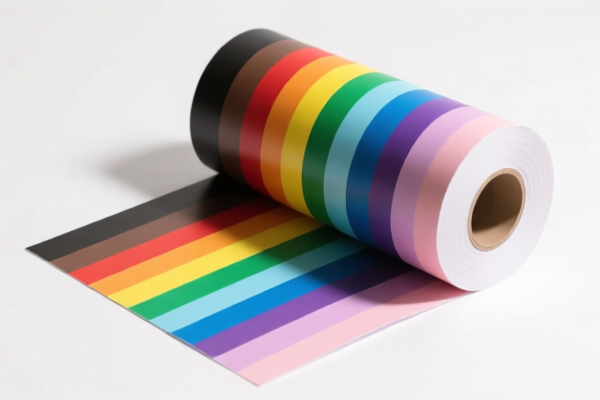
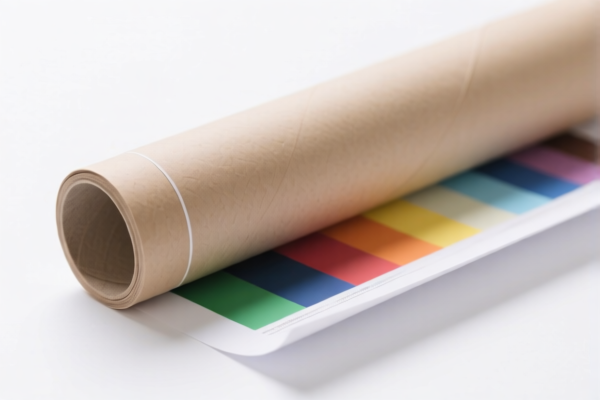
Color Photo Paper Roll (Lightfast)
CN → US| HS Code | Tariff Rate | Origin | Destination | Doc |
|---|---|---|---|---|
| 3703203030 | 38.7% | CN | US | Official Doc |
| 4823906700 | 35.0% | CN | US | Official Doc |
| 3703103030 | 38.7% | CN | US | Official Doc |
| 4823908680 | 35.0% | CN | US | Official Doc |
| 3701910060 | 38.7% | CN | US | Official Doc |
Product Images


AI Analysis
🎞️ Color Photo Paper Roll (Lightfast)
🌐 HS Code Reference & Customs Clearance Guide | 2026 Latest Tariff Analysis | Professional Classification Strategy
📌 I. Product Definition & Classification: Do You Really Understand "Photo Paper"?
Color Photo Paper Roll (Lightfast) is a specialized photographic material used for printing high-quality color images. In international trade, its classification hinges on three critical factors: 1. Material: Is it chemically treated "Silver Halide Paper" (Photo-specific) or "Coated Paper" (General Stationery/Packaging)? 2. Usage: Is it for "Photographic Sensing/Developing" or merely "Printing/Decoration"? 3. Form: It is in Rolls (Roll-form), not sheets.
⚠️ Critical Distinction Point:
- If the paper has a silver halide emulsion designed for light sensitivity and chemical development → Chapter 37 (Photographic Goods).
- If the paper is merely coated/uncoated paper stock without specific photographic sensing properties → Chapter 48 (Paper & Paperboard).
- "Lightfast" implies archival quality, but does not automatically change the HS code if the material is still fundamentally paper. The key is the emulsion type.
📦 II. HS Code Classification Details (2026 Latest Tariff Authoritative Comparison)
| HS Code | Product Description | Application Scenario | Key Characteristic |
|---|---|---|---|
3703.20.30.30 |
Silver-halide photographic paper of a kind used for colour prints, in rolls | Professional photo labs, inkjet laser printers using silver-halide tech | ✅ Silver Halide (Light-sensitive emulsion) |
4823.90.67.00 |
Other paper and paperboard, cut to size or shape; coated paper products | General printing, packaging, non-sensitized decorative rolls | ✅ Coated Paper (No light sensitivity) |
3703.10.30.30 |
Silver-halide photographic paper, in rolls, for color prints | High-end archival printing, fine art photography | ✅ Silver Halide (Color specific) |
4823.90.86.80 |
Other paper products, n.e.c. (Not elsewhere classified) | Uncoated or lightly coated paper rolls for general use | ✅ Paper Stock (General category) |
3701.91.00.60 |
Photographic plates and film, other than silver-halide sensitive material | Sensitized films, digital printing plates (if applicable) | ✅ Non-Silver Halide (Sensitized but not paper) |
🔍 Key Reminder:
- If the product is truly Silver-Halide based (traditional photo paper), it falls under Chapter 37 (3703or3701).
- If it is Inkjet Paper or Plain Coated Paper with no light-sensitive emulsion, it falls under Chapter 48 (4823).
- The term "Lightfast" is a performance attribute, not a classifier. You must declare the chemical composition (emulsion type) to avoid customs disputes.
💰 III. 2026 Latest Tariff Rate Breakdown (Including Surtaxes & Policy Add-ons)
✅ Applicable Country: United States (US)
✅ Origin: China (CN)
✅ Effective Date: From November 10, 2025 (including subsequent imports)
🎯 1. 3703.20.30.30 & 3703.10.30.30 —— Silver-Halide Photographic Paper (Color, Rolls)
These two codes share the same tariff structure because they both fall under Chapter 37 (Photographic Goods).
| Item | Content |
|---|---|
| Base Tariff | 3.7% (ad valorem) |
| USITC Surtax (Section 301) | +25.0% (From USITC Footnote related to Chinese goods) |
| IEEPA Surcharge (Section 122/EO) | +10.0% (Targeting China/HK products) |
| Total Tax Rate | 38.7% |
| Tax Calculation | CIF Value × 38.7% |
| De Minimis Exemption | ❌ Not Eligible (High risk of audit, typically denied for classified goods) |
| Legal Basis Path | IEEPA:9903.01.25 → IEEPA:9903.01.24 → USITC:3703.xx.xx.xx → FOOTNOTE |
📌 Explanation:
- "Base Tariff 3.7%": Standard MFN rate for photographic paper.
- "25% USITC Surtax": Under Section 301 of the Trade Act, targeting strategic imports from China.
- "10% IEEPA Surcharge": Additional levy under Executive Orders targeting Chinese imports.
- Total 38.7%: This is a high tariff. Must be factored into cost modeling immediately.
🎯 2. 4823.90.67.00 & 4823.90.86.80 —— Coated/Other Paper Products (Non-Sensitized)
These codes fall under Chapter 48 (Paper & Paperboard). They generally have lower base tariffs but are still subject to the same US surtaxes.
| Item | Content |
|---|---|
| Base Tariff | 0.0% (ad valorem) |
| USITC Surtax (Section 301) | +25.0% |
| IEEPA Surcharge (Section 122/EO) | +10.0% |
| Total Tax Rate | 35.0% |
| Tax Calculation | CIF Value × 35.0% |
| De Minimis Exemption | ❌ Not Eligible |
| Legal Basis Path | IEEPA:9901.25 → IEEPA:9903.01.24 → USITC:4823.xx.xx.xx |
📌 Note:
- If your product is Inkjet Photo Paper (no silver halide emulsion), it is classified as Coated Paper (4823).
- Total 35.0%: Slightly cheaper than Chapter 37 (38.7%) due to the 0% base rate.
- Crucial: Misclassifying Chapter 37 paper as Chapter 48 paper can lead to smuggling charges or heavy penalties if customs detects light-sensitive emulsions.
🎯 3. 3701.91.00.60 —— Other Photographic Materials (Non-Silver Halide/Other Sensitized)
| Item | Content |
|---|---|
| Base Tariff | 3.7% |
| USITC Surtax | +25.0% |
| IEEPA Surcharge | +10.0% |
| Total Tax Rate | 38.7% |
| Tax Calculation | CIF Value × 38.7% |
| De Minimis Exemption | ❌ Not Eligible |
📌 Explanation:
- Used if the product is sensitized (light-sensitive) but not standard photographic paper (e.g., specialized films or digital printing plates).
- If the product is "Lightfast" but not light-sensitive for development (e.g., archival inkjet paper), do not use this code. Use Chapter 48.
🛠️ IV. Customs Clearance Practical Advice (Combat Pitfalls Guide)
✅ 1. Required Documentation Checklist (Non-Negotiable)
| Document | Mandatory? | Description |
|---|---|---|
| ✅ Product Spec Sheet | ✔️ | Must specify: Emulsion Type (Silver Halide vs. Inkjet), Base Material (Paper vs. Plastic), Lightfastness Rating (e.g., ASTM D1009). |
| ✅ Product Photos | ✔️ | Clear images showing packaging, label, and the roll itself. Highlight any "Photo Paper" or "Coated Paper" labeling. |
| ✅ Commercial Invoice | ✔️ | Must clearly state: "Color Photo Paper Roll, Lightfast, [Specify Material: Silver Halide or Coated Paper]". |
| ✅ Certificate of Origin (CO) | ✔️ | Required for US import; must match the exporter's declaration. |
| ✅ Packing List | ✔️ | Detailed weight and dimensions to verify CIQ inspections if triggered. |
| ✅ Third-Party Test Report | ✔️ | If claiming "Lightfast" or specific archival quality, a lab report (e.g., Wilhelm Imaging Research) helps justify classification if challenged. |
✅ 2. Declaration Tips (Key Mantra)
🔥 "Define Emulsion, Not Just 'Paper'. Silver Halide = Ch37, Coated = Ch48."
| Scenario | Correct Declaration | Error to Avoid |
|---|---|---|
| Traditional Photo Paper (Developed chemically) | 3703.20.30.30 or 3703.10.30.30 Declare: "Silver-halide photographic paper" |
Declaring as "Coated Paper" → Smuggling risk |
| Inkjet/Ceramic Photo Paper (No emulsion, just coating) | 4823.90.67.00 or 4823.90.86.80 Declare: "Coated paper for printing" |
Declaring as "Photo Paper" → Misclassification (Customs may reclassify to Ch37 if they suspect sensitivity) |
| Roll Form | Specify "In Rolls" in description | Describing as "Sheets" → Mismatch with physical inspection |
| Lightfast Attribute | Include in "Brand/Model" or "Special Features" | Using "Lightfast" as the primary HS keyword → Irrelevant for HS |
✅ 3. Special Case Handling
| Situation | Handling Advice |
|---|---|
| Mixed Packaging (Rolls + Sheets) | Declare separately. Rolls go to 3703/4823; Sheets may have different codes. Do not combine. |
| OEM Custom Labels | Provide the OEM contract and design files. Prove the product is not a generic "stolen" good. |
| Digital Printing Plates | If used for offset printing, ensure it's not classified as 3703. May fall under 3701 or 4823 depending on material. |
| High-Value Archival Paper | Provide Wilhelm Imaging Research certificates to justify "Lightfast" claim, preventing customs from downgrading quality or questioning content. |
🌍 V. Global Market Clearance Comparison (2026 Latest)
| Country/Region | Recommended HS Code | Tariff Rate (China Origin) | Certification Required | Notes |
|---|---|---|---|---|
| 🇺🇸 USA | 3703.20.30.30 (Photo) 4823.90.67.00 (Coated) |
38.7% (Photo) 35.0% (Coated) |
None specific for paper, but FDA may inspect for chemical residues | Highest tariffs. Section 301 + IEEPA apply. |
| 🇨🇳 China | 3703.20.30.30 4823.90.67.00 |
3.7% (Photo) 0.0% (Coated) |
CCC (If applicable for specific uses) | Low entry barrier. |
| 🇪🇺 EU | 3703.20 4823.90 |
3.7% (Photo) 0.0% (Coated) |
REACH (Chemical compliance) | No Section 301 equivalent. |
| 🇬🇧 UK | 3703.20 4823.90 |
3.7% (Photo) 0.0% (Coated) |
UKCA (If applicable) | Post-Brexit tariffs align closely with EU. |
📌 Conclusion:
- USA is the most expensive market due to the combined 35-38.7% tariff rate.
- EU/UK/China have significantly lower base tariffs.
- Strategy: If shipping to the US, ensure accurate classification (Ch37 vs Ch48) to avoid duty evasion accusations, which carry heavier penalties than just paying the 35% tariff.
📌 VI. Common Errors & Pitfall Guide (Blood & Tears Lessons)
❌ Error 1: Declaring "Silver Halide Photo Paper" as "Coated Paper" (4823)
👉 Consequence: Customs detects light-sensitive chemicals during X-ray or lab test → Seizure, Fine, or Fraud Charges.
👉 Correct: Use 3703.20.30.30 and pay the 38.7%.
❌ Error 2: Declaring "Inkjet Paper" as "Silver Halide Paper" (3703)
👉 Consequence: Overpaying taxes by 3.7% on base value. Minor, but still a loss.
👉 Correct: Use 4823.90.67.00 and pay the 35.0%.
❌ Error 3: Ignoring the "Roll" form in description
👉 Consequence: Customs mismatch with physical inspection → Delay, Re-inspection, Storage Fees.
👉 Correct: Explicitly state "In Rolls" in the commercial invoice.
❌ Error 4: Assuming "Lightfast" means "Premium/Higher HS"
👉 Consequence: No such HS code for "Quality". Classification is based on material and function.
👉 Correct: Focus on Emulsion Type and Base Material.
✅ Correct Declaration Example:
"Color Photo Paper Roll, Lightfast, Silver-Halide Emulsion, 36" Width, 100ft Length, for Photographic Development. Model: LF-300."
HS Code:3703.20.30.30
Tax: 38.7%
🎯 VII. Conclusion: Precision Classification Saves Money & Time
🎯 Remember the Mantra:
🔹 "Silver Halide = Chapter 37 (38.7%), Coated Paper = Chapter 48 (35.0%). Roll Form is Key, Lightfast is Just a Feature!"
🔹 "HS Code Determines Duty, Misclassification Leads to Trouble, Accurate Declaration is Your Best Friend!"
📌 Pro Tip:
If your product is Inkjet Photo Paper (most common consumer type), it is likely Chapter 48 (
4823.90.67.00). Pay 35.0%.
If it is Professional Silver-Halide Paper (lab use), it is Chapter 37 (3703.20.30.30). Pay 38.7%.
Verify the emulsion type with your manufacturer before declaring!
📣 Immediate Action:
📞 Contact your Customs Broker + Provide Product Specs + Apply for Pre-Ruling if value is high.
🚀 Let your Photo Paper Rolls Clear Smoothly, Save Costs, and Boost Profits!
✨ Professional Clearance Starts with Accurate Classification!
💼 Every Penny Saved is a Penny Earned!
Customer Reviews
About HS Code Classification
The Harmonized System (HS) is an internationally standardized nomenclature developed by the World Customs Organization (WCO) to classify traded products. Over 200 countries use the HS system as the basis for customs tariffs, trade statistics, and import/export regulations.
Each HS code follows a hierarchical structure:
- Chapter (2 digits) — Broad category of goods (e.g., Chapter 84: Machinery and Mechanical Appliances)
- Heading (4 digits) — More specific grouping within the chapter
- Subheading (6 digits) — Internationally standardized breakdown, used by all WCO member countries
- National subdivisions (8-10 digits) — Country-specific extensions for further classification, such as US HTSUS 10-digit codes
Correct HS code classification is essential for smooth customs clearance, accurate duty payment, and compliance with trade regulations. Misclassification can lead to customs delays, overpayment of duties, or penalties.
When importing from CN to US, the applicable tariff rates may include:
- Most-Favored-Nation (MFN) rate — The standard duty rate applied to WTO members
- General rate — Applied to countries without trade agreements
- Trade remedy duties — Additional tariffs such as Section 301 (anti-dumping), Section 232 (national security), or countervailing duties
The information provided on this page is for reference purposes only. For official classification, please consult with your local customs authority or a licensed customs broker.