Color Photographic Film
CN → US| HS Code | Tariff Rate | Origin | Destination | Doc |
|---|---|---|---|---|
| 3704000000 | 35.0% | CN | US | Official Doc |
| 3702520130 | 38.7% | CN | US | Official Doc |
| 3702310100 | 38.7% | CN | US | Official Doc |
| 3706106060 | 35.0% | CN | US | Official Doc |
| 3706900060 | 35.0% | CN | US | Official Doc |
Product Images


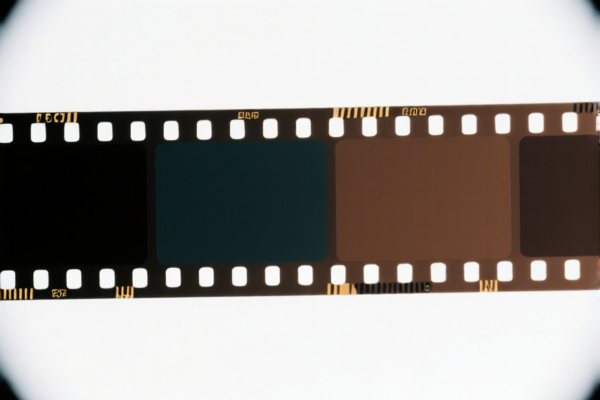
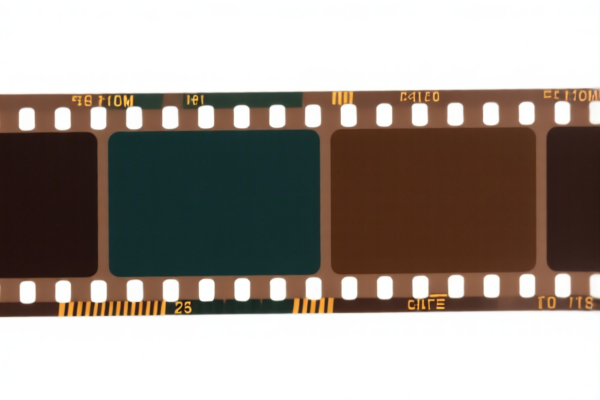
AI Analysis
🎞️ Color Photographic Film (彩色胶卷)
🌐 HS Code Reference & Customs Clearance Guide | 2026 Latest Tariff Analysis | Professional Import Strategy for USA
📌 I. Product Definition & Classification: What Exactly Is "Color Film"?
Color Photographic Film is a light-sensitive medium used for capturing images through chemical development. In international trade, it is categorized based on its physical form (rolls vs. sheets), usage (general photography vs. motion picture/cinema), and chemical composition.
⚠️ Key Classification Logic:
- If it is photo paper or other sensitive paper → Not applicable (different heading).
- If it is raw film rolls for still photography → Typically 3702.
- If it is film for motion pictures (cinema) → Typically 3706.
- Crucial Distinction: The presence of "122 Tariff" (Section 301/IEEPA sanctions) significantly impacts costs for goods originating from China.
📦 II. HS Code Classification Details (2026 Latest Tariff Authority)
Based on the provided data, here are the specific HS Codes, summaries, and tax breakdowns for Color Photographic Film.
| HS Code | Product Description / Summary | Application Scenario | Key Characteristics |
|---|---|---|---|
3704.00.00.00 |
Color film in roll format, meeting material & form requirements. | General color photographic film (rolls). | No base duty. High add-on duties apply. |
3702.52.01.30 |
Color & Color Reversal Film. Consistent usage,感光 material. | Standard color negative or slide film for photography. | Base duty 3.7%. Add-ons apply. |
3702.31.01.00 |
Contains color & film elements. Non-paper, non-textile sensitive material. | General purpose color film rolls. | Base duty 3.7%. Add-ons apply. |
3706.10.60.60 |
Color film meets cinematic attributes. Motion photography falls under special cinema category. | Motion picture film (Cinema/Video production). | No base duty. High add-on duties apply. |
3706.90.00.60 |
Film meets cinematic material attributes. Color & motion photography fall under "Other". | Other cinematic films (not standard negative/positive). | No base duty. High add-on duties apply. |
🔍 Important Note:
- 3702 Series: Generally refers to films for still photography or other non-motion picture uses.
- 3706 Series: Strictly for films for motion pictures (cinema).
- Origin Impact: All codes listed above assume origin from China, triggering specific "122 Clause" tariffs.
💰 III. 2026 Latest Tariff Rate Detail (Including Surcharges & Policy Add-ons)
✅ Applicable Country: USA (US)
✅ Origin: China (CN)
✅ Effective Time: Post-November 2025 (Including subsequent imports)
🎯 1. 3704.00.00.00 —— Color Film (Roll Format)
| Item | Content |
|---|---|
| Base Tariff | 0.0% |
| Add-on Tariff (Section 301) | +25.0% |
| 122 Clause Tariff (IEEPA) | +10.0% |
| Total Tariff Rate | 35.0% |
| Tax Calculation | CIF Value × 35% |
| De Minimis Eligibility | ❌ Not Eligible (High value/regulated category) |
| Legal Basis Path | USITC:3704.00.00.00 → FOOTNOTE:Section301 → IEEPA:122Clause |
📌 Explanation:
- Although the base tariff is 0%, the total effective rate is 35% due to heavy sanctions.
- The 10% "122 Clause" is a specific additional duty applied to Chinese goods under recent executive orders.
- Warning: Do not assume 0% base means low cost. The 35% total is significant.
🎯 2. 3702.52.01.30 —— Color & Color Reversal Film
| Item | Content |
|---|---|
| Base Tariff | 3.7% |
| Add-on Tariff (Section 301) | +25.0% |
| 122 Clause Tariff (IEEPA) | +10.0% |
| Total Tariff Rate | 38.7% |
| Tax Calculation | CIF Value × 38.7% |
| De Minimis Eligibility | ❌ Not Eligible |
| Legal Basis Path | USITC:3702.52.01.30 → FOOTNOTE:Section301 → IEEPA:122Clause |
📌 Explanation:
- This code covers Color Reversal Film (Slide Film) and standard Color Negative Film.
- The 3.7% base is added to the 25% and 10% surcharges.
- Higher Cost: This is 3.7% more expensive than Code3704.00.00.00due to the base duty.
🎯 3. 3702.31.01.00 —— Other Color Film (Non-Paper/Non-Textile)
| Item | Content |
|---|---|
| Base Tariff | 3.7% |
| Add-on Tariff (Section 301) | +25.0% |
| 122 Clause Tariff (IEEPA) | +10.0% |
| Total Tariff Rate | 38.7% |
| Tax Calculation | CIF Value × 38.7% |
| De Minimis Eligibility | ❌ Not Eligible |
| Legal Basis Path | USITC:3702.31.01.00 → FOOTNOTE:Section301 → IEEPA:122Clause |
📌 Explanation:
- Similar to the above, this captures general color film that doesn't fit the specific reversal description.
- Same Tax Burden: Identical to3702.52.01.30.
🎯 4. 3706.10.60.60 —— Motion Picture Film (Color)
| Item | Content |
|---|---|
| Base Tariff | 0.0% |
| Add-on Tariff (Section 301) | +25.0% |
| 122 Clause Tariff (IEEPA) | +10.0% |
| Total Tariff Rate | 35.0% |
| Tax Calculation | CIF Value × 35.0% |
| De Minimis Eligibility | ❌ Not Eligible |
| Legal Basis Path | USITC:3706.10.60.60 → FOOTNOTE:Section301 → IEEPA:122Clause |
📌 Explanation:
- For Cinema/Motion Picture use.
- Efficiency Tip: Since the base duty is 0%, the total rate (35%) is lower than the still-photography film (38.7%).
- Strategic Advice: If the film can be classified as "Motion Picture Film" rather than "Still Photography Film," it saves 3.7% in tariffs.
🎯 5. 3706.90.00.60 —— Other Motion Picture Film
| Item | Content |
|---|---|
| Base Tariff | 0.0% |
| Add-on Tariff (Section 301) | +25.0% |
| 122 Clause Tariff (IEEPA) | +10.0% |
| Total Tariff Rate | 35.0% |
| Tax Calculation | CIF Value × 35.0% |
| De Minimis Eligibility | ❌ Not Eligible |
| Legal Basis Path | USITC:3706.90.00.60 → FOOTNOTE:Section301 → IEEPA:122Clause |
📌 Explanation:
- Covers other types of cinematic film not specified elsewhere.
- Same as 3706.10: 0% base, 35% total.
🛠️ IV. Customs Clearance Practical Advice (Real-World Pitfall Avoidance)
✅ 1. Preparation Checklist (Mandatory Documents)
| Document | Required | Explanation |
|---|---|---|
| ✅ Product Spec Sheet | ✔️ | Must specify: Format (Roll/Sheet), Emulsion Type, Speed (ISO/ASA), Color vs. B&W. |
| ✅ Usage Declaration | ✔️ | Clearly state: "For Still Photography" or "For Motion Picture/Cinema". This determines HS Code! |
| ✅ Composition Analysis | ✔️ | Proves it is not "Paper" (which has different codes) but cellulose acetate/PET plastic. |
| ✅ Commercial Invoice | ✔️ | Must match HS Code exactly. Description: "Color Photographic Film for Motion Pictures". |
| ✅ Certificate of Origin | ✔️ | If from China, expect high tariffs. If from other countries, check for FTAs. |
✅ 2. Declaration Tips (Key Rules)
🔥 "Use Defines Code, Code Defines Cost!"
| Scenario | Correct Declaration | Incorrect Declaration | Consequence |
|---|---|---|---|
| Cinema Film | 3706.10.60.60 (35% Total) |
3702.52.01.30 (38.7% Total) |
Overpaid 3.7% |
| Still Photo Film | 3702.52.01.30 (38.7% Total) |
3706.90.00.60 (35% Total) |
Under-declaration Risk + Audit |
| Raw Film Rolls | 3704.00.00.00 (35% Total) |
"Accessories" or "Plastic Rolls" | Misclassification, Fines, Seizure |
📌 Critical Insight:
- Do NOT declare as "Plastic Roll" or "Camera Accessory". It is a Sensitive Material (Chemical/Optical).
- Do NOT ignore the 122 Clause. Even if the base duty is 0%, the 35% total is the real cost.
✅ 3. Special Case Handling
| Situation | Handling Advice |
|---|---|
| Sample Film | Must declare value accurately. Small value samples still subject to 35-38.7% duty. |
| Mixed Shipment | Separate "Motion Picture" from "Still Photography" in invoice. Use correct HS for each. |
| Re-export | If imported under Bonded Warehouse, duty may be deferred. Verify eligibility. |
| Origin Change | If produced in Thailand/Vietnam, tariffs may be lower (check current FTAs). |
🌍 V. Global Market Comparison (2026)
| Country/Region | Recommended HS Code | Tariff Rate (China Origin) | Certification | Notes |
|---|---|---|---|---|
| 🇺🇸 USA | 3706 or 3702 |
35.0% - 38.7% | No specific certs needed for film itself | High Barrier due to 122 Clause |
| 🇨🇳 China | 3706 or 3702 |
0% - 3% (Import Duty) | N/A | Low tariff, but US export restrictions may apply |
| 🇪🇺 EU | 3702 or 3706 |
0% - 4% | REACH Compliance | No "122 Clause" equivalent, but strict chemical regs |
| 🇯🇵 Japan | 3702 or 3706 |
0% - 3% | PSE (if electronic accessories) | Generally low tariffs |
📌 Conclusion:
- The USA is the most expensive market for Color Film from China due to the 122 Clause + Section 301.
- 3.7% Difference: Classifying as Motion Picture Film (3706) is financially smarter than Still Photo Film (3702) if technically accurate.
📌 VI. Common Mistakes & Pitfalls (Lessons Learned)
❌ Mistake 1: Declaring "Color Film" as "Plastic Rolls" to avoid scrutiny.
👉 Result: Customs inspection reveals chemical composition. Confiscation + 200% Penalty.
❌ Mistake 2: Using 3702 for Cinema Film to save time.
👉 Result: Paying 38.7% instead of 35.0%. Wasted money on every shipment.
❌ Mistake 3: Ignoring the "122 Clause" in cost calculation.
👉 Result: Budgeting for 0% or 3.7% tax. Cash flow crisis when 35% is due.
✅ Correct Practice:
"Color Motion Picture Film, 35mm, Roll Format, For Cinematography, Model XYZ, Origin: China"
🎯 VII. Conclusion: Professional Declaration, Cost Optimization!
🎯 Remember the Golden Rules:
🔹 "Cinema is Cheaper: 3706 = 35%, Still = 38.7%. Use the right code!"
🔹 "Base 0% is a Trap: Total is 35% or 38.7% due to 122 Clause."
🔹 "Don't Guess: Specify 'Motion Picture' vs 'Still Photography' clearly."
📌 Pro Tip:
If your film is not from China, tariffs may be significantly lower.
Recommendation: Apply for an Advance Ruling (Pre-classification) from US Customs if importing large volumes.
🚀 Ensure Smooth Clearance, Avoid Delays, Maximize Profit!
✨ Professional Clearance Starts with Accurate Classification!
💼 Your Every Dollar is Worth Calculating!
Customer Reviews
About HS Code Classification
The Harmonized System (HS) is an internationally standardized nomenclature developed by the World Customs Organization (WCO) to classify traded products. Over 200 countries use the HS system as the basis for customs tariffs, trade statistics, and import/export regulations.
Each HS code follows a hierarchical structure:
- Chapter (2 digits) — Broad category of goods (e.g., Chapter 84: Machinery and Mechanical Appliances)
- Heading (4 digits) — More specific grouping within the chapter
- Subheading (6 digits) — Internationally standardized breakdown, used by all WCO member countries
- National subdivisions (8-10 digits) — Country-specific extensions for further classification, such as US HTSUS 10-digit codes
Correct HS code classification is essential for smooth customs clearance, accurate duty payment, and compliance with trade regulations. Misclassification can lead to customs delays, overpayment of duties, or penalties.
When importing from CN to US, the applicable tariff rates may include:
- Most-Favored-Nation (MFN) rate — The standard duty rate applied to WTO members
- General rate — Applied to countries without trade agreements
- Trade remedy duties — Additional tariffs such as Section 301 (anti-dumping), Section 232 (national security), or countervailing duties
The information provided on this page is for reference purposes only. For official classification, please consult with your local customs authority or a licensed customs broker.