Color Photographic Paper Roll for Architectural Photography
CN → US| HS Code | Tariff Rate | Origin | Destination | Doc |
|---|---|---|---|---|
| 4823906700 | 35.0% | CN | US | Official Doc |
| 4823908680 | 35.0% | CN | US | Official Doc |
| 3703203030 | 38.7% | CN | US | Official Doc |
| 3703103030 | 38.7% | CN | US | Official Doc |
| 4911914040 | 17.5% | CN | US | Official Doc |
Product Images
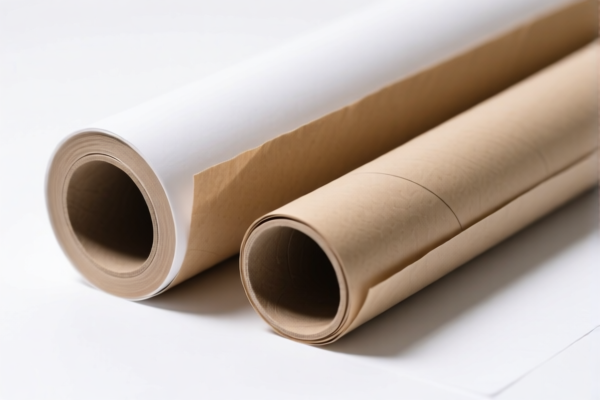
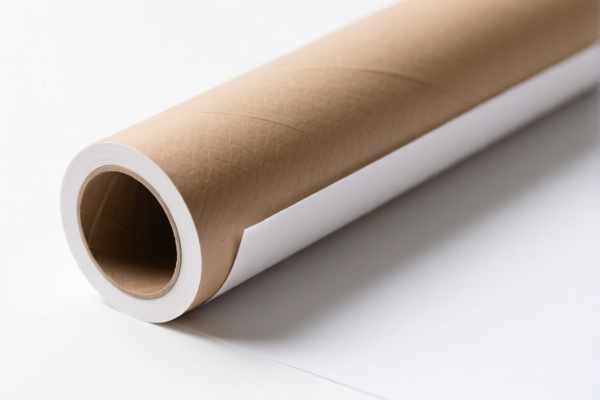
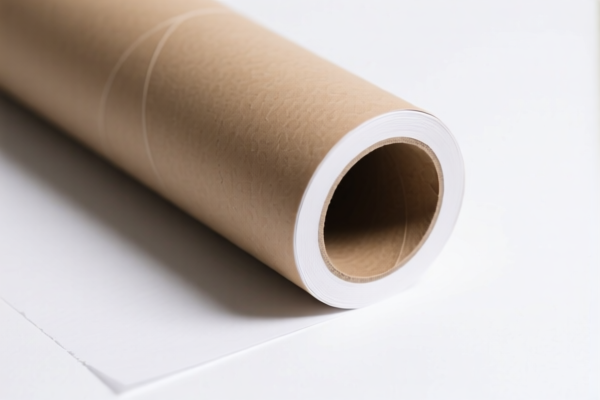
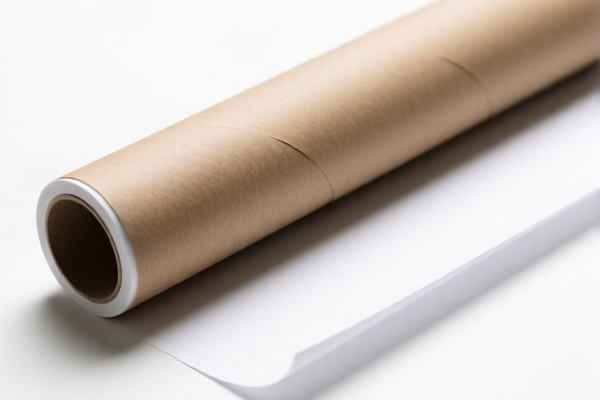
AI Analysis
📸 Architectural Color Photographic Paper Roll: HS Code Guide & Customs Clearance Strategy (USA)
🌐 HS Code Reference & Customs Guide | 2026 Latest Tariff Analysis | Professional Clearance Strategy
📌 I. Product Definition & Classification: What is "Color Photographic Paper Roll"?
Color Photographic Paper for Architectural Photography is a specialized imaging medium. In international trade, it is generally classified under two competing logic paths depending on the specific chemical composition and manufacturing process:
- Photographic Media (Chapter 37): If the paper contains light-sensitive emulsions (such as silver halide) intended for chemical or digital printing in professional photography.
- Paper Products (Chapter 48): If the paper is coated but not light-sensitive, or is considered a generic printed/image carrier rather than active photographic material.
- Printed Materials (Chapter 49): If the paper is pre-printed with images/designs and used as a final output medium.
⚠️ Key Distinction Point: - If the paper is light-sensitive (silver halide) and used for color photography →归类 to 3703 (Photographic Plates/Film/Paper). - If the paper is non-sensitive coated paper or generic photo paper →归类 to 4823 (Other Coated Paper). - If the paper is pre-printed with architectural designs/images →归类 to 4911 (Printed Pictures/Designs).
📦 II. HS Code Classification Details (2026 Latest Tariff Authority Comparison)
| HS Code | Product Description | Matching Criteria | Applicable Scenario |
|---|---|---|---|
3703.10.30.30 |
Color photographic paper, roll form, width > 610mm, continuous tone | Material: Silver halide; Use: Color Photography; Form: Roll; Width: >610mm | Professional architectural printing, large-format color photos |
3703.20.30.30 |
Color photographic paper, roll form, width ≤ 610mm | Material: Silver halide; Use: Color Photography; Form: Roll; Width: ≤610mm | Standard architectural prints, medium format |
4823.90.67.00 |
Other coated paper, roll form | Material: Paper (Coated); Form: Roll; No light-sensitive claim | Generic high-quality photo paper, non-sensitive coated paper |
4823.90.86.80 |
Other paper articles, roll form | Material: Paper; Form: Roll; No specific coating conflict | Other paper-based photographic carriers or blanks |
4911.91.40.40 |
Other printed matter, including printed pictures | Content: Printed images/designs; Form: Roll | Pre-printed architectural drawings, posters, or image-bearing paper |
🔍 Critical Reminder: - Light-Sensitive vs. Non-Sensitive: If the product is explicitly marketed as "photographic paper" with emulsion, customs may insist on Chapter 37. Misdeclaring sensitive film as generic paper (
4823) can lead to audits. - Roll Width: For HS Code3703, the width (>610mm vs. ≤610mm) significantly impacts the sub-code. - Printed vs. Blank: If the paper already contains the architectural image, it may fall under4911(Printed Matter), which has a lower tariff burden.
💰 III. 2026 Latest Tariff Rate Breakdown (Including Add-on Taxes & Policy Surcharges)
✅ Applicable Country: United States (US) ✅ Origin: China (CN) ✅ Effective Date: From November 10, 2025 (and subsequent imports)
🎯 1. 3703.10.30.30 & 3703.20.30.30 —— Color Photographic Paper (Light-Sensitive)
| Item | Detail |
|---|---|
| Base Tariff | 3.7% (ad valorem) |
| USITC Add-on Tax | +25.0% (Section 301 Tariff) |
| IEEPA Add-on Tax | +10.0% (China/HK products, from Nov 10, 2025) |
| Total Rate | 38.7% |
| Tax Calculation | CIF Value × 38.7% |
| De Minimis Exemption | ❌ Not Available (deny_de_minimis) |
| Legal Basis Path | IEEPA:9903.01.25 → IEEPA:9903.01.24 → USITC:3703.10.30.30 / 3703.20.30.30 |
📌 Explanation: - The 3.7% base tariff applies to photographic goods. - The 25% is the standard Section 301 tariff on Chinese goods. - The 10% is the new IEEPA surcharge effective late 2025. - Total: 38.7%. This is a high-cost category. You must verify if the paper is truly "light-sensitive" to justify this code. If it is not sensitive, this code is incorrect and risky.
🎯 2. 4823.90.67.00 & 4823.90.86.80 —— Other Coated Paper / Paper Articles (Non-Sensitive)
| Item | Detail |
|---|---|
| Base Tariff | 0.0% |
| USITC Add-on Tax | +25.0% (Section 301 Tariff) |
| IEEPA Add-on Tax | +10.0% (China/HK products, from Nov 10, 2025) |
| Total Rate | 35.0% |
| Tax Calculation | CIF Value × 35.0% |
| De Minimis Exemption | ❌ Not Available (deny_de_minimis) |
| Legal Basis Path | IEEPA:9903.01.25 → IEEPA:9903.01.24 → USITC:4823.90.67.00 / 4823.90.86.80 |
📌 Explanation: - If the paper is not light-sensitive (e.g., inkjet coated paper, glossy paper for general use), it falls under Chapter 48. - The base tariff is 0%, but the 25% + 10% add-ons still apply due to Section 301 and IEEPA. - Total: 35.0%. This is 3.7% lower than the photographic code, but still significant.
🎯 3. 4911.91.40.40 —— Printed Matter / Other Printed Pictures
| Item | Detail |
|---|---|
| Base Tariff | 0.0% |
| USITC Add-on Tax | +7.5% (Section 301 Tariff - Note: Specific footnote may vary, but data indicates 7.5%) |
| IEEPA Add-on Tax | +10.0% (China/HK products, from Nov 10, 2025) |
| Total Rate | 17.5% |
| Tax Calculation | CIF Value × 17.5% |
| De Minimis Exemption | ❌ Not Available (deny_de_minimis) |
| Legal Basis Path | IEEPA:9903.01.25 → IEEPA:9903.01.24 → USITC:4911.91.40.40 |
📌 Explanation: - This is the most cost-effective option if applicable. - Crucial Condition: The paper must be pre-printed with images, designs, or architectural drawings. If you are importing blank paper rolls, this code is incorrect and will lead to classification disputes and penalties. - Total: 17.5%. This is less than half the cost of Chapter 37 or 48.
🛠️ IV. Customs Clearance Practical Advice (Real-World Pitfall Avoidance)
✅ 1. Required Documentation Checklist (All Mandatory)
| Document | Mandatory | Explanation |
|---|---|---|
| ✅ Product Specification Sheet | ✔️ | Must clearly state: Material, Coating Type, Sensitivity (Light-Sensitive or Not), Width, Roll Length. |
| ✅ Product Photos | ✔️ | Clear images of the roll end, packaging label, and any text indicating "Photo Paper" or "Printed." |
| ✅ Commercial Invoice | ✔️ | Description must be precise. E.g., "Color Photographic Paper Roll, Silver Halide Emulsion" OR "Pre-printed Architectural Design Paper Roll." |
| ✅ Packaging List | ✔️ | Detail gross/net weight, dimensions, and number of rolls. |
| ✅ Certificate of Origin (CO) | ✔️ | To confirm Chinese origin for tariff calculation. |
| ✅ Letter of Guarantee | ✔️ | If using 4911, provide a letter stating the paper is pre-printed and not blank photographic stock. |
✅ 2. Declaration Strategy (Key Mantras)
🔥 "Sensitive vs. Blank, Printed vs. Coated, Name Precision Saves Money!"
| Scenario | Correct Declaration | Wrong Action | Consequence |
|---|---|---|---|
| Blank, Light-Sensitive Photo Paper | 3703.xxxx.xxxx (38.7%) |
Declare as 4823 |
❌ High Risk: Customs audit, penalty, retariffing to 38.7% + fines. |
| Blank, Non-Sensitive Coated Paper | 4823.90.67.00 (35.0%) |
Declare as 4911 |
❌ Rejection: Paper is not pre-printed. |
| Pre-Printed Architectural Drawings | 4911.91.40.40 (17.5%) |
Declare as 4823 or 3703 |
⚠️ Overpaid: You pay 35-38% when you only owe 17.5%. |
| Mixed Batch (Blank + Printed) | Separate Lines | Mixed Declaration | ❌ Confusion: Each line must match its content exactly. |
✅ 3. Special Case Handling
| Situation | Handling Advice |
|---|---|
| OEM Custom Paper | If the paper is blank but branded, it still falls under 3703 or 4823. Branding does not make it "printed matter" for HS purposes. |
| Width > 610mm | For 3703, ensure the code 3703.10.30.30 is used (width > 610mm). Using the ≤610mm code causes discrepancies. |
| Digital vs. Analog | "Digital Photo Paper" is often still considered 3703 if it has special emulsion, but some may argue 4823. Check chemical composition. If no emulsion, use 4823. |
| Sample Shipments | Even for samples, if value is high or volume is significant, full tariff applies. De minimis ($800) is denied for Chinese-origin these goods from Nov 10, 2025. |
🌍 V. Global Market Comparison (2026 Latest)
| Country/Region | Recommended HS Code | Tariff Rate | Certification Requirements | Notes |
|---|---|---|---|---|
| 🇺🇸 USA | 4911.91.40.40 (if printed) |
17.5% | None specific for paper | Lowest cost if pre-printed. |
| 🇺🇸 USA | 3703.10.30.30 (sensitive) |
38.7% | None | High cost. Verify sensitivity. |
| 🇨🇳 China | 3703.10.30.30 |
~3.7% | None | Import into China is cheap. |
| 🇪🇺 EU | 3703.20.30.30 |
~6.5% | REACH Compliance | Standard EU tariff structure. |
| 🇯🇵 Japan | 3703.20.30.30 |
~6.0% | None | Competitive market. |
📌 Conclusion: - USA Tariffs are the most critical factor. - If your product is pre-printed,
4911.91.40.40is the best option (17.5%). - If your product is blank, you must choose between3703(38.7%) or4823(35.0%) based on sensitivity. - Misclassification is costly. Do not force4911if the paper is blank.
📌 VI. Common Mistakes & Pitfalls (Lessons Learned)
❌ Mistake 1: Declaring blank photographic paper as 4911 (Printed Matter) to save tax.
👉 Consequence: Customs will detect the lack of printed content. Penalties + Back Tax + Legal Risk.
❌ Mistake 2: Declaring light-sensitive paper as 4823 (Paper) to avoid the 3.7% base.
👉 Consequence: Customs may classify it as 3703, charging 38.7% instead of 35.0%, plus potential fines for incorrect declaration.
❌ Mistake 3: Ignoring the IEEPA 10% surcharge effective Nov 10, 2025. 👉 Consequence: Underpayment of 10% on all goods. Seizure or Demand for Payment.
❌ Mistake 4: Not specifying width for 3703.
👉 Consequence: Incorrect sub-code selection leads to duty calculation errors and customs delays.
✅ Correct Approach:
- Pre-Printed: "Architectural Design Print Roll, 48x36 inch, Pre-Printed" →
4911.91.40.40(17.5%)- Blank, Sensitive: "Color Photographic Paper Roll, Silver Halide, 620mm Width" →
3703.10.30.30(38.7%)- Blank, Non-Sensitive: "Glossy Coated Paper Roll for Inkjet, 620mm Width" →
4823.90.67.00(35.0%)
🎯 VII. Conclusion: Professional Classification, Time-Saving, Cost-Effective!
🎯 Remember the Mantra:
🔹 "Printed saves 20%, Sensitive costs 39%, Blank Coated is 35%." 🔹 "Check Width, Check Sensitivity, Check Print Content." 🔹 "HS Code determines destiny, 3.7% difference can mean thousands in savings."
📌 Pro Tip: If your product is pre-printed, ensure the invoice clearly states "Pre-Printed" or "Printed Matter." If blank, provide a technical data sheet proving whether it is light-sensitive (emulsion present) or not. Apply for a Binding Ruling (Advance Ruling) with US Customs (CBP) if you are shipping large volumes. This provides legal certainty and avoids surprise audits.
📣 Immediate Action:
📞 Contact a professional customs broker. 🖼️ Provide clear product photos (roll end + packaging + sample print). 📄 Submit technical specifications (Emulsion type, Width, Print vs. Blank). 🚀 Ensure smooth clearance, maximize profit, and stay compliant!
✨ Professional clearance starts with precise classification! 💼 Every cent of your cost is worth calculating accurately!
Customer Reviews
About HS Code Classification
The Harmonized System (HS) is an internationally standardized nomenclature developed by the World Customs Organization (WCO) to classify traded products. Over 200 countries use the HS system as the basis for customs tariffs, trade statistics, and import/export regulations.
Each HS code follows a hierarchical structure:
- Chapter (2 digits) — Broad category of goods (e.g., Chapter 84: Machinery and Mechanical Appliances)
- Heading (4 digits) — More specific grouping within the chapter
- Subheading (6 digits) — Internationally standardized breakdown, used by all WCO member countries
- National subdivisions (8-10 digits) — Country-specific extensions for further classification, such as US HTSUS 10-digit codes
Correct HS code classification is essential for smooth customs clearance, accurate duty payment, and compliance with trade regulations. Misclassification can lead to customs delays, overpayment of duties, or penalties.
When importing from CN to US, the applicable tariff rates may include:
- Most-Favored-Nation (MFN) rate — The standard duty rate applied to WTO members
- General rate — Applied to countries without trade agreements
- Trade remedy duties — Additional tariffs such as Section 301 (anti-dumping), Section 232 (national security), or countervailing duties
The information provided on this page is for reference purposes only. For official classification, please consult with your local customs authority or a licensed customs broker.