Color Photosensitive Emulsion Dispersant
CN → US| HS Code | Tariff Rate | Origin | Destination | Doc |
|---|---|---|---|---|
| 8479820080 | 35.0% | CN | US | Official Doc |
| 8479820040 | 35.0% | CN | US | Official Doc |
| 3824994900 | 41.5% | CN | US | Official Doc |
| 3824997000 | 35.0% | CN | US | Official Doc |
Product Images

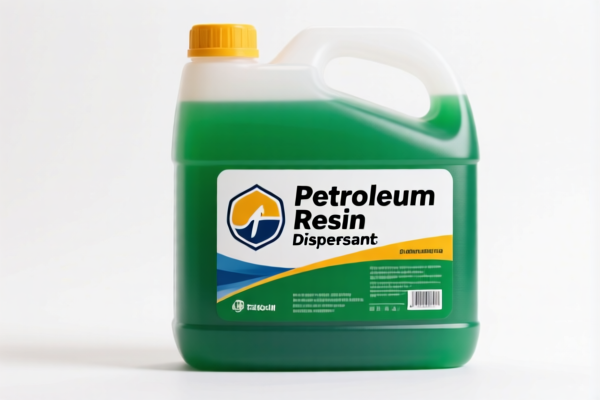
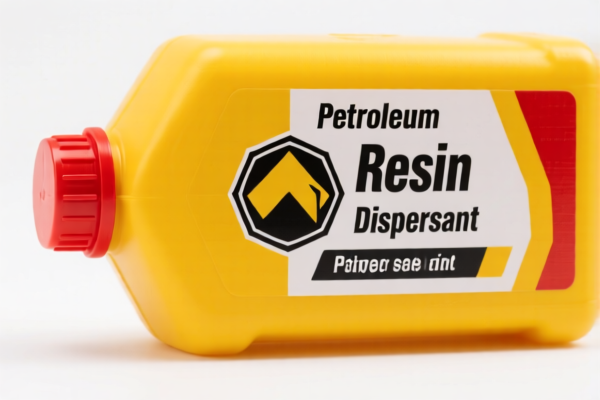
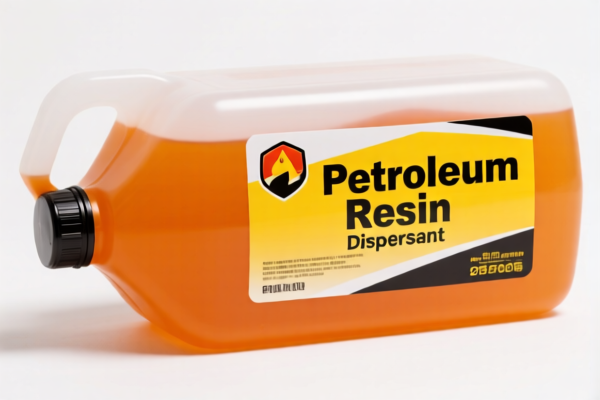
AI Analysis
🧪 Color Photosensitive Emulsion Dispersant (Chemical Auxiliary Agent)
🌐 HS Code Reference & Customs Clearance Guide | 2026 Latest Tariff Analysis | Professional Clearance Strategy
📌 I. Product Definition & Classification: What is "Color Photosensitive Emulsion Dispersant"?
Color Photosensitive Emulsion Dispersant is a critical chemical auxiliary agent used primarily in the manufacturing of photosensitive materials (such as photoresists, printing plates, and photographic papers). Its core function is to facilitate the emulsification, dispersion, and homogenization processes of light-sensitive agents.
In international trade, this product is not classified as a simple chemical raw material but as a specialized industrial chemical preparation. It is often associated with machinery functions (homogenizers/emulsifiers) or specific chemical formulations for the chemical industry.
⚠️ Key Classification Nuance:
- If the product is viewed as an auxiliary for mechanical emulsification processes, it may fall under Chapter 84 (Machinery parts/accessories).
- If the product is viewed as a standalone chemical formulation/preparation for industrial use (e.g., coating, printing), it falls under Chapter 38 (Miscellaneous Chemical Products).
- Customs Risk: Misclassification between Chapter 84 and Chapter 38 is the most common error, leading to significant tax differences or detention.
📦 II. HS Code Classification Details (2026 Latest Tariff Authoritative Mapping)
Based on the provided data, there are four potential HS Codes depending on the specific functional interpretation and chemical composition.
| HS Code | Product Description | Application Scenario | Logic Basis |
|---|---|---|---|
8479.82.00.80 |
Sensitizer dispersant, chemical auxiliary for emulsification processes | Used in homogenization/emulsification machinery contexts; fits "parts/accessories" logic for chemical processing equipment | Functional: Related to homogenization/emulsification machinery functions |
8479.82.00.40 |
Sensitizer dispersant, chemical additive for mixing/emulsification | Chemical treatment logic consistent with mixing machines or emulsifiers | Functional: Consistent with chemical processing machines |
3824.99.49.00 |
Emulsion dispersant for photosensitive paper | Chemical industry preparation; organic/synthetic chemical compounds for coating/printing | Chemical: Defined as a chemical product/preparation for industrial use |
3824.99.70.00 |
Emulsion dispersant for photosensitive paper (Unlisted/Other) | Miscellaneous chemical products not specified elsewhere; no material conflict | Chemical: Catch-all for unlisted chemical preparations |
🔍 Critical Distinction:
- Chapter 84 Codes (8479.82...): Emphasize the mechanical/processing function (dispersing as a machine accessory or auxiliary).
- Chapter 38 Codes (3824.99...): Emphasize the chemical nature of the product itself (a formulated dispersion agent).
- Recommendation: Most "dispersants" are chemicals (3824). Chapter 84 is typically for parts of machines. Unless this is a specific additive for a machine to function (like a lubricant), Chapter 38 is usually more accurate for a liquid powder/formulation. However, the data provided includes both, so customs may accept either based on the "primary use" declaration.
💰 III. 2026 Latest Tariff Rate Breakdown (Including Additional Taxes & Policy Surcharges)
✅ Applicable Country: United States (US)
✅ Origin: China (CN)
✅ Effective Time: 2025/2026 Import Periods
🎯 1. 8479.82.00.80 & 8479.82.00.40 – Chemical Auxiliaries for Machinery Functions
| Item | Content |
|---|---|
| Base Tariff | 0.0% (ad valorem) |
| Section 301 Additional Tariff | +25.0% (USITC Footnote 9903.88.01) |
| Section 122 Tariff | +10.0% (Specific trade remedy/surcharge) |
| Total Tariff Rate | 35.0% |
| Tax Calculation | CIF Value × 35% |
| De Minimis Exemption | ❌ Not Applicable (Denied for Chinese origin under these surcharges) |
| Legal Basis Path | USITC:8479.82.00 → 301:9903.88.01 → 122:Surcharge |
📌 Explanation:
- Even though the base rate is 0%, the 35% total burden is high.
- The 25% is the standard Section 301 tariff for many chemical/machinery-adjacent items.
- The 10% is an additional specific surcharge (Section 122).
- Risk: High cost; ensure the chemical nature is well-documented to avoid disputes over "machine part" vs. "chemical".
🎯 2. 3824.99.49.00 – Chemical Preparation for Photosensitive Paper
| Item | Content |
|---|---|
| Base Tariff | 6.5% (ad valorem) |
| Section 301 Additional Tariff | +25.0% |
| Section 122 Tariff | +10.0% |
| Total Tariff Rate | 41.5% |
| Tax Calculation | CIF Value × 41.5% |
| De Minimis Exemption | ❌ Not Applicable |
| Legal Basis Path | USITC:3824.99.49.00 → 301:9903.88.01 → 122:Surcharge |
📌 Explanation:
- This is the highest tax bracket among the options.
- The base rate of 6.5% is significantly higher than the 0% for Chapter 84.
- Why use this? If the product is strictly a chemical formulation and cannot be argued as a machinery accessory, this is the mandatory code.
- Cost Impact: 6.5% higher base than Chapter 84 codes.
🎯 3. 3824.99.70.00 – Other Miscellaneous Chemical Products
| Item | Content |
|---|---|
| Base Tariff | 0.0% (ad valorem) |
| Section 301 Additional Tariff | +25.0% |
| Section 122 Tariff | +10.0% |
| Total Tariff Rate | 35.0% |
| Tax Calculation | CIF Value × 35% |
| De Minimis Exemption | ❌ Not Applicable |
| Legal Basis Path | USITC:3824.99.70.00 → 301:9903.88.01 → 122:Surcharge |
📌 Explanation:
- This code offers a 0% base rate, making the total 35%, which is lower than3824.99.49.00.
- Strategy: If the product fits the "unlisted/other" definition, this is the cost-effective chemical classification.
- Caution: Must ensure the product does not fit more specific 3824 subheadings (like coatings or adhesives) that might carry higher base rates.
🛠️ IV. Customs Clearance Practical Advice (Avoid Pitfalls)
✅ 1. Required Documentation Checklist
| Document | Required? | Note |
|---|---|---|
| ✅ Product Specification Sheet | ✔️ | Must detail chemical composition, concentration, and primary function (e.g., "for emulsification" vs. "chemical coating agent"). |
| ✅ MSDS (Material Safety Data Sheet) | ✔️ | Essential for chemical imports. Must match the HS Code description. |
| ✅ Formula/Composition List | ✔️ | To prove it is a "preparation" (Chapter 38) rather than a pure element. |
| ✅ Commercial Invoice | ✔️ | Clearly state: "Chemical Dispersant for Photosensitive Materials" or "Auxiliary for Emulsification Machinery". |
| ✅ Packaging Photos | ✔️ | Show labels, hazard symbols, and container type. |
| ✅ Third-Party Test Report | ✔️ | Optional but helpful to confirm chemical nature. |
✅ 2. Classification Strategy & Declaration Tips
🔥 Golden Rule:
"Chemical Nature First, Function Second. If it flows, it’s likely Chapter 38."
| Scenario | Recommended HS Code | Reason |
|---|---|---|
| Liquid/Powder Formulation | 3824.99.70.00 |
Best Cost Option: 0% base + 35% surcharge = 35%. Lower than 3824.99.49.00 (41.5%). |
| Strictly for Machinery Lubrication/Aux | 8479.82.00.80 |
0% base + 35% surcharge = 35%. Only use if it’s a direct machine additive. |
| Specific Coating Additive | 3824.99.49.00 |
Only if it’s specifically listed under "coatings" or similar in USHTA. Higher base rate makes it less favorable. |
| Unclear/General Chemical Prep | 3824.99.70.00 |
Safest "other" chemical code with low base rate. |
✅ 3. Critical Warnings
- ❌ Error 1: Declaring as "Raw Chemical"
→ If the product is a mixture/preparation, it must go to Chapter 38. Pure chemicals have different codes. Misdeclaration leads to audits. - ❌ Error 2: Ignoring Section 122
→ The 10% surcharge is often overlooked. Total tax is not just 25% (301), but 35% or 41.5%. Budget accordingly. - ❌ Error 3: Confusing with Photoresist
→ Photoresists have their own codes. If this is a dispersant used to make photoresist, it is Chapter 38. If it is a photoresist, it might be different. Be precise.
🌍 V. Global Market Comparison (2026)
| Country/Region | Recommended HS Code | Est. Tariff (China Origin) | Notes |
|---|---|---|---|
| 🇺🇸 USA | 3824.99.70.00 |
35% (0% base + 25% 301 + 10% 122) | Best Cost among chemical codes. |
| 🇺🇸 USA | 3824.99.49.00 |
41.5% (6.5% base + 25% 301 + 10% 122) | Higher base rate. Avoid if possible. |
| 🇨🇳 China | 3824.99.70.00 |
~6.5% | Import into China may have lower tariffs. |
| 🇪🇺 EU | 3824.99.99 |
~6.5% (Variable) | Check EU Common Customs Tariff. |
| 🇬🇧 UK | 3824.99.99 |
~6.5% | Post-Brexit tariff schedules apply. |
📌 Conclusion:
- For US Imports,3824.99.70.00is the optimal HS Code among the provided options, offering the lowest total tax burden (35%) among the chemical classifications.
- Chapter 84 codes (8479) also result in 35%, but are riskier if the product is not clearly a machine accessory.
📌 VI. Common Mistakes & Pitfalls (Lessons Learned)
❌ Mistake 1: Using 3824.99.49.00 without justification
👉 Consequence: Paying 6.5% extra base tax unnecessarily.
👉 Fix: Argue for 3824.99.70.00 as "other chemical products" if it doesn’t fit specific subheadings.
❌ Mistake 2: Failing to declare Section 122 Tariff
👉 Consequence: Underpayment, penalties, and cargo delay.
👉 Fix: Always calculate 35% or 41.5%, not just 25%.
❌ Mistake 3: Vague Description "Chemical"
👉 Consequence: Customs inspection, lab testing, and potential reclassification to higher tariffs.
👉 Fix: Use precise terms: "Water-based emulsion dispersant for photosensitive coating applications."
🎯 VII. Conclusion: Professional Declaration, Cost Optimization!
🎯 Key Takeaways:
🔹 Best HS Code:
3824.99.70.00(Total 35%)
🔹 Alternative:8479.82.00.80(Total 35%, if machine auxiliary logic holds)
🔹 Avoid:3824.99.49.00(Total 41.5%, higher base rate)📌 Pro Tip:
Prepare a Technical Data Sheet that highlights the product’s role as a general chemical preparation for dispersing photosensitive agents. This supports the3824.99.70.00classification, minimizing base duties while acknowledging the unavoidable 35% total surcharge for Chinese-origin goods.
📣 Immediate Action:
📞 Consult with a licensed customs broker.
📄 Submit Advance Ruling Request if possible.
📦 Ensure MSDS and Formula are ready for inspection.
✨ Precision Classification Saves Money!
💼 35% vs 41.5% is a significant margin—choose wisely!
Customer Reviews
About HS Code Classification
The Harmonized System (HS) is an internationally standardized nomenclature developed by the World Customs Organization (WCO) to classify traded products. Over 200 countries use the HS system as the basis for customs tariffs, trade statistics, and import/export regulations.
Each HS code follows a hierarchical structure:
- Chapter (2 digits) — Broad category of goods (e.g., Chapter 84: Machinery and Mechanical Appliances)
- Heading (4 digits) — More specific grouping within the chapter
- Subheading (6 digits) — Internationally standardized breakdown, used by all WCO member countries
- National subdivisions (8-10 digits) — Country-specific extensions for further classification, such as US HTSUS 10-digit codes
Correct HS code classification is essential for smooth customs clearance, accurate duty payment, and compliance with trade regulations. Misclassification can lead to customs delays, overpayment of duties, or penalties.
When importing from CN to US, the applicable tariff rates may include:
- Most-Favored-Nation (MFN) rate — The standard duty rate applied to WTO members
- General rate — Applied to countries without trade agreements
- Trade remedy duties — Additional tariffs such as Section 301 (anti-dumping), Section 232 (national security), or countervailing duties
The information provided on this page is for reference purposes only. For official classification, please consult with your local customs authority or a licensed customs broker.