Color Photosensitive Emulsion Stabilizer
CN → US| HS Code | Tariff Rate | Origin | Destination | Doc |
|---|---|---|---|---|
| 3824992500 | 41.5% | CN | US | Official Doc |
| 3824992600 | 35.0% | CN | US | Official Doc |
| 3204192040 | 41.5% | CN | US | Official Doc |
Product Images
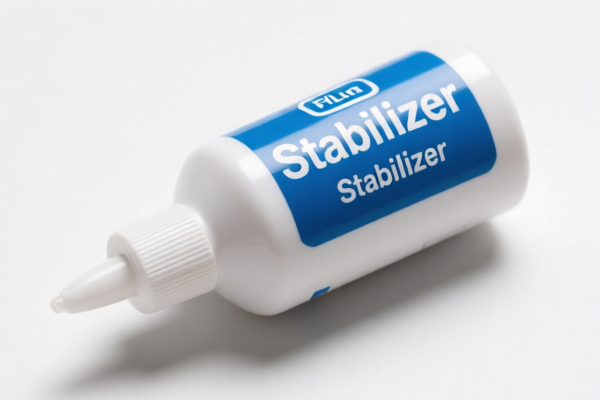
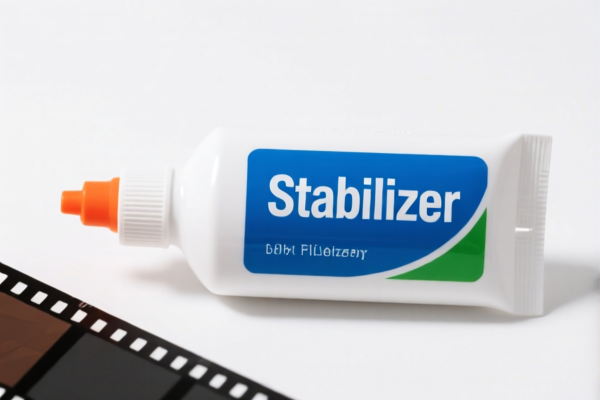
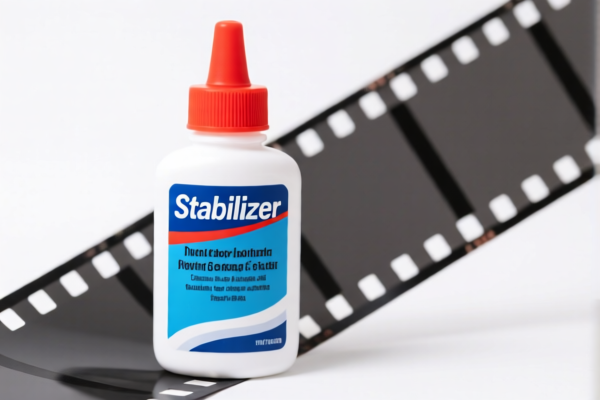
AI Analysis
🎞️ Color Photosensitive Emulsion Stabilizer (彩色感光乳剂硬化剂/稳定剂)
🌐 HS Code Classification & Customs Clearance Guide | 2026 Tariff Analysis | Professional Strategy for Chemical Products
📌 I. Product Definition: What is a "Photosensitive Emulsion Stabilizer"?
In the photographic and printing industry, a Color Photosensitive Emulsion Stabilizer (often referred to technically as a hardener or cross-linking agent) is a critical chemical reagent. Its primary function is to stabilize the gelatin matrix of photographic emulsions, preventing them from melting or distorting under high temperatures and humidity during processing.
Key Characteristics: * Chemical Nature: Typically contains aromatic or modified aromatic compounds; often exists as a water-based mixture or solution. * Application: Used in color photographic films, printing plates, and medical imaging sensors. * State: Can be a liquid solution, powder, or paste, but usually classified by its chemical composition rather than its physical state.
⚠️ Critical Distinction:
- If the product is a generic chemical mixture containing aromatic substances → Falls under Chapter 38 (Miscellaneous Chemical Products).
- If the product is a specific organic dye precursor or coloring matter → Might fall under Chapter 32 (Tanning or Dyeing Extracts; Dyes).
The classification below strictly follows the provided data source.
📦 II. HS Code Classification Details (Based on Provided Data)
According to the specific data provided for "Color Photosensitive Emulsion Stabilizer," there are three potential HS Code classifications depending on the exact chemical formulation.
| HS Code | Product Description & Summary | Total Tax Rate | Tax Breakdown |
|---|---|---|---|
3824.99.25.00 |
Aromatic Mixture Type: Water-based mixture containing aromatic or modified aromatic substances. Classified as "Other Chemical Products." | 41.5% | Base: 6.5% Additional: 25.0% Section 301: 10% |
3824.99.26.00 |
General Chemical Reagent Type: Chemical products and preparations related to the chemical industry. | 35.0% | Base: 0.0% Additional: 25.0% Section 301: 10% |
3204.19.20.40 |
Dye/Colorant Solution Type: Solution of synthetic organic coloring matter and related preparations. | 41.5% | Base: 6.5% Additional: 25.0% Section 301: 10% |
🔍 Key Insight:
-3824.99.25.00and3824.99.26.00are in Chapter 38 (Miscellaneous Chemical Products). The choice depends on whether the product is defined as an "aromatic mixture" (25) or a general "chemical preparation" (26). -3204.19.20.40is in Chapter 32 (Dyes/Pigments). This applies only if the stabilizer is formulated specifically as a "synthetic organic coloring matter solution." - All three codes attract high tariffs due to US-China trade measures (Section 301 and IEEPA).
💰 III. Detailed Tariff Rate Explanation (2026 Latest Tariff Schedule)
✅ Applicable Country: United States (US)
✅ Country of Origin: China (CN)
✅ Effective Date: Current trade policies (including Section 301 and IEEPA surcharges)
🎯 1. 3824.99.25.00 – Aromatic Water-Based Mixture
| Item | Content |
|---|---|
| Base Tariff | 6.5% (General Rate for "Other Chemical Products") |
| USITC Additional Tariff (301) | +25% (List 3/4 items for chemical products) |
| IEEPA Additional Tariff | +10% (Targeting specific Chinese chemical imports) |
| Total Tax Rate | 41.5% |
| Calculation Basis | CIF Value × 41.5% |
| De Minimis Exemption? | ❌ No. This is a chemical product, typically excluded from $800 de minimis exemption for high-risk goods. |
📌 Explanation:
- This classification applies if the product is explicitly a water-based mixture containing aromatic compounds.
- The 6.5% base rate is higher than zero-rated items, making the total burden even heavier.
🎯 2. 3824.99.26.00 – General Chemical Preparation
| Item | Content |
|---|---|
| Base Tariff | 0.0% (Some chemical preparations are base-zero) |
| USITC Additional Tariff (301) | +25% |
| IEEPA Additional Tariff | +10% |
| Total Tax Rate | 35.0% |
| Calculation Basis | CIF Value × 35.0% |
| De Minimis Exemption? | ❌ No. |
📌 Explanation:
- This is the most favorable of the three options (35% vs 41.5%), if the product can be legally classified here.
- It applies if the product is a general "chemical industry-related preparation" without specific aromatic mixture designation.
🎯 3. 3204.19.20.40 – Synthetic Organic Coloring Matter Solution
| Item | Content |
|---|---|
| Base Tariff | 6.5% (For "Other Synthetic Organic Coloring Matter") |
| USITC Additional Tariff (301) | +25% |
| IEEPA Additional Tariff | +10% |
| Total Tax Rate | 41.5% |
| Calculation Basis | CIF Value × 41.5% |
| De Minimis Exemption? | ❌ No. |
📌 Explanation:
- This is only applicable if the "stabilizer" is chemically a coloring matter solution.
- Caution: Misclassifying a stabilizer as a dye to avoid Chapter 38 duties may lead to customs audits and penalties if the chemical nature doesn't match Chapter 32 definitions.
🛠️ IV. Customs Clearance Practical Advice
✅ 1. Documentation Checklist (Essential for Chemical Imports)
| Document | Required? | Notes |
|---|---|---|
| Safety Data Sheet (SDS) | ✅ Mandatory | Must be GHS-compliant, specifying chemical composition (especially aromatic content). |
| Product Specification Sheet | ✅ Mandatory | Detail the chemical structure, concentration, and function (hardener vs. dye). |
| Certificate of Analysis (COA) | ✅ Recommended | To prove purity and composition, helping distinguish between 3824 (chemicals) and 3204 (dyes). |
| Commercial Invoice | ✅ Mandatory | Must clearly state "Color Photosensitive Emulsion Stabilizer" and HS Code. |
| Packaging List | ✅ Mandatory | Net/Gross weight, container type (hazardous/non-hazardous). |
| Import License | ⚠️ Check | Some chemical mixtures may require EPA or other regulatory approvals. |
✅ 2. Classification Strategy & Tips
🔥 Golden Rule: "Chemical Nature Dictates Code, Not Trade Name!"
| Scenario | Recommended HS Code | Why? |
|---|---|---|
| Product is a mixture of aromatic compounds in water | 3824.99.25.00 |
Matches "Water-based mixture containing aromatic substances." |
| Product is a generic chemical reagent (not aromatic-focused) | 3824.99.26.00 |
Best fit for "Chemical industry preparations." Lowest Tax (35%). |
| Product is a colored solution used as a dye/colorant | 3204.19.20.40 |
Only if it meets the legal definition of "Synthetic Organic Coloring Matter." |
⚠️ Warning:
- Do not use3824.99.26.00(0% base) if the product is visibly aromatic or colored, as customs may reclassify it to3824.99.25.00or3204.19.20.40, resulting in back taxes and penalties. - Accurate SDS is your best defense. It must clearly state the chemical makeup to justify the chosen HS Code.
✅ 3. Special Handling for Chemical Imports
| Situation | Advice |
|---|---|
| Hazardous Chemicals | If the stabilizer is classified as hazardous (e.g., flammable, corrosive), additional DOT/PHMSA regulations apply. Ensure proper labeling. |
| Small Packages (De Minimis) | Do not rely on $800 de minimis. Chemical products, especially those from China with 25-30% surcharges, are high-risk for customs scrutiny. |
| Pre-Ruling | Highly Recommended. File a Binding Ruling Request with US CBP to confirm the HS Code (3824 vs 3204) before shipping. |
| Origin Declaration | Ensure the Certificate of Origin clearly states "China" to avoid unexpected duty hikes if misdeclared. |
🌍 V. Global Market Comparison (Contextual)
| Market | HS Code Trend | Tariff Impact | Notes |
|---|---|---|---|
| 🇺🇸 USA | 3824.99.25/26 or 3204 |
35% - 41.5% | High due to Section 301 + IEEPA. Strict chemical documentation required. |
| 🇪🇺 EU | Similar codes | ~6.5% | Lower base tariffs, but REACH registration may be required for chemical substances. |
| 🇨🇳 China | 3824 |
~5-6.5% | Import duties are lower, but export controls may apply. |
| 🇯🇵 Japan | 3824 |
~6% | Generally favorable, but strict safety standards apply. |
📌 Conclusion:
The US market is the most challenging for these products due to the叠加 (stacking) of base tariffs and political surcharges. Accurate classification is critical to avoid the 41.5% rate if the 35% rate is applicable.
📌 VI. Common Mistakes & Pitfalls
❌ Mistake 1: Classifying as 3824.99.26.00 (0% base) when the product is visibly aromatic.
👉 Result: Customs audit, reclassification to 3824.99.25.00, back taxes, and penalties.
❌ Mistake 2: Ignoring the "Color" aspect and misclassifying as a plain chemical.
👉 Result: If the product is a dye solution, it should be 3204.19.20.40. Misclassification leads to delays.
❌ Mistake 3: Assuming De Minimis ($800) applies.
👉 Result: Chemicals from China are often excluded or heavily scrutinized. Expect full duty declaration.
❌ Mistake 4: Incomplete SDS.
👉 Result: Customs cannot verify the chemical nature → Detention and return.
✅ Correct Practice:
"Submit a detailed SDS, choose the HS code that matches the chemical composition, not just the trade name. Prepare for 35-41.5% duty. Consider pre-ruling."
🎯 VII. Conclusion: Precision is Profit
🎯 Key Takeaway:
🔹 Lowest Tax:
3824.99.26.00at 35% (if chemically accurate).
🔹 Highest Tax:3824.99.25.00and3204.19.20.40at 41.5%.
🔹 Critical Document: SDS (Safety Data Sheet) is non-negotiable.
📌 Pro Tip:
If your product contains modified aromatic substances, you are likely stuck with the 41.5% rate under
3824.99.25.00.
Strategy: Consult a customs broker to see if your specific formulation can be legally classified under3824.99.26.00(0% base) to save 6.5% on CIF value.
Action: Apply for a CBP Binding Ruling before the first shipment to lock in the correct HS Code and avoid penalties.
📣 Immediate Action:
📄 Get your SDS ready.
📞 Contact a US customs broker for a pre-classification review.
📉 Calculate landed cost at 35% vs 41.5% to optimize pricing.
✨ Chemical Customs Clearance: Where Details Define Costs!
💼 Don't let misclassification cost you 6.5% – 35% of your value!
Customer Reviews
About HS Code Classification
The Harmonized System (HS) is an internationally standardized nomenclature developed by the World Customs Organization (WCO) to classify traded products. Over 200 countries use the HS system as the basis for customs tariffs, trade statistics, and import/export regulations.
Each HS code follows a hierarchical structure:
- Chapter (2 digits) — Broad category of goods (e.g., Chapter 84: Machinery and Mechanical Appliances)
- Heading (4 digits) — More specific grouping within the chapter
- Subheading (6 digits) — Internationally standardized breakdown, used by all WCO member countries
- National subdivisions (8-10 digits) — Country-specific extensions for further classification, such as US HTSUS 10-digit codes
Correct HS code classification is essential for smooth customs clearance, accurate duty payment, and compliance with trade regulations. Misclassification can lead to customs delays, overpayment of duties, or penalties.
When importing from CN to US, the applicable tariff rates may include:
- Most-Favored-Nation (MFN) rate — The standard duty rate applied to WTO members
- General rate — Applied to countries without trade agreements
- Trade remedy duties — Additional tariffs such as Section 301 (anti-dumping), Section 232 (national security), or countervailing duties
The information provided on this page is for reference purposes only. For official classification, please consult with your local customs authority or a licensed customs broker.