Color Photosensitive Paper
CN → US| HS Code | Tariff Rate | Origin | Destination | Doc |
|---|---|---|---|---|
| 4810131140 | 35.0% | CN | US | Official Doc |
| 4810141140 | 35.0% | CN | US | Official Doc |
Product Images
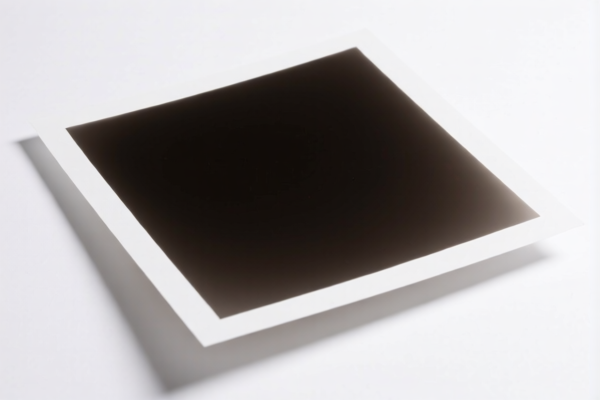
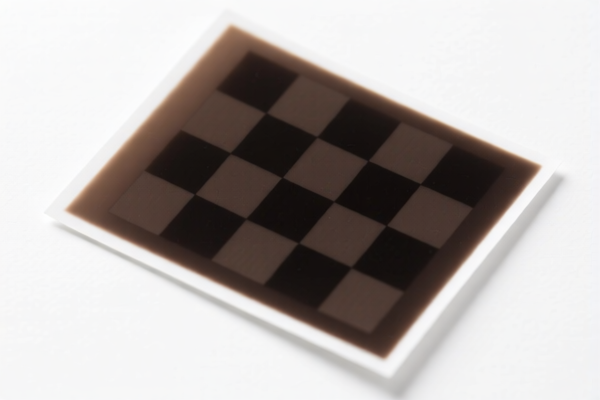
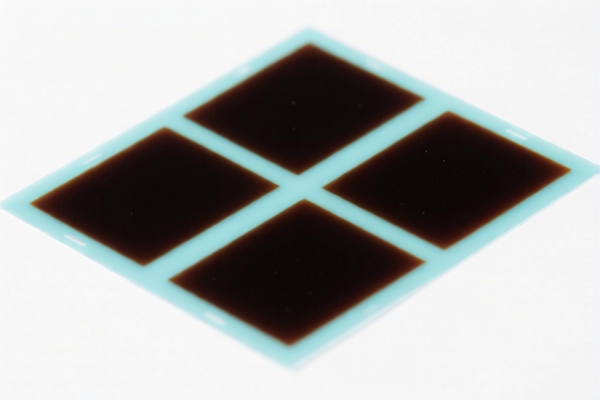
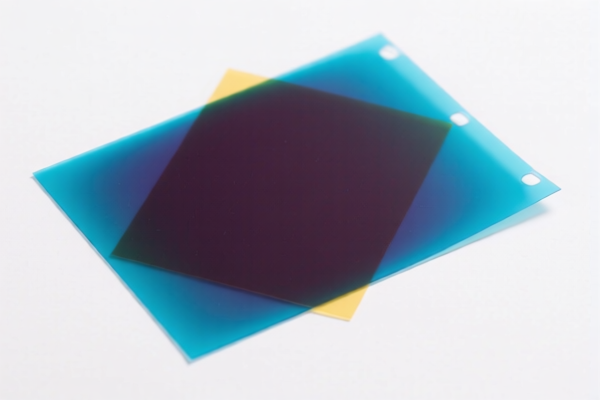
AI Analysis
📸 Color Photosensitive Paper (Paper-Based)
🌐 HS Code Reference & Customs Clearance Guide | 2026 Latest Tariff Analysis | Professional Entry Strategy
📌 I. Product Definition & Classification: Do You Really Understand "Photosensitive Paper"?
Color photosensitive paper, specifically referring to paper-based substrates coated with light-sensitive emulsions, is a critical medium for professional photography and industrial imaging. In international trade, the classification depends heavily on the coating process, physical form (rolls vs. sheets), and weight.
The data provided focuses on two specific scenarios under HS Code 4810: 1. Rolls: Uncoated or kaolin-coated base paper prepared for sensitization. 2. Sheets: Specific dimensions (photo paper size) prepared for sensitization.
⚠️ Key Distinction Point:
- If the paper is raw base paper or kaolin-coated base paper intended to be sent out for sensitization (photographic coating), it falls under 4810.13/4810.14.
- If the paper is already sensitized (finished photographic paper with emulsion), it typically falls under HS 3703 (Photographic paper).
- Note: The provided<DATA>explicitly lists items as "Basic paper to be sensitized for use in photography", confirming these are pre-sensitized base papers, not finished photographic prints.
📦 II. HS Code Classification Details (2026 Latest Tariff Authority Comparison)
| HS Code | Product Description | Application Scenario | Tax Rate (China → US) |
|---|---|---|---|
4810.13.11.40 |
In Rolls: Width > 15 cm, Weight ≤ 150 g/m², Basic paper for photography | Large-format photo paper rolls, industrial printing bases | 0.0% |
4810.14.11.40 |
In Sheets: One side ≤ 435mm, Other ≤ 297mm; One side > 360mm, Other > 150mm; Weight ≤ 150 g/m² | Standard photo paper sheets (e.g., A4, Letter size equivalents) | 25.0% |
🔍 Critical Clarification:
- 4810.13.11.40 applies to Rolls. The tariff is significantly lower (0%) because it is considered an industrial raw material in roll form. - 4810.14.11.40 applies to Sheets of specific photo-paper dimensions. The tariff is 25% due to US Trade Act Section 301 retaliatory tariffs on Chinese goods. - Both items must be "Basic paper to be sensitized". If you ship already developed or emulsion-coated photographic paper, these codes may be incorrect (use 3703 instead), leading to severe customs delays.
💰 III. 2026 Latest Tariff Rate Details (Including Surtaxes)
✅ Applicable Country: United States (US)
✅ Origin: China (CN)
✅ Product Type: Kaolin-coated paper base for photography
🎯 1. 4810.13.11.40 —— Basic Paper for Photography (In Rolls)
| Item | Content |
|---|---|
| Base Tariff | 0.0% (ad valorem) |
| Section 301 Surtax | 0.0% |
| Total Tax Rate | 0.0% |
| Tax Calculation | CIF Value × 0% = $0 |
| De Minimis Eligibility | ❌ Not Applicable (B2B industrial shipment) |
| Legal Basis | HTSUS 4810.13.11.40 |
📌 Explanation:
- This code benefits from a 0% total duty.
- However, ensure the product is clearly described as "Rolls" and Width > 15 cm.
- This is the most cost-effective classification for bulk industrial shipments of photographic base paper.
🎯 2. 4810.14.11.40 —— Basic Paper for Photography (In Sheets)
| Item | Content |
|---|---|
| Base Tariff | 0.0% |
| Section 301 Surtax | 25.0% |
| Total Tax Rate | 25.0% |
| Tax Calculation | CIF Value × 25% |
| De Minimis Eligibility | ❌ Not Applicable (Subject to Section 301) |
| Legal Basis | HTSUS 4810.14.11.40 + USITC Footnote 9903.88.01 |
📌 Explanation:
- This code incurs a 25% tariff.
- This is due to Section 301 Tariffs imposed on Chinese goods in specific categories, including certain paper products in sheet form.
- Cost Impact: For every $10,000 CIF value, you pay $2,500 in duties.
- Why the difference? Sheets are often considered closer to consumer-ready goods or have different trade negotiation statuses than industrial rolls.
🛠️ IV. Customs Clearance Practical Advice (Real-World Pitfall Avoidance)
✅ 1. Required Documentation Checklist (Non-negotiable)
| Document | Must Provide | Description |
|---|---|---|
| ✅ Product Specification Sheet | ✔️ | Must state: "Kaolin-coated base paper," "Weight: ≤150 g/m²," "Intended for photographic sensitization." |
| ✅ Commercial Invoice | ✔️ | Must explicitly state: "NOT SENSITIZED. BASE PAPER ONLY. FOR PHOTOGRAPHIC PROCESSING." Do NOT use "Photographic Paper" alone. |
| ✅ Packing List | ✔️ | Clearly distinguish between Rolls and Sheets. Do not mix in one HS Code without breakdown. |
| ✅ Certificate of Origin | ✔️ | Standard CO for China origin. |
| ✅ Bill of Lading / Air Waybill | ✔️ | Ensure freight details match invoice weight and dimensions. |
✅ 2. Declaration Tips (Key Mnemonic)
🔥 “Rolls Zero, Sheets Twenty-Five, Say 'Base Paper', Not 'Photo Paper'!”
| Situation | Correct Declaration | Wrong Practice |
|---|---|---|
| Product is in Rolls | 4810.13.11.40 + "Base Paper for Sensitization" |
Using 4810.14 → Risk of audit |
| Product is in Sheets | 4810.14.11.40 + "Base Paper for Sensitization" |
Using 4810.13 → Misclassification |
| Product is Already Coated | Do NOT use 4810. Use 3703.20 (Photographic Paper) |
Using 4810 → Severe Penalty & Rejection |
| Weight > 150 g/m² | Exclude. Use other subheadings in 4810 | Forcing ≤150g → Customs Seizure |
✅ 3. Special Case Handling
| Situation | Handling Advice |
|---|---|
| Mixed Shipment (Rolls + Sheets) | Split the declaration. Declare rolls under 4810.13.11.40 (0%) and sheets under 4810.14.11.40 (25%). Do not lump them into one line item. |
| "Color" Photosensitive Paper | The term "Color" refers to the future use. The HS code 4810 is for the base paper. If the paper is already coated with color emulsions, it is HS 3703, not 4810. Check status carefully! |
| Width ≤ 15 cm | If rolls are ≤ 15 cm wide, they fall under different subheadings in 4810. Ensure width > 15 cm for the 0% rate. |
| Sheet Dimensions | Ensure one side is ≤ 435mm and the other ≤ 297mm. If sheets are larger (e.g., A3+ or poster size), they may fall under different subheadings with different tax implications. |
🌍 V. Global Main Market Clearance Comparison (2026 Latest)
| Country/Region | Recommended HS Code | Tariff (China Origin) | Certification Requirements | Remarks |
|---|---|---|---|---|
| 🇺🇸 USA | 4810.13.11.40 (Rolls) |
0.0% | None for base paper | Rolls are tariff-free! |
| 🇺🇸 USA | 4810.14.11.40 (Sheets) |
25.0% | None for base paper | High tariff on sheets |
| 🇨🇳 China | 4810.13/14 |
5-10% | N/A (Import) | Domestic tax applies |
| 🇪🇺 EU | 4810.13/14 |
0-6.5% | CE (if sensitive chemicals) | No Section 301 equivalent |
| 🇦🇺 Australia | 4810.13/14 |
5% | N/A | Free Trade Agreement (ChAFTA) may apply |
📌 Conclusion:
- The US is the only major market with a 25% penalty on sheet-form base paper.
- Rolls (4810.13.11.40) are strategically preferred for US exports to avoid the 25% tariff.
- If you must ship sheets, factor the 25% cost into your pricing.
📌 VI. Common Errors & Pitfall Guide (Lessons Learned)
❌ Error 1: Declaring "Color Photosensitive Paper" as finished photographic paper (HS 3703) when it is actually base paper.
👉 Consequence: Misclassification. HS 3703 may have different tariffs or require FDA/EPA approvals for chemical residues. Customs will demand proof of "non-sensitized" status.
❌ Error 2: Mixing Rolls and Sheets in one HS Code line.
👉 Consequence: Customs may apply the highest tax rate (25%) to the entire shipment or initiate a full audit.
❌ Error 3: Not specifying "Weight ≤ 150 g/m²".
👉 Consequence: If weight is higher, it falls under a different subheading (e.g., 4810.13.19 or 4810.14.19), which may have different tariff treatments or require additional documentation.
❌ Error 4: Using "Photographic Paper" in the description without "Base" or "Unsensitized".
👉 Consequence: Customs may assume it is finished photo paper (HS 3703) or reject the declaration for ambiguity.
✅ Correct Declaration Example:
"KAOLIN-COATED PAPER BASE, UNSENSITIZED, FOR PHOTOGRAPHIC USE, IN ROLLS, WIDTH 20 CM, WEIGHT 140 G/M², MODEL XYZ"
🎯 VII. Conclusion: Professional Declaration Saves Money!
🎯 Remember the Mantra:
🔹 "Rolls = 0%, Sheets = 25%. Always say 'BASE PAPER', never just 'PHOTO PAPER'!"
🔹 "Check Weight: Must be ≤150 g/m². Check Dimensions for Sheets!"
📌 Pro Tip:
If you are exporting sheets to the US, consider:
1. Repackaging as Rolls if possible (to get 0% duty).
2. Using a bonded warehouse to defer duty payment.
3. Applying for an Exclusion if applicable (check USTR exclusions list periodically).
📣 Immediate Action:
📞 Verify your product status: Is it already coated?
➡️ Yes → Use HS 3703.
➡️ No → Use HS 4810 as detailed above.
📄 Prepare a technical spec sheet confirming "Unsensitized Base Paper" to present to customs brokers.
✨ Precise Classification, Maximized Profit!
💼 Don't let a 25% tariff eat your margins!
Customer Reviews
About HS Code Classification
The Harmonized System (HS) is an internationally standardized nomenclature developed by the World Customs Organization (WCO) to classify traded products. Over 200 countries use the HS system as the basis for customs tariffs, trade statistics, and import/export regulations.
Each HS code follows a hierarchical structure:
- Chapter (2 digits) — Broad category of goods (e.g., Chapter 84: Machinery and Mechanical Appliances)
- Heading (4 digits) — More specific grouping within the chapter
- Subheading (6 digits) — Internationally standardized breakdown, used by all WCO member countries
- National subdivisions (8-10 digits) — Country-specific extensions for further classification, such as US HTSUS 10-digit codes
Correct HS code classification is essential for smooth customs clearance, accurate duty payment, and compliance with trade regulations. Misclassification can lead to customs delays, overpayment of duties, or penalties.
When importing from CN to US, the applicable tariff rates may include:
- Most-Favored-Nation (MFN) rate — The standard duty rate applied to WTO members
- General rate — Applied to countries without trade agreements
- Trade remedy duties — Additional tariffs such as Section 301 (anti-dumping), Section 232 (national security), or countervailing duties
The information provided on this page is for reference purposes only. For official classification, please consult with your local customs authority or a licensed customs broker.