Color Polymer Duplicating Film (Multi color)
CN → US| HS Code | Tariff Rate | Origin | Destination | Doc |
|---|---|---|---|---|
| 9001908000 | 35.0% | CN | US | Official Doc |
| 9001909000 | 35.0% | CN | US | Official Doc |
| 3919905060 | 40.8% | CN | US | Official Doc |
| 3703906000 | 37.8% | CN | US | Official Doc |
Product Images
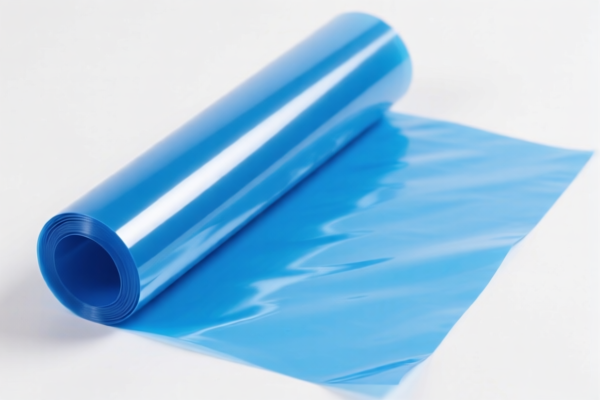
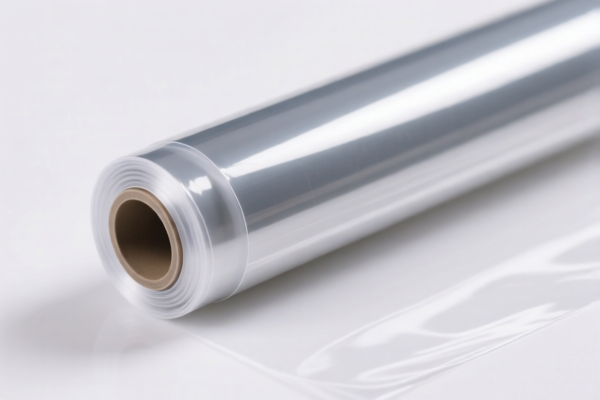


AI Analysis
🎨 Color Polymer Duplicating Film (Multi-color)
🌐 HS Code Reference & Customs Clearance Guide | 2026 Latest Tariff Analysis | Professional Clearance Strategy
📌 I. Product Definition & Classification: What Exactly is "Color Polymer Duplicating Film"?
Color Polymer Duplicating Film is a specialized optical or imaging material used primarily for color reproduction, photoresist applications, or light-sensitive image transfer processes. It typically exists in the form of thin polymer-based sheets or films that are sensitive to light or require specific chemical processing to duplicate images or patterns.
In international trade, these films are classified based on two key factors: 1. Material Composition: Is it a plastic/polymer film? Or an optical/specialty material? 2. Functionality: Is it light-sensitive (photographic/sensitized), or is it a passive optical component?
⚠️ Key Distinction Points:
- If the film is light-sensitive (unexposed/semi-exposed) and used for copying/duplicating images → Chapter 37 (Photographic/Recording Films)
- If the film is plastic-based and waterproof/functional but not light-sensitive → Chapter 39 (Plastics and Articles Thereof)
- If the film is an optical material used for imaging/lens systems without being photographic → Chapter 90 (Optical Instruments & Equipment)
📦 II. HS Code Classification Details (2026 Latest Tariff Authority Comparison)
Based on the provided data, here are the four most likely HS Code classifications for Color Polymer Duplicating Film (Multi-color):
| HS Code | Product Description | Application Scenario | Key Characteristics |
|---|---|---|---|
3703.90.60.00 |
Sensitized photographic film, in plates or paper, other than white-emulsion film | Image duplication, color printing plates, unexposed light-sensitive film | ✅ Light-sensitive (sensitized), used for copying |
9001.90.80.00 |
Optical/Imaging related materials, other than lenses, prisms, mirrors | Color reproduction modules, optical film components | ✅ Optical function, not photographic |
9001.90.90.00 |
Other optical materials, other than lenses, prisms, mirrors, optical fibers | General-purpose optical film, specialty optical substrates | ✅ Optical material category |
3919.90.50.60 |
Self-adhesive plastic films, other, waterproof functional films | Waterproof polymer film, non-optical, non-photographic | ✅ Plastic/polymer material, waterproof function |
🔍 Critical Reminder:
- If the film is sensitized/unexposed and used for image duplication, it must be classified under3703.90.60.00(Chapter 37). Misclassification as a plastic film (Chapter 39) or optical material (Chapter 90) will result in tariff discrepancies and potential customs penalties. - If the film is non-sensitized, purely plastic-based, and used for waterproofing or mechanical protection, it falls under3919.90.50.60. - If the film is an optical component (e.g., used in lens systems, projectors, or scanners) but not photographic, it may be classified under9001.90.80.00or9001.90.90.00.
💰 III. 2026 Latest Tariff Rate Breakdown (Including Surcharges, Policy Add-ons)
✅ Applicable Country: United States (US)
✅ Origin: China (CN)
✅ Effective Date: November 10, 2025 onwards (including subsequent imports)
🎯 1. 3703.90.60.00 —— Sensitized Photographic Film (for Duplication)
| Item | Content |
|---|---|
| Base Tariff | 2.8% (ad valorem) |
| USITC Surtax | +25% (under USITC Footnote 9903.88.01) |
| IEEPA Surtax | +10% (对中国/香港产品,自2025年11月10日起) |
| Total Tariff | 37.8% |
| Tax Calculation | CIF Value × 37.8% |
| De Minimis Exemption | ❌ Not Eligible (deny_de_minimis) |
| Legal Basis Path | IEEPA:9903.01.25 → IEEPA:9903.01.24 → USITC:3703.90.60.00 → FOOTNOTE:9903.88.01 |
📌 Explanation:
- The 25% USITC surcharge is imposed under Section 301 of the Trade Act for specific Chinese-origin goods. - The 10% IEEPA surcharge applies to Chinese products under the International Emergency Economic Powers Act. - Total 37.8% is a high tariff rate, requiring advance planning.
🎯 2. 9001.90.80.00 —— Optical/Imaging Related Materials
| Item | Content |
|---|---|
| Base Tariff | 0.0% |
| USITC Surtax | +25% |
| IEEPA Surtax | +10% |
| Total Tariff | 35.0% |
| Tax Calculation | CIF Value × 35.0% |
| De Minimis Exemption | ❌ Not Eligible |
| Legal Basis Path | IEEPA:9903.01.25 → IEEPA:9903.01.24 → USITC:9001.90.80.00 → FOOTNOTE:9903.88.01 |
📌 Note:
- Even though the base tariff is 0%, the surcharges bring the total to 35%. - This classification is suitable if the film is optical in nature but not photographic.
🎯 3. 9001.90.90.00 —— Other Optical Materials
| Item | Content |
|---|---|
| Base Tariff | 0.0% |
| USITC Surtax | +25% |
| IEEPA Surtax | +10% |
| Total Tariff | 35.0% |
| Tax Calculation | CIF Value × 35.0% |
| De Minimis Exemption | ❌ Not Eligible |
| Legal Basis Path | IEEPA:9903.01.25 → IEEPA:9903.01.24 → USITC:9001.90.90.00 → FOOTNOTE:9903.88.01 |
📌 Note:
- Same as above: 35% total tariff. - Applicable if the film is an optical material but does not fit under9001.90.80.00.
🎯 4. 3919.90.50.60 —— Self-Adhesive Plastic Film (Waterproof Functional)
| Item | Content |
|---|---|
| Base Tariff | 5.8% |
| USITC Surtax | +25% |
| IEEPA Surtax | +10% |
| Total Tariff | 40.8% |
| Tax Calculation | CIF Value × 40.8% |
| De Minimis Exemption | ❌ Not Eligible |
| Legal Basis Path | IEEPA:9903.01.25 → IEEPA:9903.01.24 → USITC:3919.90.50.60 → FOOTNOTE:9903.88.01 |
📌 Note:
- This is the highest tariff (40.8%) among the four options. - Only applicable if the film is plastic-based, waterproof, and not optical or photographic.
🛠️ IV. Customs Clearance Practical Advice (Real-World Pitfall Avoidance Guide)
✅ 1. Required Documentation Checklist (Mandatory)
| Document | Must Provide | Description |
|---|---|---|
| ✅ Product Specification Sheet | ✔️ | Includes material type, thickness, sensitivity (if any), dimensions |
| ✅ Material Safety Data Sheet (MSDS) | ✔️ | Required if chemical processing is involved |
| ✅ Product Photos (including label) | ✔️ | Clear images showing the film, packaging, and labeling |
| ✅ Third-Party Test Report | ✔️ | FCC, CE, RoHS, UL (if applicable) |
| ✅ Commercial Invoice | ✔️ | Clearly state "Color Polymer Duplicating Film, Multi-color" |
| ✅ Certificate of Origin (CO) | ✔️ | If not Chinese origin, may qualify for preferential rates |
| ✅ Packing List | ✔️ | Explain relationship between components, avoid split declarations |
✅ 2. Declaration Tips (Key Mantra)
🔥 "Sensitized = Chapter 37, Plastic = Chapter 39, Optical = Chapter 90! Get it wrong, pay more!"
| Scenario | Correct Declaration | Wrong Practice |
|---|---|---|
| Light-sensitive, unexposed film for duplication | 3703.90.60.00 (37.8%) |
Misclassified as plastic → 40.8% |
| Non-sensitized, plastic waterproof film | 3919.90.50.60 (40.8%) |
Misclassified as optical → 35% |
| Optical film, not photographic | 9001.90.80.00 or 9001.90.90.00 (35%) |
Misclassified as photographic → 37.8% |
| Generic polymer sheet | 3920.xx.xx (varies) |
Over-declare as specialized film |
✅ 3. Special Case Handling
| Scenario | Handling Advice |
|---|---|
| OEM Custom Film | Provide customer orders + design drawings to avoid "non-standard" labeling |
| Multi-layer Film | Declare as a single product, not split by layer |
| Film with Adhesive Backing | Still classified under 3919.90.50.60 if plastic-based |
| Film Used in Medical Imaging | If for diagnostic equipment, may require additional certifications (FDA) |
| Film Used in Military/Aerospace | May qualify for special use declaration, but requires proof |
🌍 V. Global Market Customs Clearance Comparison (2026 Latest)
| Country/Region | Recommended HS Code | Tariff | Certification Required | Notes |
|---|---|---|---|---|
| 🇺🇸 USA | 3703.90.60.00 (if sensitized) |
37.8% (CN origin) | FCC, RoHS | 35%-40.8% depending on classification |
| 🇨🇳 China | 3703.90.60.00 |
5% | CCC, RoHS | No surcharges |
| 🇪🇺 EU | 3703.90.60.00 |
6.5% (if sensitized) | CE, REACH | No surcharges |
| 🇦🇺 Australia | 3703.90.60.00 |
5% | RCM | No surcharges |
| 🇯🇵 Japan | 3703.90.60.00 |
3% | PSE | No surcharges |
📌 Conclusion:
- The US imposes significant surcharges (25% + 10%) on Chinese-origin goods, making the effective tariff 35%–40.8%. - China, EU, Australia, and Japan do not impose such surcharges, resulting in much lower effective tariffs. - Accurate classification is critical to avoid overpayment or customs penalties.
📌 VI. Common Mistakes & Pitfall Avoidance (Lessons Learned)
❌ Mistake 1: Classifying sensitized film as "plastic film" (3919.90.50.60)
👉 Consequence: Tariff increases from 37.8% to 40.8% → Overpayment!
❌ Mistake 2: Classifying non-sensitized optical film as "photographic film" (3703.90.60.00)
👉 Consequence: Tariff increases from 35% to 37.8% → Overpayment!
❌ Mistake 3: Failing to provide sensitivity information
👉 Consequence: Customs cannot determine Chapter 37 vs. Chapter 39/90 → Delay or Return!
❌ Mistake 4: Using vague terms like "film" or "polymer sheet"
👉 Consequence: Customs reclassifies incorrectly → Penalties + Back Taxes!
✅ Correct Practice:
"Sensitized Color Polymer Duplicating Film, Multi-color, Unexposed, for Image Replication, Model XYZ, RoHS Certified"
🎯 VII. Conclusion: Professional Declaration, Save Time, Reduce Costs!
🎯 Remember the Mantra:
🔹 "Sensitized = 37.8%, Optical = 35%, Plastic = 40.8%! Classify correctly, pay less!"
🔹 "HS Code determines tariff, a small mistake costs thousands!"
📌 Pro Tip:
If your film originates from Vietnam, Mexico, Thailand, or Malaysia, you may qualify for IEEPA exemptions, reducing the tariff to 0%–5%.
It is recommended to apply for an Advance Ruling before shipment to avoid clearance risks.
📣 Take Action Now:
📞 Contact a professional customs broker + Provide product images + Apply for HS Code Advance Ruling
🚀 Ensure your Color Polymer Duplicating Film clears customs smoothly, efficiently, and profitably!
✨ Professional Customs Clearance Starts with Accurate Classification!
💼 Every cent of your cost deserves precise calculation!
Customer Reviews
About HS Code Classification
The Harmonized System (HS) is an internationally standardized nomenclature developed by the World Customs Organization (WCO) to classify traded products. Over 200 countries use the HS system as the basis for customs tariffs, trade statistics, and import/export regulations.
Each HS code follows a hierarchical structure:
- Chapter (2 digits) — Broad category of goods (e.g., Chapter 84: Machinery and Mechanical Appliances)
- Heading (4 digits) — More specific grouping within the chapter
- Subheading (6 digits) — Internationally standardized breakdown, used by all WCO member countries
- National subdivisions (8-10 digits) — Country-specific extensions for further classification, such as US HTSUS 10-digit codes
Correct HS code classification is essential for smooth customs clearance, accurate duty payment, and compliance with trade regulations. Misclassification can lead to customs delays, overpayment of duties, or penalties.
When importing from CN to US, the applicable tariff rates may include:
- Most-Favored-Nation (MFN) rate — The standard duty rate applied to WTO members
- General rate — Applied to countries without trade agreements
- Trade remedy duties — Additional tariffs such as Section 301 (anti-dumping), Section 232 (national security), or countervailing duties
The information provided on this page is for reference purposes only. For official classification, please consult with your local customs authority or a licensed customs broker.