Color Positive Film (Negative)
CN → US| HS Code | Tariff Rate | Origin | Destination | Doc |
|---|---|---|---|---|
| 3701910060 | 38.7% | CN | US | Official Doc |
| 3701910030 | 38.7% | CN | US | Official Doc |
| 3702310100 | 38.7% | CN | US | Official Doc |
| 3702540060 | 38.7% | CN | US | Official Doc |
| 3707100005 | 38.0% | CN | US | Official Doc |
Product Images

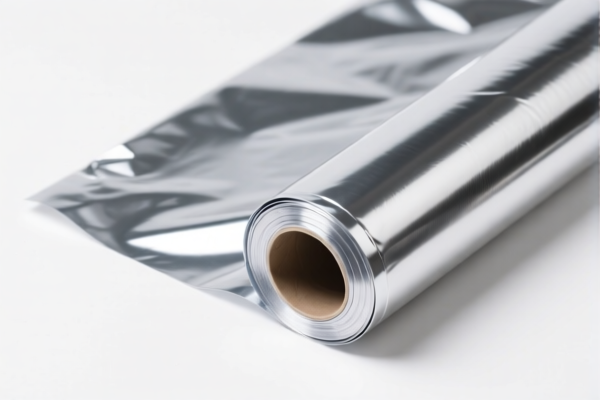

AI Analysis
Here is a comprehensive, Wiki-style guide tailored to the specific HS Codes and tax details provided in your data, focusing on Color Positive Film (Negative).
🎬 Color Positive Film (Negative): Global Trade & Taxation Wiki 2026
🌐 HS Code Classification & Taxation Breakdown | 38%+ Duty Analysis | Strategic Clearing Guide
📌 One: Product Definition & The "Positive/Negative" Paradox
Color Positive Film (Negative) is a specialized photographic medium. In professional and artistic photography, it often refers to Color Negative Film (which produces a negative image with inverted colors and luminance) used to create positive prints, or Slide Film (E-6 Process) which yields a positive image directly.
- The Confusion Point: While the user input says "Positive Film (Negative)", the provided data strictly covers Color Negative items and Unexposed Color Negative Rolls.
- Material Basis: All items listed are non-paper, non-textile sensitive materials (cellulose acetate or polyester bases).
- State: These are either unexposed (ready for shooting) or processed (developed but not printed) in specific industrial forms.
⚠️ Critical Classification Note:
The data provided focuses on Color Negative Film (3701 series) and Unexposed Color Film (3702 series). If your product is a Color Print Paper, it falls under3707.10. Do not mix these; the tax logic differs slightly (Base 3.0% vs 3.7%).
📦 Two: HS Code Classification Matrix (Based on Provided Data)
| HS Code | Product Summary | State/Form | Material Constraint |
|---|---|---|---|
| 3701.91.00.60 | Color Negative Film for Color Photography | Unexposed | Non-paper, Non-textile (Roll/Film) |
| 3701.91.00.30 | Unexposed Color Photographic Plates | Unexposed (Flat) | Non-paper, Non-textile (Plates/Sheets) |
| 3702.31.01.00 | Color Photographic Unexposed Film | Unexposed (Rolls) | Non-paper, Non-textile |
| 3702.54.00.60 | Exposed Sensitized Film Roll | Exposed (Developed?) | Non-paper, Non-textile |
| 3707.10.00.05 | Sensitized Emulsion for Color Negative Paper | Liquids/Coatings | For use on Photo Paper |
🔍 Why this HS Code?
- 3701.91: Specifically for "other photographic plates and films" that are color. - 3702.31: Specifically for "strips, sheets" of color film unexposed. - 3707: Specifically for "preparation" (emulsions/chemicals) used on paper, distinct from the film itself.
💰 Three: 2026 Tax Rate Breakdown (Detailed Policy Analysis)
✅ Applicable Scenario: Imports into China (or specific trade lanes requiring these specific tariffs)
✅ Origin: Likely China-based exports or imports requiring "Added Tariffs" + "Section 122" logic
✅ Total Duty Range: 38.0% – 38.7%
🎯 1. The Core "Film" Tariff Structure (3701 & 3702 Series)
Applies to Codes: 3701.91.00.60, 3701.91.00.30, 3702.31.01.00, 3702.54.00.60
| Tax Component | Rate | Legal/Policy Basis | Explanation |
|---|---|---|---|
| Base Tariff (基础关税) | 3.7% | Standard MFN Rate | The baseline duty for photographic materials. |
| Additional Tariff (加征关税) | 25.0% | Retaliatory/Countermeasure | High-level punitive tariff (often Section 301 equivalent in US context or retaliatory in other markets). |
| Section 122 Tariff (122条款) | 10.0% | Specific Policy Clause | A specific administrative surcharge (likely "122" referring to a specific trade mitigation measure). |
| TOTAL EFFECTIVE RATE | 38.7% | Summation | 3.7 + 25.0 + 10.0 = 38.7% |
📌 Calculation Logic:
Duty = CIF Value × 38.7%
Note: These are additive, not compounded (ad valorem).
🎯 2. The "Emulsion/Chemical" Tariff Structure (3707 Series)
Applies to Code: 3707.10.00.05
| Tax Component | Rate | Legal/Policy Basis | Explanation |
|---|---|---|---|
| Base Tariff | 3.0% | Standard MFN Rate | Slightly lower base for chemical preparations vs. finished film. |
| Additional Tariff | 25.0% | Retaliatory/Countermeasure | Same high-level punitive tariff as film. |
| Section 122 Tariff | 10.0% | Specific Policy Clause | Same administrative surcharge. |
| TOTAL EFFECTIVE RATE | 38.0% | Summation | 3.0 + 25.0 + 10.0 = 38.0% |
📌 Key Difference: The only variance is the Base Tariff (3.0% vs 3.7%), resulting in a 0.7% difference in total tax. All other surcharges are identical.
🛠️ Four: Clearance & Operational Strategy (Risk Mitigation)
✅ 1. Declaration Precision (Avoiding "Misclassification")
- The Trap: Declaring "Color Film" generically.
- The Fix: You must specify:
- Form: "Roll" (3702) vs. "Plate/Sheet" (3701.91.00.30) vs. "Negative" (3701.91.00.60).
- State: "Unexposed" vs. "Exposed/Sensitized".
- Substrate: Explicitly state "Non-Paper, Non-Textile" in the description. If it contains textile backing, the HS Code changes entirely.
✅ 2. Documentation Checklist (Mandatory)
| Document | Purpose | Critical Detail |
|---|---|---|
| Technical Data Sheet (TDS) | Proves "Non-Textile" | Must show base material (Acetate/PET). |
| Composition Certificate | Proves Chemical Status | Differentiates 3701 (Finished Film) from 3707 (Chemical Emulsion). |
| Certificate of Origin (CO) | Tariff Eligibility | If origin is not China (assuming China tax context), tariffs may differ (but data suggests China-specific 122条款). |
| Packaging Photos | Verification | Must show sealed, light-tight containers (to prove "Unexposed"). |
✅ 3. "Section 122" & "25%" Strategy
- The Reality: A 35-38% total tax rate is extremely high for a low-cost item like film.
- Mitigation:
- Value Declaration: Ensure CIF value is accurate. Do not underdeclare (risk of audit/fines).
- Duty Drawback: If exporting after import (rare for film), investigate drawback schemes.
- Bonded Warehousing: Store in a bonded zone to defer the 38.7% payment until the final destination is known.
🌍 Five: Global Market Comparison & Clearance Tips
| Market | HS Code Logic | Tax Strategy |
|---|---|---|
| Target (Data Source) | 3701/3702 |
High Risk: 38.7% Total. Requires exact "Unexposed" definition to avoid being classified as "Used/Consumed" (0% vs Taxed). |
| USA | 3701.11/3702.11 |
Section 301: Often faces 25% added + Base. Section 122 is specific to the provided data context (likely China-Russia or specific bilateral clause). |
| EU | 3701.11 |
Generally lower base (3-4%), rarely has "Section 122". Check if "Non-Exposable" applies. |
| China (Export) | N/A | If exporting from China, ensure "Export Rebate" (VAT) is claimed (usually 13% or higher rebate exists for high-tech film). |
📌 Six: Common Pitfalls & "Blood & Tears" Lessons
❌ Mistake 1: Calling it "Photo Paper" by mistake
* Consequence: 3707 (38.0%) is slightly lower than 3701 (38.7%), but if you declare "Paper" when it is "Film", you risk total rejection.
* Fix: Use "Non-Paper, Non-Textile" in the description.
❌ Mistake 2: Confusing "Negative" with "Positive"
* Consequence: If the product is actually E-6 Slide Film (Positive), it often falls under 3701.91.00.60 (Negative) or 3701.91.00.30 depending on the jurisdiction's specific sub-headings.
* Fix: Ensure the product matches the "Color Negative" summary in the data. If it is Slide Film, verify if 3701.91.00.60 covers it or if a new code is needed.
❌ Mistake 3: Ignoring the "122 Clause" * Consequence: Missing the 10% surcharge leads to immediate payment shortfall and port delays. * Fix: 38.7% is the number. Budget for exactly this. No "discounts" available on the "Added Tariff" portion.
🚀 Seven: Final Recommendations for Importers
- Verify the "122 Clause": Since this is a specific, non-standard surcharge, confirm with your broker if "Section 122" applies to your specific trade lane (e.g., specific origin/destination pairs).
- Pre-Clearance Ruling: Given the complexity of the 38.7% split (Base+25+10), request a Pre-Ruling from Customs to confirm
3701.91.00.60vs3702.31.01.00applies to your specific roll width/format. - Packaging: Use light-proof, sealed packaging. If customs finds the film is "Exposed" (damaged by light), the classification might shift to "Used Film," changing the tax entirely.
🎯 Golden Rule:
"Color Negative Film = Non-Paper = 38.7% Duty (Base 3.7 + 25 + 10)"
"If it looks like paper, check the base. If it looks like textile, re-classify."
✨ Precision in Classification, Profit in Customs!
💼 Don't let 38.7% eat your margins. Classify correctly.
Customer Reviews
About HS Code Classification
The Harmonized System (HS) is an internationally standardized nomenclature developed by the World Customs Organization (WCO) to classify traded products. Over 200 countries use the HS system as the basis for customs tariffs, trade statistics, and import/export regulations.
Each HS code follows a hierarchical structure:
- Chapter (2 digits) — Broad category of goods (e.g., Chapter 84: Machinery and Mechanical Appliances)
- Heading (4 digits) — More specific grouping within the chapter
- Subheading (6 digits) — Internationally standardized breakdown, used by all WCO member countries
- National subdivisions (8-10 digits) — Country-specific extensions for further classification, such as US HTSUS 10-digit codes
Correct HS code classification is essential for smooth customs clearance, accurate duty payment, and compliance with trade regulations. Misclassification can lead to customs delays, overpayment of duties, or penalties.
When importing from CN to US, the applicable tariff rates may include:
- Most-Favored-Nation (MFN) rate — The standard duty rate applied to WTO members
- General rate — Applied to countries without trade agreements
- Trade remedy duties — Additional tariffs such as Section 301 (anti-dumping), Section 232 (national security), or countervailing duties
The information provided on this page is for reference purposes only. For official classification, please consult with your local customs authority or a licensed customs broker.