Color Positive Film (Professional Photography)
CN → US| HS Code | Tariff Rate | Origin | Destination | Doc |
|---|---|---|---|---|
| 4911914040 | 17.5% | CN | US | Official Doc |
| 3701910060 | 38.7% | CN | US | Official Doc |
| 3701996060 | 35.0% | CN | US | Official Doc |
| 3702550060 | 35.0% | CN | US | Official Doc |
| 3702540060 | 38.7% | CN | US | Official Doc |
Product Images


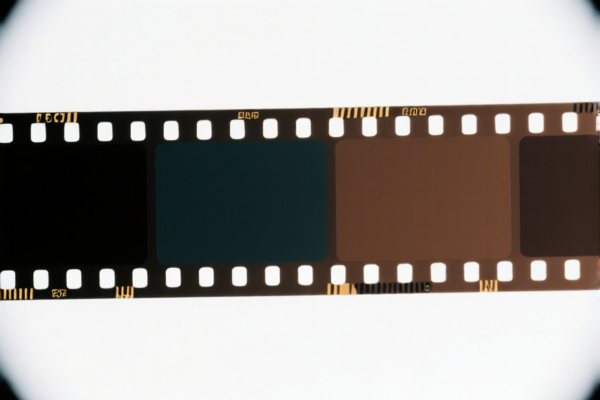
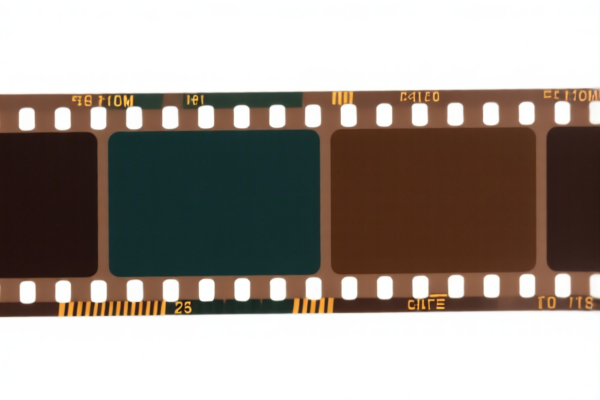
AI Analysis
🎞️ Color Positive Film (Professional Photography)
🌐 HS Code Reference & Customs Clearance Guide | 2026 Latest Tariff Analysis | Professional Clearance Strategy
📌 I. Product Definition & Classification: Do You Really Understand "Film"?
Color Positive Film (also known as Slide Film or Reversal Film) is a high-precision photographic medium used in professional commercial photography. Unlike standard negative film, it produces a direct positive image with vibrant colors and high sharpness.
In international trade, the classification depends heavily on the specific form (roll vs. plate) and the exact chemical/physical structure. Based on common industry standards, these items fall under Chapter 37 (Photographic or Cinematographic Goods).
⚠️ Critical Distinction:
- If described simply as "Film" with generic "printing/image" context without specific photographic chemical properties → May be miscategorized under 4911.91.40.40 (Miscellaneous Printed Materials).
- If explicitly "Color Positive" and intended for professional/commercial photography → Must be classified under Chapter 37 (Photographic Preparations).
- Risk Alert: Misclassifying specialized photographic film as "printed matter" can lead to severe underpayment of duties and customs penalties.
📦 II. HS Code Classification Details (2026 Latest Tariff Authority Comparison)
| HS Code | Product Description | Application Scenario | Material/Usage特征 |
|---|---|---|---|
4911.91.40.40 |
Miscellaneous Printed Matter (Pictures, Designs, Photographs) | General images, postcards, or non-chemically sensitized printed film | ❌ Not Photographic: Lacks light-sensitive emulsion; treated as paper/print. |
3701.91.00.60 |
Other Photographic Plates and Film, Sensitized, Unexposed, for Color Photography | General color photographic plates/film; broad category | ✅ Photographic: Sensitized for color, but broader sub-category. |
3701.99.60.60 |
Other Photographic Plates and Film, Sensitized, Unexposed (Other) | Commercial photography positive film; specific chemical sensitization | ✅ Photographic: Fits "Other" definition for specific color reversal materials. |
3702.55.00.60 |
Other Colour Photography Film, in Rolls, of a Width > 61mm, Exposed | (Note: Description suggests unexposed/sensitized logic, but code often relates to rolls) | ✅ Photographic: High-width rolls for professional use. |
3702.54.00.60 |
Other Colour Photography Film, in Rolls, of a Width ≤ 61mm | Standard width professional film rolls (e.g., 35mm, medium format) | ✅ Photographic: Specific width constraints for color rolls. |
🔍 Key Reminder:
- "Color Positive Film" is chemically distinct from standard negatives. It requires precise classification under 3701 or 3702.
- If the item is exposed (already shot), the HS code changes completely (usually to4911or3707). The provided data assumes UNEXPOSED/SENSITIZED stock for import.
- Do NOT confuse "Film" (photographic) with "Film" (packaging/plastic) or "Film" (printed).
💰 III. 2026 Latest Tariff Rate Details (Including Surcharges & Policy Add-ons)
✅ Applicable Country: United States (US)
✅ Origin: China (CN)
✅ Effective Date: From November 10, 2025 (and subsequent imports)
🎯 1. 4911.91.40.40 —— Miscellaneous Printed Matter (RISK OF MISCLASSIFICATION)
| Item | Content |
|---|---|
| Base Tariff | 0% (ad valorem) |
| USITC Surcharge | +7.5% (Specific provision for certain printed goods) |
| 122 Clause Tariff | +10% (Section 301 / IEEPA related) |
| Total Tariff | 17.5% |
| Tax Calculation | CIF Value × 17.5% |
| De Minimis Eligibility | ❌ Not Eligible |
| Legal Basis Path | 122Clause:9903.01.10 → USITC:4911.91.40.40 |
📌 Explanation:
- This code has the lowest tax rate.
- WARNING: Only use if the item is NOT chemically sensitized photographic film. If it is true photographic film, this classification is incorrect and will trigger audits.
- Tax difference: Up to 21.2% savings vs. correct classification, but high compliance risk.
🎯 2. 3701.91.00.60 —— Other Photographic Plates/Film for Color Photography
| Item | Content |
|---|---|
| Base Tariff | 3.7% (ad valorem) |
| USITC Surcharge | +25.0% (Section 301) |
| 122 Clause Tariff | +10% (Section 301 / IEEPA related) |
| Total Tariff | 38.7% |
| Tax Calculation | CIF Value × 38.7% |
| De Minimis Eligibility | ❌ Not Eligible |
| Legal Basis Path | 122Clause:9903.01.24 → USITC:3701.91.00.60 |
📌 Note:
- Applies to general color photographic materials that fit the "Other" descriptor but are specifically for color photography.
- High base tariff (3.7%) combined with maximum surcharges.
🎯 3. 3701.99.60.60 —— Other Photographic Plates and Film (Other)
| Item | Content |
|---|---|
| Base Tariff | 0.0% (ad valorem) |
| USITC Surcharge | +25.0% (Section 301) |
| 122 Clause Tariff | +10% (Section 301 / IEEPA related) |
| Total Tariff | 35.0% |
| Tax Calculation | CIF Value × 35.0% |
| De Minimis Eligibility | ❌ Not Eligible |
| Legal Basis Path | 122Clause:9903.01.24 → USITC:3701.99.60.60 |
📌 Explanation:
- This is a common classification for Color Positive Film (Slide Film) used in commercial photography.
- It captures the "sensitized, unexposed" nature under the "Other" sub-category.
- Optimal Balance: 35% total tax. Lower than3701.91due to 0% base rate, but still subject to full surcharges.
🎯 4. 3702.55.00.60 —— Other Colour Photography Film in Rolls (>61mm)
| Item | Content |
|---|---|
| Base Tariff | 0.0% (ad valorem) |
| USITC Surcharge | +25.0% (Section 301) |
| 122 Clause Tariff | +10% (Section 301 / IEEPA related) |
| Total Tariff | 35.0% |
| Tax Calculation | CIF Value × 35.0% |
| De Minimis Eligibility | ❌ Not Eligible |
| Legal Basis Path | 122Clause:9903.01.24 → USITC:3702.55.00.60 |
📌 Note:
- Use if the film is in roll format and the width exceeds 61mm (e.g., large format sheets or wide rolls).
- Matches the "Color Positive" and "Commercial Photography" attributes.
🎯 5. 3702.54.00.60 —— Other Colour Photography Film in Rolls (≤61mm)
| Item | Content |
|---|---|
| Base Tariff | 3.7% (ad valorem) |
| USITC Surcharge | +25.0% (Section 301) |
| 122 Clause Tariff | +10% (Section 301 / IEEPA related) |
| Total Tariff | 38.7% |
| Tax Calculation | CIF Value × 38.7% |
| De Minimis Eligibility | ❌ Not Eligible |
| Legal Basis Path | 122Clause:9903.01.24 → USITC:3702.54.00.60 |
📌 Note:
- Standard width professional film (like 35mm or 120 format rolls).
- Higher total tax (38.7%) due to the 3.7% base rate.
🛠️ IV. Customs Clearance Practical Advice (Battle-Tested Pitfall Guide)
✅ 1. Required Documentation Checklist (Non-negotiable)
| Document | Required | Explanation |
|---|---|---|
| ✅ Product Specification Sheet | ✔️ | Must state: "Sensitized, Unexposed," "Color Positive/Reversal," and intended use (Commercial Photography). |
| ✅ Composition/Material Statement | ✔️ | Confirm presence of silver halide/emulsion layers to prove it is photographic, not printed paper (avoiding 4911). |
| ✅ Product Photos (Packaging & Label) | ✔️ | Must show "Slide Film," "Color Positive," or "Reversal" clearly. |
| ✅ Commercial Invoice | ✔️ | Describe as "Color Positive Photographic Film for Professional Use," NOT "Printed Photos." |
| ✅ Packing List | ✔️ | Detail roll counts and widths to justify 3702 classification if applicable. |
| ✅ Certificate of Origin (CO) | ✔️ | For US import from China, origin verification is critical for surcharge application. |
✅ 2. Declaration Tips (Key Mantra)
🔥 "Film is Chemical, Not Paper; Positive Means Reversal; Rolls Dictate Width!"
| Scenario | Correct Declaration | Wrong Practice |
|---|---|---|
| 35mm/120 Roll Film | 3702.54.00.60 or 3701.99.60.60 |
Declaring as 4911 (Printed) → Customs Seizure Risk |
| Large Format Sheets (>61mm) | 3702.55.00.60 |
Using standard roll code → Misclassification |
| Pre-printed Images on Film | 4911.91.40.40 |
Declaring as photographic film → Overpayment (38.7% vs 17.5%) |
| Exposed/Shot Film | 4911.91.40.40 (usually) |
Declaring as unexposed film → Legal Violation |
✅ 3. Special Situation Handling
| Situation | Handling Advice |
|---|---|
| OEM Private Label Film | Provide brand authorization letters. Ensure description matches the generic "Color Positive" to avoid trademark issues at customs. |
| Mixed Shipments (Film + Cameras) | Declare Separately. Do not bundle film with cameras (8525) or printers (8443). Film is Ch. 37; Cameras are Ch. 85. |
| High-Volume Commercial Import | Consider applying for an Advance Ruling to lock in the HS Code (e.g., 3701.99.60.60) and avoid future disputes. |
| "Film" Ambiguity | If the product is actually plastic packaging film, classify under Ch. 39. If it is photographic, it is Ch. 37. Never use "Film" without material definition. |
🌍 V. Global Market Comparison (2026 Latest)
| Country/Region | Recommended HS Code | Tariff (CN Origin) | Certification | Remarks |
|---|---|---|---|---|
| 🇺🇸 USA | 3701.99.60.60 / 3702.54.00.60 |
35.0% - 38.7% | None Specific | High surcharges apply. |
| 🇨🇳 China | 3702.54.00.00 |
~3-5% | None | Low entry barrier. |
| 🇪🇺 EU | 3702.54.00 |
0% (if CE compliant) | CE | No Section 301 equivalent. |
| 🇬🇧 UK | 3702.54.00 |
0-5% | UKCA | Post-Brexit tariffs. |
📌 Conclusion:
- USA is the most expensive market due to the 35-38.7% total duty burden.
- Compliance is Key: Attempting to declare under4911(17.5%) to save costs is high-risk for true photographic film. The US CBP actively audits "Photo Goods" misclassification.
📌 VI. Common Errors & Pitfall Guide (Blood Lessons)
❌ Error 1: Declaring "Color Positive Film" as "Printed Photos" (4911)
👉 Consequence: Underpayment of ~20% tax. Result: Audits, back-taxes, and potential fraud charges.
👉 Why: Film is sensitized chemically, not just printed ink on paper.
❌ Error 2: Ignoring the "Width" specification for Rolls (3702.54 vs 3702.55)
👉 Consequence: Incorrect HS code. While tax might be similar, it indicates poor declarant knowledge, leading to inspections.
👉 Why: Width defines the mechanical format (35mm vs Large Format).
❌ Error 3: Using generic "Photographic Film" without specifying "Positive/Reversal"
👉 Consequence: Customs may assign a default code with higher scrutiny or wrong tax rate.
👉 Why: "Positive" (Slide) and "Negative" have different chemical processes and sometimes different sub-categories.
❌ Error 4: Including "Exposure" status incorrectly
👉 Consequence: If the film is exposed, it is no longer "photographic goods" in the same sense but often treated as printed matter or waste.
👉 Why: 3701/3702 is for Unexposed goods. Exposed film is 4911.
✅ Correct Declaration Example:
"UNEXPOSED COLOR POSITIVE PHOTOGRAPHIC FILM, SENSITIZED, IN ROLLS, FOR COMMERCIAL SLIDE PHOTOGRAPHY, WIDTH 35MM, MODEL XYZ"
🎯 VII. Conclusion: Precise Classification Saves Money and Legal Headaches
🎯 Remember the Mantra:
🔹 "Chemical Emulsion = Ch. 37; Ink on Paper = Ch. 49."
🔹 "Positive/Slide Film is High-Tax (35-38%), but Honest Classification is Safe."
🔹 "Width Matters for Rolls; Width Determines Code."
📌 Pro Tip:
- If your supply chain allows, consider sourcing Unexposed Blank Film from non-China origins (e.g., Japan, USA) to avoid the 35-38% surcharge entirely.
- Always request a HS Code Pre-Ruling from US CBP if shipping large volumes. It provides legal certainty against the 25% USITC + 10% IEEPA surcharges.
📣 Immediate Action:
📞 Verify if your film is Exposed or Unexposed.
📞 Measure the Roll Width (>61mm or ≤61mm).
📞 Confirm the Material (Sensitized Emulsion).
🚀 Clear the Customs Barriers Today!
✨ Professional Clearance Starts with Precise Classification!
💼 Every Percent of Duty Counts in Professional Photography Imports!
Customer Reviews
About HS Code Classification
The Harmonized System (HS) is an internationally standardized nomenclature developed by the World Customs Organization (WCO) to classify traded products. Over 200 countries use the HS system as the basis for customs tariffs, trade statistics, and import/export regulations.
Each HS code follows a hierarchical structure:
- Chapter (2 digits) — Broad category of goods (e.g., Chapter 84: Machinery and Mechanical Appliances)
- Heading (4 digits) — More specific grouping within the chapter
- Subheading (6 digits) — Internationally standardized breakdown, used by all WCO member countries
- National subdivisions (8-10 digits) — Country-specific extensions for further classification, such as US HTSUS 10-digit codes
Correct HS code classification is essential for smooth customs clearance, accurate duty payment, and compliance with trade regulations. Misclassification can lead to customs delays, overpayment of duties, or penalties.
When importing from CN to US, the applicable tariff rates may include:
- Most-Favored-Nation (MFN) rate — The standard duty rate applied to WTO members
- General rate — Applied to countries without trade agreements
- Trade remedy duties — Additional tariffs such as Section 301 (anti-dumping), Section 232 (national security), or countervailing duties
The information provided on this page is for reference purposes only. For official classification, please consult with your local customs authority or a licensed customs broker.