Color Positive Film (Width Not Exceeding 16mm)
CN → US| HS Code | Tariff Rate | Origin | Destination | Doc |
|---|---|---|---|---|
| 3704000000 | 35.0% | CN | US | Official Doc |
| 3702520130 | 38.7% | CN | US | Official Doc |
| 3702520160 | 38.7% | CN | US | Official Doc |
Product Images
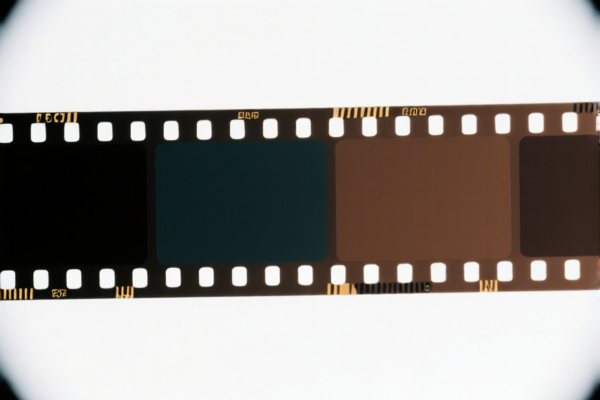
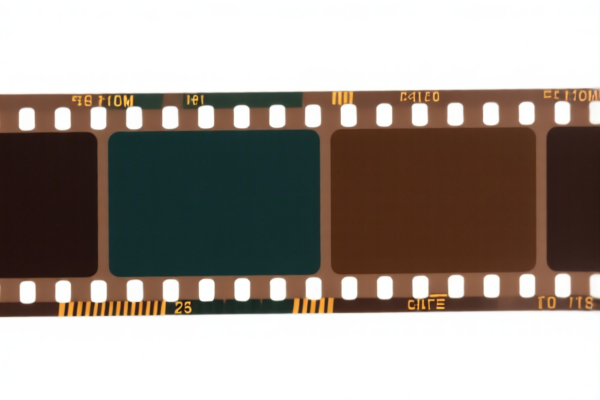

AI Analysis
🎞️ Color Positive Film (Width Not Exceeding 16mm)
🌐 HS Code Reference & Clearance Guide | 2026 Latest Tariff Analysis | Professional-Level Customs Strategy
📌 I. Product Definition & Classification: Do You Really Understand "Color Positive Film"?
Color Positive Film (often referred to as Slide Film, Reversal Film, or E-6 Process Film) is a specialized photographic medium designed to produce a direct positive image, rather than a negative. It is widely used in professional photography, cinema, and scientific imaging due its superior color fidelity and sharpness.
In international trade, it is strictly categorized under Chapter 37 (Photographic or Cinematographic Goods). The classification hinges on two critical factors: 1. Format/Width: Must not exceed 16mm. 2. Chemical State: Processed (Developed) vs. Unprocessed (Unexposed).
⚠️ Key Distinction Point:
- If the film is Unprocessed/Unexposed: It falls under 3702.52.01 (Color Reversal Film, ≤16mm).
- If the film is Processed/Developed: It falls under 3704.00.00 (Developed Photographic Film).
Misclassification here leads to massive duty discrepancies due to the "122 Clause" and Section 301 tariffs.
📦 II. HS Code Classification Details (2026 Latest Authoritative Comparison)
Based on the provided data, there are three potential HS Code matches depending on the exact state of the film (Processed vs. Unprocessed) and specific tariff interpretations.
| HS Code | Product Description | Applicability | Tax Rate (Total) | Key Features |
|---|---|---|---|---|
3704.00.00.00 |
Developed/Processed Photographic Film | Used, developed slides, or commercial processed stock. | 35.0% | Base: 0%, Sec 301: 25%, Clause 122: 10%. |
3702.52.01.30 |
Color Reversal Film (≤16mm), Unprocessed | New, unexposed slides. Specific sub-category for certain origins. | 38.7% | Base: 3.7%, Sec 301: 25%, Clause 122: 10%. |
3702.52.01.60 |
Other Color Reversal Film (≤16mm), Unprocessed | New, unexposed slides. Alternative sub-category. | 38.7% | Base: 3.7%, Sec 301: 25%, Clause 122: 10%. |
🔍 Key Reminder:
- Unprocessed vs. Processed: The biggest risk is declaring unprocessed film as processed (or vice versa).
- Width Limit: Must be ≤16mm. Films wider than 16mm fall under different subheadings (e.g., 35mm) with different tax structures.
- Material: Must be non-paper, non-textile (standard photographic emulsion on polyester/acetate base).
💰 III. 2026 Latest Tariff Rate Breakdown (Including Surtaxes & Policy Surcharges)
✅ Applicable Country: United States (US)
✅ Origin: China (CN)
✅ Effective Date: Post-2025 November 10 (Including subsequent imports)
🎯 1. 3704.00.00.00 —— Developed/Processed Photographic Film
| Item | Content |
|---|---|
| Base Tariff | 0.0% (ad valorem) |
| USITC Surtax | +25.0% (Section 301 - "Item 122" or Footnote 9903.88.01 equivalent) |
| IEEPA Surtax | +10.0% (Targeted at Chinese/HK products, effective Nov 10, 2025) |
| Total Tariff | 35.0% |
| Tax Calculation | CIF Value × 35% |
| De Minimis Exemption | ❌ Not Eligible (deny_de_minimis) |
| Legal Basis Path | IEEPA:9903.01.25 → IEEPA:9903.01.24 → USITC:3704.00.00.00 |
📌 Explanation:
- Developed film is often treated as a finished consumer good or specialized chemical product.
- The 10% IEEPA surcharge is critical here, added on top of the 25% Section 301 duty.
- Total 35% is a high barrier for high-volume developed film imports.
🎯 2. 3702.52.01.30 & 3702.52.01.60 —— Color Reversal Film (Unprocessed, ≤16mm)
| Item | Content |
|---|---|
| Base Tariff | 3.7% (ad valorem) |
| USITC Surtax | +25.0% (Section 301) |
| IEEPA Surtax | +10.0% (Targeted at Chinese/HK products) |
| Total Tariff | 38.7% |
| Tax Calculation | CIF Value × 38.7% |
| De Minimis Exemption | ❌ Not Eligible (deny_de_minimis) |
| Legal Basis Path | IEEPA:9901.25 → IEEPA:9903.01.24 → USITC:3702.52.01.30/60 |
📌 Note:
- Although the base rate is 3.7% (higher than processed film), the total rate (38.7%) is even higher than developed film (35.0%) due to the base tariff component.
- Both30and60subheadings attract the same total tax burden in this specific scenario.
- Material Inference: The description confirms "non-paper, non-textile," which is standard for photographic film.
🛠️ IV. Customs Clearance Practical Advice (Practical Pitfall Avoidance Guide)
✅ 1. Documentation Checklist (All Mandatory)
| Document | Required | Description |
|---|---|---|
| ✅ Product Specification Sheet | ✔️ | Must clearly state: Width (≤16mm), Type (Color Reversal/Positive), Process (E-6). |
| ✅ Unprocessed Status Proof | ✔️ | If declaring under 3702, provide a statement that film is unexposed/unprocessed. |
| ✅ Product Photos (Including Label) | ✔️ | Clear shot of the canister label showing "Slide Film," "ISO," and no "Processed/Developed" marks. |
| ✅ Commercial Invoice | ✔️ | Explicitly describe as: "Color Reversal Film, Width ≤16mm, Unexposed" (or "Developed" if applicable). |
| ✅ Packing List | ✔️ | Detail quantity (rolls/frames). Avoid vague terms like "Photographic Supplies." |
| ✅ Certificate of Origin (CO) | ✔️ | If applicable for non-China origins (e.g., Japan, Germany) to avoid IEEPA tariffs. |
✅ 2. Declaration Tactics (Key Mnemonic)
🔥 “Width under 16, Unexposed is Key, Developed is Clear, Don’t Mix Up!”
| Situation | Correct Declaration | Incorrect Practice |
|---|---|---|
| New Slide Film (Unexposed) | 3702.52.01.30 or .60 |
Declaring as "Processed" → Risk of 35% vs 38.7% (minor diff, but compliance issue) |
| Developed Slides | 3704.00.00.00 |
Declaring as "Unprocessed" → Heavy Penalty + Seizure Risk |
| Film >16mm (e.g., 35mm) | Different HS Code | Declaring ≤16mm → Misdeclaration |
| Film on Paper/Cardboard | Different Chapter (e.g., 4801) | Declaring as "Photographic Film" → Wrong Classification |
✅ 3. Special Case Handling
| Situation | Handling Advice |
|---|---|
| OEM Custom Slides | Provide client order + design specs. Ensure label matches commercial invoice exactly. |
| Mixed Bundles (Film + Camera) | Separate Declaration. Film goes to Ch.37, Camera to Ch.90. Do not bundle under one HS Code. |
| Origin: Non-China (e.g., Japan) | Apply for IEEPA Exemption. Rate drops significantly (Base + Sec 301 only, or lower). |
| High Volume Import | Consider Advance Ruling (Pre-classification) to lock in HS Code and avoid retrospective duty changes. |
🌍 V. Global Main Market Clearance Comparison (2026 Latest)
| Country/Region | Recommended HS Code | Tariff (China Origin) | Certification Requirements | Remarks |
|---|---|---|---|---|
| 🇺🇸 USA | 3702.52.01.30 / 3704.00.00 |
35.0% - 38.7% | None specific for film, but FDA may inspect chemicals | Highest Duty Region due to IEEPA + 301 |
| 🇨🇳 China | 3702.52.01 |
~5-6% | CCC (if applicable components) | Standard MFN rate |
| 🇪🇺 EU | 3702.52 |
0-4% | REACH (Chemical compliance) | Lower barrier, but strict chemical declarations |
| 🇬🇧 UK | 3702.52 |
0-4% | UKCA (if applicable) | Post-Brexit alignment with EU |
| 🇯🇵 Japan | 3702.52 |
0-3% | None | Very low duty for photographic goods |
📌 Conclusion:
- USA is the most expensive market for Chinese-origin Color Positive Film due to the 35-38.7% combined tariff.
- Supply Chain Strategy: If targeting the US, consider sourcing film from non-China origins (Japan, Korea, Europe) to mitigate IEEPA tariffs.
- De Minimis: Note that $800 de minimis exemption does NOT apply to these items from China due to policy restrictions (Section 301/IEEPA).
📌 VI. Common Errors & Pitfall Guide (Lessons Learned)
❌ Error 1: Declaring "Processed Film" as "Unprocessed" to avoid higher base rates
👉 Consequence: Customs inspection reveals chemical residue/stains → Seizure, Penalty, and Blacklist.
❌ Error 2: Ignoring the "Width" specification
👉 Consequence: Declaring 35mm film as ≤16mm → HS Code Mismatch + Back Taxes.
❌ Error 3: Using vague terms like "Camera Accessories"
👉 Consequence: Customs assigns highest generic rate → Unnecessary Cost.
❌ Error 4: Failing to separate Film from Cameras in packaging
👉 Consequence: Complex valuation issues → Delay in Clearance.
✅ Correct Practice:
"Kodak Ektachrome E100, Color Reversal Film, 16mm Width, Unexposed, Batch No. XYZ, Origin: Japan"
🎯 VII. Conclusion: Precision Classification Saves Money!
🎯 Remember the Mnemonic:
🔹 "≤16mm is Key, Unexposed vs. Processed,
Chinese Origin Costs High, IEEPA 10% is Stressful!
35% for Developed, 38.7% for Raw Stock,
Clear Documentation Stops Customs Lock!"
📌 Pro Tip:
If your Color Positive Film is originated from Japan, Germany, or South Korea, you can exempt the IEEPA 10% tariff.
Total Tax for Japan Origin:
- Developed: 25% (Sec 301 only)
- Unprocessed: 28.7% (3.7% Base + 25% Sec 301)
Recommendation:
📞 Contact Professional Freight Forwarder + Provide Origin Certificate + Apply for HS Code Advance Ruling
🚀 Ensure Smooth Clearance, Reduce Costs, Maximize Profit!
✨ Professional Clearance Starts with Accurate Classification!
💼 Every Percent of Duty Counts!
Customer Reviews
About HS Code Classification
The Harmonized System (HS) is an internationally standardized nomenclature developed by the World Customs Organization (WCO) to classify traded products. Over 200 countries use the HS system as the basis for customs tariffs, trade statistics, and import/export regulations.
Each HS code follows a hierarchical structure:
- Chapter (2 digits) — Broad category of goods (e.g., Chapter 84: Machinery and Mechanical Appliances)
- Heading (4 digits) — More specific grouping within the chapter
- Subheading (6 digits) — Internationally standardized breakdown, used by all WCO member countries
- National subdivisions (8-10 digits) — Country-specific extensions for further classification, such as US HTSUS 10-digit codes
Correct HS code classification is essential for smooth customs clearance, accurate duty payment, and compliance with trade regulations. Misclassification can lead to customs delays, overpayment of duties, or penalties.
When importing from CN to US, the applicable tariff rates may include:
- Most-Favored-Nation (MFN) rate — The standard duty rate applied to WTO members
- General rate — Applied to countries without trade agreements
- Trade remedy duties — Additional tariffs such as Section 301 (anti-dumping), Section 232 (national security), or countervailing duties
The information provided on this page is for reference purposes only. For official classification, please consult with your local customs authority or a licensed customs broker.