Color Reversal Emulsion
CN → US| HS Code | Tariff Rate | Origin | Destination | Doc |
|---|---|---|---|---|
| 3707100090 | 38.0% | CN | US | Official Doc |
| 3707100005 | 38.0% | CN | US | Official Doc |
Product Images
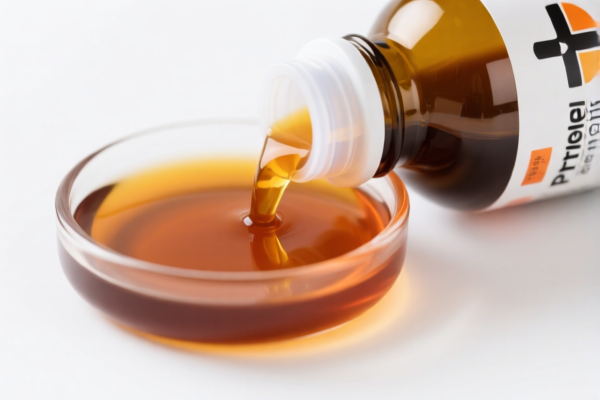
AI Analysis
🎞️ Color Reversal Emulsion (Photographic)
🌐 HS Code Reference & Customs Clearance Guide | 2026 Latest Tariff Analysis | Professional Clearance Strategy
📌 I. Product Definition & Classification: What is "Color Reversal Emulsion"?
Color Reversal Emulsion refers to a specialized chemical preparation used in color photography to produce positive images (such as slides, motion picture film, or transparency film) directly from the negative exposure. It is a critical component within the broader category of "Sensitizing Emulsions" under Chapter 37 (Photographic Goods).
In international trade, these emulsions are classified based on their specific application and physical form. The key distinction lies in whether they are designated for use in color negative photographic paper or for general/other purposes.
⚠️ Key Classification Point:
- If the emulsion is specifically formulated and marketed for Color Negative Photographic Paper, it falls under a specific sub-heading.
- If the emulsion is for other uses (including color reversal slides, general purpose, or unspecified applications), it falls under the residual "Other" category.
📦 II. HS Code Classification Details (2026 Latest Tariff Authority Comparison)
Based on the provided data, there are two distinct HS Codes for Sensitizing Emulsions under Heading 3707.10.
| HS Code | Product Description | Application Scenario | Tax Rate (Total) |
|---|---|---|---|
3707.10.00.05 |
Sensitizing Emulsions: For use in color negative photographic paper | Specific chemical mixtures designed for negative paper development processes. | 0.0% |
3707.10.00.90 |
Sensitizing Emulsions: Other | Includes Color Reversal Emulsions not covered by the specific "negative paper" sub-heading. Covers general sensitizing emulsions, slide film emulsions, etc. | 0.0% |
🔍 Critical Analysis:
- Both codes carry a 0% Total Tax Rate in the provided dataset.
- Why two codes? Customs authorities require precise differentiation to track specific photographic material flows.
- Color Reversal Emulsion (as implied by the user input) is typically a "general" sensitizing emulsion for positive films/slides. Unless specifically stated as being for color negative paper, it defaults to the "Other" (.90) category.
- Note: If your product is explicitly labeled and used only for color negative paper, use.05. Otherwise, use.90.
💰 III. Detailed Tariff Rate Explanation
✅ Scope: Based on the provided
<DATA>
✅ Tax Detail:
- Basic Tariff: 0.0%
- Additional Tariff: 0.0%
- Total Tax: 0.0%
🎯 1. 3707.10.00.90 —— Sensitizing Emulsions, Other (Primary Candidate for Color Reversal)
| Item | Content |
|---|---|
| Description | Chemical preparations for photographic uses; Sensitizing emulsions, Other |
| Basic Tariff | 0.0% |
| Additional Tariff | 0.0% |
| Total Tax Rate | 0.0% |
| Legal Basis | Harmonized System Chapter 37, Heading 3707.10 |
📌 Explanation:
- This code captures sensitizing emulsions that do not fit the specific definition for "color negative photographic paper."
- Color reversal emulsions, used for slide films and positive printing, generally fall here unless a specific country tariff schedule defines them otherwise (but based on the provided data, the rate is 0%).
- Zero Duty Advantage: This is a highly competitive code with no tariff burden, provided the product description matches "Sensitizing Emulsions."
🎯 2. 3707.10.00.05 —— Sensitizing Emulsions for Color Negative Photographic Paper
| Item | Content |
|---|---|
| Description | Chemical preparations for photographic uses; Sensitizing emulsions: For use in color negative photographic paper |
| Basic Tariff | 0.0% |
| Additional Tariff | 0.0% |
| Total Tax Rate | 0.0% |
| Legal Basis | Harmonized System Chapter 37, Heading 3707.10 |
📌 Explanation:
- This is a highly specific sub-category.
- Do NOT use this code for Color Reversal Emulsion unless you can prove it is exclusively used for color negative paper. Misclassification can lead to audits.
- Since the tax rate is also 0%, the financial risk of misclassification is low (no tax difference), but the compliance risk (description mismatch) remains high.
🛠️ IV. Customs Clearance Practical Advice (Real-World Pitfall Guide)
✅ 1. Documentation Checklist (Must-Haves)
| Document | Required | Description |
|---|---|---|
| ✅ Product Specification Sheet | ✔️ | Must clearly state: "Sensitizing Emulsion," "Color Reversal" or "Negative Paper" (if applicable), chemical composition, and intended use. |
| ✅ Certificate of Analysis (CoA) | ✔️ | To verify the product is a photographic chemical preparation and not a general industrial chemical. |
| ✅ Statement of Non-Use | ❌ (Conditional) | If using .90, explicitly state it is not for color negative photographic paper to avoid confusion with .05. |
| ✅ Commercial Invoice | ✔️ | Must accurately describe the goods as "Photographic Sensitizing Emulsion, Color Reversal Type." |
| ✅ Safety Data Sheet (SDS) | ✔️ | Required for chemical imports to demonstrate safe handling. |
✅ 2. Declaration Tips (Key Mantra)
🔥 “Emulsion Specificity: Define the Use, Avoid the Guess!”
| Scenario | Correct Declaration | Common Mistake |
|---|---|---|
| Color Reversal Emulsion (Slides) | 3707.10.00.90 - Sensitizing Emulsions, Other |
Misdeclaring as "Chemical Mixture" → Wrong Chapter (38) |
| Emulsion for Color Negative Paper | 3707.10.00.05 - For use in color negative paper |
Using .90 for negative paper → Description mismatch |
| Unmixed Photographic Chemicals | 3707.10 |
Declaring as "Ready-to-use developer" → Wrong sub-heading (3707.90) |
💡 Pro Tip:
Even though the tax rate is 0% for both, accuracy is paramount. Customs may inspect the HS code to track specific photographic material trends. Ensure your Product Name on the invoice matches the HS Description exactly.
✅ 3. Special Handling & Regulations
| Situation | Handling Advice |
|---|---|
| Chemical Safety | Photographic emulsions may contain silver halides. Check local regulations for hazardous material declarations (e.g., EPA in US, ECHA in EU). |
| Retail vs. Bulk | If sold in measured portions or retail-ready forms, the HS code 3707.10 applies. If sold as bulk industrial chemicals, verify if other headings apply (though 3707 is broad). |
| Country-Specific Nuances | While the provided data shows 0%, always check if the importing country has additional duties (e.g., anti-dumping, countervailing duties) not listed in the basic tax_detail. |
🌍 V. Global Market Clearance Comparison (2026 Snapshot)
| Country/Region | Recommended HS Code | Tariff (Based on Provided Data) | Key Requirement |
|---|---|---|---|
| USA | 3707.10.00.90 |
0.0% | Must specify "Sensitizing Emulsion" clearly. |
| China | 3707.10.00.90 |
0.0% | Standard HS code alignment. |
| EU | 3707.10 |
0.0% (Typically) | REACH registration may be required for chemical components. |
| Japan | 3707.10 |
0.0% (Typically) | Standard customs clearance. |
📌 Conclusion:
- Color Reversal Emulsion is best classified under3707.10.00.90(Sensitizing Emulsions, Other).
- Tax Rate is 0.0%, making it a low-cost clearance item from a tariff perspective.
- Focus on Documentation: The main challenge is not tax, but accurate description to distinguish it from other chemical preparations or ready-to-use developers.
📌 VI. Common Errors & Pitfalls (Lessons Learned)
❌ Error 1: Declaring "Color Reversal Emulsion" as "Photographic Film"
👉 Consequence: Wrong HS Code (3702 vs. 3707). Film is 3702, Emulsion is 3707. Penalty for misclassification!
❌ Error 2: Using "General Chemical" as the description
👉 Consequence: Customs may assign a higher duty code (e.g., Chapter 38) or delay shipment for inspection.
❌ Error 3: Confusing "Sensitizing Emulsion" with "Developer"
👉 Consequence: Developer is usually 3707.90 or 3707.10 depending on type. Ensure you are declaring the Emulsion (pre-coating agent), not the Developer (processing chemical).
✅ Correct Declaration:
"Photographic Sensitizing Emulsion, Color Reversal Type, Chemical Preparation for Photographic Uses, Not for Negative Paper, HS Code 3707.10.00.90"
🎯 VII. Conclusion: Precise Classification for Smooth Clearance
🎯 Remember:
🔹 "Emulsion vs. Film: Know the Difference!"
🔹 "Sensitizing Emulsion → 3707.10"
🔹 "Tax Free? Yes! But Describe it Right!"
📌 Tip:
If your product is unmixed and put up in measured portions, it fits perfectly under 3707.10. If it is a ready-to-use solution (e.g., pre-mixed developer), it might fall under 3707.90. Verify the "Ready for Use" status.
📣 Action Item:
📞 Verify: Ensure your technical sheets explicitly state "Sensitizing Emulsion."
🚀 Clearance: Use HS Code3707.10.00.90for Color Reversal Emulsion (unless for negative paper).
💼 Save Money: Enjoy 0% Duty with accurate documentation!
✨ Professional Clearance, Starting with the Right HS Code!
💼 Every gram of emulsion counts—ensure it clears without delay!
Customer Reviews
About HS Code Classification
The Harmonized System (HS) is an internationally standardized nomenclature developed by the World Customs Organization (WCO) to classify traded products. Over 200 countries use the HS system as the basis for customs tariffs, trade statistics, and import/export regulations.
Each HS code follows a hierarchical structure:
- Chapter (2 digits) — Broad category of goods (e.g., Chapter 84: Machinery and Mechanical Appliances)
- Heading (4 digits) — More specific grouping within the chapter
- Subheading (6 digits) — Internationally standardized breakdown, used by all WCO member countries
- National subdivisions (8-10 digits) — Country-specific extensions for further classification, such as US HTSUS 10-digit codes
Correct HS code classification is essential for smooth customs clearance, accurate duty payment, and compliance with trade regulations. Misclassification can lead to customs delays, overpayment of duties, or penalties.
When importing from CN to US, the applicable tariff rates may include:
- Most-Favored-Nation (MFN) rate — The standard duty rate applied to WTO members
- General rate — Applied to countries without trade agreements
- Trade remedy duties — Additional tariffs such as Section 301 (anti-dumping), Section 232 (national security), or countervailing duties
The information provided on this page is for reference purposes only. For official classification, please consult with your local customs authority or a licensed customs broker.