Color Reversal Film 135
CN → US| HS Code | Tariff Rate | Origin | Destination | Doc |
|---|---|---|---|---|
| 3703906000 | 37.8% | CN | US | Official Doc |
| 3701996060 | 35.0% | CN | US | Official Doc |
| 3702540060 | 38.7% | CN | US | Official Doc |
| 3701910060 | 38.7% | CN | US | Official Doc |
| 3701910030 | 38.7% | CN | US | Official Doc |
Product Images


AI Analysis
🎞️ Color Reversal Film 135 (Photographic Slides)
🌐 HS Code Reference & Customs Clearance Guide | 2026 Latest Tariff Analysis | Professional Clearance Strategy
📌 I. Product Definition & Classification: Do You Really Understand "Color Reversal Film"?
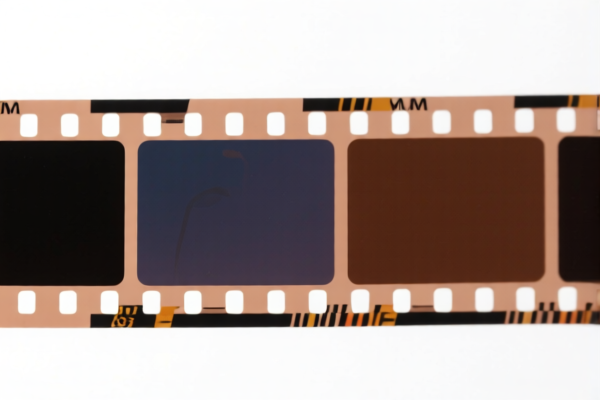
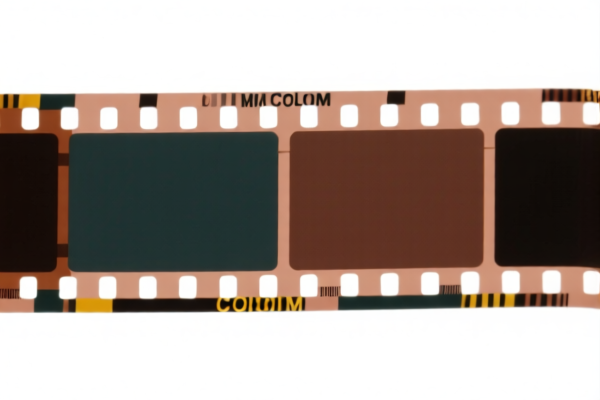
Color Reversal Film 135, commonly known as Slide Film or Ektachrome/Fuji Velvia, is a specialized photographic medium used to produce positive transparencies (slides) directly from exposure. Unlike negative film, it is designed for projection or scanning.
In international trade, the classification depends heavily on physical form and material substrate:
Photographic Film (Emulsion on Plastic Base): The standard form is a flexible strip of polyester or cellulose acetate base coated with light-sensitive emulsion. This is the most common form for 135 cartridge films.
Photographic Paper/Cardboard (If Misidentified): In rare cases, if the material is incorrectly identified as paper-based or if the product is actually photographic paper intended for reversal processing, it falls under different headings.
⚠️ Key Distinction:
- If the product is a flexible strip of plastic/polyester base with emulsion → It is a Photographic Film (Heading 3701 or 3702).
- If the product is mistakenly described as paper or textile-based in documentation → It may be incorrectly flagged under 3703 (Photographic Paper/Cardboard/Textiles).
- Crucial Point: 135 film is almost exclusively plastic-based, so 3701 or 3702 are the correct headings, NOT 3703.
📦 II. HS Code Classification Details (2026 Latest Tariff Authority对照)
The following HS Codes are derived strictly from the provided <DATA> set. Note that the tax rates vary significantly based on the specific sub-heading interpretation of the material and use.
| HS Code | Product Description & Material Basis | Total Tax Rate | Tax Breakdown (Base + 301 + 122) |
|---|---|---|---|
3703.90.60.00 |
Misclassified/Atypical Material: Described as being within the scope of photographic paper, cardboard, or textiles. | 37.8% | Base: 2.8% 301 Clause: 25.0% 122 Clause: 10.0% |
3701.99.60.60 |
Color Reversal Film (Film Base): Sensory film material that is NOT paper or textile. Correct material basis for standard 135 film. | 35.0% | Base: 0.0% 301 Clause: 25.0% 122 Clause: 10.0% |
3702.54.00.60 |
Photographic Film Roll (Unexposed): Matches the use and form of photographic film rolls. Core material attribute is film. | 38.7% | Base: 3.7% 301 Clause: 25.0% 122 Clause: 10.0% |
3701.91.00.60 |
Color Photographic Film: Name fits color photography description. Material inferred as non-paper, non-textile sensory material. | 38.7% | Base: 3.7% 301 Clause: 25.0% 122 Clause: 10.0% |
3701.91.00.30 |
Unexposed Sensory Film (Color): Matches unexposed film attributes. Color corresponds to color photography. Material inferred as film class. | 38.7% | Base: 3.7% 301 Clause: 25.0% 122 Clause: 10.0% |
🔍 Critical Analysis:
- Best Rate Option:3701.99.60.60offers the lowest total tax at 35.0% because the Base Tariff is 0.0%.
- Higher Rate Options: Codes3702.54.00.60,3701.91.00.60, and3701.91.00.30all carry a 3.7% Base Tariff, leading to a 38.7% Total Tax.
- Incorrect Material Classification:3703.90.60.00applies if the goods are wrongly categorized as paper/textile, resulting in a 37.8% Tax. This should be avoided as it misrepresents the product's physical nature (plastic vs. paper).
💰 III. 2026 Latest Tariff Rate Detailed Explanation (Including Surtaxes)
✅ Applicable Country: United States (US)
✅ Origin: China (CN)
✅ Effective Time: Current rates apply (Section 301 & 122)
🎯 1. Optimal Choice: 3701.99.60.60 – Color Reversal Film (Film Base)
| Item | Content |
|---|---|
| Base Tariff | 0.0% (Ad Valorem) |
| USITC Surcharge (Section 301) | +25.0% |
| 122 Clause Surcharge | +10.0% |
| Total Tax Rate | 35.0% |
| Tax Calculation | CIF Value × 35.0% |
| De Minimis Exemption | ❌ Not Eligible (Standard for this category) |
📌 Explanation:
- This code specifically identifies the product as sensory film that is not paper or textile.
- The 0% base tariff makes this the most cost-effective classification for standard 135 color reversal film.
- The 301 Clause (25%) and 122 Clause (10%) are mandatory add-ons for Chinese-origin goods in this category.
🎯 2. Alternative Choice: 3701.91.00.60 / 3701.91.00.30 – Color Photographic Film
| Item | Content |
|---|---|
| Base Tariff | 3.7% (Ad Valorem) |
| USITC Surcharge (Section 301) | +25.0% |
| 122 Clause Surcharge | +10.0% |
| Total Tax Rate | 38.7% |
| Tax Calculation | CIF Value × 38.7% |
| De Minimis Exemption | ❌ Not Eligible |
📌 Explanation:
- These codes are also correct for color reversal film but carry a 3.7% base tariff.
- The difference between 35.0% and 38.7% is 3.7% of the CIF value. For high-value shipments, this difference is significant.
- Use these codes only if customs documentation explicitly defines the product as "unexposed sensory film" rather than general "color reversal film."
🎯 3. Avoid: 3703.90.60.00 – Photographic Paper/Cardboard
| Item | Content |
|---|---|
| Base Tariff | 2.8% (Ad Valorem) |
| USITC Surcharge (Section 301) | +25.0% |
| 122 Clause Surcharge | +10.0% |
| Total Tax Rate | 37.8% |
| Tax Calculation | CIF Value × 37.8% |
📌 Warning:
- This code is for paper, cardboard, or textile-based photographic materials.
- 135 film is plastic-based (polyester). Misclassifying it here is a material error and can lead to customs penalties or re-verification.
- Although the tax (37.8%) is lower than 38.7%, it is incorrect and risks delays.
🛠️ IV. Customs Clearance Practical Advice (Battle-Tested Pitfall Avoidance)
✅ 1. Document Preparation Checklist (Non-Negotiable)
| Document | Required? | Details |
|---|---|---|
| ✅ Product Specification Sheet | ✔️ | Must state: "Color Reversal Film," "135 Format," "Unexposed," "Plastic Base (Polyester)." |
| ✅ Material Composition Proof | ✔️ | Explicitly state: "Substrate: Polyester/Cellophane. NOT Paper, NOT Textile." |
| ✅ Product Photos | ✔️ | Show the cartridge, the film strip, and the emulsion side. |
| ✅ Commercial Invoice | ✔️ | Description: "Color Reversal Film, 135, Unexposed, Plastic Base." Avoid vague terms like "Photographic Supplies." |
| ✅ Packing List | ✔️ | Quantity in rolls/cartons. |
✅ 2. Declaration Strategy (Key Mantra)
🔥 “Plastic Base is Key, Don’t Say Paper! 3701.99 is Cheapest!”
| Scenario | Correct Declaration | Error to Avoid |
|---|---|---|
| Standard 135 Color Reversal Film | 3701.99.60.60 (35.0%) |
Mislabeling as "Paper" → 3703 (37.8%) or 3701.91 (38.7%) |
| Unexposed Film Rolls | 3702.54.00.60 (38.7%) |
Acceptable, but higher tax. |
| Film with Cartridge | Declare as Film | Do not split cartridge and film. |
✅ 3. Special Case Handling
| Case | Handling Advice |
|---|---|
| OEM/Private Label | Provide brand authorization if applicable, but focus on material composition. |
| Mixed Shipments (Film + Negative) | Clearly separate HS Codes. Film and Negative film may have different classifications. |
| Digital Scans of Film | NOT covered here. Digital files are software/data. This guide applies only to physical film. |
🌍 V. Global Market Comparison (2026)
| Market | Recommended HS Code | Est. Tax Rate (China Origin) | Key Requirement |
|---|---|---|---|
| 🇺🇸 USA | 3701.99.60.60 |
35.0% | Proven Plastic Base, Not Paper |
| 🇨🇳 China | 3701.91.00.00 |
~5-10% (Check Local) | Standard Declaration |
| 🇪🇺 EU | 3701.99 |
0% (Mostly) | CE/RoHS not typically required for raw film, but check |
| 🇬🇧 UK | 3701.99 |
0% | Post-Brexit rules apply |
📌 Conclusion:
- The US is the most complex market due to Section 301 and 122 clauses.
- Correctly identifying the material as "Plastic/Non-Paper" is the single most important factor for minimizing tax and avoiding customs flags.
📌 VI. Common Errors & Pitfalls (Lessons Learned)
❌ Error 1: Calling the product "Photographic Paper"
👉 Result: Customs flags for material mismatch. Potential re-classification to 3703 or penalties.
👉 Fix: Always specify "Plastic Base" or "Polyester Substrate."
❌ Error 2: Using a generic term like "Camera Film"
👉 Result: Customs may assign a default code with higher tax (e.g., 38.7%).
👉 Fix: Use precise code 3701.99.60.60 with clear description "Color Reversal Film."
❌ Error 3: Assuming De Minimis (Section 321) applies
👉 Result: No. Photographic film is generally excluded from low-value exemption for Chinese origin under current trade rules.
👉 Fix: Prepare full formal entry documents regardless of value.
🎯 VII. Conclusion: Precision in Classification Saves Money!
🎯 Remember the Mantra:
🔹 "Plastic Base, Not Paper! Code 3701.99 Wins!"
🔹 "Tax is 35%, not 38%! Don't Pay Extra for Wrong Words!"
📌 Pro Tip:
If your shipment includes both Color Reversal Film and Negative Film, ensure they are declared on separate lines with their respective HS Codes. Mixing them can lead to confusion and potential misclassification.
📣 Immediate Action:
📞 Contact a licensed customs broker.
📄 Provide Product Specifications proving Plastic Base.
🚀 Clear your goods efficiently with the 35.0% rate code.
✨ Professional Customs Clearance Starts with Accurate Classification!
💼 Every percentage point matters in global trade!
Customer Reviews
About HS Code Classification
The Harmonized System (HS) is an internationally standardized nomenclature developed by the World Customs Organization (WCO) to classify traded products. Over 200 countries use the HS system as the basis for customs tariffs, trade statistics, and import/export regulations.
Each HS code follows a hierarchical structure:
- Chapter (2 digits) — Broad category of goods (e.g., Chapter 84: Machinery and Mechanical Appliances)
- Heading (4 digits) — More specific grouping within the chapter
- Subheading (6 digits) — Internationally standardized breakdown, used by all WCO member countries
- National subdivisions (8-10 digits) — Country-specific extensions for further classification, such as US HTSUS 10-digit codes
Correct HS code classification is essential for smooth customs clearance, accurate duty payment, and compliance with trade regulations. Misclassification can lead to customs delays, overpayment of duties, or penalties.
When importing from CN to US, the applicable tariff rates may include:
- Most-Favored-Nation (MFN) rate — The standard duty rate applied to WTO members
- General rate — Applied to countries without trade agreements
- Trade remedy duties — Additional tariffs such as Section 301 (anti-dumping), Section 232 (national security), or countervailing duties
The information provided on this page is for reference purposes only. For official classification, please consult with your local customs authority or a licensed customs broker.