Color Reversal Photo Paper Roll
CN → US| HS Code | Tariff Rate | Origin | Destination | Doc |
|---|---|---|---|---|
| 3703103030 | 38.7% | CN | US | Official Doc |
| 3703203030 | 38.7% | CN | US | Official Doc |
Product Images
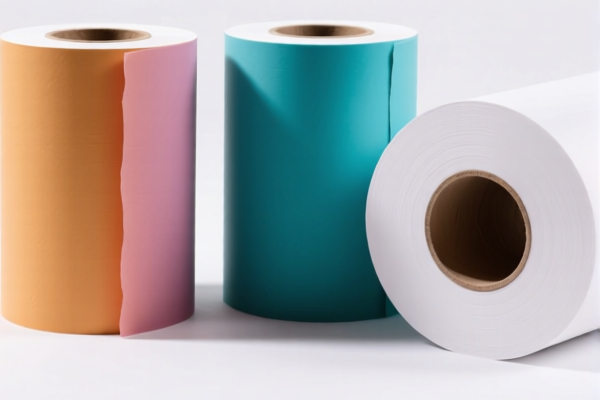
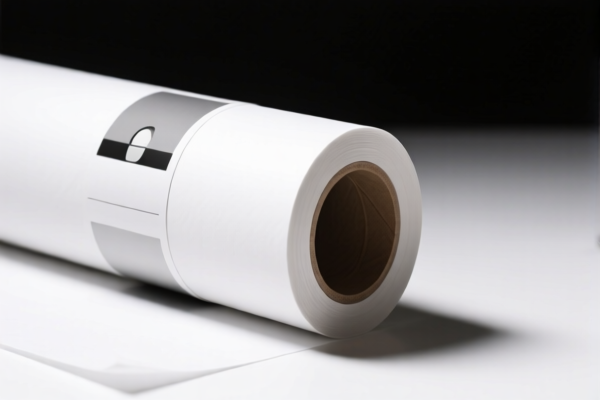
AI Analysis
📸 Color Reversal Photo Paper Roll (Photographic Paper, Sensitized, Unexposed)
🌐 HS Code Reference & Customs Clearance Guide | 2026 Latest Tariff Analysis | Professional Clearance Strategy
📌 I. Product Definition & Classification: Do You Really Understand "Color Reversal Photo Paper"?
Color Reversal Photo Paper is a specialized photographic medium used primarily for producing direct positive prints (such as slides or transparencies) rather than the negative prints used in standard color photography. In international trade, these are classified under Chapter 37 ("Photographic or cinematographic goods").
Specifically, these goods fall under: * Sensitized: The paper is chemically treated with light-sensitive emulsions (typically silver halides). * Unexposed: The product has not yet been used to create an image. * Format: The prompt specifies "Roll," which triggers specific width-based classification rules in the Harmonized System (HS).
⚠️ Key Distinction:
- If the paper is for Color Photography (Polychrome) and intended for Pictorial Use (Continuous Tone) (e.g., artistic slides, scientific transparency), it falls under subheading 3703.10 or 3703.20 depending on the roll width. - Do not confuse with color print paper (for negative-to-positive printing), which has different subheadings. Color reversal paper creates direct positives.
📦 II. HS Code Classification Details (2026 Latest Tariff Authority Alignment)
Based on the provided <DATA>, there are two specific HS Codes depending on the roll width. Both codes carry 0% Total Tax in the provided scenario.
| HS Code | Product Description | Applicable Scenario | Roll Width Condition |
|---|---|---|---|
3703.10.30.30 |
Silver halide papers for pictorial use (continuous tone) for color photography (polychrome) | Artistic color slides, professional transparency rolls | Width > 610 mm (In rolls exceeding 610 mm) |
3703.20.30.30 |
Other silver halide papers for pictorial use (continuous tone) for color photography (polychrome) | General color reversal rolls, smaller format professional films/papers | Other widths (Does not meet the >610 mm criterion or falls under "Other" categories in specific national sub-tariffs) |
🔍 Important Note:
- The primary differentiator is the physical dimension (width > 610mm).
- Both codes specify "For pictorial use (continuous tone)", meaning this is high-quality photographic paper, not for technical diagrams or text-only printing.
- Both codes specify "For color photography (polychrome)", confirming it is for color output, not black and white.
💰 III. 2026 Latest Tariff Rate Details (Detailed Breakdown)
✅ Applicable Country: Importing Country (As per
<DATA>)
✅ Product: Sensitized Color Reversal Photo Paper
✅ Status: Unexposed
✅ Tax Outcome: 0.0% Total Tax
🎯 1. 3703.10.30.30 —— Silver Halide Papers for Pictorial Use (Width > 610 mm)
| Item | Content |
|---|---|
| Base Tariff Rate | 0.0% |
| Additional Tariff (e.g., Section 301/Retaliatory) | 0.0% |
| Total Tax Rate | 0.0% |
| Tax Calculation | Value of Goods × 0% = $0 |
| De Minimis Exemption | N/A (Tax is 0% regardless of value) |
| Legal Basis Path | HS:3703.10.30.30 → Tax:0.0% |
📌 Explanation:
- This code attracts zero duty.
- This is likely due to free trade agreements (FTAs), specific policy exemptions for photographic materials, or national tariff schedules that list this item at 0% to support the media/arts industry.
- No hidden fees in terms of ad valorem tariffs.
🎯 2. 3703.20.30.30 —— Other Silver Halide Papers for Pictorial Use (Color Photography)
| Item | Content |
|---|---|
| Base Tariff Rate | 0.0% |
| Additional Tariff (e.g., Section 301/Retaliatory) | 0.0% |
| Total Tax Rate | 0.0% |
| Tax Calculation | Value of Goods × 0% = $0 |
| De Minimis Exemption | N/A (Tax is 0% regardless of value) |
| Legal Basis Path | HS:3703.20.30.30 → Tax:0.0% |
📌 Explanation:
- Like the previous code, this attracts zero duty.
- Even if the roll width is ≤ 610mm (or falls under the "Other" category), the tax rate remains 0%.
- This consistency suggests that the importing country does not levy protective tariffs on sensitized photographic materials for pictorial use.
🛠️ IV. Customs Clearance Practical Advice (Real-World Pitfall Guide)
✅ 1. Preparation Checklist (Do Not Miss These)
| Document | Mandatory? | Explanation |
|---|---|---|
| ✅ Product Specifications | ✔️ | Must clearly state: "Color Reversal Paper," "Silver Halide," "Sensitized," "Unexposed." |
| ✅ Material Safety Data Sheet (MSDS) | ✔️ | Critical: Photographic paper contains chemical emulsions. Customs may require MSDS to verify it is not hazardous waste or explosive. |
| ✅ Commercial Invoice | ✔️ | Must clearly describe the product as "Photographic Paper, Sensitized, Unexposed" and specify "For Color Photography." Avoid vague terms like "Film" or "Paper." |
| ✅ Certificate of Origin | ✔️ | Required to confirm tariff eligibility (even if 0%, origin data is needed for statistics). |
| ✅ HS Code Declaration | ✔️ | Declare correct HS Code based on roll width (>610mm vs. Other). |
✅ 2. Declaration Tips (Key Mnemonics)
🔥 “Sensitized? Yes. Exposed? No. Color? Yes. Width? Check Size!”
| Scenario | Correct Declaration | Wrong Practice |
|---|---|---|
| Roll Width > 610 mm | 3703.10.30.30 |
Use 3703.20... → Wrong subheading |
| Roll Width ≤ 610 mm | 3703.20.30.30 |
Use 3703.10... → Wrong subheading |
| Exposed Paper | NOT THIS CATEGORY | Declaring exposed slides under HS 3703 → REJECTION |
| Unsensitized Paper | NOT THIS CATEGORY | Declaring blank photo paper (unsensitized) under HS 3703 → Wrong Chapter |
✅ 3. Special Situation Handling
| Situation | Handling Advice |
|---|---|
| Hazardous Chemicals? | If the emulsion contains flammable solvents, provide UN Number and proper Dangerous Goods Declaration. However, standard dry sensitized paper is usually non-hazardous. |
| Customs Inspection | Be prepared for a physical inspection. Customs may cut a sample to verify it is sensitized (not blank) and unexposed. |
| Mixed Batches | If shipments contain both sensitized and unsensitized paper, separate declarations are mandatory. Do not mix. |
| Labeling | Ensure outer packaging clearly states: "PHOTOGRAPHIC PAPER - SENSITIZED - FLAMMABLE IF TREATED WITH SOLVENTS" (if applicable) to aid customs officers. |
🌍 V. Global Market Comparison (2026 Latest)
| Country/Region | Recommended HS Code | Tariff Rate | Certification Requirement | Notes |
|---|---|---|---|---|
| 🇺🇸 USA | 3703.10.90 / 3703.20.90 |
0% (General) | FDA (if applicable for certain chemicals) | 0% is standard for most photographic goods. Check Section 301 for specific origin restrictions. |
| 🇪🇺 EU | 3703 10 00 / 3703 20 00 |
0% | CE (if containing hazardous substances) | No duty for most photographic materials. |
| 🇨🇳 China | 3703.10.30 / 3703.20.30 |
0% ~ 10% | CCC (if applicable) | Tariffs vary. Some sensitized goods may have import duties depending on the specific subheading and FTA. |
| 🇯🇵 Japan | 3703.10.00 / 3703.20.00 |
0% ~ 3.2% | JIS Standards | Low tariffs for photographic goods. |
📌 Conclusion:
- Tariff-Free Zone: The provided<DATA>indicates a 0% tariff environment for these items, which is favorable for importers.
- Focus on Compliance: Since tax is not a barrier, accuracy in description and MSDS submission are the critical factors for smooth clearance.
📌 VI. Common Errors & Pitfalls (Lessons Learned)
❌ Error 1: Declaring as "Blank Photo Paper"
👉 Consequence: Wrong HS Code. Blank paper is under Chapter 48 (Paper). Sensitized paper is Chapter 37. Misdeclaration leads to penalties and delays.
❌ Error 2: Ignoring the "Sensitized" Status
👉 Consequence: Customs may classify it as a chemical product if not clearly described, leading to additional inspections or hazardous material regulations.
❌ Error 3: Mixing Roll Widths
👉 Consequence: If a shipment contains rolls of different widths, declare them separately under 3703.10.30.30 and 3703.20.30.30 to avoid classification errors.
❌ Error 4: Failing to Provide MSDS
👉 Consequence: Shipment held for hazardous material review. Photographic emulsions can sometimes be flagged if the chemical composition is unknown.
✅ Correct Practice:
"Color Reversal Photographic Paper, Sensitized, Unexposed, Silver Halide, for Pictorial Use, Continuous Tone, Rolls >610mm Width, Model XYZ, MSDS Attached."
🎯 VII. Conclusion: Professional Declaration, Zero Hassle, 0% Tax!
🎯 Remember the Mnemonic:
🔹 "Sensitized? Yes. Exposed? No. Color? Yes. Width Matters!"
🔹 "HS 3703 is the key, 0% tax is free, describe accurately, avoid fee!"
📌 Pro Tip:
- Since the tax is 0%, the main risk is customs delay due to misclassification.
- Always include the MSDS with your shipping documents to preemptively answer any chemical safety questions.
- Use precise English descriptions in your invoice: "Sensitized Photographic Paper for Color Reversal Process."
📣 Immediate Action:
📞 Contact your customs broker with the MSDS and product specifications.
🚀 Ensure your invoice clearly states "Sensitized, Unexposed, Color Reversal" to qualify for the 0% tariff under 3703.10.30.30 or 3703.20.30.30.
✨ Professional clearance starts with accurate classification!
💼 Your cost is zero, but your documentation must be perfect!
Customer Reviews
About HS Code Classification
The Harmonized System (HS) is an internationally standardized nomenclature developed by the World Customs Organization (WCO) to classify traded products. Over 200 countries use the HS system as the basis for customs tariffs, trade statistics, and import/export regulations.
Each HS code follows a hierarchical structure:
- Chapter (2 digits) — Broad category of goods (e.g., Chapter 84: Machinery and Mechanical Appliances)
- Heading (4 digits) — More specific grouping within the chapter
- Subheading (6 digits) — Internationally standardized breakdown, used by all WCO member countries
- National subdivisions (8-10 digits) — Country-specific extensions for further classification, such as US HTSUS 10-digit codes
Correct HS code classification is essential for smooth customs clearance, accurate duty payment, and compliance with trade regulations. Misclassification can lead to customs delays, overpayment of duties, or penalties.
When importing from CN to US, the applicable tariff rates may include:
- Most-Favored-Nation (MFN) rate — The standard duty rate applied to WTO members
- General rate — Applied to countries without trade agreements
- Trade remedy duties — Additional tariffs such as Section 301 (anti-dumping), Section 232 (national security), or countervailing duties
The information provided on this page is for reference purposes only. For official classification, please consult with your local customs authority or a licensed customs broker.