Color Self Adhesive Photo Paper
CN → US| HS Code | Tariff Rate | Origin | Destination | Doc |
|---|---|---|---|---|
| 4821902000 | 35.0% | CN | US | Official Doc |
| 4911998000 | 17.5% | CN | US | Official Doc |
| 4821904000 | 35.0% | CN | US | Official Doc |
| 3919905060 | 40.8% | CN | US | Official Doc |
| 3919102055 | 40.8% | CN | US | Official Doc |
Product Images
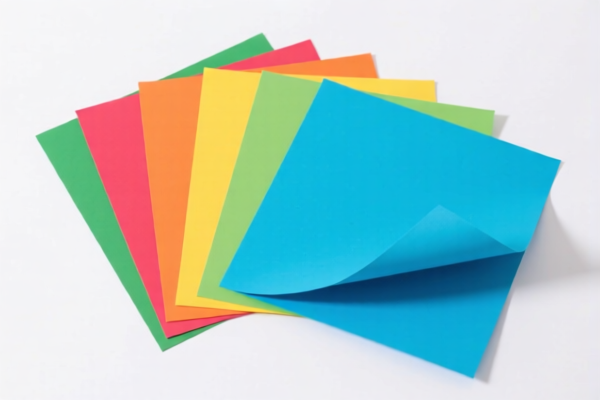
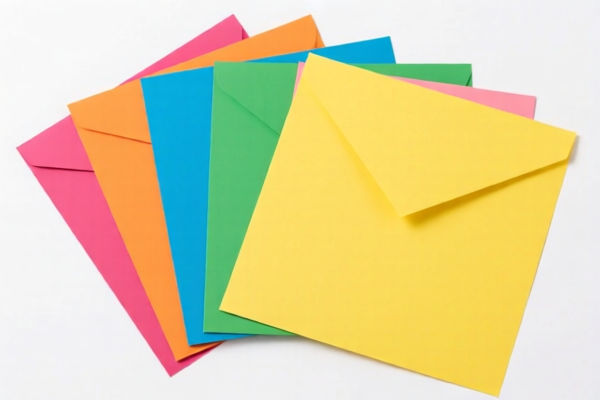
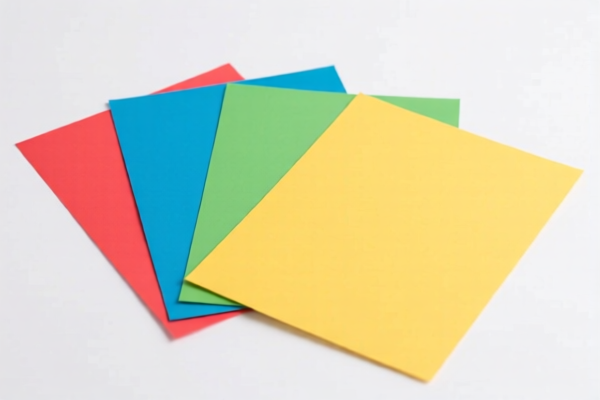
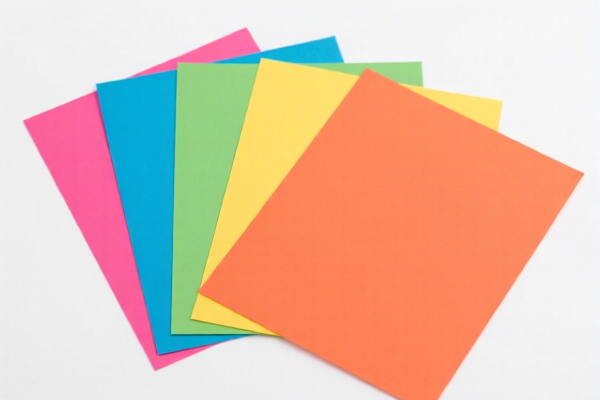
AI Analysis
🖼️ Color Self-Adhesive Photo Paper (Stickers/Labels)
🌐 HS Code Reference & Clearance Guide | 2026 Latest Tariff Analysis | Professional Customs Strategy
📌 I. Product Definition & Classification: Do You Really Understand "Color Self-Adhesive Photo Paper"?
Color Self-Adhesive Photo Paper is a versatile printing substrate used for commercial printing, photo albums, packaging, and decorative stickers. In international trade, it is not classified as a single entity. Instead, it is categorized based on its base material and functional definition.
Two Main Categories: 1. Paper-Based Adhesive Products: If the backing paper is primarily paper, it falls under Chapter 48. 2. Plastic/Polymer-Based Adhesive Products: If the backing material is plastic (e.g., vinyl, PET, PVC), it falls under Chapter 39.
⚠️ Key Distinction Point:
- If the primary material is Paper → Look at HS 4821.
- If the primary material is Plastic → Look at HS 3919.
- Misclassification leads to massive tariff differences (17.5% vs. 40.8%).
📦 II. HS Code Classification Details (2026 Latest Tariff Authority Cross-Reference)
| HS Code | Product Description | Application Scenario | Base Material |
|---|---|---|---|
4821.90.20.00 |
Other self-adhesive paper labels | Generic paper stickers, photo labels on paper backing | ✅ Paper |
4911.99.80.00 |
Other printed matter | Stickers considered as "printed goods" rather than labels | ✅ Paper/Any |
4821.90.40.00 |
Other self-adhesive labels | General purpose adhesive labels (paper-based) | ✅ Paper |
3919.90.50.60 |
Self-adhesive flat shapes, of plastics | Plastic-backed photo stickers, vinyl decals | ✅ Plastic |
3919.10.20.55 |
Self-adhesive flat shapes, of plastics (rolls) | Rolls of plastic-based adhesive film/stickers | ✅ Plastic |
🔍 Critical Reminder:
- Chapter 48 vs. Chapter 39: The physical composition of the backing determines the chapter.
- "Photo Paper" Trap: Even if it says "Photo Paper," if it has an adhesive backing, it is no longer just "paper"; it becomes an "adhesive product."
- 4911.99.80.00 is a residual category for printed items that don't fit specific label definitions but are still printed.
💰 III. 2026 Latest Tariff Rate Breakdown (Including Surtaxes & Policy Add-ons)
✅ Applicable Country: United States (US)
✅ Origin: China (CN)
✅ Effective Date: 2025年11月10日起 (Including subsequent imports)
🎯 1. Paper-Based Classifications (Lower Base Tariff, Higher Surtax)
📌 4821.90.20.00 & 4821.90.40.00 —— Self-Adhesive Paper Labels
| Item | Content |
|---|---|
| Base Rate | 0.0% (ad valorem) |
| USITC Surtax | +25.0% (Section 301 Tariff) |
| IEEPA Surtax | +10.0% (122 Clauses, Targeting China) |
| Total Rate | 35.0% |
| Tax Calculation | CIF Value × 35% |
| De Minimis Eligibility | ❌ No (deny_de_minimis) |
| Legal Basis Path | Section 301: 4821 → IEEPA: 122 |
📌 Explanation:
- Although the base tariff is 0%, the 25% Section 301 tariff applies to Chinese origin goods.
- The 10% IEEPA tariff is a new/additional levy under specific trade clauses.
- Total: 35%. This is a moderate-to-high cost for paper-based adhesive goods.
📌 4911.99.80.00 —— Other Printed Matter
| Item | Content |
|---|---|
| Base Rate | 0.0% |
| USITC Surtax | +7.5% |
| IEEPA Surtax | +10.0% |
| Total Rate | 17.5% |
| Tax Calculation | CIF Value × 17.5% |
| De Minimis Eligibility | ❌ No (deny_de_minimis) |
| Legal Basis Path | Section 301: 4911 → IEEPA: 122 |
📌 Strategy Note:
- This is the most tax-efficient classification if customs authorities accept it as "printed matter" rather than "labels."
- Risk: Customs may reject this if the product is clearly a "self-adhesive label" (which forces it into 4821 at 35%).
- Justification: Argue that the primary value is in the printing/design (the photo), not the adhesive function.
🎯 2. Plastic-Based Classifications (Higher Base Tariff)
📌 3919.90.50.60 & 3919.10.20.55 —— Self-Adhesive Plastic Flat Shapes
| Item | Content |
|---|---|
| Base Rate | 5.8% |
| USITC Surtax | +25.0% |
| IEEPA Surtax | +10.0% |
| Total Rate | 40.8% |
| Tax Calculation | CIF Value × 40.8% |
| De Minimis Eligibility | ❌ No (deny_de_minimis) |
| Legal Basis Path | USITC: 3919 → Section 301 → IEEPA: 122 |
📌 Explanation:
- If your photo paper is on a plastic/vinyl/PET backing, it is classified under Chapter 39.
- Unlike paper, plastic-based adhesives have a base duty of 5.8%.
- Total: 40.8%. This is the highest cost scenario.
- Conclusion: Avoid this classification if possible. Use paper backing to stay in Chapter 48.
🛠️ IV. Customs Clearance Practical Advice (Real-World Pitfall Avoidance Guide)
✅ 1. Preparation Checklist (Mandatory Documents)
| Document | Must Provide | Description |
|---|---|---|
| ✅ Product Specification | ✔️ | Clearly state: "Self-Adhesive," "Backing Material: Paper/Plastic," "Usage: Printing/Photo" |
| ✅ Composition Breakdown | ✔️ | Specify % of paper vs. adhesive vs. ink. Crucial for Chapter 48 vs. 39. |
| ✅ Product Photos | ✔️ | Show the label/sticker, the adhesive side, and the printed side. |
| ✅ Commercial Invoice | ✔️ | Use precise description: "Self-Adhesive Paper Labels for Printing" or "Printed Photo Stickers" |
| ✅ Origin Certificate | ✔️ | Proof of Chinese Origin triggers the surtaxes. |
✅ 2. Declaration Strategy (Key Mantra)
🔥 "Paper Backing = Chapter 48 (Cheaper), Plastic Backing = Chapter 39 (Expensive)! Choose wisely!"
| Scenario | Correct HS Code | Wrong Practice | Consequence |
|---|---|---|---|
| Paper-backed photo sticker | 4821.90.20.00 or 4911.99.80.00 |
Declare as 3919 (Plastic) |
Pay 40.8% instead of 35% or 17.5% |
| High-value design/printed art | 4911.99.80.00 |
Declare as 4821 (Label) |
Pay 35% instead of 17.5% |
| Vinyl/Vinyl-PVC sticker | 3919.90.50.60 |
Declare as 4821 (Paper) |
Customs Rejection + Penalty |
📌 Pro Tip:
- If the product is purely for decoration or artistic display and not for labeling goods, argue for 4911.99.80.00 ("Other Printed Matter") to save 17.5%.
- If it is for commercial labeling (e.g., price tags, product stickers), you must use 4821.90.20.00 or 4821.90.40.00.
✅ 3. Special Circumstances
| Situation | Handling Advice |
|---|---|
| Mixed Materials (Paper with Plastic Film) | If the plastic film is the primary surface, customs may push for Chapter 39. Stick to paper backing if possible. |
| Rolls vs. Sheets | Both 4821 codes apply to sheets and rolls. 3919 explicitly mentions rolls. Ensure format matches HS description. |
| Customs Audit | Provide a "Material Declaration Letter" stating the backing is 100% paper if claiming 4821. |
🌍 V. Global Market Comparison (2026 Latest)
| Country/Region | Recommended HS Code | Tariff (China Origin) | Certification | Remarks |
|---|---|---|---|---|
| 🇺🇸 USA | 4911.99.80.00 |
17.5% | None | Lowest duty if classified as printed matter. |
| 🇺🇸 USA | 4821.90.20.00 |
35.0% | None | Standard for adhesive labels. |
| 🇺🇸 USA | 3919.90.50.60 |
40.8% | None | Highest duty for plastic adhesives. |
| 🇨🇳 China | 4821.90.20.00 |
5-8% | None | Low import duty, no surtaxes. |
| 🇪🇺 EU | 4821.90.20.00 |
2.0% - 5.0% | REACH | No Section 301 equivalent. |
📌 Conclusion:
- The USA is the only major market with these punitive surtaxes (301 + IEEPA).
- For the US market,4911.99.80.00(17.5%) is the optimal classification if your product can be legally defined as "printed matter" (e.g., artistic photo stickers) rather than functional "labels."
📌 VI. Common Errors & Pitfall Guide (Blood & Tears Lessons)
❌ Error 1: Declaring a plastic-backed sticker as paper (4821).
👉 Result: Customs inspection reveals plastic film → Penalty + Retroactive Tax at 40.8%.
❌ Error 2: Declaring all stickers as "Labels" (4821) when they are Decorative Art.
👉 Result: Missed opportunity for 17.5% rate. Pay 35% unnecessarily.
❌ Error 3: Ignoring the IEEPA 10% clause.
👉 Result: Underestimating total landed cost. 10% is on top of 25%, not inclusive.
❌ Error 4: Using vague descriptions like "Stickers" on Invoice.
👉 Result: Customs delays for classification review → Port Storage Fees.
✅ Correct Action:
"Self-Adhesive Paper Labels, White Base, Matte Finish, for Commercial Printing, Model XYZ, 100% Paper Backing"
OR
"Printed Photo Stickers, Artistic Design, Self-Adhesive Backing, Chapter 49 Classification"
🎯 VII. Conclusion: Professional Declaration, Cost Optimization
🎯 Remember the Mantra:
🔹 "Printed Art = 17.5%, Label Function = 35%, Plastic Base = 40.8%"
🔹 "Choose 4911 if you can prove it's 'printed matter', not just a label!"
📌 Tips:
- If your product is high-value artistic photo paper stickers, strongly consider arguing for 4911.99.80.00 to save 17.5% vs. 35%.
- If it is standard commercial labeling, stick to 4821.90.20.00 to avoid 3919's 40.8%.
- Always verify the backing material. Paper is king in Chapter 48.
📣 Immediate Action:
📞 Consult a licensed customs broker for Pre-Ruling on
4911eligibility.
🚀 Save 17.5% on your customs duty by classifying correctly!
✨ Professional Customs Clearance Starts with Precise Classification!
💼 Your Bottom Line Depends on This 10% Difference!
Customer Reviews
About HS Code Classification
The Harmonized System (HS) is an internationally standardized nomenclature developed by the World Customs Organization (WCO) to classify traded products. Over 200 countries use the HS system as the basis for customs tariffs, trade statistics, and import/export regulations.
Each HS code follows a hierarchical structure:
- Chapter (2 digits) — Broad category of goods (e.g., Chapter 84: Machinery and Mechanical Appliances)
- Heading (4 digits) — More specific grouping within the chapter
- Subheading (6 digits) — Internationally standardized breakdown, used by all WCO member countries
- National subdivisions (8-10 digits) — Country-specific extensions for further classification, such as US HTSUS 10-digit codes
Correct HS code classification is essential for smooth customs clearance, accurate duty payment, and compliance with trade regulations. Misclassification can lead to customs delays, overpayment of duties, or penalties.
When importing from CN to US, the applicable tariff rates may include:
- Most-Favored-Nation (MFN) rate — The standard duty rate applied to WTO members
- General rate — Applied to countries without trade agreements
- Trade remedy duties — Additional tariffs such as Section 301 (anti-dumping), Section 232 (national security), or countervailing duties
The information provided on this page is for reference purposes only. For official classification, please consult with your local customs authority or a licensed customs broker.