Color Sensitized Carbonless Paper (Multi color)
CN → US| HS Code | Tariff Rate | Origin | Destination | Doc |
|---|---|---|---|---|
| 4811909030 | 35.0% | CN | US | Official Doc |
| 4811909080 | 35.0% | CN | US | Official Doc |
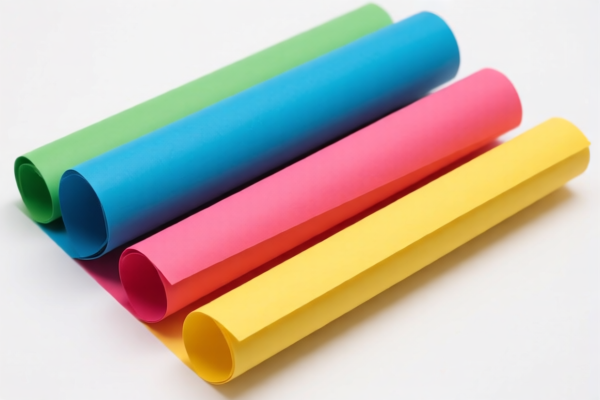
Product Images



AI Analysis
🖨️ Color Sensitized Carbonless Paper (Multi-color)
🌐 HS Code Reference & Clearance Guide | 2026 Latest Tariff Analysis | Professional Strategy for NCR Paper
📌 I. Product Definition & Classification: What is "Color Sensitized Carbonless Paper"?
Color Sensitized Carbonless Paper, commonly known as NCR Paper (No Carbon Required), is a multi-layered paper used to create duplicate copies without the need for carbon paper. It consists of Top Sheets (CB/CFB) and Bottom Sheets (CF), coated with micro-encapsulated dyes (top) and clay-based color developers (bottom).
In international trade, this product is strictly classified under Chapter 48 (Paper and Paperboard). Specifically, because it is coated, impregnated, covered, or printed, it falls under heading 4811.
⚠️ Key Distinction:
- If the paper is coated (which NCR paper always is, with dye or developer) → HS Code 4811.
- If it were uncoated writing paper → HS Code 4802.
- Note: The input data specifically references 4811.90, confirming this is coated/processed paper, not standard uncoated stock.
📦 II. HS Code Classification Details (2026 Latest Tariff Authority)
Based on the provided data, the product falls into two specific sub-categories under 4811.90.90. The distinction lies in the specific type of coating or finish.
| HS Code | Product Description | Application Scenario | Coating Type |
|---|---|---|---|
4811.90.90.30 |
Direct thermal coated paper | Papers with special thermal-sensitive coatings that react to heat. Note: While "Color Sensitized" usually implies mechanical pressure, some advanced NCR papers may have thermal layers or be misclassified if not explicitly described as "mechanically activated". However, based on the text, this is a specific coated variant. | Thermal / Chemical Coating |
4811.90.90.80 |
Other | Standard Multi-Color Carbonless Paper (NCR). This is the most likely code for general "Color Sensitized" papers that rely on micro-encapsulated dyes activated by pressure, not heat. | Dye/Developer Coating |
🔍 Critical Clarification:
- "Color Sensitized" typically refers to the chemical reaction between the dye (CB/CFB) and the developer (CF) upon pressure.
-4811.90.90.80is the "Other" category, which catches the vast majority of multi-color NCR papers that do not fit into the specific "Direct thermal" niche.
-4811.90.90.30is for Direct Thermal papers (like receipt paper that turns black when heated). Do NOT use this for standard multi-color NCR paper unless it is specifically thermal-sensitive. Misclassification here can lead to delays.
💰 III. 2026 Latest Tariff Rate Breakdown (Including Surtaxes)
✅ Applicable Country: United States (US)
✅ Origin: China (CN)
✅ Effective Date: 2025-11-10 (for subsequent imports)
✅ Total Surtax: 25.0% (as per provided data)
🎯 1. 4811.90.90.30 —— Direct Thermal Coated Paper
| Item | Detail |
|---|---|
| Base Tariff | 0.0% |
| Surtax | +25.0% |
| Total Tax Rate | 25.0% |
| Tax Calculation | CIF Value × 25% |
| Legal Basis | Section 301 Tariffs (USITC) |
📌 Explanation:
- This code attracts a 25% surtax due to trade relations.
- Base tariff is 0%, meaning the entire 25% is an additional penalty tax.
🎯 2. 4811.90.90.80 —— Other Paper (Standard NCR)
| Item | Detail |
|---|---|
| Base Tariff | 0.0% |
| Surtax | +25.0% |
| Total Tax Rate | 25.0% |
| Tax Calculation | CIF Value × 25% |
| Legal Basis | Section 301 Tariffs (USITC) |
📌 Explanation:
- Identical tax treatment to thermal paper.
- Total 25% must be factored into your landed cost.
🛠️ IV. Customs Clearance Practical Advice (Actionable Checklist)
✅ 1. Required Documentation (Must-Haves)
| Document | Purpose | Key Detail to Include |
|---|---|---|
| Product Specification Sheet | To prove it is Coated Paper | Must state: "NCR Paper, Multi-Color, Micro-encapsulated Dye Coated" |
| Commercial Invoice | For Valuation | Clearly describe as "Color Sensitized Carbonless Paper (Multi-Color)" |
| Packing List | For Quantity Verification | List number of reams, kg, and dimensions |
| Origin Certificate (CO) | To Confirm Chinese Origin | Required for accurate surtax application |
| Chemical Safety Data Sheet (SDS) | Optional but Helpful | Proves coating materials (dye/developer) are safe |
⚠️ Critical Tip:
- Do NOT describe the product simply as "Paper" or "Writing Paper".
- Use precise terms: "Coated Carbonless Paper" or "NCR Paper".
- If you describe it as "Uncoated Writing Paper," it may be misclassified under 4802, leading to different (potentially higher) duties or compliance issues.
✅ 2. Declaration Strategy (Key Rules)
| Scenario | Correct Declaration | Risk of Error |
|---|---|---|
| Standard Multi-Color NCR | 4811.90.90.80 |
Low if described correctly as "coated" |
| Thermal Receipt Paper | 4811.90.90.30 |
High if mixed with NCR in same shipment |
| Uncoated Copy Paper | 4802.xx |
Very High if misdeclared as coated |
🔥 Golden Rule:
"Coated = 4811. Uncoated = 4802."
Since NCR paper must have coatings (dye/developer), it always goes to 4811.
✅ 3. Special Considerations
| Issue | Solution |
|---|---|
| Mixed Shipments | If shipping both Thermal Paper and NCR Paper, separate the HS Codes on the invoice. Do not lump them together. |
| Sample Kits | Clearly mark as "Samples – Not for Resale" to potentially reduce duty impact (though surtax may still apply). |
| Packaging | Ensure packaging is labeled with "Chinese Origin" to avoid misdeclaration of country. |
🌍 V. Global Market Comparison (2026)
| Country | Recommended HS Code | Total Duty Rate | Notes |
|---|---|---|---|
| 🇺🇸 USA | 4811.90.90.80 |
25% | High surtax due to trade policy |
| 🇨🇳 China | 4811.90.90.80 |
~9-10% | Import duty only, no surtax |
| 🇪🇺 EU | 4811.90.90 |
~6.5% | Standard NMF duty |
| 🇯🇵 Japan | 4811.90.90 |
~6-7% | Standard MFN rate |
📌 Conclusion:
- The US market is the most expensive for importing this product due to the 25% surtax.
- Plan your pricing strategy accordingly. Consider sourcing from non-China origins (e.g., Vietnam, Thailand) if feasible to avoid surtaxes.
📌 VI. Common Mistakes & Pitfalls
❌ Mistake 1: Classifying NCR paper as 4802 (Uncoated Writing Paper)
👉 Result: Incorrect. NCR is coated. Customs may reject or reclassify, causing delays.
❌ Mistake 2: Describing product as "Copy Paper" without mentioning "Coated" or "Carbonless"
👉 Result: Ambiguity. Customs may ask for samples, delaying clearance.
❌ Mistake 3: Ignoring the 25% Surtax in cost calculations
👉 Result: Margin erosion. A 25% unexpected tax can wipe out profitability.
🎯 VII. Conclusion: Precision in Classification Saves Money
🎯 Remember:
🔹 "NCR is Coated → HS 4811. Not 4802."
🔹 "US Import = +25% Surtax. Plan for 25% extra cost."
🔹 "Specify 'Multi-Color Carbonless' to avoid ambiguity."
📌 Pro Tip:
If your NCR paper is direct thermal (turns black with heat), use 4811.90.90.30.
If it is mechanically activated (multi-color copies via pressure), use 4811.90.90.80.
📣 Immediate Action:
📞 Verify your product’s activation method (Thermal vs. Pressure).
📄 Ensure your invoice explicitly states "Coated Carbonless Paper".
💰 Budget for 25% total tax for US imports.
✨ Professional clearance starts with accurate classification!
💼 Protect your margins with precise HS codes!
Customer Reviews
About HS Code Classification
The Harmonized System (HS) is an internationally standardized nomenclature developed by the World Customs Organization (WCO) to classify traded products. Over 200 countries use the HS system as the basis for customs tariffs, trade statistics, and import/export regulations.
Each HS code follows a hierarchical structure:
- Chapter (2 digits) — Broad category of goods (e.g., Chapter 84: Machinery and Mechanical Appliances)
- Heading (4 digits) — More specific grouping within the chapter
- Subheading (6 digits) — Internationally standardized breakdown, used by all WCO member countries
- National subdivisions (8-10 digits) — Country-specific extensions for further classification, such as US HTSUS 10-digit codes
Correct HS code classification is essential for smooth customs clearance, accurate duty payment, and compliance with trade regulations. Misclassification can lead to customs delays, overpayment of duties, or penalties.
When importing from CN to US, the applicable tariff rates may include:
- Most-Favored-Nation (MFN) rate — The standard duty rate applied to WTO members
- General rate — Applied to countries without trade agreements
- Trade remedy duties — Additional tariffs such as Section 301 (anti-dumping), Section 232 (national security), or countervailing duties
The information provided on this page is for reference purposes only. For official classification, please consult with your local customs authority or a licensed customs broker.