Color Sensitized Copy Paper Multi color
CN → US| HS Code | Tariff Rate | Origin | Destination | Doc |
|---|---|---|---|---|
| 4811908050 | 35.0% | CN | US | Official Doc |
| 4802623000 | 35.0% | CN | US | Official Doc |
| 4802561000 | 35.0% | CN | US | Official Doc |
| 4811592000 | 35.0% | CN | US | Official Doc |
Product Images


AI Analysis
📄 Color Sensitized Copy Paper & Multi-Color Paper
🌐 HS Code Reference & Customs Clearance Guide | 2026 Latest Tariff Analysis | Professional Entry Strategies
📌 I. Product Definition & Classification: Do You Really Understand "Color Paper"?
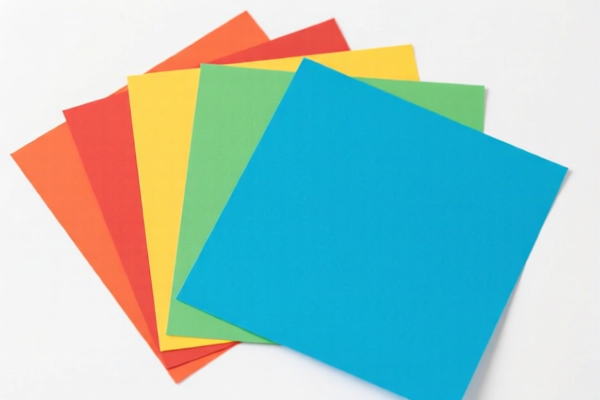
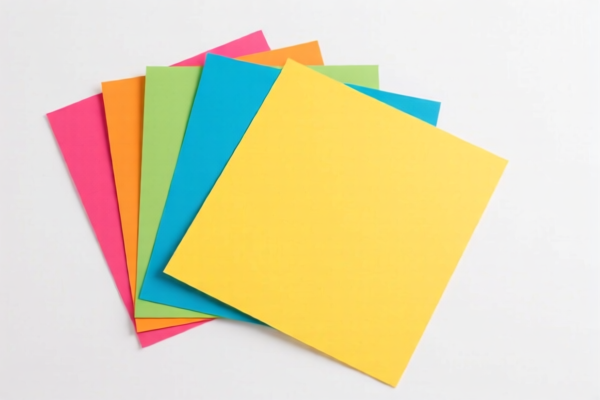
Color Sensitized Copy Paper and Multi-Color Paper are specialized paper products used primarily for office printing, graphic design, school projects, and commercial advertising. Unlike standard white A4 paper, these papers come in various hues (red, blue, yellow, green, etc.) to enhance visual impact.
In international trade, they are generally categorized under Chapter 48 (Paper and Paperboard). The specific HS Code depends on whether the paper is coated, uncoated, or intended for specific writing/printed purposes.
⚠️ Key Distinction Points:
- If the paper is uncoated and used for standard writing/printing → Typically falls under 4802.56 or 4802.62.
- If the paper is coated (for gloss/matte finishes) → Typically falls under 4811.90 or 4811.59.
- Critical Note: For US imports from China, ALL these categories attract heavy additional tariffs (25% + 10%).
📦 II. HS Code Classification Details (2026 Latest Tariff Authority Comparison)
| HS Code | Product Description | Application Scenario | Coating Status |
|---|---|---|---|
4802.56.10.00 |
Copy Paper, uncoated, for writing/printed matter, fits "Writing & Cover Paper" category | Standard colored copy paper, uncoated, for everyday office use | ❌ Uncoated |
4802.62.30.00 |
Copy Paper, for printing/copying, uncoated paper, fits use and basic spec classification | Multi-color sheets for desktop printers, standard office paper | ❌ Uncoated |
4811.59.20.00 |
Copy Paper, paper material, for printing/copying, fits "Printed Paper" category definition | Coated colored paper, often used for higher quality prints | ✅ Coated |
4811.90.80.50 |
Copy Paper, paper material, fits "Coated/Printed Paper" scope, defaults to roll or sheet | Specialty coated multi-color paper, decorative or industrial use | ✅ Coated |
🔍 Key Reminder:
- Uncoated Paper (most common office color paper) typically falls under 4802.56 or 4802.62.
- Coated Paper (glossy/matte colored paper) typically falls under 4811.59 or 4811.90.
- Do NOT mix coatings: If a shipment contains both coated and uncoated papers, they must be declared separately with different HS Codes to avoid customs confusion.
💰 III. 2026 Latest Tariff Rate Breakdown (Including Surtaxes & Policy Add-ons)
✅ Applicable Country: United States (US)
✅ Origin: China (CN)
✅ Effective Date: From November 10, 2025 (including subsequent imports)
🎯 1. 4802.56.10.00 & 4802.62.30.00 —— Uncoated Copy Paper (Most Common)
| Item | Details |
|---|---|
| Base Tariff | 0.0% (Ad Valorem) |
| Section 301 Surtax | +25.0% (USITC Footnote 9903.88.01) |
| IEEPA Surtax | +10.0% (Targeting China/HK products, effective Nov 10, 2025) |
| Total Tax Rate | 35.0% |
| Tax Calculation | CIF Value × 35% |
| De Minimis Exemption? | ❌ No (deny_de_minimis) |
| Legal Basis Path | IEEPA:9903.01.25 → IEEPA:9903.01.24 → USITC:4802.56.10.00 / 4802.62.30.00 → FOOTNOTE:9903.88.01 |
📌 Explanation:
- The 25% surtax is under the "Section 301" trade remedies.
- The 10% is under the "International Emergency Economic Powers Act" (IEEPA).
- Total 35% applies to ALL Chinese-origin copy paper, regardless of color.
- No de minimis exemption: Even small shipments (under $800) are NOT exempt from these tariffs.
🎯 2. 4811.59.20.00 & 4811.90.80.50 —— Coated Copy Paper
| Item | Details |
|---|---|
| Base Tariff | 0.0% |
| Section 301 Surtax | +25.0% |
| IEEPA Surtax | +10.0% |
| Total Tax Rate | 35.0% |
| Tax Calculation | CIF Value × 35% |
| De Minimis Exemption? | ❌ No |
| Legal Basis Path | IEEPA:9903.01.25 → IEEPA:9903.01.24 → USITC:4811.59.20.00 / 4811.90.80.50 → FOOTNOTE:9903.88.01 |
📌 Note:
- Coated colored papers (e.g., glossy photo paper, matte cardstock) face the same 35% total tariff.
- Even if the paper is "specialty" or "decorative," if it’s Chinese-made and imported to the US, the 35% rate stands.
🛠️ IV. Customs Clearance Practical Advice (Real-World Pitfall Guide)
✅ 1. Required Documentation Checklist (Missing Items = Delays)
| Document | Required? | Notes |
|---|---|---|
| ✅ Product Spec Sheet | ✔️ | Must specify: Color, Weight (gsm), Coating status (Coated/Uncoated), Size |
| ✅ Commercial Invoice | ✔️ | Must clearly state: "Copy Paper, Colored, [Coated/Uncoated], Origin: China" |
| ✅ Packing List | ✔️ | Detail weights and quantities per color/package |
| ✅ Certificate of Origin (CO) | ✔️ | Required to confirm Chinese origin for tariff application |
| ✅ Photographs | ✔️ | Show labels, packaging, and sample colors to prove it’s paper, not other materials |
| ✅ Test Reports | ❌ | Not always required, but useful if customs questions "coating" status |
✅ 2. Declaration Tips (Key Mantra)
🔥 "Declare by Coating, Specify Color, Avoid Ambiguity!"
| Situation | Correct Declaration | Wrong Practice |
|---|---|---|
| Standard colored A4 paper | 4802.62.30.00 (Uncoated) |
Vague term "Colored Paper" → Risk of reclassification |
| Glossy colored photo paper | 4811.90.80.50 (Coated) |
Calling it "Uncoated" → Penalties |
| Mixed shipment (Coated + Uncoated) | Separate lines for each HS Code | Combining into one line → Confusion & Delays |
| Bulk Rolls | 4811.90.80.50 |
Calling it "Sheet Paper" → Mismatch |
✅ 3. Special Case Handling
| Situation | Advice |
|---|---|
| Multi-Color Sets | Declare the primary material (paper) and list colors in the description. Do not declare as "Mixed Goods." |
| Small Samples (<$800) | ⚠️ No De Minimis Exemption! Even small packages from China are subject to the 35% tariff. Plan accordingly. |
| Re-exported Paper | If paper was manufactured in China but finished/packaged in another country, you may need a Certificate of Origin proving substantial transformation. |
| Customs Inspection | Be ready to provide a sample if customs doubts whether the paper is "coated" or "uncoated." |
🌍 V. Global Market Comparison (2026 Latest)
| Country/Region | Recommended HS Code | Tariff Rate (China Origin) | Certification | Notes |
|---|---|---|---|---|
| 🇺🇸 USA | 4802.62.30.00 / 4811.90.80.50 |
35% (0% Base + 25% + 10%) | None specific | High tariff barrier |
| 🇨🇳 China | 4802.56.10.00 / 4811.59.20.00 |
5% | CCC (if applicable) | Lower domestic tax |
| 🇪🇺 EU | 4802.56.10.00 / 4811.59.20.00 |
0% - 6.5% | CE (if applicable) | No Section 301 tariffs |
| 🇬🇧 UK | 4802.56.10.00 / 4811.59.20.00 |
0% - 6.5% | UKCA | Post-Brexit independent rules |
| 🇯🇵 Japan | 4802.56.10.00 / 4811.59.20.00 |
0% - 3.2% | PSE (if applicable) | Low tariffs |
📌 Conclusion:
- USA is the only major market with a 35% total tariff on Chinese paper products.
- EU, UK, Japan, and China have significantly lower tariffs (0-6.5%).
- If importing to the US, consider supply chain diversification (e.g., sourcing from Vietnam, Thailand, or Mexico) to avoid the 35% tariff.
📌 VI. Common Mistakes & Pitfalls (Lessons Learned)
❌ Mistake 1: Declaring all colored paper as "Uncoated" when some is coated
👉 Consequence: Customs may reclassify under higher duty rates or penalize for misdeclaration.
❌ Mistake 2: Assuming small shipments (<$800) are tax-free
👉 Consequence: 35% tariff still applies! No de minimis exemption for Chinese origin.
❌ Mistake 3: Using vague terms like "Paper for Printing" without specifying coating
👉 Consequence: Customs may choose the higher-rate HS Code by default.
❌ Mistake 4: Combining coated and uncoated papers in one HS Code line
👉 Consequence: Risk of rejection, delays, or mandatory re-export.
✅ Correct Practice:
"Copy Paper, A4 Size, 80gsm, Uncoated, Multi-Color (Red/Blue/Yellow), Origin: China, HS Code: 4802.62.30.00"
🎯 VII. Conclusion: Professional Declaration Saves Money!
🎯 Remember the Mantra:
🔹 "Coating Defines HS Code, Color Defines Description, 35% is the Price!"
🔹 "HS Code Determines Duty, 35% Total for China, Plan Ahead to Save Costs!"
📌 Tips:
- If your paper is originally manufactured in Vietnam, Thailand, Malaysia, or Mexico, you may apply for IEEPA Exemption, reducing tariffs to 0%-5%.
- Consider applying for a Binding Ruling (Advance Ruling) from US Customs to confirm the correct HS Code before shipment.
📣 Immediate Action:
📞 Contact a professional customs broker + Provide product specs + Apply for HS Code Advance Ruling
🚀 Let your color paper clear customs smoothly, efficiently, and cost-effectively!
✨ Professional Clearance Starts with Accurate Classification!
💼 Every cent of your cost deserves precise calculation!
Customer Reviews
About HS Code Classification
The Harmonized System (HS) is an internationally standardized nomenclature developed by the World Customs Organization (WCO) to classify traded products. Over 200 countries use the HS system as the basis for customs tariffs, trade statistics, and import/export regulations.
Each HS code follows a hierarchical structure:
- Chapter (2 digits) — Broad category of goods (e.g., Chapter 84: Machinery and Mechanical Appliances)
- Heading (4 digits) — More specific grouping within the chapter
- Subheading (6 digits) — Internationally standardized breakdown, used by all WCO member countries
- National subdivisions (8-10 digits) — Country-specific extensions for further classification, such as US HTSUS 10-digit codes
Correct HS code classification is essential for smooth customs clearance, accurate duty payment, and compliance with trade regulations. Misclassification can lead to customs delays, overpayment of duties, or penalties.
When importing from CN to US, the applicable tariff rates may include:
- Most-Favored-Nation (MFN) rate — The standard duty rate applied to WTO members
- General rate — Applied to countries without trade agreements
- Trade remedy duties — Additional tariffs such as Section 301 (anti-dumping), Section 232 (national security), or countervailing duties
The information provided on this page is for reference purposes only. For official classification, please consult with your local customs authority or a licensed customs broker.