Color Sensitized Duplicating Film (Multi color)
CN → US| HS Code | Tariff Rate | Origin | Destination | Doc |
|---|---|---|---|---|
| 9001909000 | 35.0% | CN | US | Official Doc |
| 9001908000 | 35.0% | CN | US | Official Doc |
| 4823400000 | 35.0% | CN | US | Official Doc |
| 4823908000 | 35.0% | CN | US | Official Doc |
| 4811906010 | 35.0% | CN | US | Official Doc |
Product Images



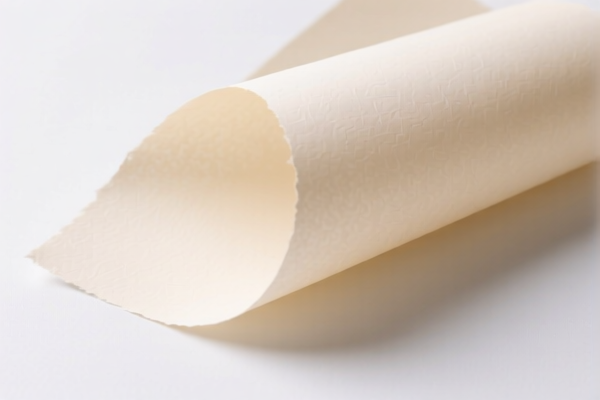
AI Analysis
🎨 Color Sensitized Duplicating Film (Multi-color)
🌐 HS Code Reference & Customs Clearance Guide | 2026 Latest Tariff Analysis | Professional Clearance Strategy
📌 I. Product Definition & Classification: Do You Really Understand "Color Sensitized Film"?
Color Sensitized Duplicating Film (Multi-color), often referred to as "Color Copier Paper" or "Dye-transfer Film," is a specialized optical and imaging material. In international trade, its classification is critical because it sits at the intersection of optical materials, paper products, and imaging supplies.
The key distinction lies in the physical form and chemical composition: * Optical Film Form: If the product is a continuous roll or sheet of plastic/polymer base coated with light-sensitive dyes, it falls under Chapter 90 (Optical Instruments). * Paper/Cardboard Form: If the product is cellulose-based paper or cardboard coated with transfer dyes (often used for manual duplicating or mechanical presses), it falls under Chapter 48 (Paper/Paperboard).
⚠️ Key Classification Point:
- If the substrate is polymer/film → Classify under 9001 (Optical Materials).
- If the substrate is paper/cardboard → Classify under 4823 or 4811 (Paper Products).
- Crucial Warning: All listed HS Codes below are subject to 35% Total Tariff for US imports from China due to Section 301 and IEEPA provisions.
📦 II. HS Code Classification Details (2026 Latest Tariff Authority Comparison)
| HS Code | Product Description | Application Scenario | Material/Substrate Type |
|---|---|---|---|
9001.90.90.00 |
Other optical elements and accessories (Film form) | Continuous film rolls/sheets for optical imaging, multi-color duplicating systems | ✅ Polymer/Film Base |
9001.90.80.00 |
Other optical elements and accessories (Semi-finished) | Film for color copying/processing, intermediate imaging materials | ✅ Polymer/Film Base |
4823.40.00.00 |
Carbon paper, copying paper, and similar copy paper | Multi-color duplicating sheets for manual/machine duplication | ✅ Paper/Sheets/Rolls |
4823.90.80.00 |
Other paper and paperboard articles (Sealing/Pad Materials) | Paper-based duplicating materials used as pads or seals in imaging | ✅ Paper/Fiber Based |
4811.90.60.10 |
Paper, paperboard, etc., coated, impregnated, covered... | Sensitive duplicating paper (coated/colored paper for reproduction) | ✅ Coated Paper Base |
🔍 Critical Reminder:
- "Film" vs. "Paper": If your product is a plastic-based roll used in high-end optical duplicators, use 9001. If it is paper-based (like traditional carbon paper but multi-colored), use 4823 or 4811.
- Common Mistake: Misclassifying paper-based duplicating supplies as optical film. This can lead to customs disputes and delays.
💰 III. 2026 Latest Tariff Rate Details (Including Surcharges & Policy Add-ons)
✅ Applicable Country: United States (US)
✅ Origin: China (CN)
✅ Effective Date: 2025/2026 Import Cycle
🎯 1. 9001.90.90.00 & 9001.90.80.00 —— Optical Film Category
| Item | Content |
|---|---|
| Base Tariff Rate | 0.0% (ad valorem) |
| Section 301 Tariff | +25.0% (301 List 4B) |
| Section 122 Tariff | +10.0% (Specific US Trade Remedy) |
| Total Tariff Rate | 35.0% |
| Tax Calculation | CIF Value × 35% |
| De Minimis Eligibility | ❌ No (Denied) |
| Legal Basis Path | USITC:9001.90.90.00 → SECTION_301:9903.88.01 → IEEPA:9903.01.25 → SECTION_122 |
📌 Explanation:
- The 0% base rate applies to optical materials generally.
- The 25% Section 301 tariff is applied to most Chinese-origin optical components and materials.
- The 10% Section 122 tariff is a specific duty under 19 U.S.C. § 2412, often applied to certain imported goods that threaten national security or economic stability.
- Total: 35%. This is a high-cost category.
🎯 2. 4823.40.00.00 —— Carbon/Copying Paper Category
| Item | Content |
|---|---|
| Base Tariff Rate | 0.0% |
| Section 301 Tariff | +25.0% (301 List 4B) |
| Section 122 Tariff | +10.0% |
| Total Tariff Rate | 35.0% |
| Tax Calculation | CIF Value × 35% |
| De Minimis Eligibility | ❌ No |
| Legal Basis Path | USITC:4823.40.00.00 → SECTION_301:9903.88.01 → SECTION_122 |
📌 Note:
- Even though "paper" often has low base tariffs, the Section 301 and Section 122 surcharges push the total to 35%.
- This applies to multi-color carbon paper and duplicating sheets.
🎯 3. 4823.90.80.00 & 4811.90.60.10 —— Other Paper Products
| Item | Content |
|---|---|
| Base Tariff Rate | 0.0% - 3.5% (varies slightly by subheading, but generally low) |
| Section 301 Tariff | +25.0% |
| Section 122 Tariff | +10.0% |
| Total Tariff Rate | 35.0% (as per data summary) |
| Tax Calculation | CIF Value × 35% |
| De Minimis Eligibility | ❌ No |
📌 Note:
- Whether classified as "other paper articles" (4823.90) or "coated paper" (4811.90), the 35% total tariff remains consistent for Chinese-origin goods under current US trade policy.
🛠️ IV. Customs Clearance Practical Advice (Real-World Pitfall Guide)
✅ 1. Required Documentation Checklist (Mandatory)
| Document | Must Provide | Description |
|---|---|---|
| ✅ Product Specification Sheet | ✔️ | Must clearly state Material Base (Film vs. Paper), Coating Type (Sensitized Dye), and Application (Duplicating/Imaging). |
| ✅ Material Safety Data Sheet (MSDS) | ✔️ | Required if the sensitized coating contains hazardous chemicals. |
| ✅ Product Photos | ✔️ | Clear images showing the product form (roll, sheet, pack) and any markings. |
| ✅ Commercial Invoice | ✔️ | Must explicitly describe the goods as "Color Sensitized Duplicating Film/Paper" and include HS Code. |
| ✅ Origin Certificate | ✔️ | To prove country of origin (China). |
| ✅ Packing List | ✔️ | Detailing units, weight, and dimensions. |
✅ 2. Declaration Tips (Key Mnemonic)
🔥 "Film goes to 90, Paper goes to 48, Both pay 35%!"
| Scenario | Correct HS Code | Incorrect Action | Consequence |
|---|---|---|---|
| Plastic-base film roll | 9001.90.90.00 / 9001.90.80.00 |
Declare as "Paper" | Customs Rejection (Misclassification) |
| Paper-base duplicating sheet | 4823.40.00.00 / 4811.90.60.10 |
Declare as "Optical Film" | Audit Risk & Potential Fine |
| Any of the above (from China) | N/A | Assume 0% or low tariff | 35% Surcharge Applied |
✅ 3. Special Situation Handling
| Situation | Handling Advice |
|---|---|
| Mixed Shipments | If a shipment contains both film (9001) and paper (4823), declare separately with different HS codes. Do not consolidate into one code. |
| Sample/Small Quantity | Even for samples, the 35% tariff applies. There is no de minimis exemption for these categories from China. |
| OEM Custom Film | Provide customer design specs and coating formulation to prove it is a "sensitized" product, not generic plastic film. |
🌍 V. Global Market Comparison (2026 Latest)
| Country/Region | Recommended HS Code | Tariff (China Origin) | Certification | Notes |
|---|---|---|---|---|
| 🇺🇸 USA | 9001.90.90.00 / 4823.40.00.00 |
35% (Base 0% + 25% Sec 301 + 10% Sec 122) | None specific | High tariff barrier; accurate classification is key. |
| 🇨🇳 China | 3702.54 (Photographic) or 4823 |
5% - 8% | N/A | Lower import duty, but check anti-dumping duties. |
| 🇪🇺 EU | 9001.90 / 4823 |
0% - 3% | REACH Compliance | No Section 301/122 equivalent; generally lower cost. |
| 🇦🇺 Australia | 9001.90 / 4823 |
5% | N/A | Moderate tariff; no major trade wars. |
📌 Conclusion:
- USA is the most expensive market for these goods due to the 35% combined tariff.
- EU and Asia-Pacific offer significantly lower tariff burdens.
- Recommendation: If targeting the US market, consider supply chain diversification (e.g., manufacturing in Vietnam or Mexico) to avoid Section 301/122 duties, if possible.
📌 VI. Common Errors & Pitfall Guide (Blood & Tears Lessons)
❌ Error 1: Classifying Paper-based duplicating sheets as Optical Film (9001).
👉 Consequence: Customs may reject the classification, demanding proper Chapter 48 codes, leading to delays.
❌ Error 2: Assuming 0% Tariff because it is "optical material."
👉 Consequence: 35% Back-Tax + Interest + Penalties. The Section 301 and 122 duties are mandatory.
❌ Error 3: Not declaring the Sensitive Coating.
👉 Consequence: If the coating is deemed hazardous, it may trigger DOT/HAZMAT regulations, causing shipping delays or refusals.
✅ Correct Declaration Example:
"Color Sensitized Duplicating Film, Multi-Color, Polymer Base, for Optical Copying Machines, Model XYZ, Made in China. HS Code: 9001.90.90.00"
🎯 VII. Conclusion: Professional Declaration Saves Money!
🎯 Remember the Rule:
🔹 "Film = 9001, Paper = 4823, Both = 35% Total Tax!"
🔹 "Do not assume low rates for optical/paper goods from China!"
🔹 "Accurate material description is your best defense against audits!"
📌 Tips:
- If your film is not from China, check for Free Trade Agreement (FTA) benefits (e.g., USMCA for Mexico/Canada).
- For US imports, always apply for an Advance Ruling if the classification between "Film" and "Paper" is ambiguous.
📣 Immediate Action:
📞 Consult your customs broker with Product Specs (Material Base) + Apply for HS Code Pre-Ruling
🚀 Ensure your goods pass smoothly, avoid penalties, and maximize profit margins!
✨ Professional clearance starts with precise classification!
💼 Your every cent of cost deserves precise calculation!
Customer Reviews
About HS Code Classification
The Harmonized System (HS) is an internationally standardized nomenclature developed by the World Customs Organization (WCO) to classify traded products. Over 200 countries use the HS system as the basis for customs tariffs, trade statistics, and import/export regulations.
Each HS code follows a hierarchical structure:
- Chapter (2 digits) — Broad category of goods (e.g., Chapter 84: Machinery and Mechanical Appliances)
- Heading (4 digits) — More specific grouping within the chapter
- Subheading (6 digits) — Internationally standardized breakdown, used by all WCO member countries
- National subdivisions (8-10 digits) — Country-specific extensions for further classification, such as US HTSUS 10-digit codes
Correct HS code classification is essential for smooth customs clearance, accurate duty payment, and compliance with trade regulations. Misclassification can lead to customs delays, overpayment of duties, or penalties.
When importing from CN to US, the applicable tariff rates may include:
- Most-Favored-Nation (MFN) rate — The standard duty rate applied to WTO members
- General rate — Applied to countries without trade agreements
- Trade remedy duties — Additional tariffs such as Section 301 (anti-dumping), Section 232 (national security), or countervailing duties
The information provided on this page is for reference purposes only. For official classification, please consult with your local customs authority or a licensed customs broker.