Color Sensitized Duplicating Film Multi Color
CN → US| HS Code | Tariff Rate | Origin | Destination | Doc |
|---|---|---|---|---|
| 3701910030 | 38.7% | CN | US | Official Doc |
| 3702520160 | 38.7% | CN | US | Official Doc |
| 3702550060 | 35.0% | CN | US | Official Doc |
| 3704000000 | 35.0% | CN | US | Official Doc |
| 3701910060 | 38.7% | CN | US | Official Doc |
Product Images
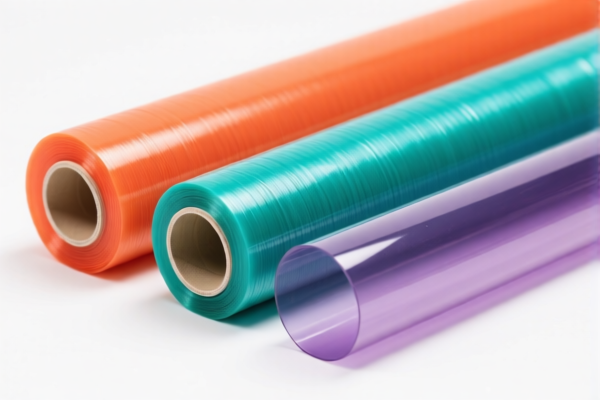
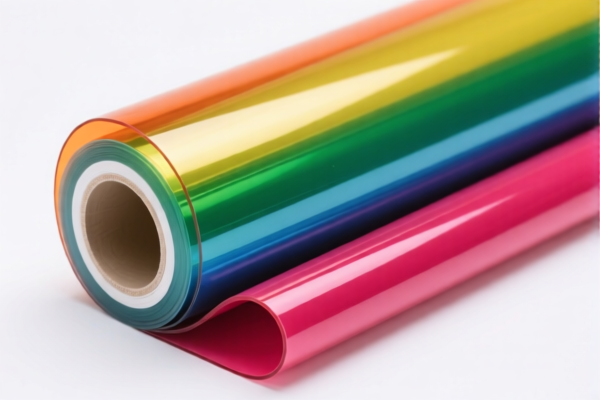
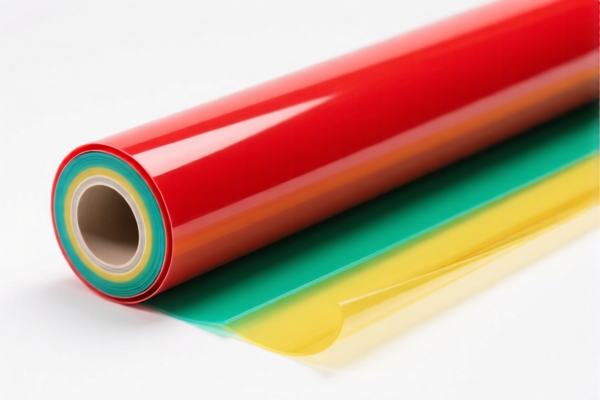

AI Analysis
🎞️ Color-Sensitized Duplicating Film (Multi-Color)
🌐 HS Code Reference & Customs Clearance Guide | 2026 Latest Tariff Analysis | Professional Clearance Strategy
📌 I. Product Definition & Classification: Do You Really Understand "Color-Sensitized Duplicating Film"?
Color-sensitized duplicating film (multi-color) is a specialized photographic material used in professional imaging, printing, and industrial reproduction processes. It is designed to capture or reproduce color images with high fidelity. In international trade, this product falls under Chapter 37: Photographic or Cinematographic Goods.
Key characteristics include: - Sensitization: The film is chemically treated to be sensitive to specific wavelengths of light (multi-color sensitivity). - Format: Typically supplied as rolls or sheets of flexible plastic support (e.g., polyester) coated with light-sensitive emulsion. - Usage: Used for duplicating color negatives/positives, creating intermediate films, or professional multi-color photography. - State: Can be unexposed (new stock) or exposed but undeveloped (if applicable, though most trade involves unexposed stock).
⚠️ Key Distinction:
- If the film is unexposed and intended for general color photography or duplicating → It falls under 3701 or 3702 depending on form and specificity.
- If the film is exposed but not yet developed → It may still fall under 3702 but requires careful declaration to avoid misclassification as "processed" film (which would go to 3706).
- Instant printing film (if applicable) → Falls under 3701.91.
📦 II. HS Code Classification Details (2026 Latest Tariff Authoritative Comparison)
| HS Code | Product Description | Applicable Scenario | Total Tax Rate | Tax Breakdown |
|---|---|---|---|---|
3701.91.00.30 |
Color high-speed film, for color photography (multi-color) and unexposed instant printing film form | General color duplicating film, unexposed, high-sensitivity emulsion | 38.7% | Base Tariff: 3.7%, Additional Tariff: 25.0%, Section 122 Tariff: 10% |
3702.52.01.60 |
Color-use film, belonging to the category of exposed but unexposed, compliant with non-paper, non-textile material color film roll form | Color film rolls, exposed but not developed, non-paper support | 38.7% | Base Tariff: 3.7%, Additional Tariff: 25.0%, Section 122 Tariff: 10% |
3702.55.00.60 |
Color photography film, belonging to exposed, unexposed photosensitive materials, compliant with other color film specifications | Other color film rolls, exposed but not developed, general purpose | 35.0% | Base Tariff: 0.0%, Additional Tariff: 25.0%, Section 122 Tariff: 10% |
3704.00.00.00 |
Film fully matches material/form, color high-sensitivity is an attribute description, no material or use conflict | General color film, unexposed, standard photographic material | 35.0% | Base Tariff: 0.0%, Additional Tariff: 25.0%, Section 122 Tariff: 10% |
3701.91.00.60 |
Color code consistent with film, flat state, compliant with other category material requirements | Color film, unexposed, flat sheet or roll, general photographic use | 38.7% | Base Tariff: 3.7%, Additional Tariff: 25.0%, Section 122 Tariff: 10% |
🔍 Key Reminder:
- Unexposed color film for general photography or duplicating typically falls under 3701 or 3702.
- Exposed but unprocessed film must be clearly declared as "exposed but not developed" to avoid being misclassified as "processed" (which has different tax treatments).
- Instant printing film (if applicable) is specifically covered under 3701.91.
💰 III. 2026 Latest Tariff Rate Details (Including Additional Taxes, Policy Add-ons)
✅ Applicable Country: United States (US)
✅ Origin: China (CN)
✅ Effective Date: November 10, 2025 (and subsequent imports)
🎯 1. 3701.91.00.30 —— Color High-Speed Duplicating Film (Unexposed)
| Item | Details |
|---|---|
| Base Tariff | 3.7% (ad valorem) |
| USITC Additional Tariff | +25% (under USITC Footnote 9903.88.01) |
| IEEPA Additional Tariff | +10% (targeting China/HK products, effective Nov 10, 2025) |
| Total Tariff | 38.7% |
| Tax Calculation | CIF Value × 38.7% |
| De Minimis Exemption Available? | ❌ No (deny_de_minimis) |
| Legal Basis Path | IEEPA:9903.01.25 → IEEPA:9903.01.24 → USITC:3701.91.00.30 → FOOTNOTE:9903.88.01 |
📌 Explanation:
- The 25% USITC tariff is applied under Section 301 of the U.S. Trade Act for Chinese-origin goods;
- The 10% IEEPA tariff is an emergency economic power levy on Chinese products;
- Total 38.7%, which is a high tariff for photographic materials, requiring advance planning.
🎯 2. 3702.52.01.60 —— Exposed but Unprocessed Color Film
| Item | Details |
|---|---|
| Base Tariff | 3.7% |
| USITC Additional Tariff | +25% |
| IEEPA Additional Tariff | +10% |
| Total Tariff | 38.7% |
| Tax Calculation | CIF × 38.7% |
| De Minimis Exemption Available? | ❌ No |
| Legal Basis Path | IEEPA:9903.01.25 → IEEPA:9903.01.24 → USITC:3702.52.01.60 → FOOTNOTE:9903.88.01 |
📌 Note:
- Same as above, applies to exposed but unprocessed color film;
- Must be clearly declared as "exposed but not developed" to avoid misclassification.
🎯 3. 3702.55.00.60 —— Other Color Film Rolls (Exposed but Unprocessed)
| Item | Details |
|---|---|
| Base Tariff | 0.0% |
| USITC Additional Tariff | +25% |
| IEEPA Additional Tariff | +10% |
| Total Tariff | 35.0% |
| Tax Calculation | CIF × 35.0% |
| De Minimis Exemption Available? | ❌ No |
| Legal Basis Path | IEEPA:9903.01.25 → IEEPA:9903.01.24 → USITC:3702.55.00.60 → FOOTNOTE:9903.88.01 |
📌 Note:
- Lower base tariff (0%) due to different sub-category;
- Still subject to 35% total due to additional tariffs.
🎯 4. 3704.00.00.00 —— General Color Film (Unexposed)
| Item | Details |
|---|---|
| Base Tariff | 0.0% |
| USITC Additional Tariff | +25% |
| IEEPA Additional Tariff | +10% |
| Total Tariff | 35.0% |
| Tax Calculation | CIF × 35.0% |
| De Minimis Exemption Available? | ❌ No |
| Legal Basis Path | IEEPA:9903.01.25 → IEEPA:9903.01.24 → USITC:3704.00.00.00 → FOOTNOTE:9903.88.01 |
📌 Note:
- Applies to general color film without specific high-sensitivity or instant printing features;
- Same total tariff as3702.55.00.60.
🎯 5. 3701.91.00.60 —— Other Color Film (Unexposed)
| Item | Details |
|---|---|
| Base Tariff | 3.7% |
| USITC Additional Tariff | +25% |
| IEEPA Additional Tariff | +10% |
| Total Tariff | 38.7% |
| Tax Calculation | CIF × 38.7% |
| De Minimis Exemption Available? | ❌ No |
| Legal Basis Path | IEEPA:9903.01.25 → IEEPA:9903.01.24 → USITC:3701.91.00.60 → FOOTNOTE:9903.88.01 |
📌 Note:
- Similar to3701.91.00.30but without specific "instant printing" designation;
- Total tariff remains 38.7%.
🛠️ IV. Customs Clearance Practical Advice (Real-World Pitfall Avoidance Guide)
✅ 1. Required Documentation Checklist (All Mandatory)
| Document | Required | Notes |
|---|---|---|
| ✅ Product Specification Sheet | ✔️ | Includes film type, sensitivity, format, emulsion type |
| ✅ Material Safety Data Sheet (MSDS) | ✔️ | For chemical emulsion components |
| ✅ Product Photos (including packaging) | ✔️ | Clear labels showing HS Code recommendation, brand, model |
| ✅ Third-Party Test Report | ✔️ | ISO certification, environmental compliance (RoHS, REACH if applicable) |
| ✅ Commercial Invoice | ✔️ | Must state "Color-Sensitized Duplicating Film (Multi-Color), Unexposed/Exposed-Undeveloped" |
| ✅ Certificate of Origin (CO) | ✔️ | If not Chinese origin, may qualify for preferential rates |
| ✅ Packing List | ✔️ | Details quantity, weight, and whether film is rolled or sheeted |
✅ 2. Declaration Tips (Key Mnemonic)
🔥 "Declare State Clearly, Base Tariff Matters, Additional Taxes Are Fixed!"
| Scenario | Correct Declaration | Incorrect Approach |
|---|---|---|
| Unexposed color film | 3701.91.00.30 or 3701.91.00.60 |
Misdeclare as "exposed" → Higher scrutiny |
| Exposed but undeveloped | 3702.52.01.60 or 3702.55.00.60 |
Declare as "processed" → Wrong HS Code, penalties |
| Instant printing film | 3701.91.00.30 |
Declare as general film → Wrong tax rate |
| General color film | 3704.00.00.00 |
Over-specify → Unnecessary complexity |
✅ 3. Special Case Handling
| Scenario | Handling Advice |
|---|---|
| OEM Custom Film | Provide customer order + technical specs to prove specific use |
| Film with Chemical Coatings | Provide MSDS to confirm no hazardous substances |
| Film for Medical/Industrial Use | If specialized, provide end-user certificate to justify classification |
| Film for Military/Aerospace | May require additional security clearance, but HS Code remains same |
🌍 V. Global Major Market Clearance Comparison (2026 Latest)
| Country/Region | Recommended HS Code | Tariff | Certification Requirements | Notes |
|---|---|---|---|---|
| 🇺🇸 United States | 3701.91.00.30 / 3702.55.00.60 |
35.0%–38.7% (Chinese origin) | No special certification | High additional tariffs apply |
| 🇨🇳 China | 3701.91.00.30 / 3702.55.00.60 |
Low/Zero | CCC (if applicable) | No additional tariffs |
| 🇪🇺 European Union | 3701.91.00 / 3702.55.00 |
0%–6.5% | CE (if electronic components) | No additional tariffs |
| 🇦🇺 Australia | 3701.91.00 / 3702.55.00 |
5%–10% | RCM (if applicable) | No additional tariffs |
| 🇯🇵 Japan | 3701.91.00 / 3702.55.00 |
0%–6% | PSE (if applicable) | No additional tariffs |
📌 Conclusion:
- The United States imposes high additional tariffs (25% + 10%) on Chinese-origin photographic films;
- China, EU, Japan, and Australia have much lower or zero base tariffs;
- Supply chain diversification (e.g., producing in Vietnam, Thailand, or Mexico) may significantly reduce U.S. import costs.
📌 VI. Common Errors & Pitfall Guide (Blood & Tears Lessons)
❌ Error 1: Declaring "exposed but undeveloped" film as "unexposed"
👉 Consequence: Misclassification, potential fines, delays in clearance
❌ Error 2: Declaring unexposed film as "processed"
👉 Consequence: Wrong HS Code, higher scrutiny, possible rejection
❌ Error 3: Not providing MSDS for chemical coatings
👉 Consequence: Customs may hold shipment for safety review, causing delays
❌ Error 4: Using vague descriptions like "photographic film" without specifying state (exposed/unexposed)
👉 Consequence: Customs may assign incorrect HS Code, leading to incorrect tariff application
✅ Correct Approach:
"Color-Sensitized Duplicating Film, Multi-Color, Unexposed, Polyester Support, Emulsion Type XYZ, for Professional Duplicating Use, No Hazardous Chemicals, Model ABC, ISO Certified"
🎯 VII. Conclusion: Professional Declaration, Save Time, Reduce Costs!
🎯 Remember the Mnemonic:
🔹 "Declare State Clearly, Base Tariff Matters, Additional Taxes Are Fixed!"
🔹 "HS Code Decides Fate, Tariff Differs by 3.7%, One Mistake, Thousands in Extra Costs!"
📌 Pro Tip:
If your film is originally from Vietnam, Mexico, Thailand, or Malaysia, you may qualify for IEEPA Exemptions, with tariffs as low as 0%–5%;
It is recommended to apply for an Advance Ruling before shipment to avoid clearance risks.
📣 Immediate Action:
📞 Contact a professional customs broker + Provide product specs + Apply for HS Code Advance Ruling
🚀 Ensure your film clears customs smoothly, exports efficiently, and maximizes profits!
✨ Professional Clearance Starts with Precise Classification!
💼 Every Penny of Your Cost Deserves Accurate Calculation!
Customer Reviews
About HS Code Classification
The Harmonized System (HS) is an internationally standardized nomenclature developed by the World Customs Organization (WCO) to classify traded products. Over 200 countries use the HS system as the basis for customs tariffs, trade statistics, and import/export regulations.
Each HS code follows a hierarchical structure:
- Chapter (2 digits) — Broad category of goods (e.g., Chapter 84: Machinery and Mechanical Appliances)
- Heading (4 digits) — More specific grouping within the chapter
- Subheading (6 digits) — Internationally standardized breakdown, used by all WCO member countries
- National subdivisions (8-10 digits) — Country-specific extensions for further classification, such as US HTSUS 10-digit codes
Correct HS code classification is essential for smooth customs clearance, accurate duty payment, and compliance with trade regulations. Misclassification can lead to customs delays, overpayment of duties, or penalties.
When importing from CN to US, the applicable tariff rates may include:
- Most-Favored-Nation (MFN) rate — The standard duty rate applied to WTO members
- General rate — Applied to countries without trade agreements
- Trade remedy duties — Additional tariffs such as Section 301 (anti-dumping), Section 232 (national security), or countervailing duties
The information provided on this page is for reference purposes only. For official classification, please consult with your local customs authority or a licensed customs broker.