Color Sensitized Duplicating Paper (Multi color)
CN → US| HS Code | Tariff Rate | Origin | Destination | Doc |
|---|---|---|---|---|
| 4811906010 | 35.0% | CN | US | Official Doc |
| 4823908000 | 35.0% | CN | US | Official Doc |
| 4823400000 | 35.0% | CN | US | Official Doc |
| 4811909030 | 35.0% | CN | US | Official Doc |
| 9001909000 | 35.0% | CN | US | Official Doc |
Product Images
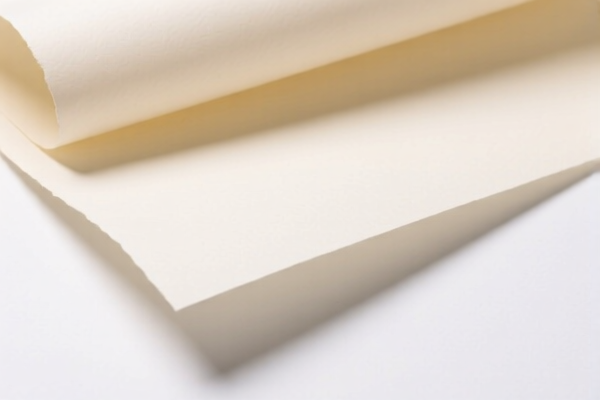
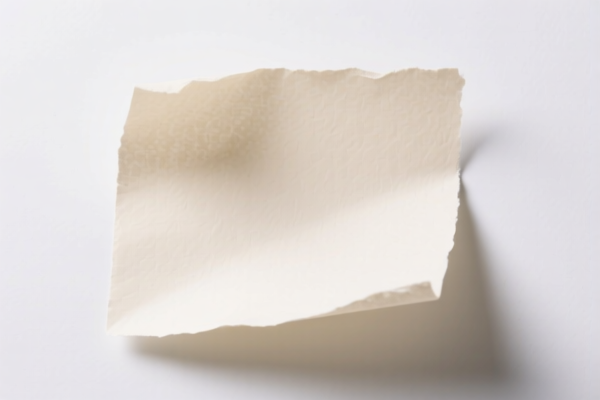

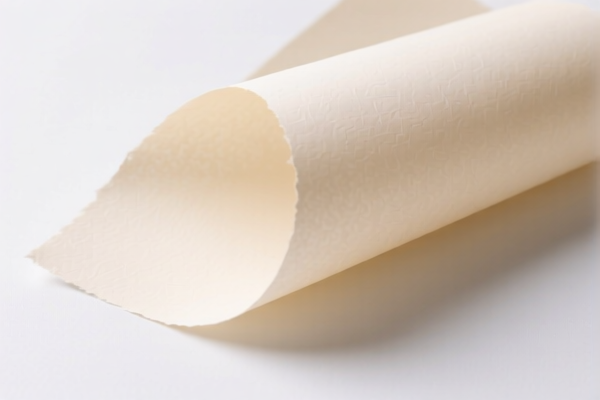
AI Analysis
🖨️ Color Sensitized Duplicating Paper (Multi-color)
🌐 HS Code Reference & Customs Clearance Guide | 2026 Latest Tariff Analysis | Professional Clearance Strategy
📌 I. Product Definition & Classification: What is "Color Sensitized Duplicating Paper"?
Color sensitized duplicating paper, commonly known as mimeograph paper, diazo paper, or re-production paper, is a chemical paper used for rapid duplication of documents. It is coated with light-sensitive chemicals (such as diazo compounds or photo-initiators) that react to blue or ultraviolet light, creating a latent image which becomes visible upon development (exposure to ammonia vapor or water).
Key Characteristics in International Trade: * Sensitized: The paper contains chemical coatings. * Cut to Size/Shape: Usually supplied in rolls or sheets for specific duplicating machines. * Specific Use: For self-recording apparatus or duplicating, not general printing.
⚠️ Critical Distinction:
- If the paper is printed with pre-formed images for self-recording charts (e.g., for weather stations, medical recorders) → It is classified under 4823.40.00.00.
- If the paper is blank or uniformly sensitized for general duplicating (mimeograph/diazo) → It is classified under 4823.90.80.00 (Other articles of paper).
- If the paper is coated/impregnated but not for self-recording and exceeds certain dimensions → It may fall under 4811.90.
📦 II. HS Code Classification Details (2026 Latest Tariff Authority Comparison)
| HS Code | Product Description | Application Scenario | Key Features |
|---|---|---|---|
4823.40.00.00 |
Rolls, sheets, and dials, printed for self-recording apparatus | Medical charts, weather recorders, scientific data loggers | Pre-printed grids/scales; used with recording pens; not for chemical sensitization duplication. |
4823.90.80.00 |
Other articles of paper pulp, paper, paperboard... Gaskets, washers and other seals; Other | General duplicating paper (mimeo/diazo), blank sensitized rolls, specialized paper articles | Chemically sensitized but not pre-printed for self-recording; used for image reproduction via chemical reaction. |
4811.90.60.10 |
Tissue papers having a basis weight not exceeding 29 g/m²... in sheets | Ultra-lightweight sensitive papers (rare for standard duplicating) | Basis weight ≤29 g/m²; specific tissue paper classification. |
4811.90.90.30 |
Other Direct thermal coated paper | Thermal receipt paper, fax paper | Thermal sensitization (heat-sensitive), not chemical/diazo. |
🔍 Focus Analysis for "Color Sensitized Duplicating Paper":
Most standard "Color Sensitized Duplicating Paper" (multi-color diazo mimeo paper) does not fit4823.40because it is not "printed for self-recording apparatus" (like a clock dial). It is a raw material for duplication.
Therefore, it is most accurately classified under4823.90.80.00as "Other articles of paper."
Note: If the paper is extremely lightweight (<29 g/m²), it might compete with4811.90.60.10, but4823.90.80.00is the standard for general duplicating papers that are cut to size.
💰 III. 2026 Latest Tariff Rate Breakdown (Including Surtaxes & Policy Add-ons)
✅ Applicable Country: United States (US)
✅ Country of Origin: China (CN)
✅ Effective Date: November 10, 2025 (and subsequent imports)
🎯 1. 4823.90.80.00 —— Other articles of paper (including standard duplicating paper)
| Item | Content |
|---|---|
| Base Tariff Rate | 0% (ad valorem) |
| USITC Surtax (Section 301) | +25% |
| Total Tax Rate | 25.0% |
| Tax Calculation | CIF Value × 25% |
| De Minimis Eligibility | ❌ No (Not eligible for $800 de minimis exemption if other conditions apply, though generally Section 301 applies regardless of value for most goods from China). |
| Legal Basis Path | USITC: 4823.90.80.00 → Footnote 9903.88.01 (Section 301 Surtax) |
📌 Explanation:
- The Base Tariff is 0%, which is favorable.
- However, due to US-China trade tensions, a 25% surtax is applied to most paper articles from China under Section 301.
- Total Effective Tax: 25%.
- This is significantly lower than electronics (45-50%) but still a substantial cost increase compared to pre-2018 levels.
🎯 2. 4823.40.00.00 —— If mistakenly classified as self-recording paper
| Item | Content |
|---|---|
| Base Tariff Rate | 0% |
| USITC Surtax (Section 301) | +25% |
| Total Tax Rate | 25.0% |
| Legal Basis | Same as above. |
⚠️ Risk Note: Even if classified under
4823.40, the rate is also 25%. However, misclassification can lead to duties evasion penalties or goods rejection if the product description does not match "self-recording apparatus."
🎯 3. 4811.90.60.10 / 4811.90.90.30 —— If classified as coated/thermal/tissue
| Item | Content |
|---|---|
| Base Tariff Rate | 0% |
| USITC Surtax (Section 301) | +25% |
| Total Tax Rate | 25.0% |
📌 Observation: All paper items from China currently face a uniform 25% surtax under Section 301, regardless of the specific subheading within Chapter 48. The key is correct classification to avoid customs delays, not necessarily tax reduction (since the rate is consistent).
🛠️ IV. Customs Clearance Practical Advice (Real-World Pitfall Avoidance Guide)
✅ 1. Required Documentation Checklist
| Document | Must Provide | Explanation |
|---|---|---|
| ✅ Product Specification Sheet | ✔️ | Must detail: Chemical composition (diazo, photo-initiator), weight (gsm), width, length, and sensitivity type (blue light, UV, etc.). |
| ✅ Photos of Product | ✔️ | Show packaging, label, and sample paper. Label should say "Sensitized Paper" or "Duplicating Paper," NOT "Printed Chart Paper." |
| ✅ Composition Statement | ✔️ | Explicitly state: "Contains diazo compounds/photo-sensitizers. Not pre-printed with scales/grids for self-recording instruments." |
| ✅ Commercial Invoice | ✔️ | Description: "Color Sensitized Duplicating Paper, for Mimeograph/Diazo Reproduction." |
| ✅ MSDS (Material Safety Data Sheet) | ✔️ | Required for chemicals. Diazos can be flammable or irritants. |
✅ 2. Declaration Tips (Key Mnemonics)
🔥 “Don’t Say ‘Chart’, Say ‘Sensitized’; Don’t Hide ‘Chemicals’!”
| Scenario | Correct Declaration | Wrong Declaration |
|---|---|---|
| Standard mimeo paper | HS 4823.90.80.00 "Sensitized Paper for Duplicating" | "Chart Paper" → Risk of audit |
| Pre-printed weather recorder paper | HS 4823.40.00.00 "Printed for Self-Recording Apparatus" | "Sensitized Paper" → Misclassification |
| Thermal receipt paper | HS 4811.90.90.30 "Thermal Coated Paper" | "Sensitized Paper" → Different chemical mechanism |
| Blank writing paper | HS 4802/4804 | "Sensitized Paper" → Wrong category entirely |
📌 Critical Point:
- "Sensitized" implies chemical coating.
- "Duplicating" implies use case.
- Do NOT use "Chart Paper" unless it has pre-printed grids for recording instruments (like a seismograph). Most multi-color duplicating papers are blank sheets with color layers that develop images. These go to 4823.90.80.00.
✅ 3. Special Situations Handling
| Situation | Handling Advice |
|---|---|
| Multi-Color Papers | Specify that "multi-color" refers to the chemical layers or protective coatings, not printed graphics. This supports classification under 4823.90. |
| Small Quantities (Sample) | Still subject to 25% tax. De minimis ($800) may apply if shipped via postal/courier as low-value, but customs may still inspect. |
| Hazmat Concerns | Some sensitized papers are flammable. Ensure MSDS is clear. If classified as hazardous, additional shipping costs apply. |
| Origin Marking | "Made in China" must be clearly marked on the product or packaging for US customs. |
🌍 V. Global Major Market Clearance Comparison (2026 Latest)
| Country/Region | Recommended HS Code | Tariff | Certification | Remarks |
|---|---|---|---|---|
| 🇺🇸 United States | 4823.90.80.00 |
25% | - | High surtax due to Section 301. |
| 🇨🇳 China (Import) | 4823.90.80.00 |
0%~5% | CCC (if applicable) | No surtax. |
| 🇪🇺 European Union | 4823.90.90 |
4.5% - 6.5% | - | No surtax. Standard WTO rate. |
| 🇬🇧 United Kingdom | 4823.90.90 |
4.5% - 6.5% | - | Post-Brexit, standard rates apply. |
| 🇦🇺 Australia | 4823.90.90 |
5% | - | No surtax. |
| 🇨🇦 Canada | 4823.90.90 |
5% | - | No surtax. |
📌 Conclusion:
- USA is the only major market with a 25% surtax on these paper goods.
- EU, UK, CA, AU have much lower tariffs (4.5-6.5%), making them more cost-effective destinations for this product.
- If the buyer is in the US, consider supply chain diversification (e.g., produce in Vietnam or Mexico) to avoid the 25% tax, if feasible.
📌 VI. Common Mistakes & Pitfall Guide (Lessons Learned)
❌ Mistake 1: Declaring "Sensitized Paper" as "Printed Chart Paper" (4823.40) to avoid inspection.
👉 Consequence: Customs will detect no printed grids/scales → Misclassification Penalty + 25% Tax + Delay.
❌ Mistake 2: Ignoring MSDS for chemical paper.
👉 Consequence: Goods held at port for hazmat review → Storage Fees + Delays.
❌ Mistake 3: Using "Thermal Paper" description for Diazo paper.
👉 Consequence: Wrong HS code (4811 vs 4823) → Customs Rejection.
❌ Mistake 4: Assuming all paper is 0% tax.
👉 Consequence: Surprise 25% bill from US Customs (CBP) → Cash Flow Issue.
✅ Correct Practice:
“Color Sensitized Duplicating Paper, Diazo-based, Blank Sheets, for Mimeograph Reproduction, Not for Self-Recording Instruments, Made in China.”
🎯 VII. Conclusion: Precision in Classification Saves Money!
🎯 Remember This Mnemonic:
🔹 “Sensitized is not Chart; Chemicals need MSDS.”
🔹 “US Tariff is 25%, EU is 6%. Choose wisely.”
🔹 “HS 4823.90 is your friend for standard duplicating paper.”
📌 Pro Tip:
If you are exporting large volumes to the USA, consider:
1. Advance Ruling: Request a binding ruling from US CBP on your specific product.
2. Supply Chain Shift: Produce in non-China countries to avoid the 25% Section 301 surtax.
3. Value-Added Processing: Export as semi-finished rolls and finish in a third country (if rules of origin allow).
📣 Immediate Action:
📞 Consult a customs broker before shipping.
📄 Prepare MSDS and Product Composition Statement.
🚀 Accurate Declaration ensures smooth clearance and predictable costs!
✨ Professional Clearance, Starting from Accurate Classification!
💼 Your Cost Efficiency Depends on the Right HS Code!
Customer Reviews
About HS Code Classification
The Harmonized System (HS) is an internationally standardized nomenclature developed by the World Customs Organization (WCO) to classify traded products. Over 200 countries use the HS system as the basis for customs tariffs, trade statistics, and import/export regulations.
Each HS code follows a hierarchical structure:
- Chapter (2 digits) — Broad category of goods (e.g., Chapter 84: Machinery and Mechanical Appliances)
- Heading (4 digits) — More specific grouping within the chapter
- Subheading (6 digits) — Internationally standardized breakdown, used by all WCO member countries
- National subdivisions (8-10 digits) — Country-specific extensions for further classification, such as US HTSUS 10-digit codes
Correct HS code classification is essential for smooth customs clearance, accurate duty payment, and compliance with trade regulations. Misclassification can lead to customs delays, overpayment of duties, or penalties.
When importing from CN to US, the applicable tariff rates may include:
- Most-Favored-Nation (MFN) rate — The standard duty rate applied to WTO members
- General rate — Applied to countries without trade agreements
- Trade remedy duties — Additional tariffs such as Section 301 (anti-dumping), Section 232 (national security), or countervailing duties
The information provided on this page is for reference purposes only. For official classification, please consult with your local customs authority or a licensed customs broker.