Color Sensitized Duplicating Paper Multi Color
CN → US| HS Code | Tariff Rate | Origin | Destination | Doc |
|---|---|---|---|---|
| 4816900100 | 35.0% | CN | US | Official Doc |
| 3703103060 | 38.7% | CN | US | Official Doc |
| 4816200000 | 35.0% | CN | US | Official Doc |
| 3703103090 | 38.7% | CN | US | Official Doc |
| 4823908680 | 35.0% | CN | US | Official Doc |
Product Images
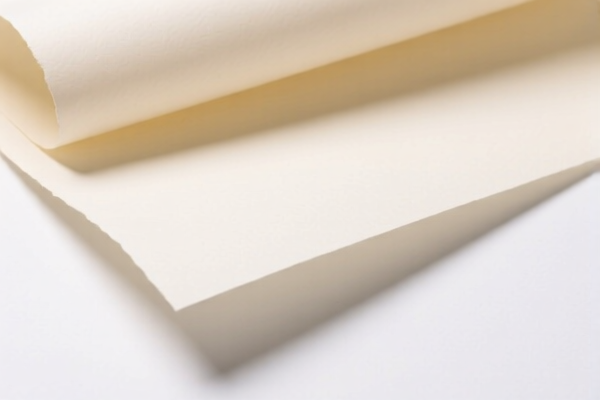
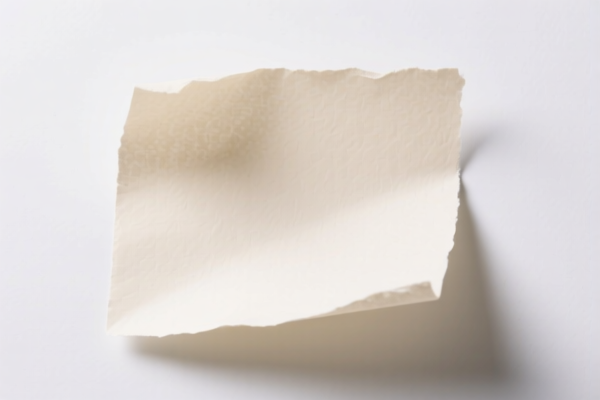

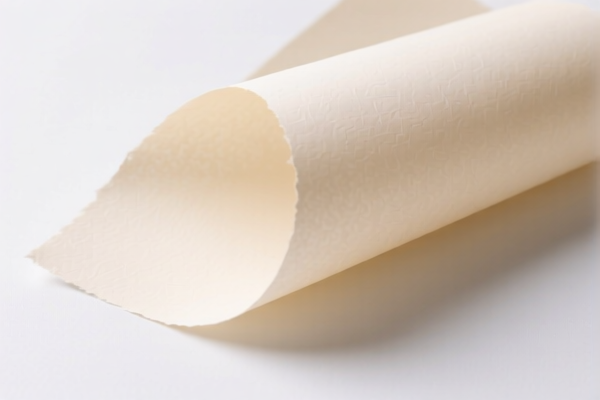
AI Analysis
📸 Color Sensitized Duplicating Paper (Multi-Color)
🌐 HS Code Reference & Customs Clearance Guide | 2026 Latest Tariff Analysis | Professional Clearance Strategy
📌 一、Product Definition: What is "Color Sensitized Duplicating Paper"?
"Color Sensitized Duplicating Paper" refers to special photographic or duplicating paper treated with light-sensitive emulsions (such as diazo, silver halide, or carbon pigments) to allow for the reproduction of images, text, or graphics. The term "Multi-Color" implies that the paper may be coated to handle specific color separation processes, dye-transfer, or multi-layered exposure, rather than being simple black-and-white copy paper.
In international trade, this product sits at the intersection of Paper Products (Chapter 48) and Photographic Goods (Chapter 37). The correct classification depends heavily on the specific chemical sensitivity and the primary function of the paper.
⚠️ Key Distinction:
- If the paper is primarily for mechanical duplicating (e.g., mimeograph, spirit duplicating) or carbon copy without significant photographic emulsion properties → It often falls under Chapter 48.
- If the paper contains silver halides or specialized light-sensitive emulsions for photographic or high-fidelity image transfer → It often falls under Chapter 37.
📦 二、HS Code Classification Details (Based on Provided Data)
According to the provided dataset, there are four potential HS Codes. Here is the detailed breakdown:
| HS Code | Summary Logic | Primary Characteristic |
|---|---|---|
| 4816.90.01.00 | Sensitized paper belongs to paper materials; fits the attribute of carbon paper, duplicating paper, wax paper, etc. Logic for "Other" category does not conflict. | Paper-based duplicating/carbon paper properties. |
| 3703.10.30.60 | Product name fits core material (sensitized/silver halide) characteristics. Since width and specific use are unspecified, it is reasonably inferred to belong to the category of sensitized paper under the "fallback" rule. | Silver Halide / Photographic Sensitized Paper. |
| 4816.20.00.00 | Sensitized paper is made of paper; fits the attribute of paper for copying, transferring, and image processing. Infers it possesses sensitized duplicating functions. | Paper for copying/transfer/image processing (General Sensitized Paper). |
| 3703.10.30.90 | Product name matches the "sensitized" material characteristic. Since the form is not explicitly stated, it defaults to silver halide paper material sensitized materials under the "fallback" principle. | Silver Halide / Photographic Sensitized Paper (General Fallback). |
| 4823.90.86.80 | Product explicitly contains "paper" material, meeting the classification requirement for "paper, paperboard, cellulose wadding and fibres"; form is a manufactured product cut to size or shape. | Other cut paper products (Non-sensitized or less specific). |
🔍 Important Note:
- Codes 3703.10.30.60 and 3703.10.30.90 are highly similar, differing only in the last digit, often indicating slight variations in sub-category or "other" vs. specific types within silver halide papers.
- Codes 4816.90.01.00 and 4816.20.00.00 are more common for non-photographic duplicating papers (like mimeograph or thermal, though thermal is usually 4911 or 3703 depending on tech). The provided summary explicitly links them to "sensitized" functions.
💰 三、2026 Latest Tariff Rate Breakdown (Including Surcharges & Policy Add-ons)
✅ Applicable Country: United States (US)
✅ Origin: China (CN)
✅ Effective Date: From November 10, 2025 (and subsequent imports)
🎯 1. 4816.90.01.00 & 4816.20.00.00 & 4823.90.86.80 —— Paper-Based Duplicating/Sensitized Papers
These codes share the same tariff structure in the provided data.
| Item | Content |
|---|---|
| Base Tariff Rate | 0% (ad valorem) |
| USITC Additional Tariff | +25% (From USITC Footnote 9903.88.01 / Section 301) |
| IEEPA Additional Tariff | +10% (For China/HK products, from Nov 10, 2025) |
| Total Tariff Rate | 35.0% |
| Tax Calculation | CIF Value × 35% |
| De Minimis Exemption | ❌ Not Available (deny_de_minimis) |
| Legal Basis Path | IEEPA:9903.01.25 → IEEPA:9903.01.24 → USITC:4816.90.01.00 → FOOTNOTE:9903.88.01 |
📌 Explanation:
- The 0% base rate reflects the standard Most Favored Nation (MFN) duty for these paper articles.
- The 25% USITC rate is the standard Section 301 tariff on many Chinese goods.
- The 10% IEEPA rate is a specific additional surcharge effective from late 2025 for Chinese-origin goods.
- Total: 35%. This is a high tariff, so accurate classification is crucial to avoid overpayment or penalties.
🎯 2. 3703.10.30.60 & 3703.10.30.90 —— Silver Halide / Photographic Sensitized Papers
These codes share the same tariff structure.
| Item | Content |
|---|---|
| Base Tariff Rate | 3.7% (ad valorem) |
| USITC Additional Tariff | +25% (From USITC Footnote 9903.88.01 / Section 301) |
| IEEPA Additional Tariff | +10% (For China/HK products, from Nov 10, 2025) |
| Total Tariff Rate | 38.7% |
| Tax Calculation | CIF Value × 38.7% |
| De Minimis Exemption | ❌ Not Available (deny_de_minimis) |
| Legal Basis Path | IEEPA:9903.01.25 → IEEPA:9903.01.24 → USITC:3703.10.30.60 → FOOTNOTE:9903.88.01 |
📌 Explanation:
- The 3.7% base rate is slightly higher than the 0% for paper-based codes, reflecting the specialized photographic nature.
- The 25% + 10% surcharges are identical.
- Total: 38.7%. This is 3.7% higher than the paper-based codes.
- Critical Point: If your product is not truly silver halide photographic paper but rather standard duplicating paper, classifying it under 3703 could lead to misclassification penalties if audited, or simply overpaying by 3.7%. Conversely, if it is photographic paper, classifying under 4816 might be considered incorrect and risk customs delays.
🛠️ 四、Customs Clearance Practical Advice (Expert Pitfall Avoidance Guide)
✅ 1. Essential Documentation Checklist
| Document | Required | Description |
|---|---|---|
| ✅ Product Specification Sheet | ✔️ | Must detail the type of sensitivity (e.g., diazo, silver halide, thermal), dimensions, coating type. |
| ✅ Material Safety Data Sheet (MSDS) | ✔️ | Chemical composition is vital to prove if it contains silver halides (Chapter 37) or is just treated paper (Chapter 48). |
| ✅ Product Photos | ✔️ | Clear images of the packaging, label, and the paper itself (showing any color layers or emulsion side). |
| ✅ Commercial Invoice | ✔️ | Clearly state: "Color Sensitized Duplicating Paper, Multi-Color". Avoid vague terms like "Paper". |
| ✅ Certificate of Origin (CO) | ✔️ | Required for determining origin and applying any potential exemptions (though unlikely for China origin under current tariffs). |
| ✅ Usage Declaration | ✔️ | Explain the intended use: e.g., "For use in office duplicating machines" vs. "For photographic image transfer". |
✅ 2. Classification Strategy & Key Tips
🔥 "Know Your Chemistry: Silver Halide = 3703, Paper-Based = 4816."
| Scenario | Recommended HS Code | Why? |
|---|---|---|
| Silver Halide Emulsion | 3703.10.30.60 or 3703.10.30.90 |
If the paper uses light-sensitive silver compounds for high-fidelity color reproduction, it is Photographic Paper. |
| Diazo/Carbon Duplicating | 4816.20.00.00 or 4816.90.01.00 |
If the paper is used for mimeograph, spirit duplicating, or carbon copies, it is Sensitized Paper under Chapter 48. |
| Cut to Size | 4823.90.86.80 |
Only if the sensitization is minor or the primary feature is the cut shape and it doesn't fit the specific sensitized descriptions above. (Least likely for "sensitized" product). |
| Unknown/Unspecified | Use 3703.10.30.60 (Fallback) |
As per the provided summary, if width and use are unknown, the "fallback" rule for sensitized paper points to Chapter 37. |
✅ 3. Special Circumstances
| Situation | Handling Advice |
|---|---|
| "Multi-Color" Labeling | If the paper is for dye-transfer or color separation, it strongly leans towards Chapter 37 (3703) due to the photographic nature. |
| OEM/Private Label | Provide the original manufacturer's specs. Do not modify the technical description on the invoice. |
| Samples vs. Bulk | Even samples are subject to full tariff if value exceeds de minimis ($800 is the general limit, but sensitized paper is denied de minimis according to the data). Declare accurately. |
| Hybrid Products | If the product is paper with a sensitized layer AND a backing, ensure the sensitized layer is the essential character. If not, it might fall under base paper codes. |
🌍 五、Global Market Customs Comparison (2026 Latest)
| Country/Region | Recommended HS Code | Tariff (China Origin) | Certification | Notes |
|---|---|---|---|---|
| 🇺🇸 USA | 3703.10.30.60 / 4816.20.00.00 |
35% - 38.7% | No special certs, but precise description | High tariffs apply. De minimis exemption NOT available for these HS codes. |
| 🇨🇳 China | 3703.10.30 / 4816.20.00 |
~5-10% | CCC (if applicable) | Lower tariffs, no Section 301. |
| 🇪🇺 EU | 3703.10 / 4816.20 |
~5-7% | REACH (Chemical registration) | No Section 301 equivalent, but REACH compliance is critical for sensitized chemicals. |
| 🇬🇧 UK | 3703.10 / 4816.20 |
~5-7% | UKCA / REACH | Post-Brexit rules apply. |
📌 Conclusion:
- The USA is the most challenging market due to the 35-38.7% total tariff and lack of de minimis exemption.
- Accurate classification between Chapter 37 (Photographic) and Chapter 48 (Paper) is critical to avoid disputes and ensure correct duty payment.
📌 六、Common Errors & Pitfalls (Lessons Learned)
❌ Error 1: Classifying "Sensitized Paper" under general "Paper" codes (e.g., 4801, 4802) without the sensitized suffix.
👉 Consequence: Incorrect classification, potential penalties, or delayed clearance.
❌ Error 2: Ignoring the "De Minimis Denial".
👉 Consequence: Assuming shipments under $800 are tax-free. False. These HS codes are specifically denied de minimis exemption, so even small samples incur the full 35-38.7% duty.
❌ Error 3: Vague Description "Copy Paper".
👉 Consequence: Customs may reclassify it to a higher-duty category or demand detailed chemical analysis (MSDS) to prove it's not photographic.
✅ Correct Declaration:
"Color Sensitized Duplicating Paper, Multi-Color, Silver Halide Emulsion, for Photographic Image Transfer, Cut to Size, Model XYZ, MSDS Attached."
🎯 七、Conclusion: Precise Classification Saves Money & Time!
🎯 Remember the Mantra:
🔹 "Silver Halide = 3703 (38.7%), Paper Duplicating = 4816 (35.0%)".
🔹 "No De Minimis! Declare for All Values!
🔹 **"MSDS is Key to Prove Chemistry!
📌 Pro Tip:
If you are unsure whether your product is "Silver Halide" or "Diazo/Carbon", provide the MSDS and Technical Data Sheet to your customs broker. A small investment in expert classification can save thousands in misclassification penalties.
📣 Immediate Action:
📞 Contact a Professional Customs Broker + Provide Product Specs + Apply for Pre-Ruling (if possible)
🚀 Ensure Smooth Clearance, Avoid Delays, and Optimize Your Landing Cost!
✨ Professional Clearance Starts with Accurate Classification!
💼 Every Cent of Duty Counts!
Customer Reviews
About HS Code Classification
The Harmonized System (HS) is an internationally standardized nomenclature developed by the World Customs Organization (WCO) to classify traded products. Over 200 countries use the HS system as the basis for customs tariffs, trade statistics, and import/export regulations.
Each HS code follows a hierarchical structure:
- Chapter (2 digits) — Broad category of goods (e.g., Chapter 84: Machinery and Mechanical Appliances)
- Heading (4 digits) — More specific grouping within the chapter
- Subheading (6 digits) — Internationally standardized breakdown, used by all WCO member countries
- National subdivisions (8-10 digits) — Country-specific extensions for further classification, such as US HTSUS 10-digit codes
Correct HS code classification is essential for smooth customs clearance, accurate duty payment, and compliance with trade regulations. Misclassification can lead to customs delays, overpayment of duties, or penalties.
When importing from CN to US, the applicable tariff rates may include:
- Most-Favored-Nation (MFN) rate — The standard duty rate applied to WTO members
- General rate — Applied to countries without trade agreements
- Trade remedy duties — Additional tariffs such as Section 301 (anti-dumping), Section 232 (national security), or countervailing duties
The information provided on this page is for reference purposes only. For official classification, please consult with your local customs authority or a licensed customs broker.