Color Slide Film
CN → US| HS Code | Tariff Rate | Origin | Destination | Doc |
|---|---|---|---|---|
| 3702520130 | 38.7% | CN | US | Official Doc |
| 3702550030 | 35.0% | CN | US | Official Doc |
| 3704000000 | 35.0% | CN | US | Official Doc |
| 3707100090 | 38.0% | CN | US | Official Doc |
| 3701910060 | 38.7% | CN | US | Official Doc |
Product Images


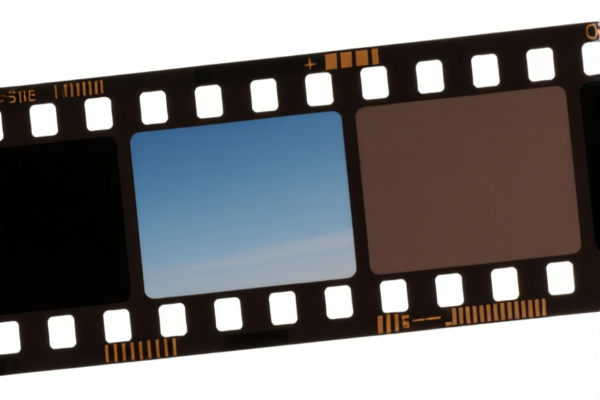
AI Analysis
🎞️ Color Slide Film (Professional Color Reversal Film)
🌐 HS Code Reference & Customs Clearance Guide | 2026 Latest Tariff Analysis | Strategic Entry Protocol
📌 1. Product Definition & Classification: Do You Know Your "Slide Film"?
Color Slide Film (also known as Color Reversal Film or E-6 Process Film) is a specialized photographic material used to create positive images (slides) directly from the film negative. Unlike standard color negative film, it is designed for projection, scanning, or direct printing. In international trade, its classification depends heavily on form (sheet, roll, or unexposed stock) and specific chemical/emulsion characteristics.
⚠️ Critical Distinction for Classification: * Film Rolls (Loaded/Unexposed): Generally fall under 3702 or 3704 depending on width and specific use. * Sheet Film: May fall under 3701 or 3707 depending on professional vs. amateur status. * Developed Slides: Do NOT fall here; they are treated as "processed photographic images" (Chapter 3705 or 3706). Only unexposed film is covered below.
📦 2. HS Code Classification Matrix (2026 Tariff Schedule)
| HS Code | Product Description | Scenario | Tax Detail | Total Tax |
|---|---|---|---|---|
| 3702.52.01.30 | Color Reversal Film: Matched for specific color reversal film usage & form | Standard 35mm/120 rolls for professional/reversal use | Base: 3.7% + Add'l: 25.0% + 122: 10% | 38.7% |
| 3702.55.00.30 | Color Reversal Film: Matching color & reversal characteristics & roll form | General purpose color reversal rolls (specific sub-category) | Base: 0.0% + Add'l: 25.0% + 122: 10% | 35.0% |
| 3704.00.00.00 | Color Reversal Film: Matching film form & photosensitive image carrier attributes | Unspecific "other" photographic film, rolls | Base: 0.0% + Add'l: 25.0% + 122: 10% | 35.0% |
| 3707.10.00.90 | Color Reversal Film Professional: Matching color photography sensitizing emulsion use | Professional emulsion/chemical components or sheet film | Base: 3.0% + Add'l: 25.0% + 122: 10% | 38.0% |
| 3701.91.00.60 | Color Reversal Film Professional: Matching color photography & unexposed film form | Professional unexposed sheet film or specific high-end rolls | Base: 3.7% + Add'l: 25.0% + 122: 10% | 38.7% |
🔍 Key Insight:
All entries share a common 25% "Additional Tariff" (Section 301 / USITC) and a 10% "122 Clause Tariff" (specific to China/counter-measures), resulting in a total tax burden ranging from 35% to 38.7%. The Base Tariff varies slightly (0% vs. 3.0-3.7%) based on the specific sub-heading logic.
💰 3. 2026 Tariff Breakdown (Detailed Policy Analysis)
✅ Target Market: China Export (to US/Global markets subject to these clauses)
✅ Product: Unexposed Color Slide Film
✅ Effective Period: Current 2026 Tariff Regime
🎯 A. The "Additional Tariff" (25.0%)
- Source: Section 301 Tariff Actions (USITC / USTR).
- Logic: Applies to specific Chinese-origin goods, including photographic supplies and optical equipment components.
- Impact: This is a flat 25% ad valorem tax on the CIF value. It applies to ALL HS Codes listed above (3702, 3704, 3707, 3701).
- Status: Mandatory. No de minimis exemption.
🎯 B. The "122 Clause Tariff" (10%)
- Source: Specific retaliatory or counter-measure clauses (often referenced as "Clause 122" in specific trade agreement contexts or specific US Section 232/301 sub-clauses for Chinese goods).
- Logic: Targets goods with strategic or dual-use potential, or as part of broader trade friction measures against China.
- Impact: An additional 10% ad valorem tax.
- Status: Mandatory. Compounded with the Additional Tariff.
🎯 C. Base Tariff (0.0% - 3.7%)
- Source: General Most-Favored-Nation (MFN) rates.
- Variation:
- 3702.55 / 3704.00: Base rate is 0.0% (Duty-free base).
- 3702.52 / 3707.10 / 3701.91: Base rate is 3.0% - 3.7% (Slightly higher due to "professional" or specific emulsion classification).
🧮 Total Tax Calculation Example
Scenario: Import $1,000 USD of Color Slide Film under HS Code 3702.55.00.30. * Base Duty: $1,000 × 0.0% = $0.00 * Additional Duty (25%): $1,000 × 25% = $250.00 * Clause 122 Duty (10%): $1,000 × 10% = $100.00 * Total Tax: $350.00 (35.0%)
Scenario: Import $1,000 USD under HS Code 3702.52.01.30. * Base Duty: $1,000 × 3.7% = $37.00 * Additional Duty (25%): $1,000 × 25% = $250.00 * Clause 122 Duty (10%): $1,000 × 10% = $100.00 * Total Tax: $387.00 (38.7%)
📌 Warning: Do not attempt to use "De Minimis" ($800 exemption) if the shipment is commercial. These goods are strictly commercial and subject to full duties.
🛠️ 4. Customs Clearance Operational Advice (Practical Strategy)
✅ 1. Documentation Checklist (Non-Negotiable)
| Document | Requirement | Purpose |
|---|---|---|
| Commercial Invoice | Must state "Unexposed Color Reversal Film" | Distinguish from "Processed Slides" (Chapter 3705) |
| Packing List | Detail roll count, gauge (35mm, 120), and brand | Verify HS Code applicability |
| Technical Data Sheet | Must specify "Reversal" / "E-6 Process" | Prove it is not "Negative" film (different HS) |
| Chemical Composition Statement | Optional but helpful | Helps classify "Professional Emulsion" (3707 vs 3702) |
| Certificate of Origin | Mandatory | Proves country of manufacture (China = High Tariff) |
| MSDS (Safety Data Sheet) | Required for shipping | Photographic film contains chemicals; hazardous if shipped with chemicals |
✅ 2. Declaration Strategy (The "Golden Rule")
🔥 "Form + Function = HS Code"
| Situation | Correct Declaration | Risk of Error |
|---|---|---|
| Standard 35mm Reversal Roll | 3702.55.00.30 (Base 0%) |
❌ Misclassifying as 3702.52 adds 3.7% unnecessarily. |
| Professional Sheet Film | 3701.91.00.60 or 3707.10.00.90 |
❌ Calling it "Roll Film" triggers incorrect tax logic. |
| Unspecified "Other" Film | 3704.00.00.00 |
✅ Safe fallback if exact spec is unknown (0% base). |
| Developed Slides (Images) | NOT 370x! Use Chapter 3705 | ❌ Wrong chapter = Immediate seizure/delay. |
✅ 3. Special Scenarios
- Scenario A: "Sample" Shipment
- Advice: Even if labeled "Free Sample," if it is commercial-grade film, duties apply. Do not under-declare value.
- Scenario B: Kit (Film + Developer Chemicals)
- Advice: Declare separately!
- Film: 35% or 38.7% tariff.
- Chemicals: Often classified under Chapter 28 or 38 (different HS codes, potentially lower or higher tariffs). Mixing them complicates the "Base Tax" calculation.
- Advice: Declare separately!
- Scenario C: Non-China Origin (e.g., Fujifilm Japan, Ilford UK)
- Advice: If you can prove Non-China Origin (Certificate of Origin), you AVOID the 25% + 10% clauses.
- Result: Tax drops to Base Rate Only (0.0% - 3.7%). This is a massive savings.
🌍 5. Global Market Comparison (2026)
| Region | HS Code | Base Tariff | Additional Tariff | 122 Clause | Total Tax | Notes |
|---|---|---|---|---|---|---|
| 🇺🇸 USA (China Origin) | All Listed | 0-3.7% | 25.0% | 10.0% | 35-38.7% | High barrier to entry |
| 🇺🇸 USA (Japan/EU Origin) | All Listed | 0-3.7% | 0% | 0% | 0-3.7% | Strongly recommended |
| 🇪🇺 EU | 3702/3704 | 0% | 0% | 0% | 0% | No additional 301 clauses |
| 🇨🇳 China (Import) | 3702/3704 | 5% | 0% | 0% | 5% | Domestic market friendly |
| 🇯🇵 Japan | 3702/3704 | 0% | 0% | 0% | 0% | Duty-free import |
📌 Strategic Conclusion:
If you are importing Color Slide Film into the US, source from non-China suppliers (e.g., Japan, Germany, or the US itself) if possible. The tariff savings of ~35% on high-volume film shipments can make or break your profit margin.
📌 6. Common Pitfalls & Avoidance Guide
❌ Mistake 1: Confusing "Slide" (Reversal) with "Negative" Film
👉 Risk: Negative film has different HS codes and potentially different tax rates.
👉 Fix: Explicitly state "Reversal" or "E-6 Process" on the invoice.
❌ Mistake 2: Under-declaring Value to Avoid 122 Clause
👉 Risk: Customs audits film shipments frequently due to "high-value" nature.
👉 Fix: Declare full invoice value. The tax is based on value; hiding value leads to heavy penalties.
❌ Mistake 3: Assuming "Film" is one HS Code
👉 Risk: Using 3704.00 for a specific 35mm professional roll might be too broad.
👉 Fix: Check the width and speed (ISO) to select the most precise code (e.g., 3702.52 vs 3702.55).
✅ Pro Tip:
"If the film is unexposed, it is 3702/3701. If it is exposed but undeveloped, it is 3704. If it is developed, it is 3705 (different tax!). Always verify the state of the film!"
🎯 7. Final Verdict: Smart Shipping Strategy
🎯 Remember:
🔹 "Origin is King": China origin = 35-38.7% Tax. Non-China origin = 0-3.7% Tax.
🔹 "State of Matter": Unexposed = Chapter 3701/3702. Developed = Chapter 3705.
🔹 "Clarity is Money": Invoice descriptions must match HS Code descriptions perfectly.🚀 Action Plan:
1. Verify Origin: Do not ship from China unless you have calculated the 38% cost. 2. Precise Labeling: Use "Color Reversal Film, Unexposed, 35mm" in the commercial invoice. 3. Pre-Declare: If shipping large volumes, apply for a Binding Ruling on the specific HS Code to ensure stability.
📌 Disclaimer:
Tax rates and HS codes are subject to change based on 2026 trade policies. Always consult with a licensed customs broker for the specific shipment.
✨ Professional Customs, Precise Tariffs, Maximum Profit!
💼 Don't let a 38% tax rate kill your film business!
Customer Reviews
About HS Code Classification
The Harmonized System (HS) is an internationally standardized nomenclature developed by the World Customs Organization (WCO) to classify traded products. Over 200 countries use the HS system as the basis for customs tariffs, trade statistics, and import/export regulations.
Each HS code follows a hierarchical structure:
- Chapter (2 digits) — Broad category of goods (e.g., Chapter 84: Machinery and Mechanical Appliances)
- Heading (4 digits) — More specific grouping within the chapter
- Subheading (6 digits) — Internationally standardized breakdown, used by all WCO member countries
- National subdivisions (8-10 digits) — Country-specific extensions for further classification, such as US HTSUS 10-digit codes
Correct HS code classification is essential for smooth customs clearance, accurate duty payment, and compliance with trade regulations. Misclassification can lead to customs delays, overpayment of duties, or penalties.
When importing from CN to US, the applicable tariff rates may include:
- Most-Favored-Nation (MFN) rate — The standard duty rate applied to WTO members
- General rate — Applied to countries without trade agreements
- Trade remedy duties — Additional tariffs such as Section 301 (anti-dumping), Section 232 (national security), or countervailing duties
The information provided on this page is for reference purposes only. For official classification, please consult with your local customs authority or a licensed customs broker.