Color Slide Film (Landscape)
CN → US| HS Code | Tariff Rate | Origin | Destination | Doc |
|---|---|---|---|---|
| 3707100090 | 38.0% | CN | US | Official Doc |
| 3707903290 | 35.0% | CN | US | Official Doc |
| 3701910060 | 38.7% | CN | US | Official Doc |
| 3701910030 | 38.7% | CN | US | Official Doc |
| 3702530060 | 13.7% | CN | US | Official Doc |
| 3702530030 | 38.7% | CN | US | Official Doc |
Product Images
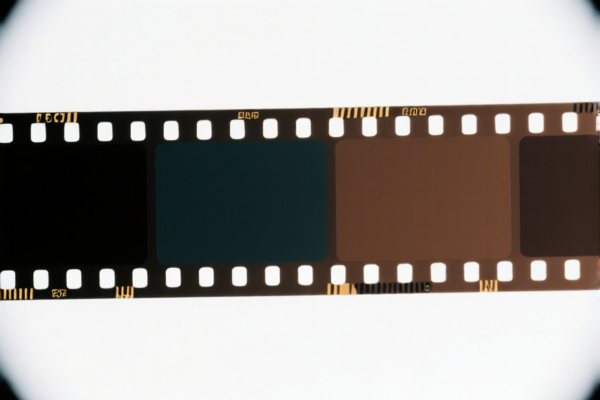
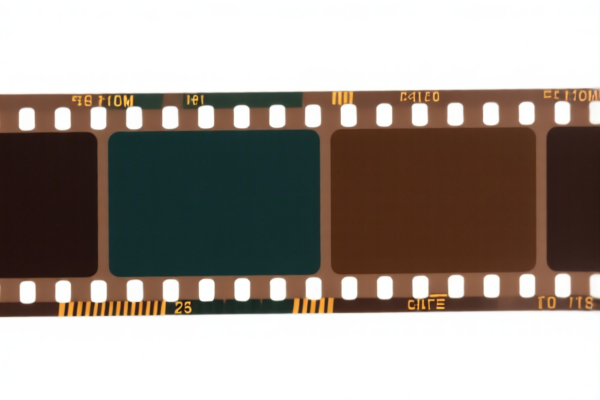
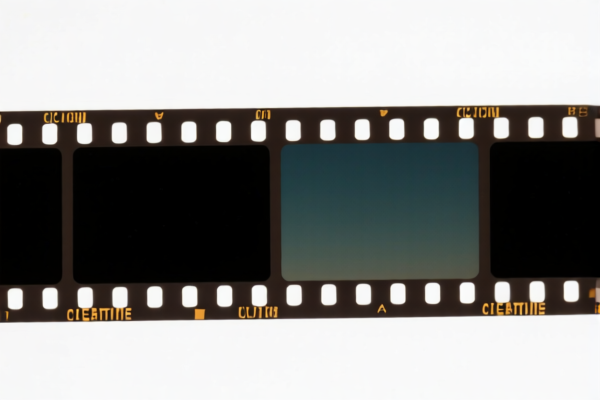

AI Analysis
🎞️ Color Slide Film (Landscape) – Photographic Film for Projection Slides
🌐 HS Code Reference & Customs Clearance Guide | 2026 Tariff Schedule Full Analysis | Professional Clearance Strategy
📌 I. Product Definition & Classification: Do You Really Understand "Color Slide Film"?
Color Slide Film (Landscape), specifically Kodak Ektachrome, Fujifilm Provia, or similar professional reversal films, is high-precision photochemical media used for creating high-resolution, transparent positive images intended for projection or archiving. In international trade, it falls under Chapter 37: Photographic or Cinematographic Goods.
The key distinction lies in the format (flat plates vs. rolls) and the intended use (slides vs. prints). For "Color Slide Film," the primary classification depends on whether it is supplied as rolls or flat sheets/disks, and its specific dimensions.
⚠️ Critical Classification Point:
- If supplied in rolls (standard 35mm or medium format) for making slides → HS Code 3702.53
- If supplied as flat plates/films or discs → HS Code 3701.91
- Note: "Landscape" is a marketing term, not a customs classification term. The classification is based on physical form and chemical composition, not the subject matter of the photos.
📦 II. HS Code Classification Details (2026 Tariff Schedule)
Based on the provided <DATA>, here are the specific HS Codes for Color Slide Film, categorized by format:
| HS Code | Product Description | Format Type | Length/Size Constraint | Application |
|---|---|---|---|---|
3702.53.00.30 |
Other film, for color photography (polychrome): 35 mm | Roll Film | Width >16mm but ≤35mm; Length ≤30m | Standard 35mm Slide Film Rolls |
3702.53.00.60 |
Other film, for color photography (polychrome): Of a width exceeding 16 mm but not exceeding 35 mm and of a length not exceeding 30 m, for slides Other | Roll Film | Width >16mm but ≤35mm; Length ≤30m | Non-35mm rolls or other slide roll formats (e.g., 120 medium format for slides) |
3701.91.00.30 |
Photographic plates and film in the flat... For color photography (polychrome) Disc film | Flat/Disc | Flat or Disc format | Disc film slides (e.g., Kodak Disc format, if still relevant/specific) |
3701.91.00.60 |
Photographic plates and film in the flat... For color photography (polychrome) Other | Flat Sheet | Flat format | Flat color slide films (e.g., large format sheet film for slides) |
🔍 Key Clarification:
- Roll Film (3702.53): This is the most common format for professional landscape photographers using 35mm or 120 cameras. It is sensitized, unexposed, and in rolls.
- Flat/Disc (3701.91): Less common for modern slide work but applicable if the film is supplied in flat sheets or specific disc formats.
- "Landscape": Does not affect HS Code. A roll of film for landscape photography is classified the same as a roll for portrait photography.
💰 III. 2026 Tariff Rate Details (Including Additional Duties)
✅ Applicable Country: United States (US)
✅ Origin: China (CN)
✅ Effective Date: 2025/2026 (Based on current trade policy trends)
🎯 1. 3702.53.00.30 & 3702.53.00.60 —— Color Slide Film (Rolls)
| Item | Detail |
|---|---|
| Base Tariff | 0.0% |
| Additional Tariff (Section 301/IEEPA) | 0.0% |
| Total Tax Rate | 0.0% |
| Tax Calculation | CIF Value × 0% = $0 |
| De Minimis Eligibility | ✅ Yes (If value is below $800) |
| Legal Basis Path | HTSUS:3702.53.00.30/60 → No additional footnotes applied in provided data |
📌 Explanation:
- Unlike many industrial or consumer goods, photographic film generally enjoys 0% duty under the base tariff.
- The provided data explicitly states "Additional Tariff: 0.0%" for these codes.
- This is a major advantage for importers, as there is no 25% or 10% surcharge on these specific HS codes.
🎯 2. 3701.91.00.30 & 3701.91.00.60 —— Color Slide Film (Flat/Disc)
| Item | Detail |
|---|---|
| Base Tariff | 0.0% |
| Additional Tariff (Section 301/IEEPA) | 0.0% |
| Total Tax Rate | 0.0% |
| Tax Calculation | CIF Value × 0% = $0 |
| De Minimis Eligibility | ✅ Yes (If value is below $800) |
| Legal Basis Path | HTSUS:3701.91.00.30/60 → No additional footnotes applied in provided data |
📌 Explanation:
- Flat or disc formats of color slide film also carry 0% total duty.
- This encourages the import of high-quality, niche photographic media for professional and archival use.
🛠️ IV. Customs Clearance Practical Advice (Pitfall Avoidance Guide)
✅ 1. Required Documentation Checklist
| Document | Mandatory? | Notes |
|---|---|---|
| ✅ Commercial Invoice | ✔️ | Must clearly state "Color Reversal Film," "Slide Film," and HS Code. Avoid vague terms like "Photographic Supplies." |
| ✅ Packing List | ✔️ | List number of rolls/sheets, brand, and film speed (ISO/DIN). |
| ✅ Manufacturer's Declaration | ✔️ | Confirm the film is sensitized, unexposed, and made of cellulose nitrate/acetate/polyester (not paper/textile). |
| ✅ Safety Data Sheet (SDS) | ⚠️ | If imported in large quantities, SDS may be required for chemical safety, though photographic film is generally low-risk. |
| ✅ FCC/Other Certifications | ❌ | Not applicable for film rolls. |
✅ 2. Declaration Tips (Critical!)
🔥 “Declare by Format, Not by Subject! Be Specific About ‘Unexposed’!”
| Scenario | Correct Declaration | Incorrect Declaration | Consequence |
|---|---|---|---|
| 35mm Roll Film | 3702.53.00.30 Color slide film, 35mm, unexposed, color reversal |
"Camera Film" or "Photo Film" | Risk of misclassification → Audit/Back Duty |
| 120 Medium Format Roll | 3702.53.00.60 Color slide film, 6cm format, unexposed |
"Photographic Paper" | HIGH RISK: Paper film has different rules; may incur penalties |
| Large Format Sheets | 3701.91.00.60 Flat color slide film, unexposed |
"Photographic Plate" | Ambiguity may delay clearance |
| Disc Format | 3701.91.00.30 Disc film, color |
"CD-ROM" or "Digital Film" | CRITICAL ERROR: Confusion with electronic media |
✅ 3. Special Cases
| Situation | Handling Advice |
|---|---|
| Mixed Shipments (Film + Paper) | Declare separately! Film goes to 3702/3701; Paper to 3703. Mixed declaration may lead to rejection of the whole shipment. |
| Exposed vs. Unexposed | Ensure the invoice clearly states "UNEXPOSED". Exposed film is not "sensitized, unexposed" and may be classified differently or subject to different regulations (e.g., as photographic prints). |
| Brand Names | Include brand (e.g., Kodak, Fujifilm) in the description for clarity, but do not rely on it for classification. |
🌍 V. Global Market Comparison (2026)
| Country/Region | Recommended HS Code | Duty Rate | Notes |
|---|---|---|---|
| 🇺🇸 USA | 3702.53.00.30 / 3702.53.00.60 |
0.0% | No additional tariffs for film rolls. |
| 🇪🇺 EU | 3702.53.00 |
0% | VAT applies (19-25%), but import duty is 0%. |
| 🇨🇳 China | 3702.53.00 |
3.5% - 5% | Base import duty may apply; check latest Chinese tariff. |
| 🇯🇵 Japan | 3702.53.00 |
0% | Generally 0% for photographic film. |
📌 Conclusion:
- USA and EU offer the most favorable duty rates (0%) for imported color slide film.
- No Section 301 or IEEPA surcharges apply to these specific HS codes in the provided data, making them highly competitive for import.
📌 VI. Common Mistakes & Pitfalls (Lessons Learned)
❌ Mistake 1: Declaring "Photographic Film" without specifying "Color Reversal" or "Slide"
👉 Consequence: Customs may default to a less favorable code or request clarification, causing delays.
❌ Mistake 2: Confusing Film Rolls (3702) with Photographic Paper (3703)
👉 Consequence: Paper has different tax implications and may be subject to different environmental regulations. Misclassification can lead to fines.
❌ Mistake 3: Ignoring the "Unexposed" requirement
👉 Consequence: If the film is exposed, it is no longer "sensitized, unexposed." It may be classified as a photographic good (3704) or even a print, changing the duty profile.
✅ Correct Practice:
"Kodak Ektachrome E100, 35mm Color Slide Film, Unexposed, Sensitized, Polyester Base, 36 Exposures per Roll"
🎯 VII. Conclusion: Professional Clearance, Cost-Effective, Efficient!
🎯 Remember the Key Points:
🔹 "Rolls go to 3702, Flat/Disc to 3701."
🔹 "Landscape is irrelevant; Format is Key."
🔹 "Unexposed is mandatory for HS 3701/3702."
🔹 "0% Duty in USA/EU – Maximize Profit!"
📌 Pro Tip:
- For large-volume imports, consider applying for an Advance Ruling from CBP (U.S. Customs and Border Protection) to confirm the HS Code.
- Ensure the manufacturer provides a Letter of Guarantee stating the film is not made of paper, paperboard, or textiles (to rule out 3703).
- Labeling: Clearly mark packages with "UNEXPOSED PHOTOGRAPHIC FILM" to expedite customs inspection.
📣 Immediate Action:
📞 Contact a licensed customs broker with expertise in chemical/photographic goods.
📄 Prepare HS Code 3702.53.00.30 (for 35mm rolls) or 3702.53.00.60 (for other rolls) in your commercial invoice.
🚀 Enjoy 0% duty on your professional slide film imports!
✨ Professional Clearance Starts with Precise Classification!
💼 Your Cost Savings Are Worth the Detail!
Customer Reviews
About HS Code Classification
The Harmonized System (HS) is an internationally standardized nomenclature developed by the World Customs Organization (WCO) to classify traded products. Over 200 countries use the HS system as the basis for customs tariffs, trade statistics, and import/export regulations.
Each HS code follows a hierarchical structure:
- Chapter (2 digits) — Broad category of goods (e.g., Chapter 84: Machinery and Mechanical Appliances)
- Heading (4 digits) — More specific grouping within the chapter
- Subheading (6 digits) — Internationally standardized breakdown, used by all WCO member countries
- National subdivisions (8-10 digits) — Country-specific extensions for further classification, such as US HTSUS 10-digit codes
Correct HS code classification is essential for smooth customs clearance, accurate duty payment, and compliance with trade regulations. Misclassification can lead to customs delays, overpayment of duties, or penalties.
When importing from CN to US, the applicable tariff rates may include:
- Most-Favored-Nation (MFN) rate — The standard duty rate applied to WTO members
- General rate — Applied to countries without trade agreements
- Trade remedy duties — Additional tariffs such as Section 301 (anti-dumping), Section 232 (national security), or countervailing duties
The information provided on this page is for reference purposes only. For official classification, please consult with your local customs authority or a licensed customs broker.