Color Tool
CN → US| HS Code | Tariff Rate | Origin | Destination | Doc |
|---|---|---|---|---|
| 9031499000 | 35.0% | CN | US | Official Doc |
| 9031808085 | 35.0% | CN | US | Official Doc |
| 8007001050 | 37.1% | CN | US | Official Doc |
| 8007005000 | 37.8% | CN | US | Official Doc |
Product Images
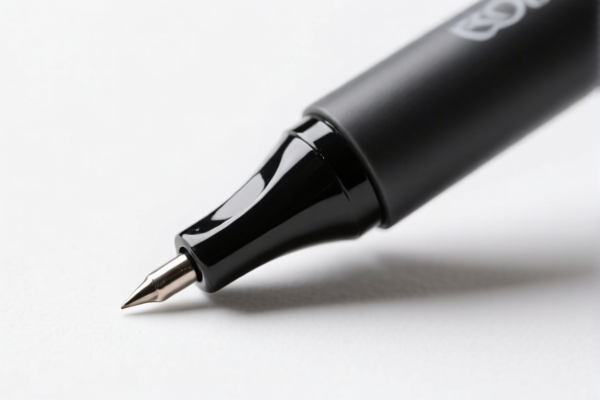


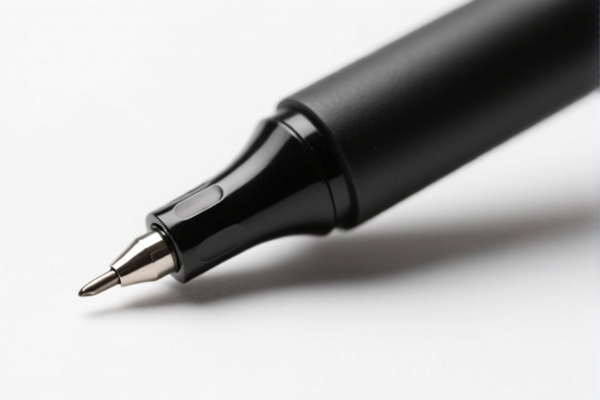
AI Analysis
🎨 Color Tools (Spectral Analyzers & Photometric Devices)
🌐 HS Code Reference & Customs Clearance Guide | 2026 Latest Tariff Analysis | Professional Compliance Strategy
📌 I. Product Definition & Classification: Do You Really Know "Color Tools"?
Color Tools (often referred to as Spectrophotometers, Colorimeters, or Color Measurement Instruments) are precision instruments used to measure the color of a material. They are critical in industries such as textiles, plastics, paints, printing, and cosmetics.
In international trade, the classification depends heavily on whether the device is optical or non-optical/mechanical. This distinction determines the HS Code and, crucially, the 25% additional tariff under Section 301 for US imports from China.
⚠️ Key Distinction Point:
- Optical Instruments: Use light sources (LEDs, Xenon lamps) and sensors (CCD, CMOS) to analyze spectral reflectance/transmittance. → HS Code 9031.49
- Non-Optical/Other: Mechanical comparators, visual matchers, or accessories not falling under optical measurement. → HS Code 9031.80 or 8007 (if applicable as tin articles, though rare for high-precision tools).
📦 II. HS Code Classification Details (2026 Latest Tariff Authority Comparison)
Based on the provided , here are the specific classifications for "Color Tools" and their corresponding tax implications. Note that "Other articles of tin" (HS 8007) are included in the source data but are highly unlikely for standard electronic color tools unless they are specifically decorative or non-functional tin containers/accessories. We focus on the primary instrumental codes.
| HS Code | Product Description | Application Scenario | Type |
|---|---|---|---|
9031.49.90.00 |
Other optical instruments and appliances: Other optical instruments and appliances: Other | Standard Spectrophotometers, Colorimeters using light sensors. Most common for high-precision color measurement. | ✅ Optical |
9031.80.80.85 |
Other measuring or checking instruments: Other Other | Non-optical color tools, mechanical color comparators, or specific non-optical checking devices not specified elsewhere. | ❌ Non-Optical |
8007.00.10.50 |
Other articles of tin: Household, table, or kitchen use; toilet and sanitary wares | Rare/Non-Standard. Only if the "tool" is a tin container or decorative item, not a functional measuring instrument. | ⚠️ Non-Functional/Deceptive |
8007.00.50.00 |
Other articles of tin: Other | Rare/Non-Standard. Same as above. | ⚠️ Non-Functional/Deceptive |
🔍 Critical Reminder:
- 99% of professional color tools (e.g., X-Rite, Datacolor, Konica Minolta) fall under 9031.49.90.00 if they are optical.
- Misclassification Risk: Declaring an optical colorimeter as "Other instruments" (9031.80) to avoid scrutiny is risky. Customs may reclassify and apply the same 25% tariff, plus penalties.
- Tin Articles (8007): Unless you are importing tin boxes for color tools, do not use 8007 codes for the instruments themselves. It is a common error by non-specialized brokers.
💰 III. 2026 Latest Tariff Rate Details (Including Additional Taxes)
✅ Applicable Country: United States (US)
✅ Origin: China (CN)
✅ Effective Date: 2025/2026 (Current Trade War Tariffs)
🎯 1. 9031.49.90.00 —— Optical Color Measurement Instruments
| Item | Content |
|---|---|
| Base Tariff | 0.0% (ad valorem) |
| Section 301 Additional Tariff | +25.0% (Footnote 9903.88.01) |
| Total Tariff | 25.0% |
| Tax Calculation | CIF Value × 25% |
| De Minimis Exemption | ❌ Not Eligible (High value instruments usually exceed $800, and even if under, Section 301 items are excluded) |
| Legal Basis | USITC:9031.49.90.00 → FOOTNOTE:9903.88.01 |
📌 Explanation:
- Optical measuring instruments are subject to the 25% Section 301 tariff due to their classification under Chapter 90.
- This is a mandatory additional tax on top of the base rate (which is 0%).
- Total Cost Impact: 25% of the declared CIF value.
🎯 2. 9031.80.80.85 —— Other Non-Optical Measuring Instruments
| Item | Content |
|---|---|
| Base Tariff | 0.0% (ad valorem) |
| Section 301 Additional Tariff | +25.0% (Footnote 9903.88.01) |
| Total Tariff | 25.0% |
| Tax Calculation | CIF Value × 25% |
| De Minimis Exemption | ❌ Not Eligible |
| Legal Basis | USITC:9031.80.80.85 → FOOTNOTE:9903.88.01 |
📌 Note:
- Even if classified as "Other" (non-optical), these instruments still attract the 25% additional tariff.
- There is no tariff advantage to misclassifying an optical device as "other" to avoid scrutiny, as the rate is identical.
🎯 3. 8007.00.10.50 & 8007.00.50.00 —— Other Articles of Tin
| Item | Content |
|---|---|
| Base Tariff | 0.0% |
| Section 301 Additional Tariff | 0.0% |
| Total Tariff | 0.0% |
| Tax Calculation | CIF Value × 0% |
| De Minimis Exemption | ❌ N/A (Zero tax, but high risk of misclassification) |
⚠️ Warning:
- These codes are for tin articles (e.g., tin boxes, sanitary ware).
- Do NOT use these for electronic color tools. Customs will reject this classification immediately, leading to seizure, fines, and delayed clearance.
- The 0% rate is irrelevant if the goods do not fit the physical description (tin, household use).
🛠️ IV. Customs Clearance Practical Advice (Real-World Pitfall Avoidance)
✅ 1. Preparation Checklist (Non-Negotiable)
| Document | Required | Notes |
|---|---|---|
| ✅ Technical Specification Sheet | ✔️ | Must clearly state: "Optical Measurement Instrument," "Spectrophotometer," or "Colorimeter." |
| ✅ Circuit/Block Diagram | ✔️ | Proves optical components (light source, detector). |
| ✅ Product Photos | ✔️ | Show brand, model, input/output ports, and optical sensor window. |
| ✅ Commercial Invoice | ✔️ | Description: "Color Measurement Instrument, Optical, Model XYZ." |
| ✅ Origin Certificate (CO) | ✔️ | Confirm Chinese origin to apply correct Section 301 duties. |
✅ 2. Declaration Strategy (Key Mnemonic)
🔥 "Optical is 9031.49, Other is 9031.80, Both pay 25%! Do NOT use Tin codes!"
| Scenario | Correct HS Code | Error Consequence |
|---|---|---|
| Standard Spectrophotometer | 9031.49.90.00 |
Correct (25% tariff) |
| Mechanical Color Comparator | 9031.80.80.85 |
Correct (25% tariff) |
| Tin Box for Tools | 8007.00.10.50 |
Correct (0% tariff) |
| Electronic Tool declared as Tin | 8007.00.50.00 |
Rejected/Fined (Misclassification) |
✅ 3. Special Cases
| Situation | Handling Advice |
|---|---|
| Exporting to US | Budget for 25% additional tariff. No exemption for China-origin optical instruments. |
| Exporting to EU | No Section 301 tariffs. Check CN Code 9031 for EU-specific rates (usually 0-4%). |
| Accessories (Cables, Cases) | If shipped separately, classify separately. Cases may fall under 4202 (bags), cables under 8544. |
| Used/Refurbished Tools | Must declare as "Used." Some restrictions may apply; ensure functionality documentation. |
🌍 V. Global Market Comparison (2026 Latest)
| Country/Region | Recommended HS Code | Tariff (China Origin) | Notes |
|---|---|---|---|
| 🇺🇸 USA | 9031.49.90.00 |
25% (Section 301) | High cost. Plan cash flow accordingly. |
| 🇪🇺 EU | 9031.49 |
0-4% | No Section 301. Standard WTO rates apply. |
| 🇨🇳 China | 9031.49 |
0% | Import tax may vary, but export from China uses origin rules. |
| 🇯🇵 Japan | 9031.49 |
0-10% | No Section 301. Check JETRO updates. |
📌 Conclusion:
- USA is the only major market with 25% additional tariffs for these instruments.
- EU, Japan, and others have standard low tariffs.
- Supply Chain Strategy: If exporting to the US, consider final assembly in a third country (e.g., Vietnam, Mexico) to mitigate Section 301 risks, but ensure substantial transformation rules are met.
📌 VI. Common Errors & Pitfall Guide (Lessons Learned)
❌ Error 1: Declaring a Colorimeter as "Laboratory Apparatus" without specifying optical nature.
👉 Result: Customs may request technical proof, causing delays. If proven optical, 25% applies anyway.
❌ Error 2: Using HS Code 8007 (Tin) to save on tariffs.
👉 Result: Seizure and Fraud Investigation. Electronic tools are not tin articles. Penalties can exceed the duty itself.
❌ Error 3: Ignoring Section 301 for "Other" instruments (9031.80).
👉 Result: Still 25%. No savings. Waste of time.
❌ Error 4: Misdeclaring "Color Tool" as "Paint" or "Dye."
👉 Result: Wrong Chapter (32 vs 90). Different tariff and regulatory requirements (e.g., EPA).
✅ Correct Approach:
"Spectrophotometer, Optical, Digital Display, Model XYZ, for Color Measurement, Made in China"
🎯 VII. Conclusion: Precision in Classification, Savings in Clearance!
🎯 Remember the Mantra:
🔹 "Optical = 9031.49, Non-Optical = 9031.80, Both = 25% in US!"
🔹 "Tin Codes = For Tin Boxes Only, Not for Electronics!"
📌 Pro Tip:
- For US imports, pre-classify with a licensed customs broker.
- Keep technical datasheets readily available for customs exams.
- If volume is high, consider Section 301 Exclusions (if applicable, though rare for standard instruments).
📣 Immediate Action:
📞 Contact a specialized customs broker + Provide technical specs + Verify HS Code
🚀 Ensure smooth clearance, avoid 25% surprises, and protect your margin!
✨ Professional clearance starts with accurate classification!
💼 Your profit margin depends on the right HS Code!
Customer Reviews
About HS Code Classification
The Harmonized System (HS) is an internationally standardized nomenclature developed by the World Customs Organization (WCO) to classify traded products. Over 200 countries use the HS system as the basis for customs tariffs, trade statistics, and import/export regulations.
Each HS code follows a hierarchical structure:
- Chapter (2 digits) — Broad category of goods (e.g., Chapter 84: Machinery and Mechanical Appliances)
- Heading (4 digits) — More specific grouping within the chapter
- Subheading (6 digits) — Internationally standardized breakdown, used by all WCO member countries
- National subdivisions (8-10 digits) — Country-specific extensions for further classification, such as US HTSUS 10-digit codes
Correct HS code classification is essential for smooth customs clearance, accurate duty payment, and compliance with trade regulations. Misclassification can lead to customs delays, overpayment of duties, or penalties.
When importing from CN to US, the applicable tariff rates may include:
- Most-Favored-Nation (MFN) rate — The standard duty rate applied to WTO members
- General rate — Applied to countries without trade agreements
- Trade remedy duties — Additional tariffs such as Section 301 (anti-dumping), Section 232 (national security), or countervailing duties
The information provided on this page is for reference purposes only. For official classification, please consult with your local customs authority or a licensed customs broker.