Color Wide Angle Landscape Photography Film
CN → US| HS Code | Tariff Rate | Origin | Destination | Doc |
|---|---|---|---|---|
| 3704000000 | 35.0% | CN | US | Official Doc |
| 3702520130 | 38.7% | CN | US | Official Doc |
| 3702310100 | 38.7% | CN | US | Official Doc |
| 3706106060 | 35.0% | CN | US | Official Doc |
| 3706900060 | 35.0% | CN | US | Official Doc |
Product Images


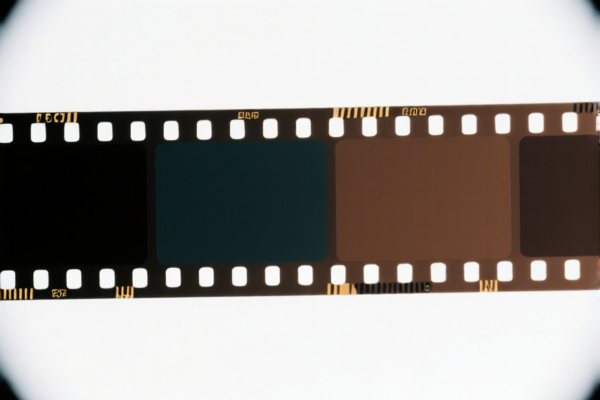
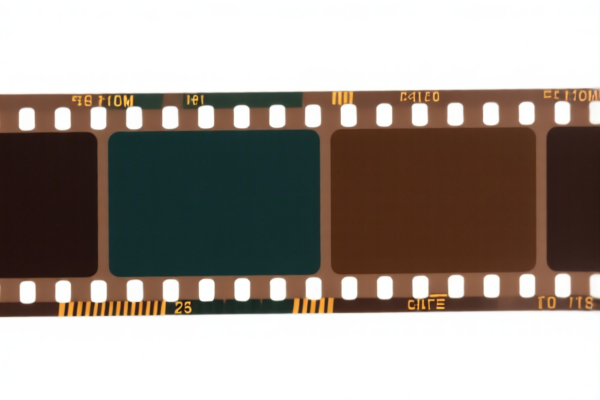
AI Analysis
📷 Color Wide Angle Landscape Photography Film (Photographic Roll Film)
🌐 HS Code Reference & Customs Clearance Guide | 2026 Latest Tariff Analysis | Professional Clearance Strategy
📌 I. Product Definition & Classification: What is "Color Wide Angle Landscape Photography Film"?
Color wide-angle landscape photography film is a light-sensitive photographic material used to capture images. In international trade, it is classified based on its physical form (roll film), sensitization (color), and intended use (still photography vs. motion picture).
Key Distinction Points:
- Roll Film vs. Sheet Film: Rolls are wound on spools; sheets are individual cut sizes.
- Still Photography vs. Motion Picture: Still photo film (HS 3702/3704) is fundamentally different from cinema film (HS 3706).
- Color Reversal vs. Color Negative: While both are "color," their chemical composition and HS code subheadings may differ, affecting duty rates.
⚠️ Critical Classification Rule:
- If the film is for still photography (cameras, not movie projectors) → HS 3702 or 3704.
- If the film is for motion pictures/cinematography → HS 3706.
- Width matters: Wide-angle lenses often use standard 35mm or medium format (24mm/60mm) rolls, which fall under specific width-based subheadings.
📦 II. HS Code Classification Details (2026 Latest Tariff Authority Comparison)
| HS Code | Product Description | Application Scenario | Form Factor |
|---|---|---|---|
3704.00.00.00 |
Color photographic film plates, not on a support of paper or paperboard | General color roll film, not specific to photo/cinema | Roll/Plate |
3702.52.01.30 |
Color reversal roll film, sensitized, not exposed, of a width ≥ 105 mm | High-end landscape film (e.g., Provia, Velvia) | Roll (Wide) |
3702.31.01.00 |
Color negative roll film, sensitized, not exposed, of a width ≤ 35 mm | Standard 35mm landscape photography (e.g., Portra, Ektar) | Roll (Standard) |
3706.10.60.60 |
Motion picture film, sensitized, exposed, developed, of a width ≥ 35 mm | Cinematic landscape shots (rare for still photographers) | Roll (Cinema) |
3706.90.00.60 |
Other motion picture film, sensitized, exposed or not | Specialty cinematic films, wide-screen formats | Roll (Cinema) |
🔍 Key Reminder:
- "Wide Angle" is a lens characteristic, not a film characteristic. The film itself is classified by width and type (negative/reversal).
- Landscape photographers typically use 35mm (≤35mm) or Medium Format (≥105mm).
- Do not confuse with 3706 (Cinema Film). Unless you are shooting 35mm/70mm movie reels, use 3702/3704.
💰 III. 2026 Latest Tariff Rate Breakdown (Including Surcharges, Policy Add-ons)
✅ Applicable Country: United States (US)
✅ Origin: China (CN)
✅ Effective Date: November 10, 2025 onwards (inclusive of subsequent imports)
🎯 1. 3704.00.00.00 —— Color Photographic Film (General/Plate)
| Item | Details |
|---|---|
| Base Duty | 0% (ad valorem) |
| USITC Surcharge | +25% (under Section 301 Duties) |
| IEEPA Surcharge | +10% (对华加征关税, effective Nov 10, 2025) |
| Total Rate | 35.0% |
| Tax Calculation | CIF Value × 35% |
| De Minimis Exemption | ❌ Not Eligible (deny_de_minimis) |
| Legal Path | IEEPA:9903.01.25 → IEEPA:9903.01.24 → USITC:3704.00.00.00 → FOOTNOTE:3704.00.00.00 |
📌 Explanation:
- This code is a "catch-all" for color film not specified elsewhere (e.g., non-paper/plastic base, or specific formats not listed in 3702).
- Total 35% is high. Ensure the film is not misclassified as "paper-based" (which might have lower base rates but is rare for modern film).
🎯 2. 3702.52.01.30 —— Color Reversal Roll Film (≥105mm)
| Item | Details |
|---|---|
| Base Duty | 3.7% |
| USITC Surcharge | +25% |
| IEEPA Surcharge | +10% |
| Total Rate | 38.7% |
| Tax Calculation | CIF Value × 38.7% |
| De Minimis Exemption | ❌ Not Eligible |
| Legal Path | IEEPA:9901.25 → IEEPA:9903.01.24 → USITC:3702.52.01.30 |
📌 Note:
- Reversal Film (Slide Film) like Fujifilm Provia or Kodak Ektachrome falls here if width ≥105mm (medium format).
- Landscape photographers often prefer reversal film for its dynamic range and color fidelity.
- Higher base duty (3.7%) makes this category slightly more expensive than3704.
🎯 3. 3702.31.01.00 —— Color Negative Roll Film (≤35mm)
| Item | Details |
|---|---|
| Base Duty | 3.7% |
| USITC Surcharge | +25% |
| > IEEPA Surcharge | +10% |
| Total Rate | 38.7% |
| Tax Calculation | CIF Value × 38.7% |
| De Minimis Exemption | ❌ Not Eligible |
| Legal Path | IEEPA:9901.25 → IEEPA:9903.01.24 → USITC:3702.31.01.00 |
📌 Note:
- Negative Film (Kodak Portra, Fuji Pro 400H) in standard 35mm format.
- Most common for landscape photography.
- Same 38.7% total rate as reversal film due to similar surcharge structure.
🎯 4. 3706.10.60.60 —— Exposed Motion Picture Film (≥35mm)
| Item | Details |
|---|---|
| Base Duty | 0% |
| USITC Surcharge | +25% |
| IEEPA Surcharge | +10% |
| Total Rate | 35.0% |
| Tax Calculation | CIF Value × 35.0% |
| De Minimis Exemption | ❌ Not Eligible |
| Legal Path | IEEPA:9903.01.25 → IEEPA:9903.01.24 → USITC:3706.10.60.60 |
📌 Explanation:
- Only for exposed, developed cinema film.
- Rare for landscape still photography. Use only if importing pre-exposed cinematic dailies.
🎯 5. 3706.90.00.60 —— Other Motion Picture Film
| Item | Details |
|---|---|
| Base Duty | 0% |
| USITC Surcharge | +25% |
| IEEPA Surcharge | +10% |
| Total Rate | 35.0% |
| Tax Calculation | CIF Value × 35.0% |
| De Minimis Exemption | ❌ Not Eligible |
| Legal Path | IEEPA:9903.01.25 → IEEPA:9903.01.24 → USITC:3706.90.00.60 |
📌 Explanation:
- Catch-all for cinema film not elsewhere specified.
- Not applicable to standard still photography film.
🛠️ IV. Customs Clearance Practical Advice (Real-World Pitfall Guide)
✅ 1. Required Documentation Checklist (Mandatory)
| Document | Required | Description |
|---|---|---|
| ✅ Product Specification Sheet | ✔️ | Must specify: Film Type (Negative/Reversal), Width (35mm/Medium), Sensitized State (Unexposed). |
| ✅ HS Code Justification Letter | ✔️ | Explain why it's not "Paper" (HS 4911) or "Cinema Film" (HS 3706). |
| ✅ Product Photos | ✔️ | Clear images of packaging showing ISO speed, color type, and format. |
| ✅ Commercial Invoice | ✔️ | Must list "Photographic Roll Film, Color, Unexposed." |
| ✅ Packing List | ✔️ | Detail number of rolls, weight, and dimensions. |
| ✅ Certificate of Origin | ✔️ | Critical for determining IEEPA surcharge eligibility (if any exemptions apply). |
✅ 2. Declaration Tips (Key Mnemonics)
🔥 “Don’t Split, Don’t Guess, Specify Width and Type!”
| Scenario | Correct Declaration | Incorrect Practice |
|---|---|---|
| Standard 35mm Negative Film | 3702.31.01.00 |
Misclassified as "Camera Accessories" → 89.5% |
| Medium Format Reversal Film | 3702.52.01.30 |
Misclassified as "General Photo Film" (3704) → Risk of audit |
| Cinema Film (Exposed) | 3706.10.60.60 |
Misclassified as "Unexposed" → Duty mismatch |
| Sheet Film (Not Roll) | 3704.00.00.00 |
Misclassified as "Roll Film" → Classification error |
📌 Critical Point:
- "Wide Angle" is irrelevant to HS Code. Focus on Width (mm) and Type (Negative/Reversal).
- Unexposed vs. Exposed: Most imported film is unexposed. Exposed film falls under 3706, which is rare and taxed differently.
✅ 3. Special Case Handling
| Scenario | Handling Advice |
|---|---|
| OEM Custom Film | Provide client order + design specs. Ensure "Color" and "Unexposed" are stated. |
| Mixed Shipments (Film + Lenses) | Do NOT combine in one HS Code. Lenses are 9002, Film is 3702/3704. Separate lines on invoice. |
| Digital Backs with Film Simulation | Not film! Declared as 8525.80 (Digital Cameras) or parts. |
| Bulk Import (≥1000 Rolls) | Consider applying for Section 301 Exclusions if available for specific photographic materials (check current USITC exclusion lists). |
🌍 V. Global Market Clearance Comparison (2026 Latest)
| Country/Region | Recommended HS Code | Tariff Rate | Certification Required | Notes |
|---|---|---|---|---|
| 🇺🇸 USA | 3702.31.01.00 / 3702.52.01.30 |
38.7% (CN Origin) | None | High duties apply. No de minimis. |
| 🇨🇳 China | 3702.31.01.00 |
3.7% | CCC (if applicable) | Low base duty. No surcharges. |
| 🇪🇺 EU | 3702.31.01.00 |
0% (if eligible) | CE (for equipment) | Film itself often 0% duty. |
| 🇯🇵 Japan | 3702.31.01.00 |
0% | PSE (for equipment) | Low duty. |
| 🇦🇺 Australia | 3702.31.01.00 |
5% | RCM | Moderate duty. |
📌 Conclusion:
- USA has the highest cost due to 301 and IEEPA surcharges (38.7%).
- EU/Japan offer better rates if sourcing from non-China origins or if exemptions apply.
- Plan for 38.7% duty if importing from China to the US.
📌 VI. Common Errors & Pitfall Guide (Lessons Learned)
❌ Error 1: Declaring "Wide Angle Lens Film"
👉 Consequence: "Wide Angle" is not a film attribute. Misclassification → Audit/Rejection.
👉 Fix: Declare "Color Photographic Roll Film, 35mm, Unexposed."
❌ Error 2: Combining Film and Lenses in One Line Item
👉 Consequence: Incorrect HS Code → 38.7% vs. 0-5% disparity.
👉 Fix: Separate line items for Film (3702) and Lenses (9002).
❌ Error 3: Misidentifying Exposed vs. Unexposed
👉 Consequence: Exposed film (3706) has different base rates.
👉 Fix: Clearly state "UNEXPOSED" on invoice.
❌ Error 4: Ignoring Width Specifications
👉 Consequence: 35mm vs. Medium Format have different subheadings.
👉 Fix: Specify width (e.g., "35mm" or "120 Roll").
✅ Correct Declaration Example:
"Color Negative Roll Film, Unexposed, 35mm Width, ISO 400, Kodak Portra 400, 24 Exp Rolls, HS 3702.31.01.00"
🎯 VII. Conclusion: Professional Declaration, Time-Saving, Cost-Effective!
🎯 Remember the Mnemonic:
🔹 "Film is Film, Width Matters, 35mm vs Medium, Don't Mix with Lenses!"
🔹 "38.7% Duty for China-US, Plan Ahead, Avoid Surprises!"
📌 Pro Tip:
If your film is originally from Japan, Europe, or USA, you may qualify for lower or zero duties in the US/EU/Japan.
Consider Advance Ruling for large shipments to confirm HS Code accuracy.
📣 Immediate Action:
📞 Contact a licensed customs broker + Provide Product Specs + Apply for HS Code Pre-Ruling
🚀 Ensure your Landscape Film clears customs smoothly, efficiently, and profitably!
✨ Professional Clearance Starts with Accurate Classification!
💼 Every Percent of Duty Saved is Pure Profit!
Customer Reviews
About HS Code Classification
The Harmonized System (HS) is an internationally standardized nomenclature developed by the World Customs Organization (WCO) to classify traded products. Over 200 countries use the HS system as the basis for customs tariffs, trade statistics, and import/export regulations.
Each HS code follows a hierarchical structure:
- Chapter (2 digits) — Broad category of goods (e.g., Chapter 84: Machinery and Mechanical Appliances)
- Heading (4 digits) — More specific grouping within the chapter
- Subheading (6 digits) — Internationally standardized breakdown, used by all WCO member countries
- National subdivisions (8-10 digits) — Country-specific extensions for further classification, such as US HTSUS 10-digit codes
Correct HS code classification is essential for smooth customs clearance, accurate duty payment, and compliance with trade regulations. Misclassification can lead to customs delays, overpayment of duties, or penalties.
When importing from CN to US, the applicable tariff rates may include:
- Most-Favored-Nation (MFN) rate — The standard duty rate applied to WTO members
- General rate — Applied to countries without trade agreements
- Trade remedy duties — Additional tariffs such as Section 301 (anti-dumping), Section 232 (national security), or countervailing duties
The information provided on this page is for reference purposes only. For official classification, please consult with your local customs authority or a licensed customs broker.