Color blocked Garden Table and Chair Cover
CN → US| HS Code | Tariff Rate | Origin | Destination | Doc |
|---|---|---|---|---|
| 6307909891 | 24.5% | CN | US | Official Doc |
| 6307909887 | 24.5% | CN | US | Official Doc |
| 4016910000 | 37.7% | CN | US | Official Doc |
| 4016990500 | 20.9% | CN | US | Official Doc |
| 3926909989 | 22.8% | CN | US | Official Doc |
| 3926907500 | 14.2% | CN | US | Official Doc |
Product Images
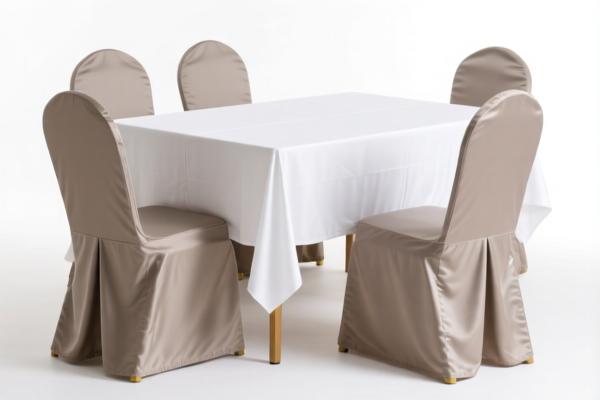
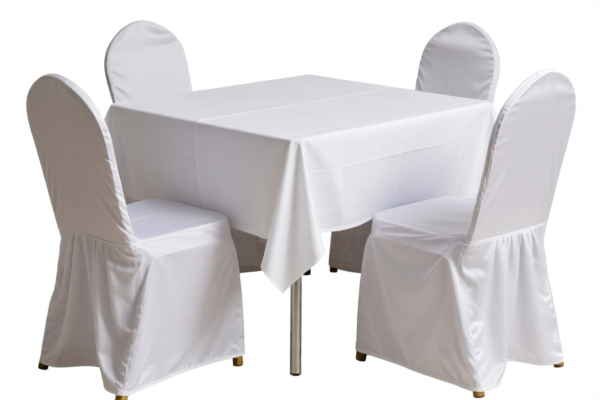

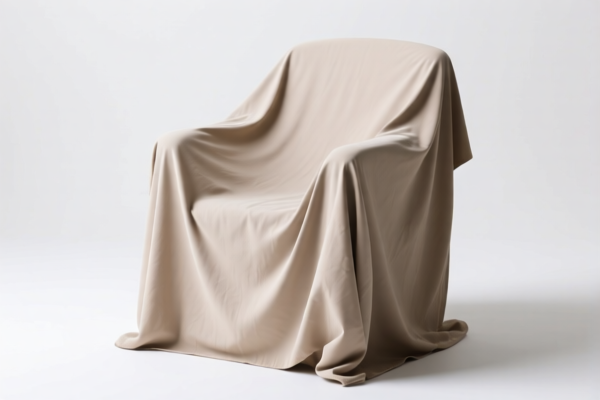
AI Analysis
🌷 Color Blocked Garden Table and Chair Cover
🌐 HS Code Reference & Customs Clearance Guide | 2026 Latest Tariff Analysis | Professional Strategy
📌 I. Product Definition & Classification: What Exactly Is a "Color-Blocked Cover"?
A Color-Blocked Garden Table and Chair Cover is a protective outdoor textile product designed to shield garden furniture from rain, UV rays, dust, and debris. The term "color-blocked" refers to a modern design style where distinct blocks of contrasting colors are sewn together to create a bold, geometric aesthetic.
In international trade, these items fall under the Plastics/Textiles/Apparel spectrum depending on the primary material and construction:
- Plastic-Rubber Coated Covers (Vulcanized Rubber/Plastic Blend): If the fabric is heavily coated or laminated with rubber/plastic for extreme waterproofing and durability, it may be classified under Chapter 40 (Rubber) or Chapter 39 (Plastics).
- Textile-Based Covers (Fiber-Heavy): If the base is woven fabric (polyester/nylon) with a thin coating, it often falls under Chapter 63 (Other Made-Up Articles).
- General "Other" Articles: If the classification is ambiguous or the material is a complex composite, it defaults to residual headings.
⚠️ Key Classification Distinction:
- If the product relies heavily on vulcanized rubber (e.g., thick rubberized mats/covers) → Chapter 40.
- If the product is primarily man-made fibers (polyester/nylon) with a thin plastic/rubber coating → Chapter 63 or Chapter 39.
- Critical Note: Many garden covers are misclassified. If the rubber coating is merely a surface treatment and the structural integrity comes from fabric, it is likely 6307 or 3926, not 4016.
📦 II. HS Code Classification Details (2026 Tariff Authority)
| HS Code | Product Description | Scenario | Material Composition |
|---|---|---|---|
4016.91.00.00 |
Other articles of vulcanized rubber (other than hard rubber): Other: Floor coverings and mats | Used if the cover is thick, rubber-dominated, and treated as a "mat" for protection. | High vulcanized rubber content. |
4016.99.05.00 |
Other articles of vulcanized rubber (other than hard rubber): Other: Other: Household articles not elsewhere specified | General household rubber covers, accessories, or mats not listed elsewhere. | Rubber-based household item. |
6307.90.98.91 |
Other made up articles: Other: Other: Other Other: Other | Standard textile/fabric covers (polyester/nylon) with color-blocking design, not fitting specific textile headings. | Man-made fibers (Textile base). |
6307.90.98.87 |
Other made up articles: Other: Other: Other Other: Furniture movers' pads of man-made fibers | Note: This code is specific to furniture pads/mats. If your cover is marketed as a "pad" rather than a "cover," this might apply, but less likely for a full cover. | Man-made fiber pads/pads. |
3926.90.99.89 |
Other articles of plastics: Other: Other: Other Other | Plastic-based covers or those heavily dominated by plastic materials. | Plastic dominant. |
3926.90.75.00 |
Other articles of plastics: Other: Pneumatic mattresses and other inflatable articles | Only if the cover is an inflatable garden cover (rare for standard furniture). | Inflatable plastic article. |
🔍 Critical Analysis for Garden Covers:
- The most accurate classification for a standard color-blocked textile garden cover is typically6307.90.98.91(Other made up articles).
- Do not assume "Rubber" just because it's waterproof. If the fabric is the main structure, it belongs in Chapter 63, not Chapter 40.
-3926.90.99.89applies only if the cover is entirely plastic/rubber without a significant fabric backing.
💰 III. 2026 Tariff Rate Breakdown (Detailed Duty Analysis)
✅ Target Market: United States (US)
✅ Origin: China (CN)
✅ Applicable Law: Section 301 Tariffs (Section 232 & 9903)
🎯 Scenario A: Textile-Based Cover (Most Likely: 6307.90.98.91)
| Item | Content |
|---|---|
| Base Tariff | 7.0% (Ad Valorem) |
| Section 301 Surcharge | +7.5% (Added under USITC 9903) |
| Total Duty Rate | 14.5% |
| Tax Calculation | CIF Value × 14.5% |
| De Minimis Exemption | ❌ No (Not eligible for $800 exemption for commercial goods) |
| Legal Reference | USITC:6307.90.98.91 → Section 301 Footnote |
📌 Explanation:
- This is the standard duty for "Other made up articles" of man-made fibers.
- The 14.5% rate is a significant cost factor. Many importers mistakenly use lower textile codes (0-5%), leading to audits.
- Action: Ensure the material composition is clearly defined as "Man-made fibers" to justify the Chapter 63 classification.
🎯 Scenario B: Rubber-Based Cover (If classified as 4016.91.00.00)
| Item | Content |
|---|---|
| Base Tariff | 2.7% |
| Section 301 Surcharge | +25.0% (Heavy penalty for rubber products from China) |
| Total Duty Rate | 27.7% |
| Tax Calculation | CIF Value × 27.7% |
| De Minimis Exemption | ❌ No |
| Legal Reference | USITC:4016.91.00.00 → Section 301 Footnote 9903.01.25 |
📌 Warning:
- If the cover is deemed "vulcanized rubber," the duty jumps to 27.7%.
- Strategy: Avoid this classification unless the product is 100% rubberized. Most garden covers are textile + coating, not pure rubber.
- Risk: Misclassification here leads to massive cost overruns and potential penalties for understating duties.
🎯 Scenario C: Plastic-Based Cover (3926.90.99.89)
| Item | Content |
|---|---|
| Base Tariff | 5.3% |
| Section 301 Surcharge | +7.5% |
| Total Duty Rate | 12.8% |
| Tax Calculation | CIF Value × 12.8% |
| De Minimis Exemption | ❌ No |
📌 Strategy:
- If the cover is a hard plastic sheet or heavy plastic weave, this applies.
- 12.8% is slightly better than rubber (27.7%) but higher than textiles (14.5%).
- Conclusion: Textile (6307) or Plastic (3926) are the viable routes; Rubber (4016) is a high-cost trap.
🎯 Scenario D: Inflatable Article (3926.90.75.00)
| Item | Content |
|---|---|
| Base Tariff | 4.2% |
| Section 301 Surcharge | 0.0% |
| Total Duty Rate | 4.2% |
| Tax Calculation | CIF Value × 4.2% |
📌 Note:
- Only apply if the product is inflatable (e.g., an air-filled cover). Standard fabric covers do not qualify.
- This is the lowest rate (4.2%), but legally inapplicable to 99% of garden covers.
🛠️ IV. Customs Clearance Practical Advice (Real-World Strategy)
✅ 1. Documentation Checklist (Non-Negotiable)
| Document | Requirement | Purpose |
|---|---|---|
| ✅ Detailed Material Spec | ✔️ Mandatory | Must specify % of Fiber (Polyester/Nylon) vs. % of Coating (PVC/Rubber). |
| ✅ Product Photos (Color-Block Design) | ✔️ Mandatory | Proves it's a "Garden Cover" and not a "Mat" or "Pad". |
| ✅ Commercial Invoice | ✔️ Mandatory | Must use precise description: "Garden Furniture Cover, Color-Blocked, Man-Made Fiber." |
| ✅ Packing List | ✔️ Mandatory | Shows dimensions and weight to rule out "inflation" (inflatable claim). |
| ✅ Origin Certificate (Form A if applicable) | ✔️ Optional | Can reduce base tariff if eligible under free trade agreements (rare for China/US). |
✅ 2. Declaring Strategy (The "Golden Rule")
🔥 "Fiber is King, Rubber is Trap, Inflate is Rare!"
| Situation | Correct HS Code | Wrong Approach |
|---|---|---|
| Standard Fabric Cover | 6307.90.98.91 (14.5%) |
Claiming 4016.91.00.00 (27.7%) → Overpay |
| Heavy Plastic Cover | 3926.90.99.89 (12.8%) |
Claiming 6307 (Textile) → Underpay (Risk of Audit) |
| Inflatable Cover | 3926.90.75.00 (4.2%) |
Claiming 6307 (14.5%) → Overpay |
| Misclassified as "Mat" | ❌ Avoid | 4016.91.00.00 (27.7%) is for mats, not covers |
✅ 3. Special Cases & Risk Management
| Scenario | Advice |
|---|---|
| OEM Custom Colors | Ensure the invoice states "Color-Blocked" clearly; customs may check for anti-dumping on specific colors if misclassified as generic. |
| "Waterproof" Claims | Do not claim "100% Rubber" unless it is. Use "PVC-Coated Polyester" to stay in 6307 or 3926. |
| Packaging with Furniture | If sold as a "Set," declare the cover separately. Bundling can lead to "Duty on Furniture" rates (often higher). |
🌍 V. Global Market Comparison (2026)
| Country | Recommended HS Code | Duty Rate | Key Requirement |
|---|---|---|---|
| 🇺🇸 USA | 6307.90.98.91 |
14.5% | High scrutiny on material mix |
| 🇪🇺 EU | 6307.90.99 |
12-17% | CE Marking, REACH Compliance |
| 🇨🇦 Canada | 6307.90.00 |
~5-10% | CUSMA benefits (if eligible) |
| 🇦🇺 Australia | 6307.90.00 |
10% | APEC Compliance |
📌 Conclusion:
- USA is the most challenging market due to the Section 301 surcharges.
- EU and Australia have moderate rates but strict material composition checks.
- Strategy: Always declare "Man-Made Fiber" to stay in the 14.5% bracket (6307) unless the product is 100% plastic/rubber.
📌 VI. Common Errors & Pitfalls (Lessons Learned)
❌ Error 1: Classifying a fabric cover as a rubber mat (4016.91.00.00)
👉 Result: Duty jumps from 14.5% to 27.7% → 13.2% extra cost!
❌ Error 2: Calling it an "Inflatable Cover" when it's just a fabric sheet (3926.90.75.00)
👉 Result: Customs audit, penalty, and back-dated duty payments.
❌ Error 3: Failing to disclose the coating material (PVC vs. Rubber)
👉 Result: Misclassification risk. If the coating is rubber, you might be liable for 4016 rates.
✅ Correct Practice:
"Garden Furniture Cover, Color-Blocked Design, 60% Polyester, 40% PVC Coating, Washable, UV Resistant."
🎯 VII. Conclusion: Smart Classification, Smart Savings
🎯 Remember the Mantra:
🔹 "Fiber = 14.5% (6307), Rubber = 27.7% (4016), Plastic = 12.8% (3926)"
🔹 "Inflate = 4.2%, but only if it's truly inflatable!"
🔹 "Color-Blocked is design, not classification!"
📌 Pro Tip:
If your product is a hybrid (fabric + heavy rubber coating), consult a customs broker for a Binding Ruling before shipping. A 13.2% difference in duty can kill your profit margin!
📣 Take Action Now:
📞 Contact your logistics team to verify the material composition (Fiber % vs. Rubber %).
🚀 Update your invoice description to match6307.90.98.91.
💡 Avoid the 27.7% trap – your margins depend on this choice!
✨ Professional Classification is Your First Step to Profit!
💼 Every percentage point saved is pure profit.
Customer Reviews
About HS Code Classification
The Harmonized System (HS) is an internationally standardized nomenclature developed by the World Customs Organization (WCO) to classify traded products. Over 200 countries use the HS system as the basis for customs tariffs, trade statistics, and import/export regulations.
Each HS code follows a hierarchical structure:
- Chapter (2 digits) — Broad category of goods (e.g., Chapter 84: Machinery and Mechanical Appliances)
- Heading (4 digits) — More specific grouping within the chapter
- Subheading (6 digits) — Internationally standardized breakdown, used by all WCO member countries
- National subdivisions (8-10 digits) — Country-specific extensions for further classification, such as US HTSUS 10-digit codes
Correct HS code classification is essential for smooth customs clearance, accurate duty payment, and compliance with trade regulations. Misclassification can lead to customs delays, overpayment of duties, or penalties.
When importing from CN to US, the applicable tariff rates may include:
- Most-Favored-Nation (MFN) rate — The standard duty rate applied to WTO members
- General rate — Applied to countries without trade agreements
- Trade remedy duties — Additional tariffs such as Section 301 (anti-dumping), Section 232 (national security), or countervailing duties
The information provided on this page is for reference purposes only. For official classification, please consult with your local customs authority or a licensed customs broker.