Colored Decorative Plaster Molding
CN → US| HS Code | Tariff Rate | Origin | Destination | Doc |
|---|---|---|---|---|
| 6809900000 | 35.0% | CN | US | Official Doc |
| 6809190000 | 38.0% | CN | US | Official Doc |
| 6809900000 | 35.0% | CN | US | Official Doc |
| 6809190000 | 38.0% | CN | US | Official Doc |
| 6809900000 | 35.0% | CN | US | Official Doc |
Product Images
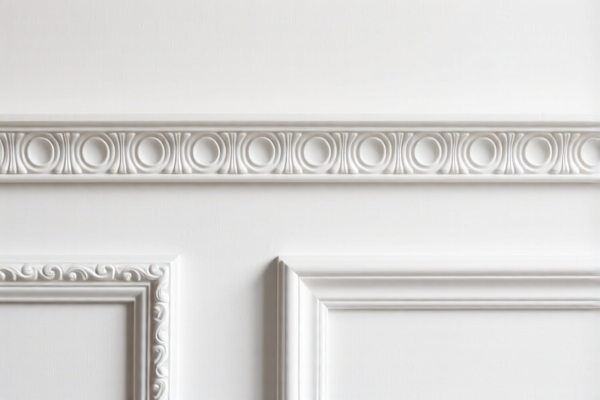
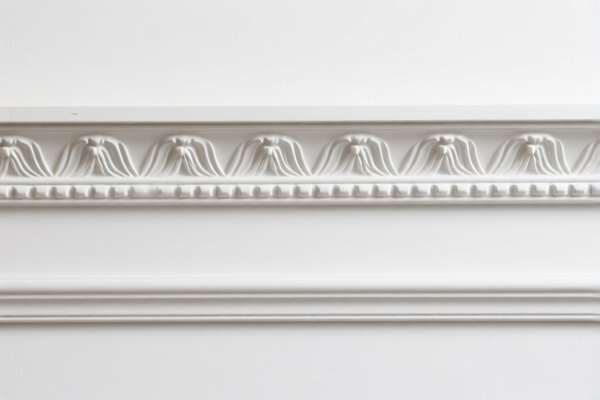
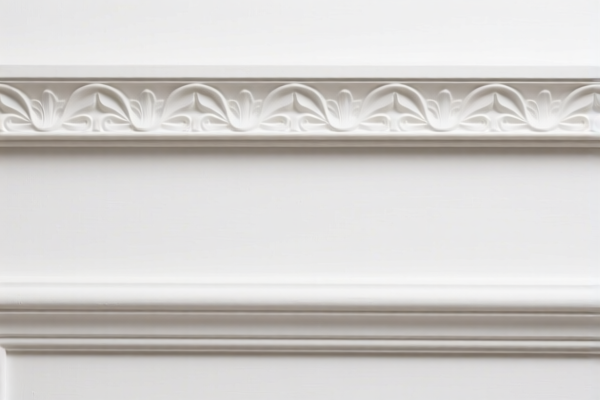
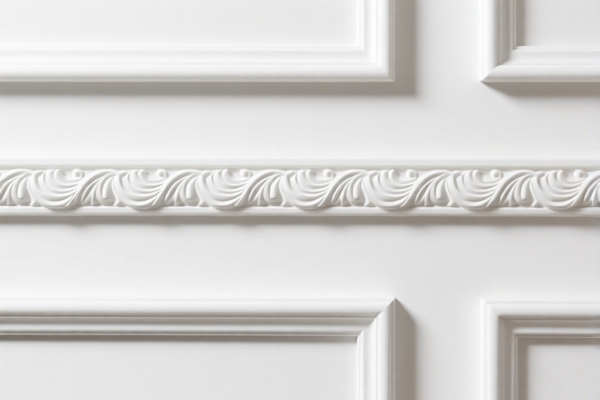
AI Analysis
🏛️ Colored Decorative Plaster Molding & Cornices
🌐 HS Code Reference & Customs Clearance Guide | 2026 Latest Tariff Analysis | Professional Clearance Strategy
📌 I. Product Definition & Classification: Do You Really Understand "Plaster Molding"?
Plaster molding and cornices are essential architectural elements used for interior decoration, wall finishing, and ceiling embellishment. In international trade, they are strictly categorized based on material composition, form, and functional intent.
Decorative Plaster Molding/Cornices:
- Material: Gypsum/Plaster
- Form: Linear profiles, corners, edges
- Purpose: Aesthetic decoration, wall/ceiling transitions
- Key Distinction: Solid plaster products, not powder or unfinished blocks
⚠️ Critical Classification Points:
- If the product is solid plaster (gypsum-based) shaped into lines, corners, or decorative profiles → It belongs to Chapter 68 (Articles of Stone, Plaster, Cement, Asbestos, or Mica).
- Specifically, it falls under HS 6809, which covers "Tiles, flags, paving blocks, cornices, architraves, wall and floor tiles of plaster or cemented with lime or cement."
- Further subdivision depends on whether it is classified as a "board/panel" type or other miscellaneous decorative articles.
📦 II. HS Code Classification Details (2026 Latest Tariff Authority Cross-Reference)
| HS Code | Product Description | Application Scenario | Material |
|---|---|---|---|
6809.90.00.00 |
Other articles of plaster: Decorative lines or cornices, made of plaster, classified as "other articles" | Custom-shaped plaster moldings, ornamental trims, non-standard profiles | ✅ Plaster/Gypsum |
6809.19.00.00 |
Other plaster articles: Decorative corner lines, made of plaster, classified as "other articles" under boards/panels/tiles | Standard plaster cornices, corner trims, decorative edge profiles | ✅ Plaster/Gypsum |
6809.90.00.00 |
Decorative plaster corner lines, made of plaster, meeting the classification of "other articles" | Ornamental plaster corners, wall-to-ceiling transitions | ✅ Plaster/Gypsum |
6809.19.00.00 |
Decorative plaster corner lines, made of plaster, classified under other catch-all categories | General-purpose plaster moldings, basic corner trims | ✅ Plaster/Gypsum |
6809.90.00.00 |
Plaster decorative lines, material: plaster, form: decorative articles, classified as other articles | Architectural plaster moldings, decorative wall elements | ✅ Plaster/Gypsum |
🔍 Key Reminder:
- All solid plaster decorative moldings must be classified under HS 6809, not Chapter 69 (ceramics) or Chapter 39 (plastics).
- The distinction between6809.19and6809.90lies in whether the product is considered a "board/panel/tile" variant or a general "other article."
- Coloring does not change the HS code; only material and form matter.
💰 III. 2026 Latest Tariff Rate Details (Including Additional Taxes & Policy Surcharges)
✅ Applicable Country: United States (US)
✅ Origin: China (CN)
✅ Effective Date: From November 10, 2025 onwards
🎯 1. 6809.90.00.00 —— Decorative Plaster Articles (Other Articles)
| Item | Content |
|---|---|
| Base Tariff | 0% (ad valorem) |
| Section 301 Additional Tariff | +25% (under US Trade Act Section 301) |
| Section 122 Tariff | +10% (targeting Chinese/ Hong Kong products, effective Nov 2025) |
| Total Tariff Rate | 35% |
| Tax Calculation | CIF Value × 35% |
| De Minimis Exemption Eligible | ❌ No (deny_de_minimis) |
| Legal Basis Path | Section 301:6809.90.00.00 → Section 122:6809.90.00.00 |
📌 Explanation:
- "Section 301 Additional Tariff 25%": Imposed under US Trade Act Section 301 for specific Chinese goods;
- "Section 122 Tariff 10%": A newer surcharge targeting Chinese imports under Section 122 of the Trade Expansion Act;
- Total 35%, which is relatively high for plaster products. Must be factored into cost planning!
🎯 2. 6809.19.00.00 —— Other Plaster Articles (Boards/Panel Variants)
| Item | Content |
|---|---|
| Base Tariff | 3% (ad valorem) |
| Section 301 Additional Tariff | +25% |
| Section 122 Tariff | +10% |
| Total Tariff Rate | 38% |
| Tax Calculation | CIF Value × 38% |
| De Minimis Exemption Eligible | ❌ No (deny_de_minimis) |
| Legal Basis Path | Section 301:6809.19.00.00 → Section 122:6809.19.00.00 |
📌 Note:
- Higher than6809.90.00.00due to the 3% base tariff;
- Applies to plaster moldings classified under "boards/panels/tiles" subcategories;
- Even if products look identical, classification differences can lead to 3% higher taxes.
🛠️ IV. Customs Clearance Practical Advice (Real-World Pitfall Avoidance Guide)
✅ 1. Required Documents Checklist (None Can Be Omitted)
| Document | Required | Description |
|---|---|---|
| ✅ Product Specification Sheet | ✔️ | Includes dimensions, shape, material (gypsum/plaster), weight, color |
| ✅ Product Photos (Clear) | ✔️ | Front, side, and detail shots showing molding profiles |
| ✅ Commercial Invoice | ✔️ | Clearly state "Decorative Plaster Molding" or "Plaster Corner Line" |
| ✅ Packing List | ✔️ | List items clearly, avoid vague terms like "construction materials" |
| ✅ Certificate of Origin (CO) | ✔️ | If non-Chinese origin, may qualify for lower tariffs |
| ✅ Material Composition Statement | ✔️ | Confirm gypsum/plaster content, no ceramic or plastic components |
✅ 2. Declaration Tips (Key Mnemonics)
🔥 "Plaster is Gypsum, Not Ceramic! HS 6809, Not 6909!"
| Scenario | Correct Declaration | Wrong Practice |
|---|---|---|
| Solid plaster moldings | 6809.90.00.00 or 6809.19.00.00 |
Misclassified as "ceramic tiles" (6909) → Higher penalties |
| Plaster powder/unshaped | Not applicable for HS 6809 | Must declare as raw gypsum (Chapter 25) |
| Plaster + wood composite | May fall under different HS | Cannot use HS 6809 if wood is primary material |
| Decorative plaster panels | 6809.19.00.00 |
Misclassified as "other articles" → 38% vs 35% |
✅ 3. Special Case Handling
| Situation | Handling Advice |
|---|---|
| OEM Custom Moldings | Provide customer design drawings + specification sheets to prove custom nature |
| Mixed Packaging (Plaster + Accessories) | Declare plaster moldings separately; accessories (screws, adhesive) under their own HS codes |
| Plaster Used in Medical/Industrial Settings | If for non-decorative use, may qualify for different classification (rare) |
| Plaster with Embedded Metals | If metal is structural, may fall under Chapter 73 or 76 instead of 6809 |
🌍 V. Global Major Market Clearance Comparison (2026 Latest)
| Country/Region | Recommended HS Code | Tariff (CN Origin) | Certification Requirements | Notes |
|---|---|---|---|---|
| 🇺🇸 United States | 6809.90.00.00 / 6809.19.00.00 |
35% / 38% | None specific | High tariffs due to Section 301 + 122 |
| 🇨🇳 China | 6809.90.00.00 |
5% | CCC (if applicable) | No additional surcharges |
| 🇪🇺 European Union | 6809.90.00.00 |
3% | CE (if applicable) | No Section 301 equivalent |
| 🇦🇺 Australia | 6809.90.00.00 |
5% | None | Stable tariff regime |
| 🇯🇵 Japan | 6809.90.00.00 |
3% | JIS (if applicable) | No additional surcharges |
📌 Conclusion:
- The United States imposes the highest tariffs on Chinese plaster moldings (35%-38%);
- China, EU, Australia, and Japan offer significantly lower rates (3%-5%);
- Consider supply chain diversification if exporting primarily to the US.
📌 VI. Common Mistakes & Pitfall Avoidance (Lessons from Blood and Tears)
❌ Mistake 1: Misclassifying plaster moldings as "ceramic tiles" (HS 6909)
👉 Consequence: Higher penalties, potential fraud allegations
❌ Mistake 2: Declaring as "construction materials" without specific description
👉 Consequence: Customs delay, additional inspections, possible demurrage fees
❌ Mistake 3: Ignoring Section 122 tariffs
👉 Consequence: Unexpected 10% surcharge, cost overrun
❌ Mistake 4: Using vague terms like "decorative items" in invoices
👉 Consequence: Customs reclassification, potential 38% tariff instead of 35%
✅ Correct Practice:
"Decorative Plaster Molding, Gypsum-Based, White/Colored, for Interior Wall/Ceiling Decoration, Model XYZ, Certified for Residential Use"
🎯 VII. Conclusion: Professional Declaration Saves Time, Effort, and Money!
🎯 Remember the Mnemonic:
🔹 "Plaster is Gypsum, HS 6809, Not 6909!"
🔹 "US Tariffs 35-38%, EU/Asia 3-5%, Clear Declaration Avoids Hassle!"
📌 Pro Tip:
If your plaster moldings are originated from Vietnam, Mexico, Thailand, or Malaysia, you may qualify for IEEPA Exemptions or lower tariffs under free trade agreements.
Recommend applying for an Advance Ruling (Pre-classification) from US Customs to avoid clearance risks.
📣 Take Action Now:
📞 Contact a professional customs broker + Provide product photos + Apply for HS Code Advance Ruling
🚀 Ensure smooth clearance, efficient global trade, and maximized profit margins!
✨ Professional Clearance Starts with Accurate Classification!
💼 Every Penny of Cost Deserves Precise Calculation!
Customer Reviews
About HS Code Classification
The Harmonized System (HS) is an internationally standardized nomenclature developed by the World Customs Organization (WCO) to classify traded products. Over 200 countries use the HS system as the basis for customs tariffs, trade statistics, and import/export regulations.
Each HS code follows a hierarchical structure:
- Chapter (2 digits) — Broad category of goods (e.g., Chapter 84: Machinery and Mechanical Appliances)
- Heading (4 digits) — More specific grouping within the chapter
- Subheading (6 digits) — Internationally standardized breakdown, used by all WCO member countries
- National subdivisions (8-10 digits) — Country-specific extensions for further classification, such as US HTSUS 10-digit codes
Correct HS code classification is essential for smooth customs clearance, accurate duty payment, and compliance with trade regulations. Misclassification can lead to customs delays, overpayment of duties, or penalties.
When importing from CN to US, the applicable tariff rates may include:
- Most-Favored-Nation (MFN) rate — The standard duty rate applied to WTO members
- General rate — Applied to countries without trade agreements
- Trade remedy duties — Additional tariffs such as Section 301 (anti-dumping), Section 232 (national security), or countervailing duties
The information provided on this page is for reference purposes only. For official classification, please consult with your local customs authority or a licensed customs broker.