Colored Emulsion Concentrate
CN → US| HS Code | Tariff Rate | Origin | Destination | Doc |
|---|---|---|---|---|
| 3210000000 | 36.8% | CN | US | Official Doc |
| 3304910050 | 35.0% | CN | US | Official Doc |
| 3304995000 | 35.0% | CN | US | Official Doc |
| 3209100000 | 40.1% | CN | US | Official Doc |
| 3209900000 | 40.9% | CN | US | Official Doc |
Product Images
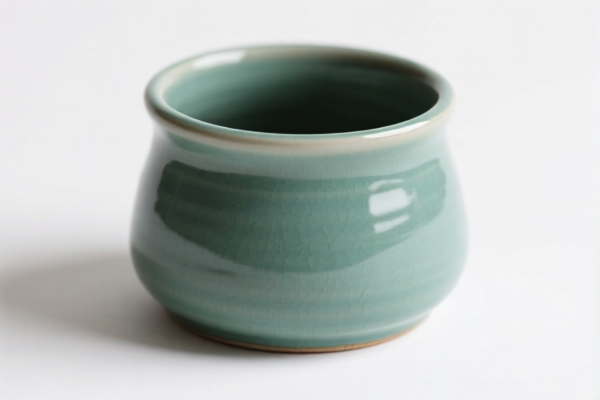
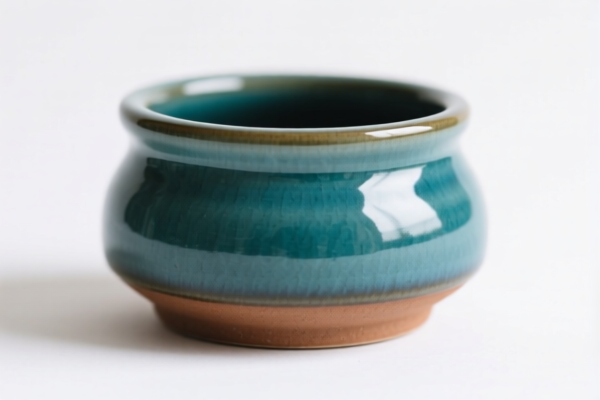
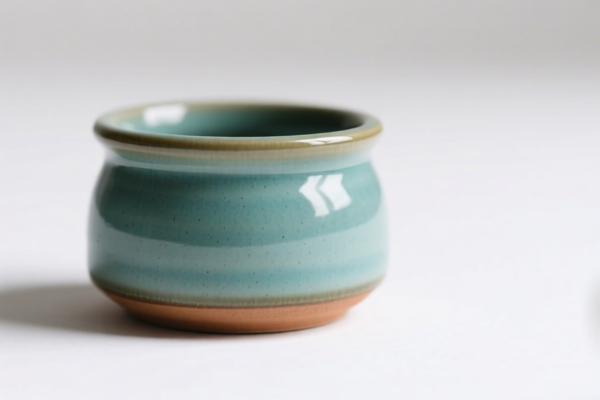
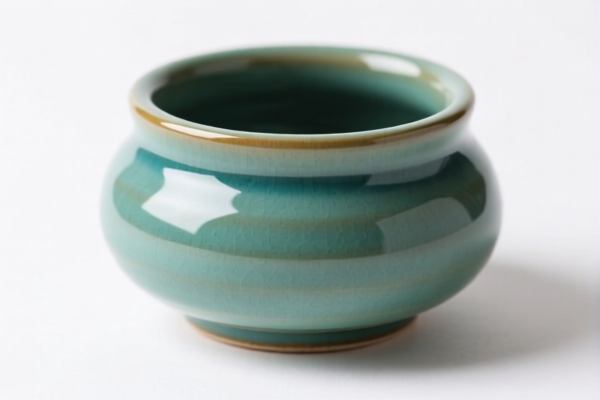
AI Analysis
🎨 Colored Emulsion Concentrate: HS Code Analysis & Customs Clearance Strategy (US Market)
🌐 HS Code Reference & Customs Guide | 2026 Tariff Code Breakdown | Professional Entry Strategy
📌 I. Product Definition & Classification: What Exactly is "Colored Emulsion Concentrate"?
"Colored Emulsion Concentrate" is a versatile industrial or cosmetic intermediate. In international trade, its classification is ambiguous because it depends heavily on the chemical composition and intended end-use. It generally falls into two conflicting categories:
1. Industrial Paint/Coating Base (Chemical Sector):
If the emulsion is a synthetic polymer (acrylic/vinyl) used as a binder for paints, varnishes, or protective coatings.
Key Identifier: High viscosity, chemical modifiers, intended for walls, wood, or metal protection.
2. Cosmetic/Personal Care Base (Pharmaceutical/Cosmetic Sector):
If the emulsion is a skin-conditioning agent, makeup base, or skincare lotion (liquid/semi-liquid state).
Key Identifier: Beauty/cosmetic labeling, specific skin-care claims, mild chemical composition.
⚠️ Critical Distinction Point:
- If it is a polymer dispersion for paint/coating → It belongs to Chapter 32 (Paints/Varnishes).
- If it is a beauty/skin treatment → It belongs to Chapter 33 (Essential Oils/Cosmetics).
- Misclassification Risk: Customs may reclassify based on proof of use. If declared as cosmetics but used in construction, penalties apply.
📦 II. HS Code Classification Matrix (2026 Latest Tariff Schedule)
Based on the provided data, the product has five potential HS Code matches. Below is the detailed breakdown of why it fits each category and the tax implications.
| HS Code | Product Description | Matching Logic (Summary) | Total Tax Rate |
|---|---|---|---|
| 3210.00.00.00 | Other Paints & Varnishes | "Colored" + "Emulsion" = Paint. Inferred as a color-modified coating product within the "other paints" category. No material conflict. | 36.8% |
| 3304.91.00.50 | Makeup & Skin Care (Powder Form Logic) | "Emulsion" = Skin Care Preparation. Although it's liquid, if it doesn't fit specific lipstick/blush categories, it falls under "Other." Inferred as a beauty preparation. | 35.0% |
| 3304.99.50.00 | Other Beauty/Cosmetic Preparations | "Emulsion" = Liquid/Semi-liquid Beauty Prep. Fits the definition of cosmetic/skin care preparations with no material conflict. Most common for skincare lotions. | 35.0% |
| 3209.10.00.00 | Paints based on Acrylic/Vinyl Polymers | "Emulsion" = Synthetic Polymer Dispersion. Inferred as an acrylic or vinyl polymer base for paints. Fits the chemical precursor description. | 40.1% |
| 3209.90.00.00 | Other Paints (Water-Mediated) | "Emulsion" = Water-Mediated Chemical Mod. Fine colored emulsions are often chemically modified synthetic polymers in water medium. Fits "Other Paints" description. | 40.9% |
🔍 Key Insight:
- Lowest Tax Option: 3304.91.00.50 / 3304.99.50.00 (35.0%) if classified as cosmetics.
- Highest Tax Option: 3209.90.00.00 (40.9%) if classified as general industrial paint.
- Conflict: You cannot claim "Cosmetic" status if the label says "Industrial Floor Coating." The actual use dictates the code.
💰 III. 2026 Detailed Tariff Breakdown (US Market)
✅ Applicable Country: USA
✅ Origin: China (CN)
✅ Effective Date: Post-2025 (Section 301 + IEEPA)
The tax structure for all five codes is consistent in its components:
🎯 1. Tax Component Breakdown (Universal for All 5 Codes)
| Tax Component | Rate | Legal Basis | Explanation |
|---|---|---|---|
| Base Duty | 0.0% - 5.9% | HTSUS Standard | - Cosmetics (3304): 0.0% - Industrial Paints (3210/3209): 1.8% - 5.9% |
| Section 301 Duty | +25.0% | USITC Footnote | Additional tariff on Chinese goods under Trade Act Section 301. |
| IEEPA Surcharge | +10.0% | IEEPA 1701 | "122-Clause" tariff targeting specific Chinese industrial/cosmetic imports. |
| TOTAL EFFECTIVE RATE | 35.0% - 40.9% | Sum of Above | Formula: Base + 25% + 10% |
🎯 2. Specific Code Tax Calculations
Option A: Cosmetic Classification (Lowest Tax)
Codes: 3304.91.00.50 & 3304.99.50.00
- Base Duty: 0.0%
- Section 301: +25.0%
- IEEPA: +10.0%
- TOTAL: 35.0%
- 💡 Advantage: 5-5.9% lower total duty than industrial codes.
Option B: Paint/Coating Classification (Standard)
Code: 3210.00.00.00
- Base Duty: 1.8%
- Section 301: +25.0%
- IEEPA: +10.0%
- TOTAL: 36.8%
Option C: Polymer-Based Industrial Paint (Highest Tax)
Codes: 3209.10.00.00 & 3209.90.00.00
- Base Duty: 5.1% - 5.9%
- Section 301: +25.0%
- IEEPA: +10.0%
- TOTAL: 40.1% - 40.9%
- ⚠️ Risk: Highest cost entry. Only use if chemical composition strictly requires it.
🛠️ IV. Customs Clearance Practical Advice (Avoid Pitfalls)
✅ 1. Documentation Checklist (Non-Negotiable)
| Document | Requirement | Why It Matters |
|---|---|---|
| ✅ MSDS / SDS | Must Provide | Proves chemical composition. Customs uses this to distinguish between "Paint" (hazardous/industrial) and "Cosmetic" (safe/beauty). |
| ✅ Product Label | Must Provide | Must clearly state End Use (e.g., "For Skincare" vs. "For Wall Coating"). Mismatched labels = Rejection. |
| ✅ COA (Certificate of Analysis) | Must Provide | Details concentration, pH, and active ingredients. Helps determine if it's a "concentrate" or ready-to-use. |
| ✅ Commercial Invoice | Must Provide | Must accurately describe as "Colored Emulsion Concentrate" and specify HS Code. |
| ✅ Packaging Photos | Must Provide | Shows if it’s bulk industrial drums or retail beauty bottles. |
✅ 2. Classification Strategy (The "Secret Sauce")
🔥 Rule of Thumb:
"If it goes on the face, it's Ch. 33. If it goes on the wall, it's Ch. 32."
| Scenario | Recommended HS Code | Reasoning |
|---|---|---|
| Skincare Lotion Base | 3304.99.50.00 |
Best tax rate (35.0%). Must prove cosmetic intent. |
| Makeup Base/Cream | 3304.91.00.50 |
Fits "Makeup" category. Same 35.0% rate. |
| Wall/Decor Paint | 3210.00.00.00 |
General "Other Paints." 36.8% rate. Safe bet for construction materials. |
| Industrial Acrylic Binder | 3209.10.00.00 |
If high polymer content. 40.1% rate. Avoid unless necessary. |
| Generic Chemical Emulsion | 3209.90.00.00 |
Catch-all for paints. 40.9% rate. Highest risk/cost. |
✅ 3. Special Handling Notes
| Situation | Action |
|---|---|
| OEM/Private Label | Ensure the label matches the importer’s business type (Cosmetic Store vs. Hardware Store). |
| Concentrate vs. Ready-to-Use | If it requires mixing with water, it may be classified as a "Preparation" rather than a finished good. Clarify in SDS. |
| FDA vs. EPA | - Cosmetic: FDA regulated (no pre-approval). - Paint/Disinfectant: EPA regulated. Ensure your regulatory compliance matches the HS Code. |
| De Minimis Risk | ❌ Not Eligible. All codes exceed $800 threshold and are subject to Section 301/IEEPA. Do not use 800/801 parcels. |
🌍 V. Global Market Comparison (2026)
| Market | Recommended HS Code | Est. Total Duty | Key Requirement |
|---|---|---|---|
| 🇺🇸 USA | 3304.99.50.00 (Cosmetic) |
35.0% | FDA Cosmetic Facility Registration |
| 🇪🇺 EU | 3304.99 (Cosmetic) |
~6.5% | CPNP Notification, EPCIS |
| 🇨🇳 China | 3304.99 (Cosmetic) |
~6.0% | NMPA Filing (if imported for sale) |
| 🇬🇧 UK | 3304.99 (Cosmetic) |
~6.5% | UK CPNP, Safety Assessment |
📌 Conclusion for US Importers:
- Prioritize Cosmetic Classification (3304) if the product allows. It saves 5-5.9% in duties.
- Industrial Paint (3209/3210) is the fallback if the product is clearly for construction/industrial use.
- Never mislabel a cosmetic as a paint or vice versa. The 5-10% duty difference is worth less than the risk of seizure.
📌 VI. Common Mistakes & Pitfalls (Learn from Others)
❌ Mistake 1: Using "Paint" terminology on a Cosmetic Product
👉 Result: Customs may flag for fraud. Even if duty is higher, honesty in description prevents audits.
❌ Mistake 2: Declaring "Colored Emulsion" without SDS
👉 Result: Hold at Port. Customs cannot determine if it’s hazardous (Paint) or non-hazardous (Cosmetic) without SDS.
❌ Mistake 3: Assuming "Concentrate" means a different HS Code
👉 Result: Concentrates are usually classified by their finished form after mixing. If mixed = Lotion → 3304. If mixed = Paint → 3210.
❌ Mistake 4: Ignoring IEEPA 10% Surcharge
👉 Result: Underpaid duty by 10%. This is mandatory for Chinese-origin cosmetics/paints.
✅ Correct Declaration Example:
"Colored Emulsion Concentrate, Synthetic Polymer Basis, For Use in Skincare Lotion Manufacturing, pH 5.5, Not for Industrial Coating. HS: 3304.99.50.00"
🎯 VII. Final Recommendations: Save Money, Clear Fast!
🎯 Golden Rule:
🔹 "Cosmetics First, Paint Second. SDS is King, Label is Queen."
🔹 "35% vs 41% is a 6% Savings. On $100k, that's $6,000!"
📌 Pro Tip:
If your product can be legally marketed as either a cosmetic base OR a decorative coating, choose the Cosmetic Code (
3304). It has a 0% Base Duty vs. 1.8-5.9% for paints.
Ensure your FDA Cosmetic Facility Registration is active.
📣 Next Steps:
📞 Contact your Customs Broker with the MSDS and Final Label Artwork.
📝 Request a Binding Ruling from CBP if the use is ambiguous.
🚀 Optimize your Supply Chain to ensure the origin certificate matches the HS Code’s duty status.
✨ Precision in Classification = Profit in Profitability!
💼 Don’t let "Emulsion" ambiguity cost you 6% of your value!
Customer Reviews
About HS Code Classification
The Harmonized System (HS) is an internationally standardized nomenclature developed by the World Customs Organization (WCO) to classify traded products. Over 200 countries use the HS system as the basis for customs tariffs, trade statistics, and import/export regulations.
Each HS code follows a hierarchical structure:
- Chapter (2 digits) — Broad category of goods (e.g., Chapter 84: Machinery and Mechanical Appliances)
- Heading (4 digits) — More specific grouping within the chapter
- Subheading (6 digits) — Internationally standardized breakdown, used by all WCO member countries
- National subdivisions (8-10 digits) — Country-specific extensions for further classification, such as US HTSUS 10-digit codes
Correct HS code classification is essential for smooth customs clearance, accurate duty payment, and compliance with trade regulations. Misclassification can lead to customs delays, overpayment of duties, or penalties.
When importing from CN to US, the applicable tariff rates may include:
- Most-Favored-Nation (MFN) rate — The standard duty rate applied to WTO members
- General rate — Applied to countries without trade agreements
- Trade remedy duties — Additional tariffs such as Section 301 (anti-dumping), Section 232 (national security), or countervailing duties
The information provided on this page is for reference purposes only. For official classification, please consult with your local customs authority or a licensed customs broker.