Colored Film (Custom Length)
CN → US| HS Code | Tariff Rate | Origin | Destination | Doc |
|---|---|---|---|---|
| 3702550030 | 35.0% | CN | US | Official Doc |
| 3702550060 | 35.0% | CN | US | Official Doc |
| 9010505000 | 35.0% | CN | US | Official Doc |
| 4823400000 | 35.0% | CN | US | Official Doc |
| 9007208000 | 38.5% | CN | US | Official Doc |
Product Images
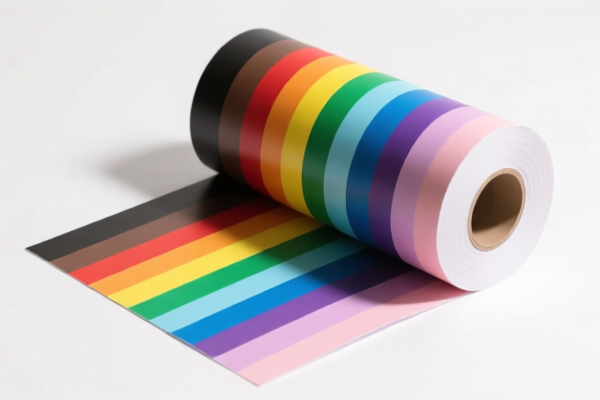
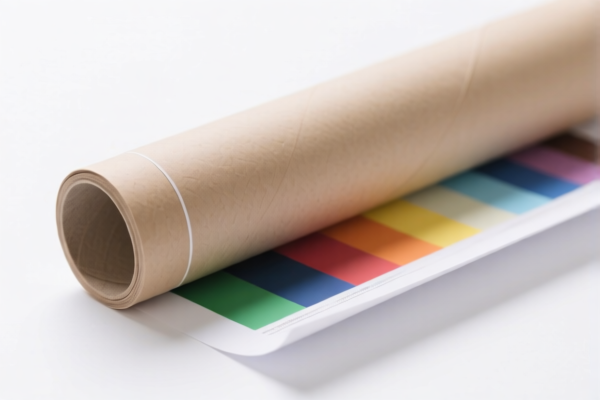
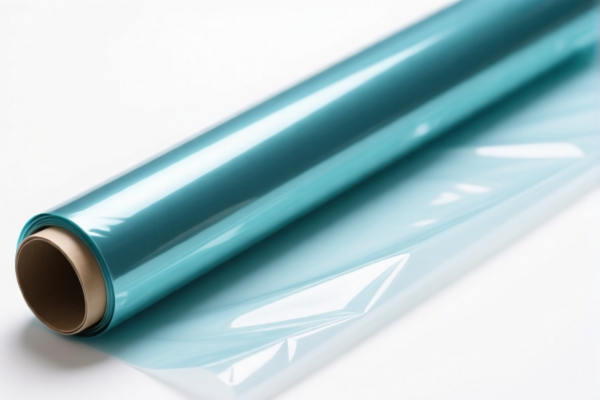
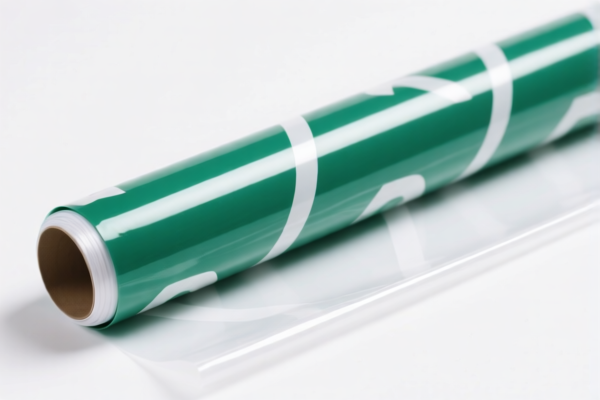
AI Analysis
🎞️ Colored Film (Custom Length)
🌐 HS Code Reference & Customs Clearance Guide | 2026 Latest Tariff Analysis | Professional Clearance Strategy
📌 I. Product Definition & Classification: What Exactly Is "Colored Film"?
Colored film, particularly when specified as "custom length," is a versatile imaging medium used in photography, cinematography, and scientific recording. In international trade, its classification depends heavily on the physical substrate (what it's made of) and the intended use (how it's processed or used).
Key Distinctions: 1. Photo-sensitive Material (Grades 37 & 9007): Films that require chemical processing (development) to create an image. This includes traditional photographic film and projection film stock. 2. Paper/Cellulose-based Recording (Grade 4823): Films that are not strictly "photo-sensitive" in the traditional sense but are used for recording/printing, often made of paper or cellulose fibers. 3. Lab Equipment Components (Grade 9010): Film used specifically as a medium or component within photographic laboratory equipment, rather than as a standalone consumer product.
⚠️ Critical Classification Point:
- If the film is light-sensitive and intended for imaging → Chapter 37 or 9007.
- If the film is paper-based or non-sensitive recording media → Chapter 4823.
- If it is a part/lab component → Chapter 9010.
📦 II. HS Code Classification Details (2026 Latest Tariff Authority对照)
| HS Code | Product Description | Applicable Scenario | Sensitivity/Material |
|---|---|---|---|
3702.55.00.30 |
Color photographic film, custom length, within the category of photosensitive films | Traditional color slide/negative film, custom cuts for professional photographers | ✅ Photo-sensitive |
3702.55.00.60 |
Color photographic film roll, custom length, non-paper, non-textile photosensitive material | Standard color film stock on plastic base (acetate/polyester), not paper | ✅ Photo-sensitive |
9010.50.50.00 |
Color film roll, image carrier medium, for use in photographic laboratory equipment | Film stock used as a consumable within lab processing machines or specialized imaging devices | ✅ Used in Lab Eq. |
4823.40.00.00 |
Color film roll, paper or cellulose film, for recording or printing | Paper-based photo paper rolls, non-sensitive recording media, or cellulose-based non-photo-sensitive films | ❌ Non-Photo-sensitive (Paper/Cellulose) |
9007.20.80.00 |
Color film roll, photosensitive material, for use as consumables in projectors or cameras | Motion picture film, projection stock, or camera film stock (broadly categorized under cinematographic equipment parts) | ✅ Photo-sensitive |
🔍 Key Reminder:
- "Custom Length" does not change the fundamental nature of the product. It is still classified by its material composition and function.
- Paper-based films go to4823, while plastic-based photosensitive films go to3702or9007.
- Misclassifying a photo-sensitive film as paper-based (4823) to avoid higher tariffs will result in significant penalties.
💰 III. 2026 Latest Tariff Rate Breakdown (Including Additional Taxes & Policy Surcharges)
✅ Applicable Country: United States (US)
✅ Origin: China (CN)
✅ Effective Time: From November 10, 2025 (including subsequent imports)
🎯 1. HS Code 3702.55.00.30 & 3702.55.00.60 —— Color Photographic Film (Photo-sensitive)
| Item | Detail |
|---|---|
| Base Tariff Rate | 0% (ad valorem) |
| USITC Additional Duty | +25% (Under Section 301 / USITC Footnote) |
| 122 Clause Tariff | +10% (Specific trade remedy measure) |
| Total Tax Rate | 35.0% |
| Tax Calculation | CIF Value × 35% |
| De Minimis Exemption | ❌ Not Eligible (deny_de_minimis) |
| Legal Basis Path | USITC:3702.55.00.30/60 → Footnote:25% → 122Clause:10% |
📌 Explanation:
- These codes cover traditional color photographic films.
- Despite a 0% base rate, the 35% total effective rate is due to the 25% Section 301 tariff and 10% 122 Clause tariff.
- No de minimis exemption applies; all shipments are subject to full duty.
🎯 2. HS Code 9010.50.50.00 —— Film for Laboratory Equipment
| Item | Detail |
|---|---|
| Base Tariff Rate | 0% (ad valorem) |
| USITC Additional Duty | +25% (Under Section 301) |
| 122 Clause Tariff | +10% (Specific trade remedy measure) |
| Total Tax Rate | 35.0% |
| Tax Calculation | CIF Value × 35% |
| De Minimis Exemption | ❌ Not Eligible |
| Legal Basis Path | USITC:9010.50.50.00 → Footnote:25% → 122Clause:10% |
📌 Explanation:
- Even though this is classified under laboratory equipment (9010), the additional taxes are identical to the photographic film codes.
- The 35% total rate applies equally.
🎯 3. HS Code 4823.40.00.00 —— Paper/Cellulose Film
| Item | Detail |
|---|---|
| Base Tariff Rate | 0% (ad valorem) |
| USITC Additional Duty | +25% (Under Section 301) |
| 122 Clause Tariff | +10% (Specific trade remedy measure) |
| Total Tax Rate | 35.0% |
| Tax Calculation | CIF Value × 35% |
| De Minimis Exemption | ❌ Not Eligible |
| Legal Basis Path | USITC:4823.40.00.00 → Footnote:25% → 122Clause:10% |
📌 Explanation:
- If your film is paper-based (e.g., photo paper rolls) or non-sensitive cellulose, it falls here.
- Crucial: The tax rate is still 35%. Misclassifying as paper to avoid "photo-sensitive" scrutiny does not reduce the tax burden in this dataset.
🎯 4. HS Code 9007.20.80.00 —— Film for Projectors/Cameras (Cinematographic)
| Item | Detail |
|---|---|
| Base Tariff Rate | 3.5% (ad valorem) |
| USITC Additional Duty | +25% (Under Section 301) |
| 122 Clause Tariff | +10% (Specific trade remedy measure) |
| Total Tax Rate | 38.5% |
| Tax Calculation | CIF Value × 38.5% |
| De Minimis Exemption | ❌ Not Eligible |
| Legal Basis Path | USITC:9007.20.80.00 → Footnote:25% → 122Clause:10% |
📌 Explanation:
- This code applies to cinematographic film or film specifically designated for projection/camera use under Chapter 90.
- Highest Rate: Because the base tariff is 3.5% (unlike the 0% for other codes), the total effective rate is 38.5%.
- Avoidance Strategy: If your product fits the definition of3702(photo film) or9010(lab component), consider if9007is truly the most accurate code, as it carries a higher base tax.
🛠️ IV. Customs Clearance Practical Advice (Real-World Pitfall Avoidance)
✅ 1. Required Documentation Checklist (All Must Be Provided)
| Document | Mandatory? | Description |
|---|---|---|
| ✅ Product Specification Sheet | ✔️ | Must detail: Film type (color/black & white), base material (acetate/polyester/paper), sensitivity, length, and width. |
| ✅ Technical Data Sheet (TDS) | ✔️ | Explains chemical composition and processing requirements. Crucial for distinguishing 3702 vs 4823. |
| ✅ Product Photos (Clear Labeling) | ✔️ | Show the roll, label, and any packaging indicating "Color Photographic Film." |
| ✅ Commercial Invoice | ✔️ | Must explicitly state: "Color Photographic Film, Custom Length, HS Code [XXX.XX.XX.XX]" |
| ✅ Packing List | ✔️ | Details net/gross weight, number of rolls, and dimensions. |
| ✅ Origin Certificate (CO) | ✔️ | Required for US imports from China. |
| ✅ Third-Party Test Report | ✔️ | If available, include tests confirming photosensitivity or material composition (e.g., FTIR for polymer base). |
✅ 2. Declaration Strategy (Key Mantras)
🔥 "Material Defines Code, Not Just Use! Be Precise, Avoid Penalties!"
| Scenario | Correct Declaration | Wrong Action |
|---|---|---|
| Plastic-based Color Photo Film | 3702.55.00.30 or 3702.55.00.60 |
Declaring as 9007.20.80.00 → 38.5% instead of 35% (Overpayment) |
| Paper-Based Photo Paper Rolls | 4823.40.00.00 |
Declaring as 3702 → Misclassification Risk (Customs may suspect hidden photosensitivity) |
| Film for Lab Machines | 9010.50.50.00 |
Declaring as generic "Film" → Delays for further examination |
| Cinematographic Projection Film | 9007.20.80.00 |
Declaring as 3702 → Potential Dispute if intended solely for projection equipment |
✅ 3. Special Situations Handling
| Situation | Handling Advice |
|---|---|
| OEM Custom Lengths | Provide a contract or order specifying "Custom Length" to justify why it's not a standard roll. However, HS code remains the same. |
| "Photographic Paper" vs. "Photo Film" | Clearly distinguish: Paper = 4823; Plastic Base = 3702. Do not mix them. |
| Lab Consumables | If the film is sold as a replacement part for a lab processor, 9010.50.50.00 is appropriate. |
| Mixed Shipments | If a shipment contains both 3702 and 4823 items, separate line items on the commercial invoice are mandatory to avoid customs audits. |
🌍 V. Global Market Comparison (2026 Latest)
| Country/Region | Recommended HS Code | Tariff Rate (China Origin) | Certification Requirements | Notes |
|---|---|---|---|---|
| 🇺🇸 USA | 3702.55.00.30/60 or 9010.50.50.00 |
35.0% | None specific for film, but ensure accurate material description | Highest burden due to 301 + 122 Clause |
| 🇺🇸 USA | 9007.20.80.00 |
38.5% | None | Avoid if possible; higher base rate |
| 🇨🇳 China | 3702.55.00.30 |
5%~8% (Varies) | CCC (if applicable) | Lower tariff, but check for domestic restrictions |
| 🇪🇺 EU | 3702.55.00 |
0% (Most FTA eligible) | CE (if electronic lab use) | No US-style additional tariffs |
| 🇬🇧 UK | 3702.55.00 |
0% | UKCA (if applicable) | Post-Brexit rules apply |
📌 Conclusion:
- The US market is the most challenging due to the 35%-38.5% effective tariff rate.
- There is no de minimis exemption for these goods, meaning even small shipments are taxed.
- Accurate material description (Paper vs. Plastic vs. Lab Component) is critical to avoid misclassification penalties, though the tax rates are similar across most codes.
📌 VI. Common Errors & Pitfall Guide (Lessons Learned)
❌ Error 1: Declaring Plastic Film as Paper Film (4823) to save time
👉 Consequence: Customs inspection reveals polymer base → Penalty + Back Duties + Delayed Release.
❌ Error 2: Using 9007.20.80.00 for standard color photo film
👉 Consequence: Paying 38.5% instead of 35% unnecessarily. Always check if 3702 or 9010 is more accurate.
❌ Error 3: Vague Description: "Color Film"
👉 Consequence: CBP issues a Questionnaire or Hold due to lack of clarity on material/sensitivity.
✅ Correct Description: "Color Photographic Film, Polyester Base, Custom Length, 35mm, Unexposed, HS 3702.55.00.30"
❌ Error 4: Ignoring the 122 Clause
👉 Consequence: Underpaying duties by 10%. Ensure your broker accounts for the 122 Clause Tariff in addition to Section 301.
🎯 VII. Conclusion: Professional Declaration, Cost Control, Efficiency!
🎯 Remember the Mantra:
🔹 "Plastic Photo Film: 35% (3702/9010/4823)"
🔹 "Cinematographic Film: 38.5% (9007)"
🔹 "No De Minimis! Every Roll is Taxed!"
🔹 "Base + 25% + 10% = Total Duty!"
📌 Pro Tip:
- If your film is not from China, verify if it qualifies for IEEPA Exemptions or Section 301 Exclusions (though rare for these specific goods in 2026).
- Always request an Advance Ruling from CBP if the film type is borderline (e.g., semi-sensitive or hybrid materials).
📣 Immediate Action:
📞 Consult your customs broker with spec sheets.
🚀 Declare accurately, pay the right duty, clear smoothly.
✨ Professional Clearance Starts with Precise Classification!
💼 Your Every Dollar of Duty Deserves Exact Calculation!
Customer Reviews
About HS Code Classification
The Harmonized System (HS) is an internationally standardized nomenclature developed by the World Customs Organization (WCO) to classify traded products. Over 200 countries use the HS system as the basis for customs tariffs, trade statistics, and import/export regulations.
Each HS code follows a hierarchical structure:
- Chapter (2 digits) — Broad category of goods (e.g., Chapter 84: Machinery and Mechanical Appliances)
- Heading (4 digits) — More specific grouping within the chapter
- Subheading (6 digits) — Internationally standardized breakdown, used by all WCO member countries
- National subdivisions (8-10 digits) — Country-specific extensions for further classification, such as US HTSUS 10-digit codes
Correct HS code classification is essential for smooth customs clearance, accurate duty payment, and compliance with trade regulations. Misclassification can lead to customs delays, overpayment of duties, or penalties.
When importing from CN to US, the applicable tariff rates may include:
- Most-Favored-Nation (MFN) rate — The standard duty rate applied to WTO members
- General rate — Applied to countries without trade agreements
- Trade remedy duties — Additional tariffs such as Section 301 (anti-dumping), Section 232 (national security), or countervailing duties
The information provided on this page is for reference purposes only. For official classification, please consult with your local customs authority or a licensed customs broker.