Colored Film Customizable Substrate
CN → US| HS Code | Tariff Rate | Origin | Destination | Doc |
|---|---|---|---|---|
| 3921904090 | 39.2% | CN | US | Official Doc |
| 3921905050 | 39.8% | CN | US | Official Doc |
| 3920591000 | 41.0% | CN | US | Official Doc |
| 3920992000 | 39.2% | CN | US | Official Doc |
| 3921904090 | 39.2% | CN | US | Official Doc |
Product Images
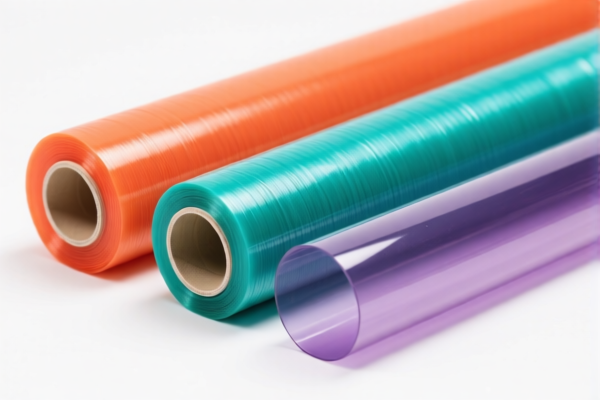
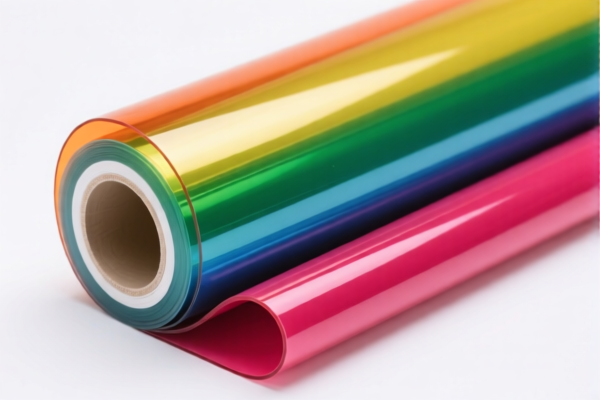
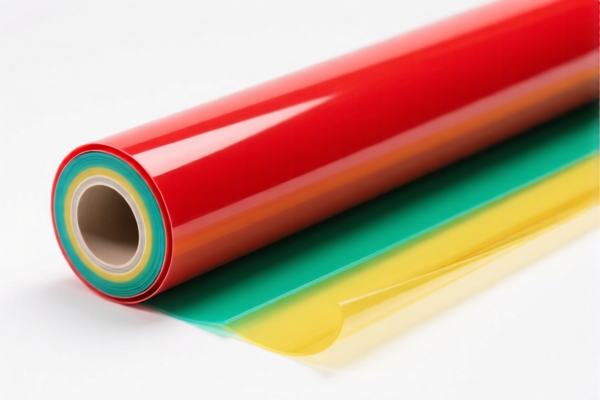

AI Analysis
🎨 Colored Film Customizable Substrate (Printable Plastic Films)
🌐 HS Code Reference & Customs Clearance Guide | 2026 Latest Tariff Analysis | Professional Clearance Strategy
📌 I. Product Definition & Classification: What is a "Colored Film Substrate"?
A "Colored Film Customizable Substrate" refers to flexible plastic films used primarily for printing, packaging, or industrial labeling. These films are colored (dyed or pigmented) during manufacturing and serve as a base layer for subsequent printing or lamination processes.
In international trade, these are classified based on their polymer type and chemical composition. The key distinction lies in whether the material is a general plastic or a specific polymer like acrylic.
⚠️ Critical Distinction:
- If the film is made of standard plastics (PE, PP, PVC, PET, etc.) → It falls under Heading 3921.
- If the film is made of Acrylic or related polymers → It falls under Heading 3920.
- Note: All items in the dataset are subject to significant additional tariffs (Section 301 & Section 122) due to their origin (likely China).
📦 II. HS Code Classification Details (2026 Latest Tariff Authority Match)
Based on the provided <DATA>, here are the four specific HS Codes mapped to this product type, depending on the exact material composition:
| HS Code | Product Description & Material | Total Tax Rate | Key Tax Components |
|---|---|---|---|
3921.90.40.90 |
Colored Plastic Film (General Plastic) | 39.2% | Base 4.2% + Add-on 25.0% + Sec 122 10% |
3921.90.50.50 |
Colored Plastic Film (General Plastic) | 39.8% | Base 4.8% + Add-on 25.0% + Sec 122 10% |
3920.59.10.00 |
Colored Acrylic Film (Acrylic/Related Polymers) | 41.0% | Base 6.0% + Add-on 25.0% + Sec 122 10% |
3920.99.20.00 |
Colored Other Plastic Film (Other Plastics) | 39.2% | Base 4.2% + Add-on 25.0% + Sec 122 10% |
🔍 Key Insight:
- Heading 3921 covers plastic films, plates, sheets, and foil, whether or not printed. Since these are "substrates" for printing, they are classified here unless they are already printed as a final product (which might change the code). - Heading 3920 covers plastic plates, sheets, etc., not cellular, of non-cellular acrylic polymers. If your substrate is acrylic-based, it must go here. - The difference between3921.90.40.90and3921.90.50.50lies in the specific sub-category of "other plastics" within the US HTSUS, often determined by thickness or specific resin type.
💰 III. 2026 Latest Tariff Rate Breakdown (With Surtaxes)
✅ Applicable Country: United States (US)
✅ Origin: China (CN) (Inferred from "Section 122" and typical surtax patterns)
✅ Effective Date: Ongoing (Check for 122 Clause updates)
🎯 1. 3921.90.40.90 & 3921.90.50.50 —— General Colored Plastic Films
| Item | Content |
|---|---|
| Base MFN Rate | 4.2% (3921.90.40) / 4.8% (3921.90.50) |
| Section 301 Surcharge | +25.0% (Standard retaliatory tariff on Chinese plastics) |
| Section 122 Surcharge | +10.0% (Specific duty on certain Chinese goods) |
| Total Landed Duty Rate | 39.2% (for .40.90) / 39.8% (for .50.50) |
| Calculation Basis | CIF Value × Total Rate |
| De Minimis Exemption | ❌ NOT APPLICABLE (Section 321 cannot be used for Section 301/122 goods) |
📌 Explanation:
- The 25% is under US Trade Act Section 301. - The 10% is under Section 122 of the Trade Act of 1974 (applied to specific Chinese imports). - Total Impact: Nearly 40% of the product value is consumed by tariffs alone.
🎯 2. 3920.59.10.00 —— Colored Acrylic Film
| Item | Content |
|---|---|
| Base MFN Rate | 6.0% |
| Section 301 Surcharge | +25.0% |
| Section 122 Surcharge | +10.0% |
| Total Landed Duty Rate | 41.0% |
| Calculation Basis | CIF Value × Total Rate |
| De Minimis Exemption | ❌ NOT APPLICABLE |
📌 Note:
Acrylic films have a slightly higher base rate (6.0% vs 4.2%-4.8%), resulting in a higher total tax burden (41.0%).
🎯 3. 3920.99.20.00 —— Other Plastic Films (Non-Acrylic)
| Item | Content |
|---|---|
| Base MFN Rate | 4.2% |
| Section 301 Surcharge | +25.0% |
| Section 122 Surcharge | +10.0% |
| Total Landed Duty Rate | 39.2% |
| Calculation Basis | CIF Value × Total Rate |
| De Minimis Exemption | ❌ NOT APPLICABLE |
📌 Note:
This code is a "catch-all" for plastics not otherwise specified (like acrylic) in 3920. The rate is identical to the most common 3921 code.
🛠️ IV. Customs Clearance Practical Advice (Pitfall Avoidance)
✅ 1. Preparation Checklist (Mandatory)
| Document | Required? | Explanation |
|---|---|---|
| ✅ Product Specification Sheet | ✔️ | Must specify: Material (PE, PP, PET, Acrylic), Color, Thickness, Width, Finish (Matte/Glossy). |
| ✅ Material Safety Data Sheet (MSDS) | ✔️ | To confirm chemical composition, especially for "Acrylic" classification. |
| ✅ Commercial Invoice | ✔️ | Must clearly state "Plastic Film Substrate for Printing" and not just "Film". |
| ✅ Certificate of Origin | ✔️ | To prove origin for Section 301/122 application. |
| ✅ Labeling/Marking | ✔️ | Ensure goods are marked "Made in China" if applicable. |
✅ 2. Classification Tips (Key Mnemonics)
🔥 "Material Dictates Code, Section 122 Adds Pain!"
| Scenario | Correct Classification | Wrong Action |
|---|---|---|
| PET/PP/PE Film (Most common) | 3921.90.40.90 or .50.50 |
❌ Do NOT use 3920 (Acrylic only) |
| Acrylic Film (Harder, clear/colored) | 3920.59.10.00 |
❌ Do NOT use 3921 |
| Pre-Printed Film | May change classification! | ❌ Do NOT declare as "Unprinted Substrate" if already printed |
| Rolls vs. Sheets | Both generally 3921/3920 | ✅ Ensure packaging matches description |
✅ 3. Special Handling for Section 122 & 301
| Situation | Recommendation |
|---|---|
| Value-Based Calculation | Be precise with CIF value. A 1% error in valuation leads to 1% tax error. |
| Transshipment Risk | Do NOT try to reroute through Vietnam/Mexico to avoid 122/301. Strict enforcement applies. Penalties are severe. |
| Pre-Ruling | ✅ Highly Recommended: Apply for a HTSUS Pre-Ruling from CBP. Since 3921 has two similar codes (.40.90 vs .50.50), a ruling ensures you pick the correct one. |
🌍 V. Global Market Comparison (2026 Latest)
| Region | Recommended HS Code | Approx. Duty (China Origin) | Notes |
|---|---|---|---|
| 🇺🇸 USA | 3921.90.40.90 |
39.2% | High surtaxes (301 + 122). |
| 🇨🇳 China | 3921.90.40.90 |
~5-6% | Export duties may apply. |
| 🇪🇺 EU | 3920.99 / 3921.99 |
6.5% | No Section 301/122 equivalent. |
| 🇬🇧 UK | 3921.90 |
6.0% | Post-Brexit tariff structure. |
📌 Conclusion:
The USA is the most expensive market for these goods due to the combination of MFN, Section 301, and Section 122 tariffs.
- Total Tax Load: ~40%
- Strategy: Consider value-added processing outside China or negotiate price absorption with US buyers.
📌 VI. Common Errors & Pitfalls (Blood & Tears Lessons)
❌ Error 1: Declaring "Acrylic Film" under 3921
👉 Consequence: Misclassification audit, penalties, and back-taxes.
👉 Fix: Confirm material with Lab Test if unsure.
❌ Error 2: Ignoring Section 122
👉 Consequence: Underpayment of 10%. CBP will demand payment + interest.
👉 Fix: Always add 10% to Section 301 goods from China.
❌ Error 3: Confusing "Substrate" with "Finished Product"
👉 Consequence: If the film is already printed with a logo/design, it might be classified differently (e.g., as printing material or other).
👉 Fix: Declare as "Unprinted Colored Plastic Film Substrate".
❌ Error 4: Using De Minimis (Section 321) for B2B Imports
👉 Consequence: Severe penalties. Section 301/122 goods are explicitly excluded from De Minimis.
👉 Fix: Use formal entry (Type 01/05) for all shipments.
🎯 VII. Conclusion: Precise Classification Saves Money!
🎯 Remember the Formula:
🔹 "Plastic? Check Acrylic. Acrylic? Use 3920. Not Acrylic? Use 3921."
🔹 "Add 25% for 301. Add 10% for 122. Total ~40%."
🔹 "De Minimis is OFF-LIMITS. Formal Entry Only."
📌 Pro Tip:
If you are importing large volumes, request a CBP Advance Ruling. The cost of a ruling is negligible compared to the risk of misclassifying 3921.90.40 vs 3921.90.50 (0.6% difference) or failing to account for Section 122.
📣 Immediate Action:
📞 Consult a Customs Broker + Provide Material Spec + Apply for Pre-Ruling
🚀 Clear Customs Smoothly, Avoid Penalties, Protect Margins!
✨ Professional Clearance Starts with Accurate Classification!
💼 Your Product's Value Deserves Precision, Not Guesswork!
Customer Reviews
About HS Code Classification
The Harmonized System (HS) is an internationally standardized nomenclature developed by the World Customs Organization (WCO) to classify traded products. Over 200 countries use the HS system as the basis for customs tariffs, trade statistics, and import/export regulations.
Each HS code follows a hierarchical structure:
- Chapter (2 digits) — Broad category of goods (e.g., Chapter 84: Machinery and Mechanical Appliances)
- Heading (4 digits) — More specific grouping within the chapter
- Subheading (6 digits) — Internationally standardized breakdown, used by all WCO member countries
- National subdivisions (8-10 digits) — Country-specific extensions for further classification, such as US HTSUS 10-digit codes
Correct HS code classification is essential for smooth customs clearance, accurate duty payment, and compliance with trade regulations. Misclassification can lead to customs delays, overpayment of duties, or penalties.
When importing from CN to US, the applicable tariff rates may include:
- Most-Favored-Nation (MFN) rate — The standard duty rate applied to WTO members
- General rate — Applied to countries without trade agreements
- Trade remedy duties — Additional tariffs such as Section 301 (anti-dumping), Section 232 (national security), or countervailing duties
The information provided on this page is for reference purposes only. For official classification, please consult with your local customs authority or a licensed customs broker.