Colored Film Low Particulate
CN → US| HS Code | Tariff Rate | Origin | Destination | Doc |
|---|---|---|---|---|
| 3707100090 | 38.0% | CN | US | Official Doc |
| 3707100005 | 38.0% | CN | US | Official Doc |
| 3702520160 | 38.7% | CN | US | Official Doc |
| 3701910060 | 38.7% | CN | US | Official Doc |
| 3701996060 | 35.0% | CN | US | Official Doc |
Product Images
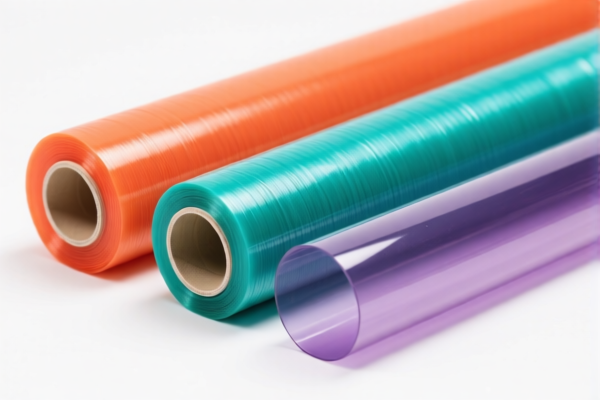
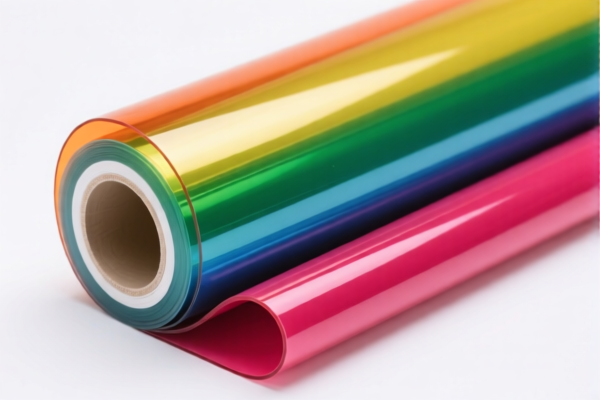
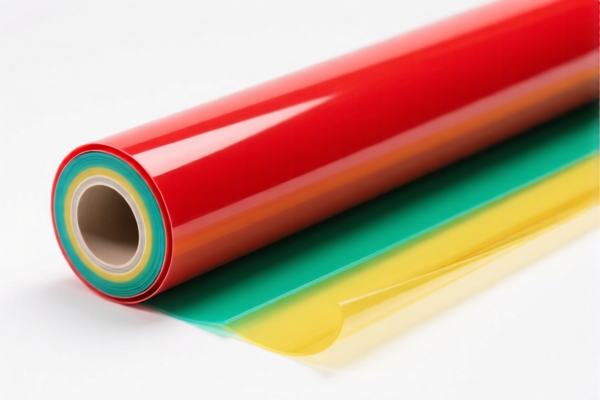

AI Analysis
🎞️ Colored Fine-Grain Film (Colored Low-Particulate Film)
🌐 HS Code Reference & Customs Clearance Guide | 2026 Latest Tariff Analysis | Professional Clearance Strategy
📌 I. Product Definition & Classification: Do You Really Understand "Colored Fine-Grain Film"?
"Colored fine-grain film" (often referred to in trade data as colored low-particulate film) is a high-precision photographic sensitive material. In international trade, it is primarily categorized under Chapter 37 (Photographic or Cinematographic Goods). The classification depends heavily on its specific form (e.g., roll, sheet, sheet film) and intended use (e.g., negative paper, graphic arts photoline, general photography).
⚠️ Key Distinction Points:
- If it is fine-grain photographic film for general photography or X-ray/medical imaging → It typically falls under 3701 or 3702.
- If it is used specifically for graphic arts, printing plates, or photolithography → It may fall under 3707 (Photographic plates and paper).
- The "low-particulate" description usually indicates high purity and quality, often used in professional or industrial applications, but the HS Code is determined by physical form and end-use, not just particle size.
📦 II. HS Code Classification Details (2026 Latest Tariff Authority Comparison)
Based on the provided <DATA>, here are the four most likely HS Codes for "Colored Fine-Grain Film," depending on its exact configuration:
| HS Code | Product Description (Summary) | Typical Application/Form | Key Characteristic |
|---|---|---|---|
| 3707.10.00.90 | Colored fine-grain film, matching sensitizing emulsion form and photographic use | Photographic plates, sensitized plates for graphic arts | Matches sensitizing emulsion |
| 3707.10.00.05 | Colored fine-grain film, meeting light-sensitive material characteristics and color negative paper use | Color negative papers, specialized photographic papers | Color negative paper usage |
| 3702.52.01.60 | Colored fine-grain film, form is roll/film, material is non-paper/textile light-sensitive material | Standard photographic rolls, plastic-base films | Roll/Film format, non-paper |
| 3701.91.00.60 | Colored fine-grain film, form is film, material inferred as non-paper/non-textile light-sensitive material | Sheet film, X-ray film, or specialized sheet materials | Sheet format, non-paper base |
| 3701.99.60.60 | Colored fine-grain film, belongs to light-sensitive materials category, fits "Other graphic arts film" | Other light-sensitive sheets not elsewhere specified | General light-sensitive sheet |
🔍 Important Note:
- All these codes represent light-sensitive materials.
- The difference lies in the base material (paper vs. plastic/plastic-based) and form (roll vs. sheet vs. plate).
- 3707 is typically for plates or papers used in graphic arts/photography processes.
- 3702 is for films (rolls/sheets) on plastic or other non-paper bases.
- 3701 covers other light-sensitive materials, including sheet film.
💰 III. 2026 Latest Tariff Rate Breakdown (Including Additional Taxes, Policy Surcharges)
✅ Applicable Country: United States (US)
✅ Origin: China (CN)
✅ Effective Date: November 10, 2025 onwards (for subsequent imports)
🎯 1. HS Code: 3707.10.00.90 & 3707.10.00.05 —— Colored Fine-Grain Film (Plate/Paper Type)
| Item | Content |
|---|---|
| Basic Tariff | 3.0% (Ad Valorem) |
| Section 301 Additional Tariff | +25% (USITC Footnote for China-origin goods) |
| Section 122 Tariff | +10% (Specific to China-origin certain goods) |
| Total Tariff Rate | 38.0% |
| Tax Calculation | CIF Value × 38.0% |
| De Minimis Eligibility | ❌ No (Not eligible for de minimis exemption) |
| Legal Basis Path | USITC:3707.10.00.90 / 3707.10.00.05 → Section 301: 25% → Section 122: 10% |
📌 Explanation:
- The 3.0% is the standard Most Favored Nation (MFN) duty rate for these HS codes.
- The 25% is the standard Section 301 tariff on Chinese goods.
- The 10% is the additional tariff under Section 122 (likely referencing specific trade actions or penalties).
- Total: 38% is a significant cost factor. Proper documentation is critical to avoid misclassification.
🎯 2. HS Code: 3702.52.01.60 & 3701.91.00.60 —— Colored Fine-Grain Film (Roll/Sheet Film, Non-Paper)
| Item | Content |
|---|---|
| Basic Tariff | 3.7% (Ad Valorem) |
| Section 301 Additional Tariff | +25% (USITC Footnote for China-origin goods) |
| Section 122 Tariff | +10% (Specific to China-origin certain goods) |
| Total Tariff Rate | 38.7% |
| Tax Calculation | CIF Value × 38.7% |
| De Minimis Eligibility | ❌ No (Not eligible for de minimis exemption) |
| Legal Basis Path | USITC:3702.52.01.60 / 3701.91.00.60 → Section 301: 25% → Section 122: 10% |
📌 Explanation:
- Slightly higher basic duty (3.7%) compared to the 3707 series (3.0%).
- Same additional surcharges apply, leading to a total of 38.7%.
- This is the most common classification for standard photographic film rolls or sheets on plastic bases.
🎯 3. HS Code: 3701.99.60.60 —— Other Light-Sensitive Materials (Graphic Arts Film)
| Item | Content |
|---|---|
| Basic Tariff | 0.0% (Ad Valorem) |
| Section 301 Additional Tariff | +25% (USITC Footnote for China-origin goods) |
| Section 122 Tariff | +10% (Specific to China-origin certain goods) |
| Total Tariff Rate | 35.0% |
| Tax Calculation | CIF Value × 35.0% |
| De Minimis Eligibility | ❌ No (Not eligible for de minimis exemption) |
| Legal Basis Path | USITC:3701.99.60.60 → Section 301: 25% → Section 122: 10% |
📌 Explanation:
- This code has a 0% basic tariff, making it the most tariff-efficient option if applicable.
- However, it is classified under "Other" light-sensitive materials, often used for graphic arts or industrial applications.
- Caution: Misclassification to gain the 0% base rate can lead to severe penalties if the product does not strictly fit "Other" and is better classified under 3702 or 3707.
🛠️ IV. Customs Clearance Practical Advice (Battle-Tested Pitfall Avoidance Guide)
✅ 1. Required Documentation Checklist (All are Mandatory)
| Document | Must Provide | Explanation |
|---|---|---|
| ✅ Product Specification Sheet | ✔️ | Must specify: Form (roll/sheet/plate), Base material (paper/plastic), Emulsion type, Sensitivity. |
| ✅ Product Photos | ✔️ | Clear images of the product, packaging, and any labels. Show if it’s a roll or sheet. |
| ✅ Composition/Structure Diagram | ✔️ | Illustrate the layers: Base, Emulsion, Protective Layer. Helps determine if it’s "paper-based" or "plastic-based." |
| ✅ Commercial Invoice | ✔️ | Must clearly state: "Colored Fine-Grain Film," HS Code, Value, Origin. |
| ✅ Packing List | ✔️ | Detail the quantity, weight, and packaging type. |
| ✅ Certificate of Origin (CO) | ✔️ | Confirm Chinese origin to accurately apply Section 301 and Section 122 tariffs. |
✅ 2. Declaration Tips (Key Mnemonics)
🔥 “Form determines Code, Base determines Chapter, Name must be Precise!”
| Scenario | Correct Declaration | Wrong Practice |
|---|---|---|
| Film on Plastic Base (Roll) | 3702.52.01.60 |
Misdeclare as "Paper" → Wrong Chapter |
| Film on Plastic Base (Sheet) | 3701.91.00.60 or 3702.52.01.60 |
Misdeclare as "Plate" → Wrong Subheading |
| Graphic Arts Photoline/Plate | 3707.10.00.90 |
Misdeclare as "Film" → Wrong Classification |
| Color Negative Paper | 3707.10.00.05 |
Misdeclare as "Plastic Film" → Wrong Base Material |
| General Light-Sensitive Sheet | 3701.99.60.60 |
If it fits 3702, use 3702 first → Specificity Rule |
✅ 3. Special Handling Cases
| Case | Handling Advice |
|---|---|
| OEM Custom Film | Provide customer order + technical specs to prove intended use. |
| Mixed Packaging | If film rolls and plates are mixed, declare separately. Do not combine into one line item. |
| Sample Shipments | Even samples are subject to duty. Declare accurately to avoid penalties. |
| Re-imports | If re-importing previously exported goods, provide proof of prior export to potentially reduce duties (if eligible). |
🌍 V. Global Main Market Customs Clearance Comparison (2026 Latest)
| Country/Region | Recommended HS Code | Tariff Rate (China Origin) | Certification Requirements | Notes |
|---|---|---|---|---|
| 🇺🇸 USA | 3702.52.01.60 / 3707.10.00.90 |
38.0% – 38.7% | None specific for film | High tariffs due to Section 301 & 122. |
| 🇨🇳 China | 3702.52.01.60 |
3.7% | CCC (if applicable) | Lower base tariff, no additional US surcharges. |
| 🇪🇺 EU | 3702.52.01.60 |
0% – 3% | CE (if electronic components included) | Generally lower tariffs for photographic goods. |
| 🇬🇧 UK | 3702.52.01.60 |
0% – 3% | UKCA (if applicable) | Post-Brexit rules may vary, but generally favorable. |
| 🇯🇵 Japan | 3702.52.01.60 |
0% – 3% | PSE (if electronic) | Low tariffs under JTEPA agreement. |
📌 Conclusion:
- The US market is significantly more expensive due to additional tariffs.
- EU, UK, Japan offer much more favorable tariff structures for light-sensitive materials.
- Consider supply chain diversification if targeting the US market to mitigate tariff risks.
📌 VI. Common Mistakes & Pitfall Guide (Lessons Learned the Hard Way)
❌ Mistake 1: Declaring "Plastic Film" as "Paper-Based"
👉 Consequence: Incorrect HS Code (3707 vs 3702) → Penalties + Back Taxes + Interest
❌ Mistake 2: Using Generic Term "Photographic Material"
👉 Consequence: Customs may assign a higher default tariff or delay clearance for further inspection.
❌ Mistake 3: Ignoring "Section 122" Tariff
👉 Consequence: Unexpected 10% surcharge on top of the 25% Section 301. Always check current trade actions.
❌ Mistake 4: Not Providing Technical Specs
👉 Consequence: Customs cannot determine if it’s "fine-grain" or "general purpose," leading to random audits and delays.
✅ Correct Practice:
"Colored Fine-Grain Photographic Film, Plastic Base, Roll Format, 35mm Width, for Professional Photography, HS Code 3702.52.01.60"
🎯 VII. Conclusion: Professional Declaration, Save Time, Reduce Costs!
🎯 Remember the Mnemonic:
🔹 "Base is King: Paper goes to 3707, Plastic to 3702/3701."
🔹 "US Tariffs are High: 38%+ is standard. Plan your costs accordingly."
🔹 "Specificity Wins: More detail in declaration = Faster clearance."
📌 Pro Tip:
If your film is originating from Vietnam, Mexico, or Thailand, you may be eligible for IEEPA Exemptions or FTAA/USMCA Preferences, reducing tariffs to 0% – 5%.
Recommend applying for an Advance Ruling from US Customs (CBP) to confirm the correct HS Code before shipping.
📣 Take Action Now:
📞 Contact a Professional Customs Broker + Provide Product Specs + Apply for HS Code Advance Ruling
🚀 Ensure your Colored Fine-Grain Film clears smoothly, efficiently, and profitably!
✨ Professional Clearance Starts with Accurate Classification!
💼 Every Penny in Tariffs Should Be Calculated Precisely!
Customer Reviews
About HS Code Classification
The Harmonized System (HS) is an internationally standardized nomenclature developed by the World Customs Organization (WCO) to classify traded products. Over 200 countries use the HS system as the basis for customs tariffs, trade statistics, and import/export regulations.
Each HS code follows a hierarchical structure:
- Chapter (2 digits) — Broad category of goods (e.g., Chapter 84: Machinery and Mechanical Appliances)
- Heading (4 digits) — More specific grouping within the chapter
- Subheading (6 digits) — Internationally standardized breakdown, used by all WCO member countries
- National subdivisions (8-10 digits) — Country-specific extensions for further classification, such as US HTSUS 10-digit codes
Correct HS code classification is essential for smooth customs clearance, accurate duty payment, and compliance with trade regulations. Misclassification can lead to customs delays, overpayment of duties, or penalties.
When importing from CN to US, the applicable tariff rates may include:
- Most-Favored-Nation (MFN) rate — The standard duty rate applied to WTO members
- General rate — Applied to countries without trade agreements
- Trade remedy duties — Additional tariffs such as Section 301 (anti-dumping), Section 232 (national security), or countervailing duties
The information provided on this page is for reference purposes only. For official classification, please consult with your local customs authority or a licensed customs broker.