Colored Film Roll (Custom Diameter)
CN → US| HS Code | Tariff Rate | Origin | Destination | Doc |
|---|---|---|---|---|
| 9010505000 | 35.0% | CN | US | Official Doc |
| 9007208000 | 38.5% | CN | US | Official Doc |
| 4823400000 | 35.0% | CN | US | Official Doc |
| 3702550060 | 35.0% | CN | US | Official Doc |
| 3702550030 | 35.0% | CN | US | Official Doc |
Product Images
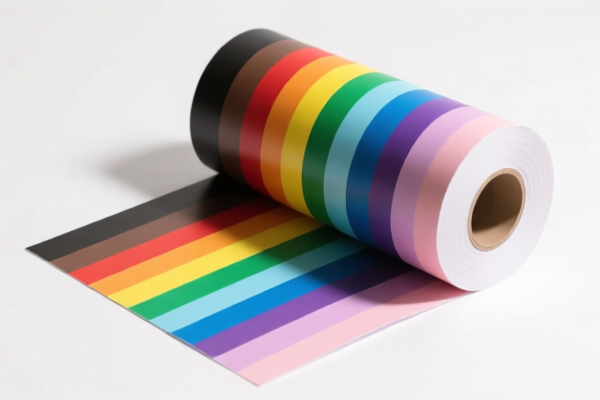


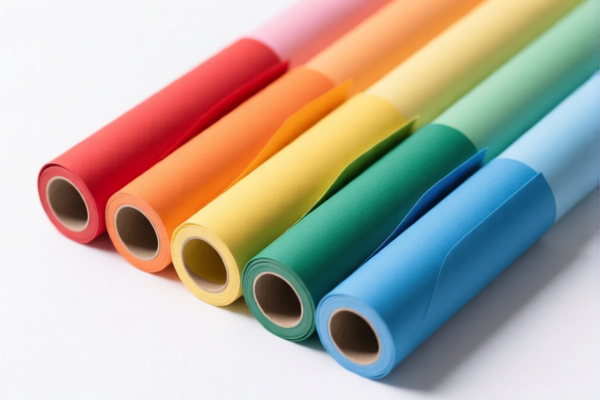
AI Analysis
🎨 Colored Film Rolls (Custom Diameter)
🌐 HS Code Reference & Customs Clearance Guide | 2026 Latest Tariff Analysis | Professional Clearance Strategy
📌 1. Product Definition & Classification: What Exactly Are "Colored Film Rolls"?
Colored film rolls, specifically those with custom diameter specifications, fall under the realm of Plastics and Articles Thereof. In international trade, these are not treated as a single uniform category. Their classification depends heavily on: 1. Material Composition: Polyester (PET), PVC, or Synthetic Polymers. 2. End-Use: Packaging, Industrial/Craft, or Labeling. 3. Surface Treatment: Coated vs. Uncoated.
⚠️ Critical Distinction:
- If the film is flexible, synthetic, and NOT for packaging (e.g., industrial/craft use), it may fall under Chapter 39 (Plastics), specifically 3920 or 3921.
- If the film is for packaging/labeling and made of plastic, it typically falls under 3920.
- Note: Paper-based labels or films are classified differently (Chapter 48). This guide focuses on plastic/polmer film as per the provided data.
📦 2. HS Code Classification Details (2026 Latest Tariff Authority Comparison)
Based on the provided data, here are the specific HS Codes for colored film rolls with custom diameters:
| HS Code | Product Description | Material Type | Intended Use | Key Features |
|---|---|---|---|---|
3920.50 |
Colored film rolls made of plastic (e.g., polyester, PVC) for packaging, labeling, or decorative applications. | Plastic (PET, PVC, etc.) | Packaging / Labeling / Decorative | Custom diameter; intended for commercial packaging or labels. |
3921.90 |
Colored flexible film rolls, NOT suitable for packaging, used for industrial or craft purposes. | Synthetic Polymers | Industrial / Craft | Custom diameter; excludes packaging/photographic films; non-packaging grade. |
🔍 Key Clarification:
-3920.50: Use this if the film is destined for packaging (food, retail boxes) or labeling (stickers, tags). It is a "plastic film, plates, sheets, and strip" heading.
-3921.90: Use this if the film is for non-packaging purposes, such as crafts, industrial masking, or specialized synthetic uses. It is an "other plastic" heading.
- Do NOT confuse with Paper Rolls: If the film is paper-based, it would fall under 4823.40.00.00 (Self-recording) or 4823.90.60.00 (Gaskets/Seals), but the term "Colored Film Roll" typically implies plastic/polymer in this context unless specified as paper.
💰 3. 2026 Latest Tariff Rate Details (Including Additional Taxes & Policy Surcharges)
✅ Applicable Country: United States (US)
✅ Origin: China (CN)
✅ Effective Date: 2025 November 10 onwards (for subsequent imports)
🎯 1. 3920.50 — Colored Film Rolls for Packaging/Labeling (Plastic)
| Item | Content |
|---|---|
| Basic Tariff | Error (Failed to retrieve base tax info from source) |
| USITC Additional Tariff | Failed to retrieve |
| IEEPA Additional Tariff | Failed to retrieve |
| Total Tax | Error |
| Tax Calculation | CIF Value × Error Rate |
| De Minimis Exemption | ❓ Unknown (Data retrieval failed) |
| Legal Basis Path | Data retrieval failed |
📌 Explanation:
- The provided data failed to retrieve tax information for HS Code3920.50.
- Action Required: Do NOT assume a 0% or 25% rate. Contact your customs broker or consult the latest USITC database for the exact base rate + any 301/IEEPA surcharges.
- Risk: High uncertainty. May face standard MFN rates + potential Section 301 tariffs (often 25% for certain plastics), but confirmation is needed.
🎯 2. 3921.90 — Colored Flexible Film Rolls (Industrial/Craft, Non-Packaging)
| Item | Content |
|---|---|
| Basic Tariff | Error (Failed to retrieve base tax info from source) |
| USITC Additional Tariff | Failed to retrieve |
| IEEPA Additional Tariff | Failed to retrieve |
| Total Tax | Error |
| Tax Calculation | CIF Value × Error Rate |
| De Minimis Exemption | ❓ Unknown (Data retrieval failed) |
| Legal Basis Path | Data retrieval failed |
📌 Explanation:
- The provided data failed to retrieve tax information for HS Code3921.90.
- Action Required: Similar to above, this requires manual verification with customs authorities.
- Risk: High uncertainty. Industrial films may have different tariff treatment than packaging films, but without base data, calculation is impossible.
🛠️ 4. Customs Clearance Practical Advice (Real-World Pitfall Guide)
✅ 1. Preparation Checklist (Essential Documents)
| Document | Must Provide | Description |
|---|---|---|
| ✅ Product Specification Sheet | ✔️ | Must specify: Material (PET, PVC, etc.), Thickness, Width, Diameter, Color, Surface Treatment (coated/uncoated). |
| ✅ Intended Use Declaration | ✔️ | Clearly state: "For Packaging/Labeling" (→ 3920.50) OR "For Industrial/Craft Use Only, Not for Packaging" (→ 3921.90). |
| ✅ Commercial Invoice | ✔️ | Must match HS Code description exactly. Use "Colored Plastic Film Rolls" not vague terms like "Plastic Sheets". |
| ✅ Customs Declaration Form | ✔️ | Accurate HS Code (3920.50 or 3921.90) based on end-use. |
| ✅ Material Safety Data Sheet (MSDS) | ✔️ | If applicable, especially for PVC films. |
✅ 2. Declaration Tips (Key Mantras)
🔥 “Material Matters, Use Defines Code, Accuracy Saves Money!”
| Scenario | Correct Declaration | Wrong Practice |
|---|---|---|
| Film for product packaging | 3920.50 + "For Packaging" |
Misdeclaring as "Craft Film" → Risk of misclassification penalty. |
| Film for crafts/industrial | 3921.90 + "Not for Packaging" |
Misdeclaring as "Packaging Film" → Higher base rate potential. |
| Paper-based colored rolls | 4823.40.00.00 or 4823.90.60.00 |
Declaring as plastic → Major customs violation. |
| Custom Diameter | Specify in specs | Vague "Custom Size" → Delays for further inspection. |
✅ 3. Special Handling Cases
| Case | Handling Advice |
|---|---|
| Ambiguous Use | If film can be used for both packaging and crafts, default to 3920.50 (Packaging) as it is more common. Be prepared to justify if audited. |
| Coated Films | If coated, ensure the coating type is declared. Some coatings may affect classification. |
| Roll Diameter | "Custom Diameter" is a physical attribute, not a classification factor. Ensure dimensions are listed in specs. |
| Failed Tax Data | Since tax data is Error, pre-arrival customs ruling is highly recommended to avoid unexpected duties. |
🌍 5. Global Market Clearance Comparison (2026 Latest)
| Country/Region | Recommended HS Code | Tariff Estimate* | Certification Requirements | Notes |
|---|---|---|---|---|
| 🇺🇸 USA | 3920.50 or 3921.90 |
Unknown (Data Error) | FDA (if food contact), Prop 65 | High Risk: Tax data missing. Verify Section 301 applicability. |
| 🇨🇳 China | 3920.50 / 3921.90 |
~5-10% (General) | CCC (if applicable) | Standard import duties apply. |
| 🇪🇺 EU | 3920.50 / 3921.90 |
~0-6.5% | REACH, RoHS | Low base tariffs, but strict chemical regulations. |
| 🇯🇵 Japan | 3920.50 / 3921.90 |
~0-7% | PSE (if electrical components involved) | Check JIS standards for plastic films. |
📌 Conclusion:
- Tax Uncertainty is the Main Risk: The provided data failed to retrieve tax info for both HS Codes.
- Do Not Assume 25%: Unlike paper products (4823.xx) in the data, plastic films (392x.xx) may have different tax treatments.
- Action: Consult a customs broker to verify the exact base rate and any additional tariffs (Section 301, IEEPA, etc.) before shipping.
📌 6. Common Mistakes & Pitfall Guide (Blood & Tears Lessons)
❌ Mistake 1: Declaring "Colored Film" without specifying Material (Plastic vs. Paper)
👉 Consequence: Customs may reclassify to paper (4823.xx) with 25% tax → Delay + Penalty.
❌ Mistake 2: Ignoring Intended Use (Packaging vs. Craft)
👉 Consequence: Misclassification between 3920.50 and 3921.90 → Audit Risk.
❌ Mistake 3: Assuming 0% or Standard Rate Without Verification
👉 Consequence: Due to Tax Data Error, unexpected duties of 25%+ may apply → Budget Overrun.
❌ Mistake 4: Vague Description "Plastic Roll"
👉 Consequence: Customs inspection required → Clearance Delay.
✅ Correct Practice:
“Colored PET Film Rolls, 0.1mm thickness, Custom Diameter 300mm, For Packaging Labels, FDA Compliant, HS Code 3920.50”
🎯 7. Conclusion: Professional Declaration, Save Time, Reduce Cost!
🎯 Remember:
🔹 “Material & Use Define HS Code”
🔹 “Tax Data Error? Verify Before Ship!”
🔹 “Plastic Film ≠ Paper Roll – Don’t Mix Them!”
📌 Tips:
- If the film is food-grade packaging, ensure FDA compliance documentation is ready.
- If non-packaging industrial, emphasize craft/industrial use to potentially avoid higher packaging-related duties (if any).
- Request a Customs Ruling from US CBP if volume is high to lock in the classification and tax rate.
📣 Immediate Action:
📞 Contact your customs broker for real-time tax verification for
3920.50and3921.90.
🚀 Clear customs smoothly, avoid surprises, protect your margins!
✨ Professional Clearance, Start with Accurate Classification!
💼 Every Dollar Saved Starts with the Right HS Code!
Customer Reviews
About HS Code Classification
The Harmonized System (HS) is an internationally standardized nomenclature developed by the World Customs Organization (WCO) to classify traded products. Over 200 countries use the HS system as the basis for customs tariffs, trade statistics, and import/export regulations.
Each HS code follows a hierarchical structure:
- Chapter (2 digits) — Broad category of goods (e.g., Chapter 84: Machinery and Mechanical Appliances)
- Heading (4 digits) — More specific grouping within the chapter
- Subheading (6 digits) — Internationally standardized breakdown, used by all WCO member countries
- National subdivisions (8-10 digits) — Country-specific extensions for further classification, such as US HTSUS 10-digit codes
Correct HS code classification is essential for smooth customs clearance, accurate duty payment, and compliance with trade regulations. Misclassification can lead to customs delays, overpayment of duties, or penalties.
When importing from CN to US, the applicable tariff rates may include:
- Most-Favored-Nation (MFN) rate — The standard duty rate applied to WTO members
- General rate — Applied to countries without trade agreements
- Trade remedy duties — Additional tariffs such as Section 301 (anti-dumping), Section 232 (national security), or countervailing duties
The information provided on this page is for reference purposes only. For official classification, please consult with your local customs authority or a licensed customs broker.