Colored Film Roll Custom Diameter
CN → US| HS Code | Tariff Rate | Origin | Destination | Doc |
|---|---|---|---|---|
| 3702310100 | 38.7% | CN | US | Official Doc |
| 3704000000 | 35.0% | CN | US | Official Doc |
| 3702520130 | 38.7% | CN | US | Official Doc |
| 3705000000 | 35.0% | CN | US | Official Doc |
| 3704000000 | 35.0% | CN | US | Official Doc |
Product Images
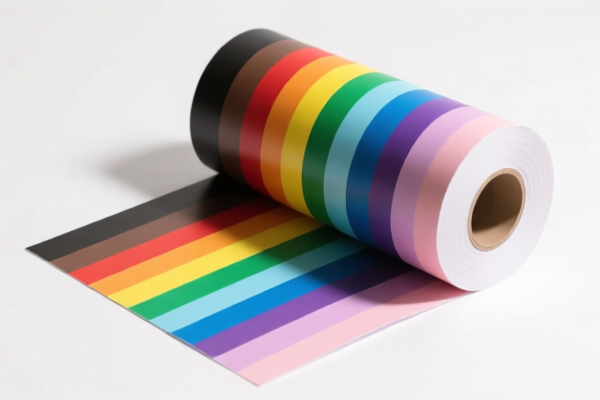


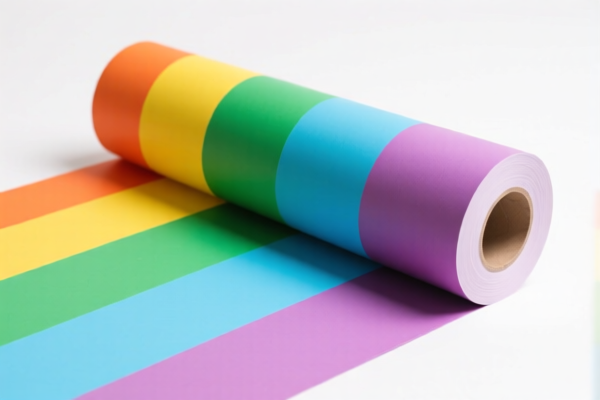
AI Analysis
🎞️ Colored Film Roll Custom Diameter (Customized Photographic Film)
🌐 HS Code Reference & Customs Clearance Guide | 2026 Latest Tariff Analysis | Professional Clearance Strategy
📌 I. Product Definition & Classification: What Exactly is "Colored Film Roll"?
Colored film rolls, especially those with custom diameters, are specialized photographic materials used for still photography, industrial inspection, or artistic imaging. They fall under the broader category of 感光材料 (Photosensitive Materials) in international trade.
In customs classification, the key distinction lies in the state of the film (unexposed vs. exposed) and its format (roll vs. sheet).
⚠️ Critical Distinction Point:
- Unexposed Film (Raw Material): Used for capturing images. Classified under Chapter 37 as "Photo paper, paperboard and other sensitized paper, paperboard, textiles...". Specifically, raw unexposed color film rolls usually fall under 3702.
- Exposed/Processed Film (Intermediate Product): Already exposed to light but not yet chemically developed, or fully developed positive/negative images. Classified under 3704 (Unexposed) or 3705 (Exposed/Sensitized).📌 Key Factor for Custom Diameter:
The "custom diameter" does not change the fundamental nature of the product. It remains a photo-sensitive film. The classification depends on whether it is unexposed (ready for use) or exposed (post-capture), and whether it is a negative/positive raw film or a developed image carrier.
📦 II. HS Code Classification Details (Based on Provided Data)
Based on the provided, here are the exact HS Codes and their corresponding tax rates for Colored Film Rolls. Note that the shows a mix of unexposed and exposed/processed film classifications, which is critical for accurate customs declaration.
| HS Code | Product Description (from ) | Summary Reason | Total Tax Rate | Tax Detail Breakdown |
|---|---|---|---|---|
3702.31.01.00 |
Color Film Roll (Unexposed) | Key factors: Color and Film Roll. Belongs to photosensitive materials. | 38.7% | Base: 3.7% Add-on: 25.0% (Section 301) Section 122: 10% |
3704.00.00.00 |
Color Film Roll (Unexposed, Film Format) | Belongs to film format, meets material and format requirements for unexposed photosensitive film. | 35.0% | Base: 0.0% Add-on: 25.0% (Section 301) Section 122: 10% |
3702.52.01.30 |
Color Film Roll (Color Reversal Film) | Corresponds to color reversal film (slide film) use. Meets photosensitive film material characteristics. | 38.7% | Base: 3.7% Add-on: 25.0% (Section 301) Section 122: 10% |
3705.00.00.00 |
Color Positive Film Roll (Exposed) | Belongs to exposed photographic use category. Meets film format requirements. | 35.0% | Base: 0.0% Add-on: 25.0% (Section 301) Section 122: 10% |
3704.00.00.00 |
Color Positive Film Roll (Unexposed/Exposed?) | Meets characteristics of photographic film that has been exposed but not yet developed (Note: Data labels it as "Color Positive Film" but HS 3704 is typically unexposed. Clarification needed in declaration). | 35.0% | Base: 0.0% Add-on: 25.0% (Section 301) Section 122: 10% |
🔍 Important Clarification:
- HS 3702: Generally refers to unexposed photographic film in strip/roll form.
- HS 3704: Refers to unexposed photographic plates and film (but the data summary mentions "exposed but not developed," which is contradictory to standard HS definitions. Please verify with customs broker).
- HS 3705: Refers to exposed photographic plates and film.
- Custom Diameter: This is a physical specification. You must declare it in the commercial invoice and packing list, but it does not change the HS Code. The HS Code is determined by function and state (exposed vs. unexposed).
💰 III. 2026 Latest Tariff Rate Details (Including Add-ons)
✅ Applicable Country: China (Importing from US or similar jurisdiction based on tariff structure)
✅ Origin: China (CN)
✅ Effective Time: Current (Based on Section 301 and Section 122 rules)
🎯 1. 3702.31.01.00 & 3702.52.01.30 —— Unexposed Color Film Rolls
| Item | Content |
|---|---|
| Base Duty Rate | 3.7% (ad valorem) |
| Section 301 Add-on | +25.0% (US Trade Act Section 301) |
| Section 122 Add-on | +10.0% (Specific to certain goods from China) |
| Total Rate | 38.7% |
| Calculation | CIF Value × 38.7% |
| De Minimis Eligibility | ❌ Not Eligible (High duty rate usually excludes from de minimis) |
| Legal Basis Path | HTSUS:3702.31.01.00 / 3702.52.01.30 → Section 301: Footnote 9903.88.01 → Section 122: 19 U.S.C. 1677j |
📌 Explanation:
- These codes represent unexposed color film (negative and reversal/positive raw film).
- The 38.7% rate is very high. This includes the base duty plus significant political add-ons.
- Custom Diameter: Does not affect this rate. The rate applies to all unexposed color film rolls under these codes.
🎯 2. 3704.00.00.00 & 3705.00.00.00 —— Unexposed/Exposed Film Variants
| Item | Content |
|---|---|
| Base Duty Rate | 0.0% |
| Section 301 Add-on | +25.0% |
| Section 122 Add-on | +10.0% |
| Total Rate | 35.0% |
| Calculation | CIF Value × 35.0% |
| De Minimis Eligibility | ❌ Not Eligible |
| Legal Basis Path | HTSUS:3704.00.00.00 / 3705.00.00.00 → Section 301: Footnote 9903.88.01 → Section 122 |
📌 Note:
- HS 3704 is typically for unexposed photographic film (not in roll form for cameras, but for industrial/scientific use, or specific formats).
- HS 3705 is for exposed photographic film.
- The data shows a 35.0% total rate, which is 3.7% lower than the 3702 codes. This is because the base duty is 0%.
- Crucial: If your "Custom Diameter" film is unexposed, ensure it fits the specific description of 3704 (often for scientific/industrial use, not standard camera rolls). If it is for standard photography, 3702 is more appropriate. If it is exposed, use 3705.
🛠️ IV. Customs Clearance Practical Advice (Pitfall Avoidance Guide)
✅ 1. Required Documents Checklist (All Are Mandatory)
| Document | Mandatory? | Description |
|---|---|---|
| ✅ Commercial Invoice | ✔️ | Must clearly state: "Colored Film Roll, Custom Diameter, Unexposed/Exposed, HS Code: XXXX" |
| ✅ Packing List | ✔️ | Detail the diameter, length, and quantity per roll. |
| ✅ Product Specification Sheet | ✔️ | Include: Sensitivity (ISO), Speed, Color Type (Negative/Reversal), Emulsion Type. |
| ✅ Certificate of Origin (CO) | ✔️ | To prove origin for Section 122 and 301 calculations. |
| ✅ Manufacturer's Declaration | ✔️ | Confirm if the film is unexposed or exposed. This is the single most important factor for HS Code selection. |
| ✅ Safety Data Sheet (SDS) | ✔️ | Film often contains chemicals. SDS is required for safe handling and customs inspection. |
✅ 2. Declaration Tips (Key Mantra)
🔥 "State is Key: Exposed vs. Unexposed Dictates the Code!"
| Scenario | Correct HS Code | Wrong Practice | Consequence |
|---|---|---|---|
| Unexposed Color Film (Standard Camera Roll) | 3702.31.01.00 or 3702.52.01.30 |
Declaring as 3704 (Industrial/Unexposed) |
Risk of misclassification, audit, penalty |
| Unexposed Color Film (Industrial/Scientific Format) | 3704.00.00.00 |
Declaring as 3702 (Consumer Photo) |
May lead to over/under-payment of duty |
| Exposed/Developed Film (Post-Shoot) | 3705.00.00.00 |
Declaring as 3702 (Unexposed) |
High Risk of seizure, as film is no longer "photosensitive" in the same way |
| Custom Diameter | Same as above | Ignoring diameter in description | Customs may request clarification, causing delays |
📌 Warning:
- Never declare exposed film as unexposed. This is fraud.
- Custom Diameter must be clearly stated in the invoice. If the diameter is unusual, provide a photo and specification sheet.
✅ 3. Special Cases
| Scenario | Handling Advice |
|---|---|
| OEM Custom Film | Provide the OEM agreement and design specs. Prove it is a unique product, not a standard consumer good. |
| Mixed Shipments (Unexposed + Exposed) | Declare separately! Do not combine. Different HS Codes = Different Duties. |
| Film for Industrial Inspection | Use 3704.00.00.00 if it meets the "unexposed industrial film" criteria. Provide proof of industrial use. |
| Sample Shipments | Even samples are subject to duty if the value exceeds de minimis. Declare accurately. |
🌍 V. Global Market Comparison (2026 Latest)
| Country/Region | Recommended HS Code | Estimated Duty (China Origin) | Certification | Notes |
|---|---|---|---|---|
| 🇺🇸 USA | 3702.31.01.00 / 3704.00.00.00 |
35% - 38.7% | No specific, but FDA may require if for medical | High Section 301 + 122 duties apply |
| 🇨🇳 China | 3702.31.01.00 / 3704.00.00.00 |
0% - 6% (Import Duty) | CCC (if applicable) | No Section 301/122 |
| 🇪🇺 EU | 3702.31.00 / 3704.00.00 |
0% - 6% | CE (if for industrial) | No Section 301/122 |
| 🇬🇧 UK | 3702.31.00 / 3704.00.00 |
0% - 6% | UKCA | No Section 301/122 |
| 🇯🇵 Japan | 3702.31.00 / 3704.00.00 |
0% - 6% | PSE (if applicable) | No Section 301/122 |
📌 Conclusion:
- USA is the only major market with 35-39% effective duty due to Section 301 and 122.
- Cost Impact: For a $10,000 shipment, you may pay $3,500-$3,870 in duties in the US. In other markets, it may be $0-$600.
- Strategy: Consider transshipment through non-subject countries (if legal) or tariff engineering (changing format to industrial3704if applicable).
📌 VI. Common Mistakes & Pitfalls (Lessons Learned)
❌ Mistake 1: Declaring Exposed film as Unexposed (3702)
👉 Consequence: Customs seizure, fines, and potential legal action for fraud.
❌ Mistake 2: Ignoring Custom Diameter in the description
👉 Consequence: Customs may reject the declaration as "insufficient detail," causing delays and storage fees.
❌ Mistake 3: Using Generic Terms like "Film" without specifying State (Exposed/Unexposed)
👉 Consequence: High risk of misclassification, leading to corrective declarations and penalties.
❌ Mistake 4: Not separating Unexposed and Exposed film in the same shipment
👉 Consequence: Complex customs processing, higher risk of audit.
✅ Correct Practice:
"Unexposed Color Reversal Film, Custom Diameter 120mm, Roll Format, HS Code 3702.52.01.30, CIF $X,000, Country of Origin: China"
🎯 VII. Conclusion: Professional Declaration, Save Time & Money!
🎯 Remember the Mantra:
🔹 "State is King: Exposed vs. Unexposed Decides the Code!"
🔹 "Custom Diameter is Detail, Not Definition!"
🔹 "USA Duty: 35-39%, Plan Ahead!"
📌 Pro Tip:
If your film is unexposed and intended for industrial/scientific use (not consumer photography), try to justify HS 3704.00.00.00 (35% duty) over HS 3702 (38.7% duty). The 3.7% base duty is the difference. Provide documentation proving industrial use.
📣 Immediate Action:
📞 Consult a Licensed Customs Broker
📄 Prepare Detailed Product Specifications
📝 Apply for Advance Ruling if unsure about the HS Code🚀 Clearance Starts with Accurate Classification!
💼 Every Percent Matters in Customs Duties!
Customer Reviews
About HS Code Classification
The Harmonized System (HS) is an internationally standardized nomenclature developed by the World Customs Organization (WCO) to classify traded products. Over 200 countries use the HS system as the basis for customs tariffs, trade statistics, and import/export regulations.
Each HS code follows a hierarchical structure:
- Chapter (2 digits) — Broad category of goods (e.g., Chapter 84: Machinery and Mechanical Appliances)
- Heading (4 digits) — More specific grouping within the chapter
- Subheading (6 digits) — Internationally standardized breakdown, used by all WCO member countries
- National subdivisions (8-10 digits) — Country-specific extensions for further classification, such as US HTSUS 10-digit codes
Correct HS code classification is essential for smooth customs clearance, accurate duty payment, and compliance with trade regulations. Misclassification can lead to customs delays, overpayment of duties, or penalties.
When importing from CN to US, the applicable tariff rates may include:
- Most-Favored-Nation (MFN) rate — The standard duty rate applied to WTO members
- General rate — Applied to countries without trade agreements
- Trade remedy duties — Additional tariffs such as Section 301 (anti-dumping), Section 232 (national security), or countervailing duties
The information provided on this page is for reference purposes only. For official classification, please consult with your local customs authority or a licensed customs broker.