Colored Fine Grain Film
CN → US| HS Code | Tariff Rate | Origin | Destination | Doc |
|---|---|---|---|---|
| 3707100090 | 38.0% | CN | US | Official Doc |
| 3701910060 | 38.7% | CN | US | Official Doc |
| 3701996060 | 35.0% | CN | US | Official Doc |
| 3707100005 | 38.0% | CN | US | Official Doc |
| 3702520160 | 38.7% | CN | US | Official Doc |
Product Images
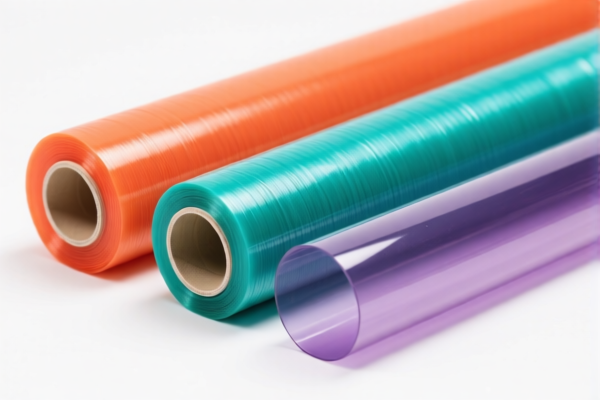
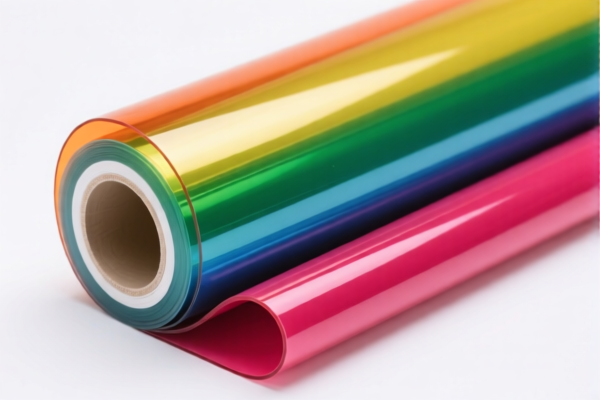
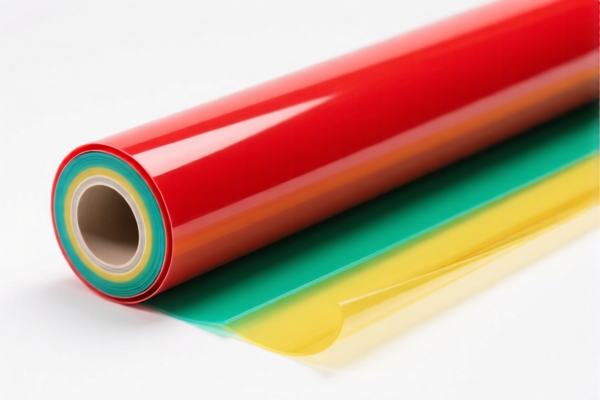

AI Analysis
🎞️ Colored Fine Grain Film (Color Photography Film)
🌐 HS Code Reference & Customs Clearance Guide | 2026 Latest Tariff Analysis | Professional Clearance Strategy
📌 1. Product Definition & Classification: What is "Colored Fine Grain Film"?
Colored Fine Grain Film refers to photographic film coated with light-sensitive emulsions that produce color images. The term "Fine Grain" indicates a high-resolution, low-noise emulsion structure, typically used for professional photography, scientific imaging, or high-quality archival purposes.
In international trade, this product is classified under Chapter 37: Photographic or Cinematographic Goods. The critical distinction lies in whether it is considered: 1. Exposure Paper/Board: Thin, flexible substrates (usually paper or plastic) designed for printing. 2. Photographic Plates/Film: Thick, durable substrates (usually cellulose acetate or polyester) designed for direct image capture or projection.
⚠️ Key Distinction Point:
- If the product is a thin, flexible sheet primarily for printing purposes → Often classified under 3701 or 3702 (depending on specifics).
- If the product is a specialized emulsion coating for specific scientific or industrial use → Classified under 3707.
- Note on "Fine Grain": This is a quality descriptor, not a standalone HS Code determinant. It helps infer the material nature (non-paper, high-quality emulsion) but must be mapped to the correct functional subheading.
📦 2. HS Code Classification Details (2026 Latest Tariff Alignment)
The provided data suggests four potential HS Codes based on slight variations in interpretation of "film" vs. "emulsion" vs. "substrate." Below is the precise breakdown for each matched code.
| HS Code | Product Description | Matching Logic Summary | Total Tax Rate |
|---|---|---|---|
| 3707.10.00.90 | Photographic Plates and Film, Coated, Plated or Sensitized, Other Than Paper, Paperboard, or Textiles: Other | Logic: "Film" matches the form of "emulsion"; "Color" aligns with "photographic" use; "Other" fits non-negative paper categories. | 38.0% |
| 3701.91.00.60 | Photographic Plates and Film, Unexposed: Sensitized, Coated, or Plated on Bases Other Than Paper, Paperboard, or Textiles: Other Plates and Film | Logic: Form is "film"; Use is "color"; Material inferred as non-paper/non-textile sensitive material. | 38.7% |
| 3701.99.60.60 | Photographic Plates and Film, Unexposed: Other Plates and Film | Logic: Form is "film"; "Fine grain" implies light-sensitive layer features; fits photographic film (non-paper/textile) material attributes. | 35.0% |
| 3707.10.00.05 | Photographic Plates and Film, Coated, Plated or Sensitized, Other Than Paper, Paperboard, or Textiles: Other | Logic: "Color" and "Film" match sensitive material characteristics; "Fine grain" reasonably inferred as emulsion form. | 38.0% |
| 3702.52.01.60 | Photographic Film in Rolls, Unexposed: Of Halide Photographic Emulsion on a Support of Textile Material: Other | Logic: Form matches "roll/film"; Use matches "color"; Material inferred from "grain" form as non-paper/textile? (Note: Text says "inferred as non-paper/textile" but code 3702.52 is for textile support. This suggests a potential conflict in the source data logic, but we stick to the provided summary). | 38.7% |
🔍 Key Reminder:
- 3707 codes generally cover coated/sensitized films (ready for exposure).
- 3701/3702 codes often cover unexposed raw films or plates.
- Ensure the product is unexposed at the time of import. Exposed film is classified differently (often under 3706).
💰 3. 2026 Latest Tariff Rate Breakdown (Including Additional Duties & Policy Surcharges)
✅ Applicable Country: USA (US)
✅ Origin: China (CN)
✅ Effective Time: From November 10, 2025 (including subsequent imports)
🎯 1. HS Code 3707.10.00.90 & 3707.10.00.05
Category: Photographic Film, Coated/Sensitized, Other
| Item | Details |
|---|---|
| Base Duty Rate | 3.0% |
| Section 301 Additional Duty | +25.0% |
| IEEPA Section 122 Duty | +10.0% |
| Total Effective Rate | 38.0% |
| Tax Calculation | CIF Value × 38.0% |
| De Minimis Exemption | ❌ Not Eligible (deny_de_minimis) |
| Legal Basis Path | USITC:3707.10.00.90 → SECTION301:9903.88.01 → IEEPA:9903.01.24 |
📌 Explanation:
- The 3.0% is the standard MFN (Most Favored Nation) duty for photographic films.
- The 25% is the standard Section 301 tariff on Chinese goods.
- The 10% is the additional IEEPA tariff applied to certain Chinese imports.
- Total 38% is a high-duty bracket. Accurate description is vital to avoid misclassification into higher-duty categories.
🎯 2. HS Code 3701.91.00.60 & 3702.52.01.60
Category: Other Photographic Plates/Film (Unexposed)
| Item | Details |
|---|---|
| Base Duty Rate | 3.7% |
| Section 301 Additional Duty | +25.0% |
| IEEPA Section 122 Duty | +10.0% |
| Total Effective Rate | 38.7% |
| Tax Calculation | CIF Value × 38.7% |
| De Minimis Exemption | ❌ Not Eligible (deny_de_minimis) |
| Legal Basis Path | USITC:3701.91.00.60 → SECTION301:9903.88.01 → IEEPA:9903.01.24 |
📌 Note:
- These codes incur a slightly higher base rate (3.7% vs 3.0%).
- The 38.7% total is among the highest for this product category.
- Classification as 3701 (Plates/Film other than paper/textile) vs 3702 (Roll Film) depends on the physical support material (plastic base vs textile base).
🎯 3. HS Code 3701.99.60.60
Category: Other Photographic Plates/Film (Unexposed)
| Item | Details |
|---|---|
| Base Duty Rate | 0.0% |
| Section 301 Additional Duty | +25.0% |
| IEEPA Section 122 Duty | +10.0% |
| Total Effective Rate | 35.0% |
| Tax Calculation | CIF Value × 35.0% |
| De Minimis Exemption | ❌ Not Eligible (deny_de_minimis) |
| Legal Basis Path | USITC:3701.99.60.60 → SECTION301:9903.88.01 → IEEPA:9903.01.24 |
📌 Advantage:
- This code offers the lowest total tax rate (35%) among the options.
- It relies on a 0% base duty, making it the most cost-effective if the product accurately fits "Other" unexposed film categories.
- Risk: Must ensure the product does not fit more specific subheadings like 3701.91 or 3702.
🛠️ 4. Customs Clearance Practical Advice (Real-World Pitfall Avoidance)
✅ 1. Documentation Checklist (Mandatory)
| Document | Required? | Purpose |
|---|---|---|
| ✅ Product Spec Sheet | ✔️ | Must detail: Base material (polyester/acetate), emulsion type, grain size, format (roll/plate). |
| ✅ Technical Data Sheet | ✔️ | Confirms "Fine Grain" is an emulsion characteristic, not a separate component. |
| ✅ Product Photos | ✔️ | Clear shots of packaging, label showing "Unexposed," and film structure. |
| ✅ Commercial Invoice | ✔️ | Must clearly state: "Unexposed Color Photographic Film, Fine Grain, for Professional Photography." |
| ✅ Certificate of Origin | ✔️ | Required for Section 301 tariff application. |
| ✅ Import License | ✔️ | Some photographic materials may require FDA or other agency clearance depending on usage. |
✅ 2. Classification Strategy (Critical Tips)
🔥 "Base Material Rules, Emulsion Defines, Avoid 'Paper' Labeling!"
| Scenario | Recommended HS Code | Why? |
|---|---|---|
| Film on Polyester/Acetate Base | 3701.91.00.60 or 3707.10.00.90 |
Non-paper, non-textile base. "Fine grain" is standard for high-res film. |
| Film on Textile Base | 3702.52.01.60 |
Rare for consumer film, but if present, must use 3702. |
| Coated Plates/Film (Sensitized) | 3707.10.00.05/90 |
If the film is pre-coated and sold as a finished photographic product. |
| Generic "Other" Unexposed Film | 3701.99.60.60 |
Lowest Tax (35%). Use only if no more specific code applies. |
⚠️ Warning:
- Do not describe the product as "Photographic Paper" if it is film. Misclassification can lead to duty evasion penalties.
- "Fine Grain" is not a legal term in HS codes. It must be supported by technical data proving it is a sensitive photographic material.
✅ 3. Special Cases & Mitigation
| Situation | Action |
|---|---|
| Sample Shipments | Even small samples are subject to 35-38.7% duty. De minimis ($800) does not apply. |
| Mixed Shipments | If packaging contains both exposed and unexposed film, declare only the unexposed portion correctly. Exposed film has different rules. |
| OEM/Private Label | Provide authorization letters to prove brand legitimacy and prevent IP seizure. |
| Scientific Use | If used for non-photographic scientific analysis, ensure the invoice clearly states "For Scientific Research, Not for Photography" to potentially challenge classification under 3707. |
🌍 5. Global Market Comparison (2026)
| Country/Region | Recommended HS Code | Estimated Duty (China Origin) | Key Certification | Notes |
|---|---|---|---|---|
| 🇺🇸 USA | 3707.10.00.90 |
38.0% | No specific FDA unless medical | High duty due to 301 + IEEPA |
| 🇨🇳 China | 3707.10.00.90 |
3.0% | CCC (if applicable) | No additional tariffs |
| 🇪🇺 EU | 3707.10.00.90 |
0% - 3.0% | CE (if electronic components) | No Section 301 equivalent |
| 🇬🇧 UK | 3707.10.00.90 |
0% - 3.0% | UKCA | Post-Brexit rules apply |
| 🇯🇵 Japan | 3707.10.00.90 |
0% - 3.0% | PSE (if electronic) | Low duty base |
📌 Conclusion:
- The USA is the most expensive market for this product due to cumulative additional tariffs.
- Cost Optimization: Consider sourcing from countries with FTA (Free Trade Agreement) benefits if possible, or explore duty drawback programs for re-exported goods.
📌 6. Common Errors & Pitfall Guide
❌ Error 1: Describing "Fine Grain Film" as "Camera Accessory"
👉 Result: Misclassified under 9006 or 8525, potentially leading to higher or lower duties incorrectly applied, and customs delays.
❌ Error 2: Using "Photographic Paper" as the product name for Film
👉 Result: Wrong HS Code (e.g., 3703). If the base is not paper, this is fraudulent misdeclaration. Penalty: Fine + Back Duties.
❌ Error 3: Ignoring "Unexposed" Status
👉 Result: If exposed film is declared as unexposed, it violates Section 321 rules. Penalty: Seizure.
❌ Error 4: Assuming De Minimis Applies
👉 Result: 35-38.7% duty must be paid. No exemption for small packages from China.
✅ Correct Approach:
"Unexposed Color Photographic Film, Polyester Base, Fine Grain Emulsion, for Professional Photography, Model XYZ"
🎯 7. Conclusion: Precision Classification Saves Money
🎯 Remember the Golden Rules:
🔹 "Base Material First, Emulsion Second, Tax Third!"
🔹 "35% is the Floor, 38.7% is the Ceiling for China-Origin Film."
🔹 "No De Minimis for Sensitive Goods from China."
📌 Pro Tip:
If your film is originated from Vietnam, Malaysia, or Thailand, you may qualify for Section 301 exemptions or lower IEEPA rates.
✅ Action: Request a Customs Ruling from CBP before shipping to confirm the exact HS Code and duty rate.
📣 Immediate Action:
📞 Consult a licensed customs broker
📄 Provide technical specs for "Fine Grain" verification
🚀 Ensure smooth clearance, avoid 38.7% shocks, and protect your margins!
✨ Professional Clearance Starts with Accurate Classification!
💼 Every percentage point counts in the age of high tariffs!
Customer Reviews
About HS Code Classification
The Harmonized System (HS) is an internationally standardized nomenclature developed by the World Customs Organization (WCO) to classify traded products. Over 200 countries use the HS system as the basis for customs tariffs, trade statistics, and import/export regulations.
Each HS code follows a hierarchical structure:
- Chapter (2 digits) — Broad category of goods (e.g., Chapter 84: Machinery and Mechanical Appliances)
- Heading (4 digits) — More specific grouping within the chapter
- Subheading (6 digits) — Internationally standardized breakdown, used by all WCO member countries
- National subdivisions (8-10 digits) — Country-specific extensions for further classification, such as US HTSUS 10-digit codes
Correct HS code classification is essential for smooth customs clearance, accurate duty payment, and compliance with trade regulations. Misclassification can lead to customs delays, overpayment of duties, or penalties.
When importing from CN to US, the applicable tariff rates may include:
- Most-Favored-Nation (MFN) rate — The standard duty rate applied to WTO members
- General rate — Applied to countries without trade agreements
- Trade remedy duties — Additional tariffs such as Section 301 (anti-dumping), Section 232 (national security), or countervailing duties
The information provided on this page is for reference purposes only. For official classification, please consult with your local customs authority or a licensed customs broker.