Colored Flags
CN → US| HS Code | Tariff Rate | Origin | Destination | Doc |
|---|---|---|---|---|
| 6307909835 | 24.5% | CN | US | Official Doc |
| 6307909825 | 24.5% | CN | US | Official Doc |
| 3926400010 | 15.3% | CN | US | Official Doc |
| 3926400090 | 15.3% | CN | US | Official Doc |
| 6307909825 | 24.5% | CN | US | Official Doc |
Product Images
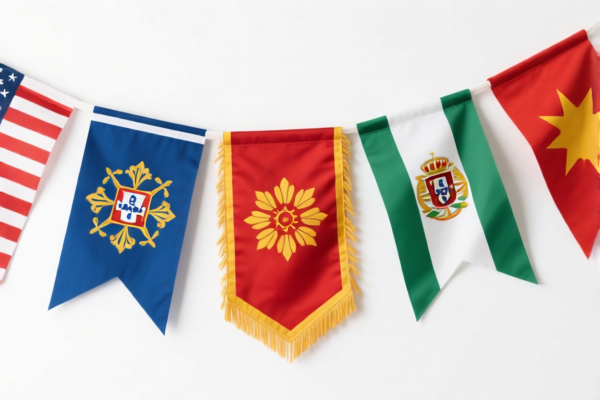
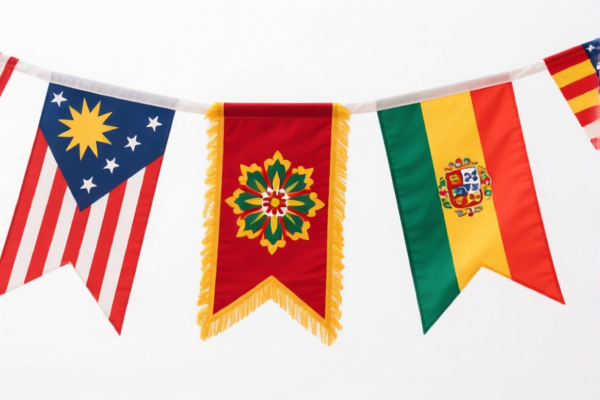
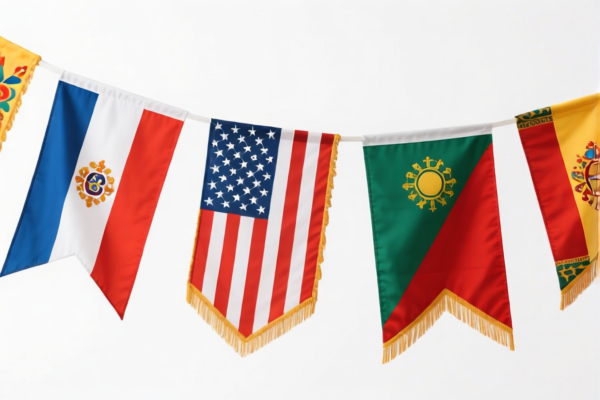
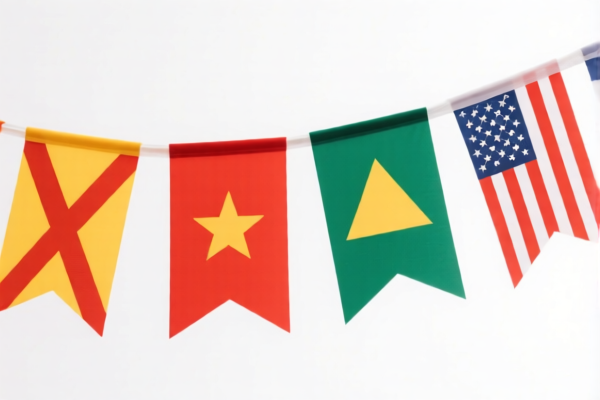
AI Analysis
🚩 Colored Flags (Bunting & Decorative Pennants)
🌐 HS Code Reference & Customs Clearance Guide | 2026 Latest Tariff Analysis | Professional Compliance Strategy
📌 I. Product Definition & Classification: Do You Really Understand "Colored Flags"?
"Colored Flags," often referred to as Bunting, Pennants, or Decorative Banners, are widely used in festivals, political campaigns, sports events, and commercial promotions. In international trade, the classification depends heavily on the material composition and manufacturing nature:
Textile/Weave Flags: Made from fabric (polyester, nylon, cotton), typically classified under Chapter 63 (Other made-up textile articles).
Plastic/Non-Woven Flags: Made from plastic films, non-woven fabrics, or paper-based laminates, often classified under Chapter 39 (Plastics and articles thereof) or Chapter 49 (Printed matter).
⚠️ Key Distinction Point:
- If made of fabric/textile →归入 6307.90.98.35 / 6307.90.98.25
- If made of plastic/non-woven → 归入 3926.40.00.10 / 3926.40.00.90
📦 II. HS Code Classification Details (2026 Latest Tariff Authority对照)
| HS Code | Product Description | Application Scenario | Material Type |
|---|---|---|---|
6307.90.98.35 |
Flags or bunting, matching purpose and form, fall into the "other made-up articles" catch-all category | Formal flags, ceremonial banners, textile-based decorations | ✅ Fabric/Textile |
6307.90.98.25 |
Flags or bunting, falling under "other made-up articles," no specific country attribution | General decorative bunting, fabric or plastic blend, generic use | ✅ Fabric/Plastic Blend |
3926.40.00.10 |
Colored flags/bunting, typically plastic or paper-based decorations, conforming to decorative use | Cheap festival bunting, plastic strips, promotional streamers | ✅ Plastic/Paper Composite |
3926.40.00.90 |
Colored flags, determined to be plastic material, falling under "other plastic decorative articles" | Heavy-duty plastic banners, outdoor plastic bunting | ✅ Plastic |
🔍 Important Reminder:
- Textile-based items with specific flag shapes are often scrutinized under 6307.90.98.35 (specific purpose); - Plastic/Non-woven items without specific ceremonial function fall under 3926.40.00 (plastic decorations); - Misclassification between "Textile" and "Plastic" can lead to tax discrepancies (e.g., 24.5% vs. 15.3%).
💰 III. 2026 Latest Tariff Rate Detailed Explanation (Including Additional Duties & Policy Surcharges)
✅ Applicable Country: United States (US)
✅ Origin: China (CN)
✅ Effective Date: Ongoing under current trade policies (Section 301 & Section 232 equivalents)
🎯 1. 6307.90.98.35 & 6307.90.98.25 —— Textile/Bunting Flags (High Tariff Category)
| Item | Detail |
|---|---|
| Base Tariff | 7.0% (Ad valorem) |
| Additional Tariff (Section 301) | +7.5% |
| Section 122 Tariff | +10.0% |
| Total Tax Rate | 24.5% |
| Tax Calculation | CIF Value × 24.5% |
| De Minimis Eligibility | ❌ Not Eligible (High value threshold often exceeded by bulk flag orders) |
| Legal Basis Path | HTSUS:6307.90.98.35/25 → USITC Footnote 301 → Section 122 Regulation |
📌 Explanation:
- These codes fall under "Other made-up textile articles".
- The 24.5% total rate reflects the cumulative burden of base duty, Section 301 punitive tariff, and Section 122 supply chain security tariff.
- Risk: High classification error risk if customs perceives "plastic-coated fabric" as plastic.
🎯 2. 3926.40.00.10 & 3926.40.00.90 —— Plastic/Non-Woven Bunting (Lower Tariff Category)
| Item | Detail |
|---|---|
| Base Tariff | 5.3% (Ad valorem) |
| Additional Tariff (Section 301) | 0.0% (Note: Some plastic decorations may be exempt or lower rate depending on specific subheading interpretation, but data shows 0% additional) |
| Section 122 Tariff | +10.0% |
| Total Tax Rate | 15.3% |
| Tax Calculation | CIF Value × 15.3% |
| De Minimis Eligibility | ❌ Not Eligible |
| Legal Basis Path | HTSUS:3926.40.00.10/90 → USITC Footnote → Section 122 Regulation |
📌 Explanation:
- These codes are classified as "Plastic Decorative Articles".
- The 15.3% total rate is lower than textile flags due to the 0% Section 301 additional tariff component (as per provided data).
- Opportunity: If your flags are non-woven (Spunbond) or plastic film, ensuring they are documented as such can save 9.2% in tariffs compared to textile classification.
🛠️ IV. Customs Clearance Practical Advice (Actionable Pitfall Guide)
✅ 1. Documentation Checklist (All Required)
| Document | Required | Explanation |
|---|---|---|
| ✅ Product Specification Sheet | ✔️ | Clearly state material: "100% Polyester," "Non-woven Polypropylene," or "Plastic Film." |
| ✅ Photos (Labeled) | ✔️ | Show texture, stitching (textile) vs. heat sealing (plastic). |
| ✅ Commercial Invoice | ✔️ | Describe as "Decorative Bunting" or "Polyester Flags." Avoid vague terms like "Decorations." |
| ✅ Packing List | ✔️ | Specify quantity and weight. Bulk shipments are more likely to trigger customs inspection. |
| ✅ Material Test Report | (Optional but Recommended) | Proof of material composition (e.g., fiber analysis) to defend HS Code classification. |
✅ 2. Declaration Strategy (Key Tips)
🔥 "Material First, Use Second. Fabric = 24.5%, Plastic = 15.3%!"
| Scenario | Correct Declaration | Incorrect Action |
|---|---|---|
| Polyester/Nylon Flags | HS: 6307.90.98.35 Desc: "Textile Flags" |
Declare as "Plastic Bunting" → Penalty for Misclassification |
| Non-woven PP Bunting | HS: 3926.40.00.90 Desc: "Plastic Non-woven Bunting" |
Declare as "Textile Flags" → Overpayment of Tax |
| Mixed Bag (Fabric + Plastic) | Split Declaration or choose the higher tax rate if mixed. | Lump sum as "Flags" → Customs Audit Risk |
| Paper-based Flags | May fall under Chapter 49 or 3926 depending on coating. | Ignore material composition → Incorrect Duty |
✅ 3. Special Cases & Handling
| Situation | Handling Advice |
|---|---|
| OEM Custom Flags | Provide design files + material spec. If client specifies "Polyester," stick to 6307.90. |
| High-Volume Bulk Shipments | Customs may request fiber analysis. Prepare a lab report in advance. |
| Flags with Lights/LEDs | If electronic components are integrated, it may shift to Chapter 85 (Electrical). Consult Specialist. |
| Paper Flags | Often classified under 4823 or 3926 if laminated. Ensure correct material declaration. |
🌍 V. Global Market Comparison (2026 Latest)
| Country/Region | Recommended HS Code | Tariff Rate | Certification | Notes |
|---|---|---|---|---|
| 🇺🇸 USA | 6307.90.98.35 (Textile) 3926.40.00.90 (Plastic) |
24.5% (Textile) 15.3% (Plastic) |
None specific | High Tariff Burden. Section 122 applies. |
| 🇨🇳 China | 6307.90.99.90 3926.40.90.90 |
~7-10% | CCC (if applicable) | Lower base rates. |
| 🇪🇺 EU | 6307.90.98 3926.90.97 |
4-6% | CE (if electronic) | No punitive tariffs. |
| 🇬🇧 UK | 6307.90.98 3926.90.97 |
4-6% | UKCA | Post-Brexit rates similar to EU. |
| 🇦🇺 Australia | 6307.90.90 3926.90.90 |
5% | ACCC | No significant punitive tariffs. |
📌 Conclusion:
- USA is the most challenging market for "Colored Flags" due to Section 301 & Section 122 surcharges.
- Material Declaration is Critical: A 9.2% tax difference exists between Textile (24.5%) and Plastic (15.3%).
- Ensure your supplier's material spec matches your declaration.
📌 VI. Common Errors & Pitfall Guide (Lessons Learned)
❌ Error 1: Declaring Non-woven PP Bunting as "Textile Flags"
👉 Consequence: Paying 24.5% instead of 15.3%. Overpayment by ~60% relative to plastic duty!
❌ Error 2: Declaring Polyester Flags as "Plastic Bunting"
👉 Consequence: Customs Penalty for misclassification + possible seizure.
❌ Error 3: Vague Description: "Party Decorations"
👉 Consequence: Customs uses Responsible Officer Discretion, often defaulting to highest duty or requesting detailed breakdown.
❌ Error 4: Ignoring Section 122 Tariff
👉 Consequence: Unexpected 10% surcharge at border if not pre-calculated.
✅ Correct Practice:
"100% Polyester Bunting, 2x3 ft, Red/White/Blue, for Festival Decoration, Made in China"
OR
"Non-woven Polypropylene Pennants, Plastic Decorative Bunting, for Party Use, Made in China"
🎯 VII. Conclusion: Professional Declaration, Cost Control!
🎯 Remember This Rule:
🔹 "Fabric = 24.5% (High Tax)"
🔹 "Plastic/Non-woven = 15.3% (Lower Tax)"
🔹 "Be Honest About Material, Or Pay The Price!"
📌 Pro Tip:
If you are importing large volumes, consider:
1. Material Substitution: Switching from Polyester to Non-woven PP (if quality allows) to save 9.2% in duties.
2. Advance Ruling: Apply for a Binding Tariff Information (BTI) or US CBP Ruling to confirm classification.
3. Supply Chain Audit: Ensure your supplier’s mill certificates match your HS Code declaration.
📣 Immediate Action:
📞 Contact Your Customs Broker
📄 Provide Material Test Reports
🚀 Optimize Declaration to Save 9.2% on Every Shipment!
✨ Professional Clearance, Starting with Accurate Classification!
💼 Your Every Penny Counts in Trade!
Customer Reviews
About HS Code Classification
The Harmonized System (HS) is an internationally standardized nomenclature developed by the World Customs Organization (WCO) to classify traded products. Over 200 countries use the HS system as the basis for customs tariffs, trade statistics, and import/export regulations.
Each HS code follows a hierarchical structure:
- Chapter (2 digits) — Broad category of goods (e.g., Chapter 84: Machinery and Mechanical Appliances)
- Heading (4 digits) — More specific grouping within the chapter
- Subheading (6 digits) — Internationally standardized breakdown, used by all WCO member countries
- National subdivisions (8-10 digits) — Country-specific extensions for further classification, such as US HTSUS 10-digit codes
Correct HS code classification is essential for smooth customs clearance, accurate duty payment, and compliance with trade regulations. Misclassification can lead to customs delays, overpayment of duties, or penalties.
When importing from CN to US, the applicable tariff rates may include:
- Most-Favored-Nation (MFN) rate — The standard duty rate applied to WTO members
- General rate — Applied to countries without trade agreements
- Trade remedy duties — Additional tariffs such as Section 301 (anti-dumping), Section 232 (national security), or countervailing duties
The information provided on this page is for reference purposes only. For official classification, please consult with your local customs authority or a licensed customs broker.