Colored Fluorescent Light Film
CN → US| HS Code | Tariff Rate | Origin | Destination | Doc |
|---|---|---|---|---|
| 9001909000 | 35.0% | CN | US | Official Doc |
| 9010505000 | 35.0% | CN | US | Official Doc |
| 8539310060 | 37.4% | CN | US | Official Doc |
| 8539310040 | 37.4% | CN | US | Official Doc |
Product Images
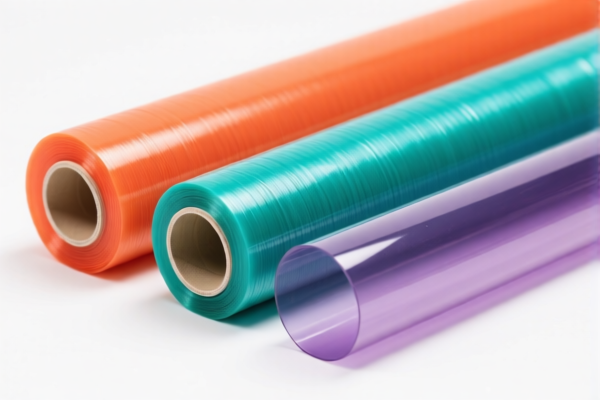
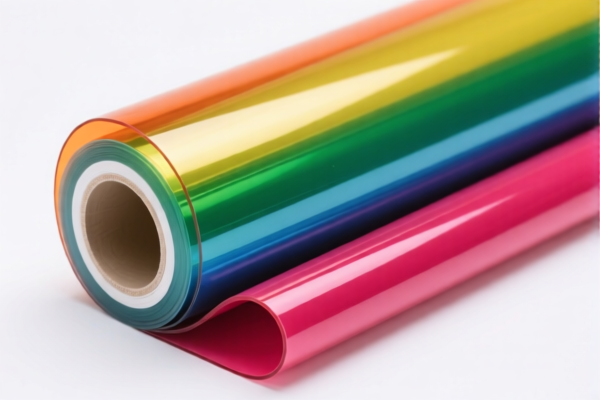
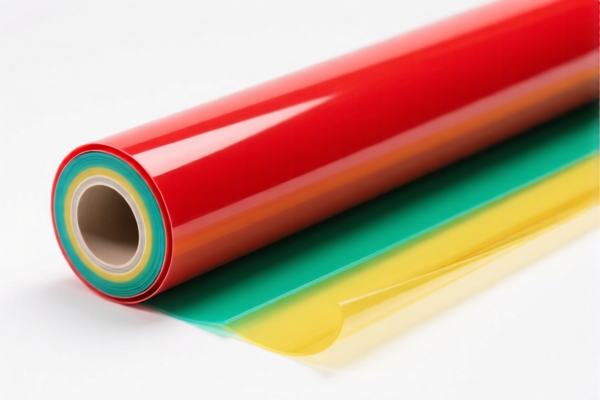

AI Analysis
🎨 Colored Fluorescent Light Film (彩色荧光灯底片)
🌐 HS Code Classification & Customs Clearance Guide | 2026 Latest Tariff Analysis | Professional Strategy for US-China Trade
📌 I. Product Definition: What Exactly is "Colored Fluorescent Light Film"?
Colored Fluorescent Light Film is a specialized optical material used primarily in the manufacturing of lighting components. It acts as a filter or coating to modify the spectral output of fluorescent lamps, ensuring accurate color rendering and specific aesthetic effects. In international trade, its classification depends heavily on its physical form (film vs. tube) and its functional role (optical component vs. lighting device).
⚠️ Key Distinction:
- If the item is a flat sheet/film used in the production process or as a separate optical element → It is classified under Chapter 90 (Optical Instruments).
- If the item refers to the finished fluorescent lamp tube (where the phosphor/film is an integral part of the bulb) → It is classified under Chapter 85 (Electrical Machinery).
📦 II. HS Code Classification Details (2026 Authoritative Reference)
Based on the provided data, here are the two primary classification paths for products related to "Colored Fluorescent Light Film."
🅰️ Path 1: The Optical Component (The Film Itself)
If the "film" is imported as a separate optical element (e.g., for coating, filtering, or laboratory use):
| HS Code | Product Description | Application Scenario | Tax Rate |
|---|---|---|---|
9001.90.90.00 |
Other optical elements (film/sheet format) | Optical filters, coating substrates, laboratory optical films | 35.0% |
9010.50.50.00 |
Photographic lab equipment/apparatus | Specific use in photographic or specialized light-sensitive processing labs | 35.0% |
🔍 Analysis:
-9001.90.90.00: Fits the description of "films and plates" that are optical elements but do not fall into more specific subheadings (like lenses or mirrors).
-9010.50.50.00: Applies if the film is explicitly designed for use in photographic laboratories or similar specialized equipment.
🅱️ Path 2: The Final Lighting Product (The Lamp Tube)
If the "Colored Fluorescent Light Film" refers to the finished fluorescent lamp (where the color comes from the internal coating/phosphor):
| HS Code | Product Description | Application Scenario | Tax Rate |
|---|---|---|---|
8539.31.00.60 |
Hot-cathode fluorescent lamps | Standard consumer/commercial lighting tubes | 37.4% |
8539.31.00.40 |
Electrical lamp tubes (discharge lamps) | General discharge lighting, industrial fluorescent tubes | 37.4% |
🔍 Analysis:
-8539.31.00.60: Specifically for Hot-cathode fluorescent lamps (the most common type).
-8539.31.00.40: For Discharge lamps (electrical lamp tubes) that may not fit the "hot-cathode" definition precisely or are industrial variants.
💰 III. 2026 Tariff Rate Breakdown (USA Import from China)
✅ Applicable Country: USA (US)
✅ Country of Origin: China (CN)
✅ Effective Date: From November 10, 2025 (and subsequent imports)
🎯 1. Optical Film Classification (9001.90.90.00 & 9010.50.50.00)
| Item | Content |
|---|---|
| Base Tariff | 0.0% (ad valorem) |
| Section 301 Additional Tariff | +25.0% (Due to USITC Footnote for Chinese goods) |
| IEEPA Additional Tariff | +10.0% (122 Clause/Section 122 Tariff for China) |
| Total Tariff Rate | 35.0% |
| Tax Calculation | CIF Value × 35% |
| De Minimis Exemption | ❌ Not Eligible (Deny de minimis) |
| Legal Basis Path | IEEPA:9903.01.25 → USITC:9001.90.90.00 → FOOTNOTE:301 |
📌 Explanation:
- Although the base tariff is 0%, the Section 301 tariff (+25%) and IEEPA additional tariff (+10%) apply due to the product's origin (China).
- Total Cost Impact: 35% of the CIF value is payable as duty.
🎯 2. Fluorescent Lamp Classification (8539.31.00.60 & 8539.31.00.40)
| Item | Content |
|---|---|
| Base Tariff | 2.4% (ad valorem) |
| Section 301 Additional Tariff | +25.0% (Due to USITC Footnote for Chinese goods) |
| IEEPA Additional Tariff | +10.0% (122 Clause/Section 122 Tariff for China) |
| Total Tariff Rate | 37.4% |
| Tax Calculation | CIF Value × 37.4% |
| De Minimis Exemption | ❌ Not Eligible (Deny de minimis) |
| Legal Basis Path | IEEPA:9903.01.25 → USITC:8539.31.00.60 → FOOTNOTE:301 |
📌 Explanation:
- The base tariff is 2.4% for electrical lighting equipment.
- Adding the 25% Section 301 and 10% IEEPA tariffs results in a 37.4% total duty rate.
- Note: This is slightly higher than the optical film classification due to the non-zero base rate.
🛠️ IV. Customs Clearance Practical Advice
✅ 1. Documentation Checklist (Essential)
| Document | Required? | Notes |
|---|---|---|
| ✅ Product Specification Sheet | ✔️ | Must clearly state: "Optical Film" OR "Fluorescent Lamp Tube". |
| ✅ Photos of Product | ✔️ | Show the film roll/sheet or the lamp tube with packaging. |
| ✅ Commercial Invoice | ✔️ | Must specify "Colored Fluorescent Light Film" or "Fluorescent Lamp". |
| ✅ Packing List | ✔️ | Detail weight, dimensions, and quantity. |
| ✅ Certificate of Origin | ✔️ | Essential for determining Section 301 applicability. |
| ✅ Third-Party Test Report | ✔️ | For lamps: UL/ETL certification may be required for safety. For films: Optical property data. |
✅ 2. Classification Strategy (Critical!)
🔥 Golden Rule: "Film is Optics (90xx), Tube is Electricity (85xx)"
| Scenario | Correct HS Code | Risk if Misclassified |
|---|---|---|
| Importing rolls of colored film for coating | 9001.90.90.00 (35%) |
If declared as lamp → Higher base rate + potential safety inspection delays. |
| Importing finished fluorescent tubes (colored) | 8539.31.00.60 (37.4%) |
If declared as film → Misdeclaration, fines, and seizure risk. |
| Importing spare parts for film coating machines | 9010.50.50.00 (35%) |
Ensure it's for lab/photo use, not general manufacturing. |
✅ 3. Special Considerations
| Situation | Handling Suggestion |
|---|---|
| OEM Custom Film | Provide customer order + design specs to prove it's a custom optical element, not a generic consumer product. |
| Lamps with Electronic Ballasts | If the lamp is sold with an integrated ballast (driver), it may be classified under 8539.29 or similar, which could have different rates. Check if "film" refers to the whole assembly. |
| Small Samples (< $800) | ❌ Do NOT use de minimis. Section 301 and IEEPA tariffs explicitly deny de minimis exemptions for Chinese goods in these categories. |
🌍 V. Global Market Comparison (2026)
| Country/Region | Recommended HS Code | Tariff (China Origin) | Key Certification | Notes |
|---|---|---|---|---|
| 🇺🇸 USA | 9001.90.90.00 or 8539.31.00.60 |
35.0% / 37.4% | FCC, UL, RoHS | Highest tariff burden due to Section 301 + IEEPA. |
| 🇨🇳 China | 9001.90.90.00 or 8539.31.00.60 |
0% / 5% | CCC, RoHS | No additional tariffs for domestic trade. |
| 🇪🇺 EU | 9001.90 or 8539.31 |
0% / 0%* | CE, Ecodesign | *May apply eco-taxes on lamps. No Section 301. |
| 🇦🇺 Australia | 9001.90 or 8539.31 |
5% / 5% | RCM | Lower tariffs, no US-style punitive tariffs. |
📌 Conclusion:
- The USA market is the most expensive for importing Chinese fluorescent films/lamps due to the 35%-37.4% total duty rate.
- Importers must absorb this cost or adjust pricing strategies.
- Optical films (90xx) have a 35% total duty, while Lamps (85xx) have a 37.4% total duty.
📌 VI. Common Pitfalls & Best Practices
❌ Pitfall 1: Declaring "Fluorescent Lamp" as "Plastic Film"
👉 Consequence: Customs will reclassify, apply the correct HS code, and issue penalties/fines for misdeclaration.
❌ Pitfall 2: Assuming De Minimis ($800) applies
👉 Consequence: All shipments from China in these categories are subject to tariffs, regardless of value. Plan logistics accordingly.
❌ Pitfall 3: Confusing "Film" with "Lamp"
👉 Consequence: Using the wrong HS code leads to either underpayment (fine) or overpayment (lost profit). Always clarify the physical form.
✅ Best Practice:
Use Precise Descriptions:
- For Film:"Colored Optical Fluorescent Coating Film, Roll, for Industrial Lamp Manufacturing"
- For Lamp:"Hot-Cathode Fluorescent Lamp Tube, Colored, 4ft, T8"
🎯 VII. Conclusion: Professional Classification, Cost Efficiency
🎯 Key Takeaways:
🔹 Film = Optics (HS 90xx) → 35% Total Duty
🔹 Lamp = Electricity (HS 85xx) → 37.4% Total Duty
🔹 No De Minimis Exemption for China
🔹 Pre-Clearance is Mandatory due to high tariffs.
📌 Pro Tip:
If you are importing finished lamps, consider if electronic ballasts are included. If so, the classification might shift, potentially affecting the base rate. Always consult with a customs broker for Advance Rulings to mitigate risk.
📣 Immediate Action:
📞 Contact a Licensed Customs Broker
📄 Prepare Detailed Product Specs
📈 Calculate Landed Cost including the 35%-37.4% tariff burden.
🚀 Ensure Smooth Clearance and Protect Your Margins!
✨ Precision in Classification Saves Thousands!
💼 Every Percent Counts in Cross-Border Trade!
Customer Reviews
About HS Code Classification
The Harmonized System (HS) is an internationally standardized nomenclature developed by the World Customs Organization (WCO) to classify traded products. Over 200 countries use the HS system as the basis for customs tariffs, trade statistics, and import/export regulations.
Each HS code follows a hierarchical structure:
- Chapter (2 digits) — Broad category of goods (e.g., Chapter 84: Machinery and Mechanical Appliances)
- Heading (4 digits) — More specific grouping within the chapter
- Subheading (6 digits) — Internationally standardized breakdown, used by all WCO member countries
- National subdivisions (8-10 digits) — Country-specific extensions for further classification, such as US HTSUS 10-digit codes
Correct HS code classification is essential for smooth customs clearance, accurate duty payment, and compliance with trade regulations. Misclassification can lead to customs delays, overpayment of duties, or penalties.
When importing from CN to US, the applicable tariff rates may include:
- Most-Favored-Nation (MFN) rate — The standard duty rate applied to WTO members
- General rate — Applied to countries without trade agreements
- Trade remedy duties — Additional tariffs such as Section 301 (anti-dumping), Section 232 (national security), or countervailing duties
The information provided on this page is for reference purposes only. For official classification, please consult with your local customs authority or a licensed customs broker.