Colored Ordinary Film
CN → US| HS Code | Tariff Rate | Origin | Destination | Doc |
|---|---|---|---|---|
| 3921121950 | 40.3% | CN | US | Official Doc |
| 3921901950 | 40.3% | CN | US | Official Doc |
| 5407200000 | 35.0% | CN | US | Official Doc |
| 5407301000 | 35.0% | CN | US | Official Doc |
| 3920200055 | 39.2% | CN | US | Official Doc |
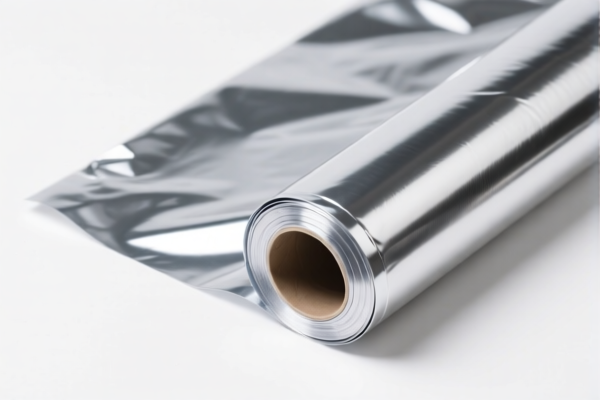
Product Images


AI Analysis
🎨 Colored Ordinary Film (Colored Sunlight Film & Wide Film)
🌐 HS Code Reference & Clearance Guide | 2026 Latest Tariff Analysis | Professional-Level Customs Strategy
📌 I. Product Definition & Classification: Do You Really Understand "Colored Ordinary Film"?
"Colored Ordinary Film" is a broad term in international trade, primarily referring to polymer-based colored films used for decoration, window tinting, packaging, or industrial applications. The key to accurate classification lies in the material composition and structural form:
- Plastic/Polymer Films (PET/PVC): Rigid or semi-rigid sheets/films made of plastics like Polyethylene Terephthalate (PET) or Polyvinyl Chloride (PVC). These often fall under Chapter 39.
- Textile/Weave Films: Films made from synthetic filament yarns or woven structures. These may fall under Chapter 54 if they exhibit textile characteristics.
⚠️ Key Distinction Point:
- If the product is a continuous roll or sheet of plastic (e.g., PVC, PET) used for shading or decoration → Likely Chapter 39 (Plastics).
- If the product is a woven fabric-like film made of synthetic fibers → Likely Chapter 54 (Chemical Fibers).
- Color and "Sunlight" properties do not change the HS Code, but the base material does.
📦 II. HS Code Classification Details (2026 Latest Tariff Authority对照)
| HS Code | Product Description | Application Scenario | Material Characteristics |
|---|---|---|---|
3921.12.19.50 |
Colored Sunlight Film, PVC/PET, Non-adhesive, Other | Window tinting, decorative wall films, general purpose plastic film | ✅ Plastic (PVC/PET), Polymer |
3921.90.19.50 |
Colored Sunlight Film, Plastic, Sheet/Foil, Other | General plastic sheets, non-specific plastic films | ✅ Plastic, Sheet/Foil form |
5407.20.00.00 |
Colored Wide Film, Strip-like, Woven | Decorative textiles, woven plastic strips, synthetic fabric films | ✅ Synthetic filament woven fabric |
5407.30.10.00 |
Colored Wide Film, Thin Fabric, Plastic-based | Plastic-coated fabrics, thin woven plastic sheets meeting 5404/5407 specs | ✅ Plastic, Woven/Thin Fabric |
3920.20.00.55 |
Colored Wide Film, Polypropylene (PP), Other | Rigid PP films, packaging films, industrial wide films | ✅ Plastic (PP), Other category |
🔍 Key Reminder:
- Chapter 39 (3920/3921) is for monolithic plastic films (non-woven).
- Chapter 54 (5407) is for woven or fabric-like plastic products.
- Misclassification between these chapters leads to significant tariff differences due to Section 301 and IEEPA surcharges.
💰 III. 2026 Latest Tariff Rate Details (Including Surcharges & Policy Add-ons)
✅ Applicable Country: United States (US)
✅ Origin: China (CN)
✅ Effective Time: Current rates apply (includes Section 301 & IEEPA surcharges)
🎯 1. 3921.12.19.50 & 3921.90.19.50 —— Colored Sunlight Film (Plastic/PET/PVC)
| Item | Content |
|---|---|
| Base Tariff | 5.3% |
| Section 301 Surcharge | +25.0% |
| IEEPA Section 122 Surcharge | +10.0% |
| Total Effective Tax Rate | 40.3% |
| Tax Calculation | CIF Value × 40.3% |
| De Minimis Exemption? | ❌ No (Not eligible for $800 exemption under Section 321 for high-surcharge items) |
| Legal Basis Path | IEEPA:9903.01.24 → USITC:3921.12.19.50 → FOOTNOTE:9903.88.01 |
📌 Explanation:
- Base Rate (5.3%): Standard Most Favored Nation (MFN) rate for plastic articles.
- Section 301 (+25%): Retaliatory tariff on Chinese goods under US Trade Act Section 301.
- IEEPA (+10%): Additional surcharge under the International Emergency Economic Powers Act for specific Chinese imports.
- Total 40.3%: This is a high tariff. Must be factored into cost structure.
🎯 2. 5407.20.00.00 & 5407.30.10.00 —— Colored Wide Film (Woven/Synthetic)
| Item | Content |
|---|---|
| Base Tariff | 0.0% |
| Section 301 Surcharge | +25.0% |
| IEEPA Section 122 Surcharge | +10.0% |
| Total Effective Tax Rate | 35.0% |
| Tax Calculation | CIF Value × 35.0% |
| De Minimis Exemption? | ❌ No |
| Legal Basis Path | IEEPA:9903.01.24 → USITC:5407.20.00.00 → FOOTNOTE:9903.88.01 |
📌 Note:
- Base Rate (0.0%): Lower base duty for certain synthetic fabrics.
- Total 35.0%: 5% lower than the PVC/PET films (3921), making this classification more cost-effective if the product qualifies as woven/textile.
- Crucial: Only applies if the film has a woven structure or meets Chapter 54 criteria.
🎯 3. 3920.20.00.55 —— Colored Wide Film (Polypropylene/PP)
| Item | Content |
|---|---|
| Base Tariff | 4.2% |
| Section 301 Surcharge | +25.0% |
| IEEPA Section 122 Surcharge | +10.0% |
| Total Effective Tax Rate | 39.2% |
| Tax Calculation | CIF Value × 39.2% |
| De Minimis Exemption? | ❌ No |
| Legal Basis Path | IEEPA:9903.01.24 → USITC:3920.20.00.55 → FOOTNOTE:9903.88.01 |
📌 Note:
- Base Rate (4.2%): Slightly lower base rate than3921films.
- Total 39.2%: Slightly cheaper than3921films, but still high.
- Material Specific: Only applies if the film is explicitly Polypropylene (PP).
🛠️ IV. Clearance Practical Advice (Battle-Tested Pitfall Avoidance Guide)
✅ 1. Documentation Checklist (Missing Any = Delay)
| Document | Required | Notes |
|---|---|---|
| ✅ Product Specification Sheet | ✔️ | Must specify material (PVC/PET/PP), thickness, width, weave structure (if any). |
| ✅ Material Composition Report | ✔️ | Crucial for distinguishing between Chapter 39 (Plastic) and Chapter 54 (Woven). |
| ✅ Product Photos | ✔️ | Show roll structure, cross-section, and texture to prove if it’s woven or monolithic. |
| ✅ Commercial Invoice | ✔️ | Clearly state "Colored Plastic Film" or "Woven Synthetic Film," avoid vague terms like "Ordinary Film." |
| ✅ Certificate of Origin (CO) | ✔️ | Essential for proving Chinese origin to apply correct surcharges. |
| ✅ Packing List | ✔️ | Detail gross/net weight, dimensions, and number of rolls. |
✅ 2. Classification Strategy (Key Rules)
🔥 "Material First, Weave Second, Don't Guess!"
| Scenario | Correct Classification | Wrong Approach | Consequence |
|---|---|---|---|
| Smooth, non-woven PET film | 3921.12.19.50 or 3921.90.19.50 |
Classify as 5407 (Woven) |
Under-declaration penalty + Back-tariff |
| Woven PP strip film | 5407.20.00.00 |
Classify as 3920 (Plastic) |
Over-payment of 39.2% vs 35.0% |
| PVC Window Tint Roll | 3921.12.19.50 |
Classify as 3920 |
Incorrect base rate (5.3% vs 4.2%) |
| Any Film from China | Apply 10% IEEPA | Forget IEEPA | Audit risk + Penalties |
✅ 3. Special Cases Handling
| Scenario | Handling Advice |
|---|---|
| Multi-layer Films | If one layer is dominant, classify by dominant material. If composite, consult ruling. |
| Adhesive Films | If adhesive backing is present, ensure it’s classified under correct plastic heading (often 3921 or 3919). |
| "Ordinary Film" Vague Name | Never use "Ordinary Film" in declaration. Use specific description: "Colored PVC Sunlight Film, 0.2mm, Roll." |
| Small Samples | Even samples are subject to 40.3% tariff if declared formally. Consider courier options if under de minimis limits (if allowed for surcharge items). |
🌍 V. Global Market Clearance Comparison (2026 Latest)
| Country/Region | Recommended HS Code | Tariff (China Origin) | Certification Requirements | Notes |
|---|---|---|---|---|
| 🇺🇸 USA | 3921.12.19.50 / 5407.20.00.00 |
35.0% - 40.3% | None specific for film | High Surcharges Apply |
| 🇨🇳 China | 3921.12.19.50 / 5407.20.00.00 |
0% - 5% | CCC (if applicable) | No Section 301 |
| 🇪🇺 EU | 3920.20.00 / 5407.20.00 |
0% - 6% | REACH Compliance | No IEEPA/301 |
| 🇬🇧 UK | 3921.12.19.50 / 5407.20.00.00 |
0% - 6% | UKCA (if applicable) | Post-Brexit rules |
| 🇦🇺 Australia | 3921.12.19.50 / 5407.20.00.00 |
0% - 5% | WERAS (if applicable) | Low tariffs |
📌 Conclusion:
- USA is the most expensive market due to Section 301 + IEEPA surcharges.
- EU/UK/Australia offer much lower tariffs (0-6%) but require REACH/UKCA compliance for chemical/plastic products.
- Cost Saving Opportunity: If product qualifies as Woven (5407), save 5.3% compared to standard plastic film (3921).
📌 VI. Common Mistakes & Pitfall Guide (Blood-Taught Lessons)
❌ Mistake 1: Using generic term "Colored Film" in Invoice
👉 Consequence: Customs may classify under highest duty rate or request additional info → Delay.
❌ Mistake 2: Ignoring IEEPA 10% Surcharge
👉 Consequence: Underpayment → Penalties + Back Taxes + Interest.
❌ Mistake 3: Misclassifying Woven Film as Plastic
👉 Consequence: Paying 40.3% instead of 35.0% → Unnecessary Cost.
❌ Mistake 4: Assuming De Minimis Exemption ($800) Applies
👉 Consequence: Section 301 and IEEPA surcharges override de minimis for China-origin goods. Even small shipments are taxed.
✅ Correct Practice:
"Specify Material: 'Colored PET Sunlight Film, 0.3mm, Roll, 120cm Width'. Declare HS Code: 3921.12.19.50. Acknowledge 40.3% Total Duty."
🎯 VII. Conclusion: Precision in Classification Saves Money!
🎯 Remember the Mantra:
🔹 "Woven is 35%, Plastic is 40%."
🔹 "IEEPA 10% is Non-Negotiable for China."
🔹 "De Minimis Doesn't Apply to Surcharges."
📌 Pro Tip:
If your film originates from Vietnam, Thailand, or Malaysia, you may qualify for IEEPA Exemptions (0% surcharge).
For large volumes, consider applying for a Customs Ruling to lock in classification and avoid future disputes.
📣 Take Action Now:
📞 Contact a Licensed Customs Broker + Provide Material Test Reports + Verify Woven vs. Monolithic Structure.
🚀 Optimize Your HS Code, Clear Faster, Save More!
✨ Professional Clearance Starts with Accurate Classification!
💼 Every Percent Matters in International Trade!
Customer Reviews
About HS Code Classification
The Harmonized System (HS) is an internationally standardized nomenclature developed by the World Customs Organization (WCO) to classify traded products. Over 200 countries use the HS system as the basis for customs tariffs, trade statistics, and import/export regulations.
Each HS code follows a hierarchical structure:
- Chapter (2 digits) — Broad category of goods (e.g., Chapter 84: Machinery and Mechanical Appliances)
- Heading (4 digits) — More specific grouping within the chapter
- Subheading (6 digits) — Internationally standardized breakdown, used by all WCO member countries
- National subdivisions (8-10 digits) — Country-specific extensions for further classification, such as US HTSUS 10-digit codes
Correct HS code classification is essential for smooth customs clearance, accurate duty payment, and compliance with trade regulations. Misclassification can lead to customs delays, overpayment of duties, or penalties.
When importing from CN to US, the applicable tariff rates may include:
- Most-Favored-Nation (MFN) rate — The standard duty rate applied to WTO members
- General rate — Applied to countries without trade agreements
- Trade remedy duties — Additional tariffs such as Section 301 (anti-dumping), Section 232 (national security), or countervailing duties
The information provided on this page is for reference purposes only. For official classification, please consult with your local customs authority or a licensed customs broker.