Colored Pages
CN → US| HS Code | Tariff Rate | Origin | Destination | Doc |
|---|---|---|---|---|
| 4823908680 | 35.0% | CN | US | Official Doc |
| 4911914040 | 17.5% | CN | US | Official Doc |
| 4811592000 | 35.0% | CN | US | Official Doc |
| 4811904090 | 35.0% | CN | US | Official Doc |
| 4911100080 | 17.5% | CN | US | Official Doc |
| 4911998000 | 17.5% | CN | US | Official Doc |
Product Images
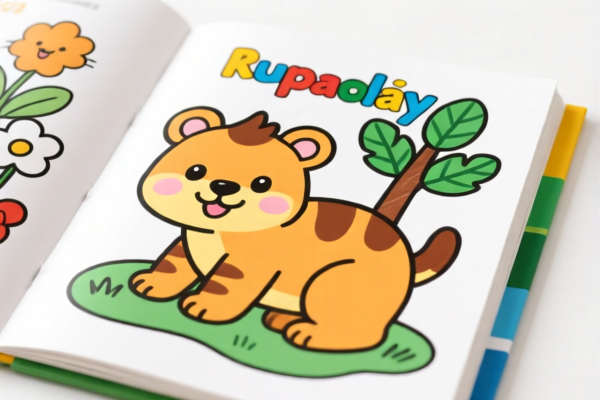
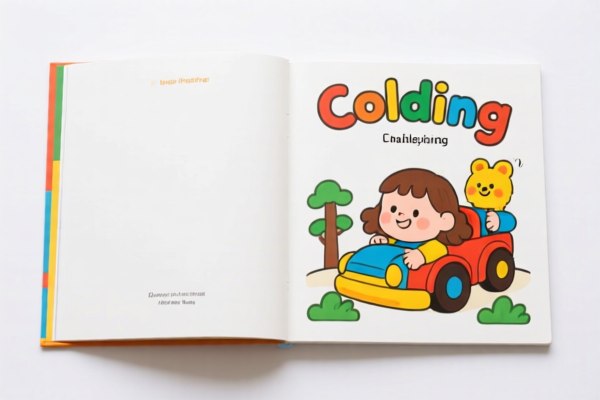


AI Analysis
🖨️ Colored Pages (彩页/印刷品)
🌐 HS Code Reference & Customs Clearance Guide | 2026 Latest Tariff Analysis | Professional Clearance Strategy
📌 I. Product Definition & Classification: Do You Really Understand "Colored Pages"?
"Colored Pages" (彩页) generally refer to printed materials containing images, text, or graphics on paper substrates. In international trade, the classification depends heavily on the specific function, coating treatment, and intended use of the pages. They are not a single unique item but fall into several categories based on their physical characteristics and commercial purpose.
⚠️ Key Distinction Points:
- Material & Coating: Is it plain paper, coated paper, or laminated?
- Content: Is it purely advertising (commercial catalog)? Is it general printed matter?
- Use Case: Are they promotional leaflets, technical manuals, or generic art prints?
📦 II. HS Code Classification Details (2026 Latest Tariff Authority Comparison)
Based on the provided data, there are 6 possible HS Codes for "Colored Pages." The classification determines the duty rate significantly.
| HS Code | Product Description | Applicable Scenario | Total Tax Rate |
|---|---|---|---|
4811.90.40.90 |
Surface-colored paper products | Colored pages with surface coloring, paper material, not primarily defined as printed matter | 35.0% |
4823.90.86.80 |
Paper products (Residual) | Colored pages made of paper, fitting the "catch-all" category for paper products | 35.0% |
4911.91.40.40 |
Printed images/photographs | Colored pages fitting the characteristics of printed images (e.g., art prints, posters) | 17.5% |
4811.59.20.00 |
Coated/Covered printed paper | Colored pages that are coated, covered, or impregnated (e.g., glossy brochures, laminated flyers) | 35.0% |
4911.10.00.80 |
Trade Advertising/Catalogs | Colored pages specifically used for trade advertising or commercial catalogs | 17.5% |
4911.99.80.00 |
Other printed matter | General printed pages (paper material) that do not fit specific categories above (e.g., general leaflets) | 17.5% |
🔍 Key Insight:
- Lower Tax Tier (17.5%):4911series. These are classified as Printed Matter (Chapter 49). This includes advertising materials, catalogs, and general printed images.
- Higher Tax Tier (35.0%):4811&4823series. These are classified as Paper Products (Chapter 48). This applies if the item is seen primarily as a raw paper product (coated, colored, or residual) rather than a finished printed communication medium.
💰 III. 2026 Latest Tariff Rate Breakdown (Including Surtaxes & Policy Add-ons)
✅ Applicable Country: United States (US)
✅ Origin: China (CN)
✅ Effective Date: Post-2025 Import Period (Based on provided data structure)
🎯 1. High-Tax Tier: 4811.90.40.90, 4823.90.86.80, 4811.59.20.00
(Paper Products / Coated Paper / Surface-Colored Paper)
| Item | Content |
|---|---|
| Base Tariff | 0.0% (ad valorem) |
| Section 301 Surtax | +25.0% (Added by USITC for Chinese goods) |
| Section 122 Surtax | +10.0% (Specific 122 Clause Tariff) |
| Total Tax Rate | 35.0% |
| Tax Calculation | CIF Value × 35% |
| De Minimis Exemption | ❌ Not Applicable (High tariff rate usually denies de minimis eligibility under current US policies) |
| Legal Basis Path | USITC:4811/4823 → Section 301: 25% → Section 122: 10% |
📌 Explanation:
- If customs officials view your "Colored Pages" as coated paper (4811.59.20.00) or surface-colored paper (4811.90.40.90), they will apply the higher paper-product tariff.
- The 122 Clause and 301 Tariff stack on top of the base rate, leading to a 35% total liability.
- Risk: Misclassifying an advertising brochure as "coated paper" instead of "printed matter" can double your duty cost (35% vs 17.5%).
🎯 2. Low-Tax Tier: 4911.91.40.40, 4911.10.00.80, 4911.99.80.00
(Printed Matter / Advertising / General Prints)
| Item | Content |
|---|---|
| Base Tariff | 0.0% (ad valorem) |
| Section 301 Surtax | +7.5% (Reduced rate for specific printed goods in some contexts, or base rate difference) |
| Section 122 Surtax | +10.0% (Specific 122 Clause Tariff) |
| Total Tax Rate | 17.5% |
| Tax Calculation | CIF Value × 17.5% |
| De Minimis Exemption | ❌ Not Applicable (Likely denied due to Section 301/122 presence) |
| Legal Basis Path | USITC:4911 → Section 301: 7.5% → Section 122: 10% |
📌 Explanation:
-4911.10.00.80: Best for Commercial Catalogs or Advertising Materials. If your colored pages are brochures, flyers, or business cards, this is the correct classification.
-4911.99.80.00: General printed matter. Use this if it doesn't fit the specific "advertising" definition but is clearly printed.
-4911.91.40.40: Use this if the page is specifically a printed image (e.g., a photo print or poster) rather than text-heavy commercial material.
🛠️ IV. Customs Clearance Practical Advice (Battle-Tested Pitfall Avoidance)
✅ 1. Documentation Checklist (Non-Negotiable)
| Document | Must Provide? | Description |
|---|---|---|
| ✅ Product Description | ✔️ | Clearly state "Colored Printed Pages" or "Advertising Brochure," not just "Paper." |
| ✅ Material Specification | ✔️ | Specify paper type: "Glossy coated paper," "Matte uncoated," etc. |
| ✅ Content Samples | ✔️ | Provide images of the front/back. Prove it contains print/text/images, not just blank colored paper. |
| ✅ Usage Declaration | ✔️ | State: "Used for commercial advertising/catalog" (to qualify for 17.5% if applicable). |
| ✅ Commercial Invoice | ✔️ | Must match HS Code and describe item as "Printed Material." |
| ✅ Packing List | ✔️ | Ensure quantity matches invoice. |
✅ 2. Declaration Strategy (Critical Tips)
🔥 “Describe as Printed Matter, Not Paper!”
| Scenario | Correct HS Code | Incorrect HS Code | Consequence |
|---|---|---|---|
| Advertising Flyer / Brochure | 4911.10.00.80 (17.5%) |
4811.59.20.00 (35.0%) |
Overpay 17.5% + Potential Audit |
| Glossy Catalog | 4911.10.00.80 (17.5%) |
4811.90.40.90 (35.0%) |
Overpay 17.5% |
| Art Print / Photo Poster | 4911.91.40.40 (17.5%) |
4823.90.86.80 (35.0%) |
Overpay 17.5% |
| Blank Colored Paper (No Print) | 4811.90.40.90 (35.0%) |
4911.99.80.00 |
Misclassification (Customs will correct to 35%) |
📌 Key Tip:
- If the pages have any printing (text, logos, images), argue for Chapter 49 (Printed Matter) to benefit from the lower 7.5% Section 301 rate.
- If they are blank, colored paper, you must use Chapter 48, incurring the 25% Section 301 rate.
✅ 3. Special Situations
| Situation | Handling Advice |
|---|---|
| Mixed Shipment | If a container has both ads and blank paper, declare separately. Do not mix, or Customs may tax the whole shipment at the highest rate. |
| Laminated Pages | Lamination may push classification to 4811 (Processed Paper). Check if the lamination is integral to the print. If so, try to argue for 4911 as "printed material with finish." |
| Small Samples (De Minimis) | Be aware that with 301/122 tariffs, Section 321 (De Minimis) exemption is often revoked for these HS codes. Do not rely on $800 exemption without verification. |
🌍 V. Global Market Clearance Comparison (2026 Latest)
| Country/Region | Recommended HS Code | Tariff Rate | Notes |
|---|---|---|---|
| 🇺🇸 USA | 4911.10.00.80 (if ad) |
17.5% | Lower rate for printed matter. Avoid 4811 (35%). |
| 🇺🇸 USA | 4811.59.20.00 (if coated) |
35.0% | High tariff for processed paper. |
| 🇨🇳 China | 4911 series |
~5-10% | Lower base import tariff. |
| 🇪🇺 EU | 4911 series |
0-6.5% | No Section 301/122 surcharges. |
| 🇯🇵 Japan | 4911 series |
0-8% | No surcharges. |
📌 Conclusion:
- The USA is the most critical market due to Section 301 and 122 tariffs.
- Correct classification is not optional; it is a cost-saving necessity. A $10,000 shipment of ads can save $1,750 by using the correct HS Code.
📌 VI. Common Mistakes & Pitfalls (Lessons Learned)
❌ Mistake 1: Calling "Glossy Brochures" "Coated Paper"
👉 Result: Taxed at 35% instead of 17.5%.
👉 Fix: Emphasize "Printed Content" in description.
❌ Mistake 2: Using 4911.99.80.00 for "Trade Catalogs"
👉 Result: Technically allowed, but 4911.10.00.80 is more precise for ads, potentially reducing scrutiny.
👉 Fix: Use specific subheadings if available.
❌ Mistake 3: Assuming all "Paper" goes to Chapter 48
👉 Result: Missing the lower tax tier for printed goods.
👉 Fix: If it has print, go to Chapter 49 first.
✅ Correct Practice:
"Colored Printed Advertising Pages, Glossy Coated Paper, For Business Catalogs, HS Code 4911.10.00.80"
🎯 VII. Conclusion: Precision Saves Money!
🎯 Remember the Golden Rule:
🔹 "Printed Matter = 17.5% | Processed Paper = 35.0%"
🔹 "Don't let 'Paper' trick you into paying double!"
📌 Pro Tip:
- If your colored pages are simple flyers, argue for 4911.99.80.00.
- If they are high-value marketing materials, use 4911.10.00.80.
- Always provide samples to Customs Brokers to prove the "printed" nature.
📣 Immediate Action Required:
📞 Contact your Customs Broker with the exact content of the pages.
📄 Submit a Pre-Ruling Request if shipment volume is high.
🚀 Optimize your supply chain costs by declaring correctly from Day 1.
✨ Professional Clearance Starts with Accurate Classification!
💼 Every Dollar Saved on Tariffs is Pure Profit!
Customer Reviews
About HS Code Classification
The Harmonized System (HS) is an internationally standardized nomenclature developed by the World Customs Organization (WCO) to classify traded products. Over 200 countries use the HS system as the basis for customs tariffs, trade statistics, and import/export regulations.
Each HS code follows a hierarchical structure:
- Chapter (2 digits) — Broad category of goods (e.g., Chapter 84: Machinery and Mechanical Appliances)
- Heading (4 digits) — More specific grouping within the chapter
- Subheading (6 digits) — Internationally standardized breakdown, used by all WCO member countries
- National subdivisions (8-10 digits) — Country-specific extensions for further classification, such as US HTSUS 10-digit codes
Correct HS code classification is essential for smooth customs clearance, accurate duty payment, and compliance with trade regulations. Misclassification can lead to customs delays, overpayment of duties, or penalties.
When importing from CN to US, the applicable tariff rates may include:
- Most-Favored-Nation (MFN) rate — The standard duty rate applied to WTO members
- General rate — Applied to countries without trade agreements
- Trade remedy duties — Additional tariffs such as Section 301 (anti-dumping), Section 232 (national security), or countervailing duties
The information provided on this page is for reference purposes only. For official classification, please consult with your local customs authority or a licensed customs broker.