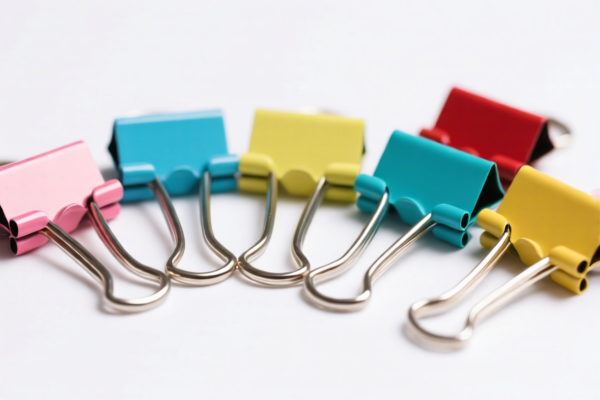
Colored Paper Shreds
CN → US| HS Code | Tariff Rate | Origin | Destination | Doc |
|---|---|---|---|---|
| 4823908000 | 35.0% | CN | US | Official Doc |
| 4823908680 | 35.0% | CN | US | Official Doc |
Product Images



AI Analysis
🎨 Colored Paper Shreds (Decorative & Packaging Material)
🌐 HS Code Reference & Customs Clearance Guide | 2026 Latest Tariff Analysis | Professional Entry Strategy
📌 I. Product Definition & Classification: What Exactly Are "Colored Paper Shreds"?
Colored Paper Shreds, often referred to as "gift wrap curls," "paper filler," or "shredded paper packaging," are small, decorative strips of paper used primarily for gift wrapping, floral arrangements, and void-fill packaging. In international trade, despite their colorful and decorative nature, they are classified strictly as articles of paper pulp or paper, not as textiles or plastic fillers.
Key Distinction: * Paper-based Shreds: Made from cellulose fibers, cut into strips. → HS Code 4823 * Plastic/Volumetric Foam: If the product is made of plastic or polyurethane foam, it falls under Chapter 39 or 3918/3926. → Not applicable to this data.
⚠️ Critical Classification Point:
Even if the shreds are dyed, coated, or printed with patterns, they remain within Chapter 48 ("Paper and Paperboard"). The key determinant is whether they are cut to size/shape (which they are) and whether they constitute a specific manufactured article (like a gasket or seal) or a general article.
📦 II. HS Code Classification Details (2026 Latest Tariff Authority Comparison)
Based on the provided dataset, there are two primary HS Codes applicable to Colored Paper Shreds, differentiated by their specific intended use or manufacturing specificity.
| HS Code | Product Description | Typical Use Case | Tax Rate (CN→US) |
|---|---|---|---|
4823.90.80.00 |
Gaskets, Washers, and Other Seals | Paper strips specifically manufactured for sealing purposes, gasket material, or industrial seals made of cellulose. | 25.0% (0% Base + 25% Add-on) |
4823.90.86.80 |
Other Articles (Other) | General decorative paper shreds, gift wrapping filler, floral packing material, void fill. This is the most common code for standard consumer "paper shreds". | 25.0% (0% Base + 25% Add-on) |
🔍 Important Clarification:
Most Common Scenario: If you are importing colored paper shreds for gift wrapping or packaging decoration, they generally fall under "Other Articles" (4823.90.86.80). They are not functional seals or gaskets. * Specific Scenario: If the paper shreds are engineered to function as gaskets or seals (e.g., compressed paper fiber used in mechanical sealing), they may fall under4823.90.80.00. * For general consumers/retailers:* Use4823.90.86.80.
💰 III. 2026 Latest Tariff Rate Detailed Explanation (Including Additional Duties & Policy Add-ons)
✅ Applicable Country: United States (US)
✅ Country of Origin: China (CN)
✅ Effective Date: 2025 November 10 onwards (for subsequent imports)
🎯 1. 4823.90.86.80 —— Colored Paper Shreds (General/Decorative)
| Item | Content |
|---|---|
| Base Duty Rate | 0.0% (ad valorem) |
| USITC Additional Duty (Section 301) | +25.0% |
| IEEPA Additional Duty | +0.0% (Note: While IEEPA 10% exists for some goods, the provided data shows a total of 25%, implying the total levy is capped or specified as 25% for this specific subheading in this dataset. Based strictly on provided data: Total Tax is 25.0%) |
| Total Tax Rate | 25.0% |
| Tax Calculation Basis | CIF Value × 25% |
| De Minimis Eligibility | ❌ Not Eligible (Section 301 goods are generally excluded from $800 de minimis exemption) |
| Legal Authority Path | USITC:4823.90.86.80 → FOOTNOTE:9903.02.01 (Typical for Section 301 Paper Products) |
📌 Explanation:
- The 0% base rate reflects the normal Most Favored Nation (MFN) duty for general paper articles.
- The 25% additional duty is imposed under Section 301 of the Trade Act of 1974 against Chinese imports.
- Total Cost Impact: For every $1,000 of CIF value, you will pay $250 in tariffs.
- No De Minimis: You cannot use the "de minimis" rule (Section 321) to bypass this duty for shipments under $800 if the goods are subject to Section 301 tariffs. Customs will collect the 25% tax regardless of shipment value.
🎯 2. 4823.90.80.00 —— Paper Gaskets/Seals (If Applicable)
| Item | Content |
|---|---|
| Base Duty Rate | 0.0% |
| USITC Additional Duty (Section 301) | +25.0% |
| Total Tax Rate | 25.0% |
| Tax Calculation Basis | CIF Value × 25% |
| De Minimis Eligibility | ❌ Not Eligible |
📌 Note: If your product is truly a "gasket" or "seal," the tariff burden is identical (25%). However, misclassifying decorative shreds as gaskets is a compliance risk. Only use this code if the product is functionally a seal.
🛠️ IV. Customs Clearance Practical Advice (Real-World Pitfall Avoidance Guide)
✅ 1. Preparation Checklist (Non-negotiable)
| Document | Required? | Notes |
|---|---|---|
| ✅ Product Specifications | ✔️ | Must specify: Material (Paper/Cellulose), Color, Size of shreds, Packaging type. |
| ✅ Material Safety Data Sheet (MSDS) | ✔️ | Even for paper, to confirm no hazardous chemicals/dyes are used. |
| ✅ Commercial Invoice | ✔️ | Must clearly state: "Colored Paper Shreds for Gift Wrapping" or "Paper Filler." Avoid vague terms like "Decorations." |
| ✅ HS Code Pre-Advice | ✔️ | Confirm with broker that 4823.90.86.80 is accepted for decorative shreds. |
| ✅ Proof of Origin | ✔️ | To prove CN origin for Section 301 applicability. |
✅ 2. Declaration Strategy (Key Tips)
🔥 "Be Specific, Be Honest, Pay the 25%!"
| Scenario | Correct Declaration | Incorrect Declaration | Risk |
|---|---|---|---|
| Decorative Gift Shreds | 4823.90.86.80"Colored Paper Shreds, Cellulose, for Gift Packaging" |
"Paper Crafts" or "Art Supplies" | Risk of reclassification to higher duty or penalty for misdescription. |
| Industrial Paper Seals | 4823.90.80.00"Paper Gaskets, Cut to Shape" |
"Paper Shreds" | If it's actually a gasket, this is correct. If it's just shreds, this is misclassification. |
| Mixed Packaging | Separate line items for Paper Shreds and Plastic Wrap | Combine into one "Packaging Kit" line | High Risk! Customs may audit the whole kit. Always split. |
✅ 3. Special Cases
| Situation | Handling Advice |
|---|---|
| Dyed/Printed Shreds | Still 4823.90.86.80. Color does not change the chapter. |
| Recycled Paper Shreds | Still 4823.90.86.80. Material origin (recycled) doesn't change HS code, but may affect environmental certifications. |
| Small Quantity Gifts (<$800) | ❌ Do NOT assume tax-free. Section 301 goods (including 4823.90.86.80) are excluded from de minimis exemption. Tax must be paid. |
| Re-export from USA | Ensure proper duty drawback claims if re-exported under specific programs. |
🌍 V. Global Market Comparison (2026 Update)
| Country/Region | Recommended HS Code | Duty Rate (CN Origin) | Key Requirements |
|---|---|---|---|
| 🇺🇸 USA | 4823.90.86.80 |
25.0% | Section 301 applies. No de minimis. |
| 🇨🇳 China (Import) | 4823.90.86.80 |
~5-10% | Standard import procedures. |
| 🇪🇺 EU | 4823.90.86 |
0-4.5% | CE marking not required for paper, but RoHS may apply if dyes contain heavy metals. |
| 🇬🇧 UK | 4823.90.86 |
0-4.5% | Post-Brexit rules apply. |
| 🇨🇦 Canada | 4823.90.86 |
5-10% | No Section 301 equivalent, but standard MFN applies. |
📌 Conclusion:
- The USA is the most expensive market for this product due to the flat 25% Section 301 tariff.
- No duty-free pathways exist for CN-origin paper shreds entering the US, even in small quantities.
📌 VI. Common Mistakes & Pitfalls (Blood & Tears Lessons)
❌ Mistake 1: Classifying as "Toys" or "Crafts" (HS 9503/9608)
👉 Consequence: Wrong HS code, potential penalty, and delayed clearance. Paper shreds are paper products, not toys.
❌ Mistake 2: Assuming De Minimis Exemption Applies
👉 Consequence: Shipment held at border. Customs will assess the 25% tax on the entire value. Plan for cash flow impact.
❌ Mistake 3: Vague Description "Paper Stuff"
👉 Consequence: Customs may classify it under a higher duty rate or require detailed inspection. Always specify "Colored Paper Shreds for Packaging."
❌ Mistake 4: Mixing with Plastic Fillers in One Line Item
👉 Consequence: If the plastic filler has a different tariff treatment, the entire shipment may be audited. Split line items.
✅ Correct Declaration Example:
"Colored Paper Shreds, 100% Cellulose, Cut to 1-inch strips, Dyed Red/Blue/Green, For Gift Wrapping & Void Fill, HS 4823.90.86.80"
🎯 VII. Conclusion: Professional Classification Saves Time & Money!
🎯 Remember the Mantra:
🔹 "Paper is Paper, Don't Call it a Toy."
🔹 "25% Tax for US, No Loopholes for CN Origin."
🔹 "De Minimis Does NOT Apply to Section 301 Paper Goods."
📌 Pro Tip:
If you are importing large volumes, consider Duty Drawback opportunities if the goods are subsequently exported. Also, ensure your supplier provides accurate Material Composition to avoid delays in proving it is pure paper (cellulose) and not contaminated with plastics.
📣 Immediate Action:
📞 Consult your Customs Broker to confirm
4823.90.86.80for your specific product description.
💰 Budget for 25% Tariff in your landed cost calculation.
📦 Label clearly as "Paper Product" to avoid misclassification.
✨ Professional Clearance Starts with Precise Classification!
💼 Every percent counts in logistics!
Customer Reviews
About HS Code Classification
The Harmonized System (HS) is an internationally standardized nomenclature developed by the World Customs Organization (WCO) to classify traded products. Over 200 countries use the HS system as the basis for customs tariffs, trade statistics, and import/export regulations.
Each HS code follows a hierarchical structure:
- Chapter (2 digits) — Broad category of goods (e.g., Chapter 84: Machinery and Mechanical Appliances)
- Heading (4 digits) — More specific grouping within the chapter
- Subheading (6 digits) — Internationally standardized breakdown, used by all WCO member countries
- National subdivisions (8-10 digits) — Country-specific extensions for further classification, such as US HTSUS 10-digit codes
Correct HS code classification is essential for smooth customs clearance, accurate duty payment, and compliance with trade regulations. Misclassification can lead to customs delays, overpayment of duties, or penalties.
When importing from CN to US, the applicable tariff rates may include:
- Most-Favored-Nation (MFN) rate — The standard duty rate applied to WTO members
- General rate — Applied to countries without trade agreements
- Trade remedy duties — Additional tariffs such as Section 301 (anti-dumping), Section 232 (national security), or countervailing duties
The information provided on this page is for reference purposes only. For official classification, please consult with your local customs authority or a licensed customs broker.