Colored Perforated Card Paper
CN → US| HS Code | Tariff Rate | Origin | Destination | Doc |
|---|---|---|---|---|
| 4811904090 | 35.0% | CN | US | Official Doc |
| 4814900200 | 17.5% | CN | US | Official Doc |
| 4823903100 | 35.0% | CN | US | Official Doc |
| 4823906700 | 35.0% | CN | US | Official Doc |
| 4811904090 | 35.0% | CN | US | Official Doc |
Product Images
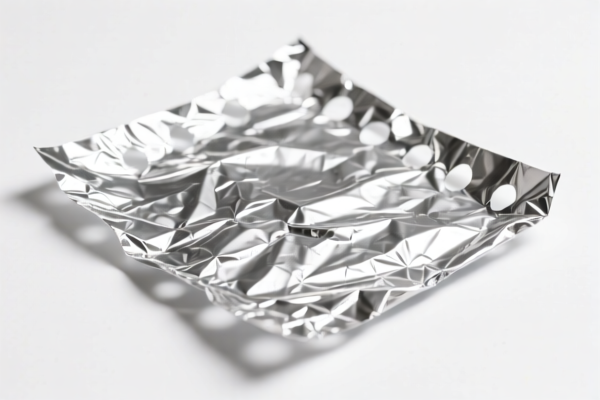
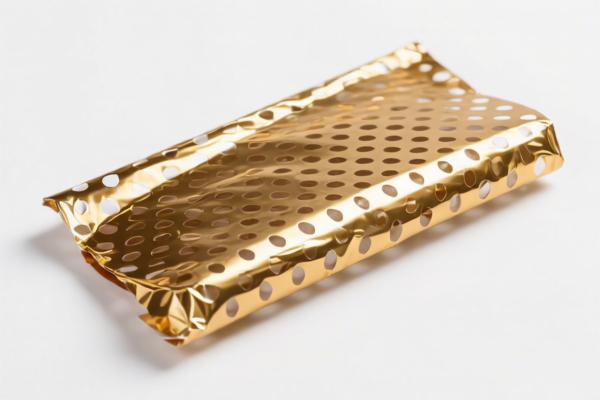


AI Analysis
🎴 Colored Perforated Card Paper (Paper/Cardboard for Punch Cards)
🌐 HS Code Reference & Customs Clearance Guide | 2026 Latest Tariff Analysis | Specialized Clearance Strategy
📌 I. Product Definition & Classification: What exactly is "Colored Perforated Card Paper"?
In the context of international trade, Colored Perforated Card Paper is typically identified by its primary historical and industrial function: Punch Cards. These are stiff paper sheets or rolls with specific holes punched in them, used for data storage, machine control, or automation.
Key Characteristics: * Material: Cellulose fibers (often cotton or high-quality paper pulp). * Form: Rolls (as indicated in the provided data) or sheets. * Feature: Pre-perforated or designed for perforation. * Application: Data processing inputs, industrial automation, historical/archival contexts.
⚠️ Key Distinction Point: - If the product is explicitly for punch cards or similar data input devices → It falls under Chapter 48 (Paper/Paperboard). - If it is merely decorative or for general packaging with holes → It might fall under different subheadings, but the provided data strongly suggests an industrial/data-related classification due to the term "perforated" combined with "card."
📦 II. HS Code Classification Details (Based on Provided Data)
Based on the <DATA> provided, all listed HS Codes refer to paper-based products, specifically rolls of paper/cardboard. While the term "Colored Perforated Card Paper" usually implies sheets, the data specifies "Rolls" (卷状). This suggests the product is likely raw material for punch card manufacturing or industrial web-fed processing.
Here is the breakdown of the HS Codes found in your data:
| HS Code | Product Description (From Data) | Key Attributes | Tax Rate |
|---|---|---|---|
4811.90.40.90 |
Cotton paper rolls, material is cotton paper, form is rolled, categorized as other paper products | ✅ Cotton Material ✅ Rolled Form ❌ No mention of perforation in summary, but general "other paper products" |
35.0% |
4814.90.02.00 |
Paper window transparency material, rolled form, categorized as other paper coverings | ✅ Transparency/Filter Type ✅ Rolled Form ⚠️ Less likely for standard punch cards, but possible if used for specialized optical/data reading |
17.5% |
4823.90.31.00 |
Cotton paper rolls, unperforated form, used for punch cards, complies with paper/cellulose category | ✅ Specific for Punch Cards ✅ Cotton Material ⚠️ Note: Summary says "unperforated," but it is for punch cards (i.e., raw stock) |
35.0% |
4823.90.67.00 |
Cotton paper rolls, cellulose fiber products, rolled, categorized as coated paper or cardboard products | ✅ Cellulose Fiber ✅ Rolled Form ✅ Coated/Treated |
35.0% |
4811.90.40.90 |
(Duplicate) Cotton paper rolls, material is cotton paper, form is rolled | ✅ Cotton Material ✅ Rolled Form |
35.0% |
🔍 Critical Observation:
The most accurate HS Code for paper specifically designated for punch cards is4823.90.31.00. Even if the summary says "unperforated," it is classified under the subheading for paper for punch cards. The "Colored" aspect may affect the specific sub-subheading within this code, but the provided data groups it here.
If the paper is not for punch cards but is a general coated cotton paper roll,4811.90.40.90or4823.90.67.00applies.
💰 III. 2026 Latest Tariff Rate Details (Including Surtaxes & Policy Additions)
✅ Applicable Country: United States (US)
✅ Origin: China (CN)
✅ Effective Date: November 10, 2025 (and subsequent imports)
🎯 1. 4823.90.31.00 —— Paper/Cellophaned Paper for Punch Cards (Cotton Paper Rolls)
| Item | Details |
|---|---|
| Base Tariff | 0% (ad valorem) |
| USITC Surcharge | +25% (Under Section 301) |
| IEEPA Surcharge | +10% (Under International Emergency Economic Powers Act, targeting China/HK) |
| Total Tariff | 35.0% |
| Tax Calculation | CIF Value × 35% |
| De Minimis Eligible? | ❌ No (deny_de_minimis) |
| Legal Authority Path | IEEPA:9903.01.25 → IEEPA:9903.01.24 → USITC:4823.90.31.00 → FOOTNOTE:9903.88.01 |
📌 Explanation:
- The 35% total rate is composed of 0% base duty + 25% Section 301 duty + 10% IEEPA duty. - This is a high tariff rate. Even though the base duty is 0%, the surcharges make it expensive. - Note: The summary says "unperforated," but this is the raw material for punch cards. If the product is already perforated, the classification might still hold if it’s not ready-for-use machinery parts, but check if it falls under "finished articles."
🎯 2. 4811.90.40.90 —— Other Paper Products (Cotton Paper Rolls)
| Item | Details |
|---|---|
| Base Tariff | 0% |
| USITC Surcharge | +25% |
| IEEPA Surcharge | +10% |
| Total Tariff | 35.0% |
| Tax Calculation | CIF Value × 35% |
| De Minimis Eligible? | ❌ No |
| Legal Authority Path | IEEPA:9903.01.25 → IEEPA:9903.01.24 → USITC:4811.90.40.90 → FOOTNOTE:9903.88.01 |
📌 Explanation:
- Identical tariff structure to above.
- Use this if the paper is not specifically for punch cards but is a general high-grade cotton paper roll used in various industries.
🎯 3. 4814.90.02.00 —— Other Paper Coverings (Window Transparency Material)
| Item | Details |
|---|---|
| Base Tariff | 0% |
| USITC Surcharge | +7.5% |
| IEEPA Surcharge | +10% |
| Total Tariff | 17.5% |
| Tax Calculation | CIF Value × 17.5% |
| De Minimis Eligible? | ❌ No |
| Legal Authority Path | IEEPA:9901.25 → IEEPA:9903.01.24 → USITC:4814.90.02.00 → FOOTNOTE:9903.88.01 |
📌 Explanation:
- This code is for transparency materials (like window film).
- Unlikely for standard punch card paper unless the "colored perforated" paper is used as a specialized transparent data medium.
- Lower tariff (17.5%) makes this attractive if the product can be justified as a "covering" or "transparency" rather than "punch card material."
🛠️ IV. Customs Clearance Practical Advice (Avoid Pitfalls)
✅ 1. Documentation Checklist (Essential)
| Document | Required? | Notes |
|---|---|---|
| ✅ Product Specification Sheet | ✔️ | Must specify: Material (Cotton/Cellulose), Form (Rolls), Dimensions, Perforation Pattern/Function. |
| ✅ Certificate of Origin (CO) | ✔️ | To confirm origin as China. |
| ✅ Commercial Invoice | ✔️ | Must clearly state: "Paper Rolls for Punch Cards" or "Cotton Paper Rolls." Avoid vague terms like "Cardboard." |
| ✅ Packing List | ✔️ | Detail net/gross weight, number of rolls. |
| ✅ Test Report | ✅ Optional but Recommended | To prove material composition (e.g., cotton content) if disputed. |
✅ 2. Declaration Tips (Critical!)
🔥 "Declare Function, Not Just Form!"
| Scenario | Correct Declaration | Wrong Declaration | Consequence |
|---|---|---|---|
| Raw paper for punch cards | 4823.90.31.00 - "Paper rolls for punch cards" |
"Perforated Paper" | Risk of misclassification → Higher duty or seizure |
| General cotton paper rolls | 4811.90.40.90 - "Cotton paper rolls" |
"Punch Card Paper" | If not for punch cards, this is correct. |
| Transparent overlay paper | 4814.90.02.00 - "Paper window film" |
"Punch Card Paper" | Avoids higher 35% duty if applicable. |
⚠️ Key Warning:
- Do NOT use "Perforated Card" alone. It is ambiguous.
- Specify "Rolls" because the data indicates rolled form. If you import sheets, the HS Code might change.
- If the product is already perforated and cut into specific punch card shapes, it might be considered a "finished article" for a machine, which could have different duties. However, based on the provided data, it is classified as paper products.
✅ 3. Special Considerations
| Situation | Recommendation |
|---|---|
| Is it Cotton? | If yes, 4823.90.31.00 or 4811.90.40.90 is likely. Cotton paper often has higher value and specific tariffs. |
| Is it Coated? | If coated, 4823.90.67.00 might apply. Coated papers can have different functional properties. |
| Is it for Export Re-import? | If the paper is exported and re-imported, check for duty drawback opportunities. |
| De Minimis? | None of these codes qualify for de minimis (Section 321) due to the high tariff rates and specific surcharges. All imports are subject to full duties. |
🌍 V. Global Market Comparison (2026)
| Country/Region | Recommended HS Code | Tariff Rate | Notes |
|---|---|---|---|
| 🇺🇸 USA | 4823.90.31.00 or 4811.90.40.90 |
35% | High due to Section 301 + IEEPA. |
| 🇨🇳 China | 4823.90.31.00 |
Low (~5-10%) | No surcharges. Import duty is low. |
| 🇪🇺 EU | 4823.90.31.00 |
0-6% | No Section 301 equivalent. |
| 🇬🇧 UK | 4823.90.31.00 |
0-6% | Post-Brexit tariffs may vary slightly. |
📌 Conclusion:
The US market is the most challenging due to the 35% total tariff. If your product is not exclusively for punch cards, consider if4814.90.02.00(17.5%) is applicable to reduce costs.
📌 VI. Common Errors & Pitfalls (Lessons Learned)
❌ Error 1: Declaring as "Cardboard" without specifying material.
👉 Result: Misclassification → Potential penalty + delay.
❌ Error 2: Ignoring the "Roll" form.
👉 Result: If declared as "Sheets," the HS Code may change. Ensure packaging matches the description.
❌ Error 3: Assuming "Perforated" means "Finished Article."
👉 Result: If it’s still a roll with perforations, it’s a paper product. If it’s cut into cards, it might be a "part of a machine" → Check HS Code 8471 (Computer parts) or 8543 (Electrical machines). But based on provided data, it’s classified as paper.
✅ Correct Approach:
"Paper Rolls, Cotton Fiber, Pre-Perforated, for Use in Punch Card Systems, Uncoated, Width: X mm"
🎯 VII. Final Recommendations
🎯 Remember:
🔹 "Punch Card Paper = 35% Duty (US)"
🔹 "Transparent Paper = 17.5% Duty (US)"
🔹 "Cotton Paper Rolls = 35% Duty (US)"
📌 Action Items:
1. Confirm Material: Is it 100% cotton? If yes, stick with 4811 or 4823.
2. Confirm Function: Is it specifically for punch cards? If yes, use 4823.90.31.00.
3. Check Eligibility for Lower Duty: Can it be classified as 4814.90.02.00 (Transparency/Covering)? If yes, save 17.5% in duties.
4. Prepare Documentation: Ensure invoices clearly state the intended use and material composition.
📣 Immediate Action:
📞 Consult a Customs Broker to verify if
4814.90.02.00(17.5%) is applicable to your "Colored Perforated" product.
🚀 Optimize Classification to reduce tariff burden from 35% to 17.5% if possible!
✨ Professional Customs Clearance Starts with Accurate Classification!
💼 Every Percent of Tariff Matters!
Customer Reviews
About HS Code Classification
The Harmonized System (HS) is an internationally standardized nomenclature developed by the World Customs Organization (WCO) to classify traded products. Over 200 countries use the HS system as the basis for customs tariffs, trade statistics, and import/export regulations.
Each HS code follows a hierarchical structure:
- Chapter (2 digits) — Broad category of goods (e.g., Chapter 84: Machinery and Mechanical Appliances)
- Heading (4 digits) — More specific grouping within the chapter
- Subheading (6 digits) — Internationally standardized breakdown, used by all WCO member countries
- National subdivisions (8-10 digits) — Country-specific extensions for further classification, such as US HTSUS 10-digit codes
Correct HS code classification is essential for smooth customs clearance, accurate duty payment, and compliance with trade regulations. Misclassification can lead to customs delays, overpayment of duties, or penalties.
When importing from CN to US, the applicable tariff rates may include:
- Most-Favored-Nation (MFN) rate — The standard duty rate applied to WTO members
- General rate — Applied to countries without trade agreements
- Trade remedy duties — Additional tariffs such as Section 301 (anti-dumping), Section 232 (national security), or countervailing duties
The information provided on this page is for reference purposes only. For official classification, please consult with your local customs authority or a licensed customs broker.