Colored Sunlight Film
CN → USProduct Images


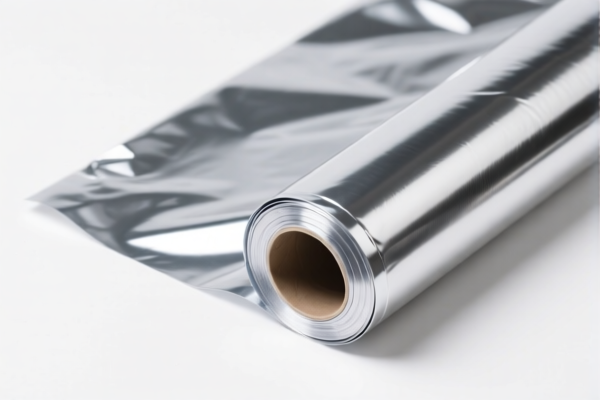
AI Analysis
🌈 Colored Sunlight Film (Decorative Window Films)
🌐 HS Code Reference & Customs Clearance Guide | 2026 Latest Tariff Analysis | Professional Logistics Strategy
📌 I. Product Definition & Classification: What is "Colored Sunlight Film"?
Colored Sunlight Film (also known as Decorative Window Film, Privacy Film, or Architectural Glass Film) is a polymeric sheet applied to glass surfaces for aesthetic, privacy, or UV-protection purposes. In international trade, it is not considered a simple "plastic film" (Chapter 39) if it contains specific functional layers or is finished for a specific end-use, but often falls under Chapter 39 (Plastics) or Chapter 70 (Glass) depending on structure.
Key Distinctions: * Polyester (PET) Based Films: The most common type. Usually classified under 3920 (Other plates, sheets, film, foil, and strip, of plastics). * Self-Adhesive Films: If the product is rolled and sold with an adhesive backing ready for application, it is still primarily classified by its base material (PET) but may be subject to specific duty notes. * Glass-Based Films: Rare, but if it is a treated glass sheet rather than a plastic film applied to glass, it may fall under 7009 (Mirrors, reflectors, and coated or plated glass of any kind, including such glass used as parts of vehicles).
⚠️ Critical Classification Point:
- If it is a plastic film (PET/PE) used for decoration/privacy → HS 3920.99 (Other plastics).
- If it is a finished glass product with coating → HS 7009.92 (Coated glass).
- Most imports are "Colored Plastic Window Film" → Focus on 3920.
📦 II. HS Code Classification Details (2026 Latest Tariff Alignment)
| HS Code | Product Description | Application Scenario | Material Basis |
|---|---|---|---|
3920.99.90.00 |
Other plates, sheets, film, foil and strip, of plastics, non-cellular, non-reinforced, laminated, supported or similarly combined with other materials: Other: Other | Most common "Colored Sunlight Film" (PET-based, decorative/privacy) | ✅ PET/PE Plastic |
3920.49.00.00 |
Polyvinyl chloride (PVC) plates, sheets, film, foil and strip | Less common for high-end films, often used for cheap stickers | ✅ PVC Plastic |
7009.92.00.00 |
Mirrors, reflectors and coated or plated glass of any kind, including such glass used as parts of vehicles: Other (Coated Glass) | If the product is actually a glass pane with colored coating, not a plastic film | ✅ Glass |
4823.90.60.00 |
Other paper, paperboard, cellulose wadding and webs of cellulose fibre: Other | If mistakenly classified as decorative paper film (rare for window use) | ❌ Paper (Wrong for typical window film) |
3919.90.00.00 |
Self-adhesive plates, sheets, film, foil, tape, strip and other flat shapes, of plastics, whether or not in rolls | If sold in rolls with adhesive backing ready for application | ✅ Plastic + Adhesive |
🔍 Key Reminder:
- Do NOT classify as simple raw plastic sheet if it is "finished" for window application. However, HS 3920 covers both raw and some finished films.
- If the film is self-adhesive, customs may look closely at 3919 vs 3920. Generally, if the primary value is the plastic substrate, 3920.99 is often used, but 3919.90 is stricter for "ready-to-use" adhesive rolls.
- Check Local Customs Rulings: Some jurisdictions require "Decorative Film" to be declared under 3920.99.90 while others may push for 3919.90 if adhesive is present.
💰 III. 2026 Latest Tariff Rate Details (Including Surcharges)
✅ Applicable Country: United States (US)
✅ Country of Origin: China (CN)
✅ Effective Date: November 10, 2025 (including subsequent imports)
🎯 1. 3920.99.90.00 —— Plastic Film, Decorative/Privacy (Non-Adhesive or Substrate-Heavy)
| Item | Details |
|---|---|
| Base Tariff Rate | 5.7% (ad valorem) |
| USITC Section 301 Surcharge | +7.5% (Footnote 9903.88.01 for certain plastic products) |
| IEEPA Surcharge | +10% (Section 232/IEEPA for Chinese plastics/chemicals) |
| Total Effective Rate | 23.2% |
| Tax Calculation | CIF Value × 23.2% |
| De Minimis Exemption | ❌ Not Applicable (Deny de minimis for Section 301 goods) |
| Legal Path | IEEPA:9903.01.24 → USITC:3920.99.90.00 → FOOTNOTE:9903.88.01 |
📌 Explanation:
- The 5.7% is the standard MFN rate for other plastic films.
- The 7.5% Section 301 rate applies to many plastic articles (including films used in construction/decor).
- The 10% IEEPA rate is a blanket surcharge on many Chinese imports under recent executive orders.
- Total: ~23.2%. This is significantly higher than non-Chinese origins.
🎯 2. 3919.90.00.00 —— Self-Adhesive Plastic Film
| Item | Details |
|---|---|
| Base Tariff Rate | 5.7% |
| USITC Section 301 Surcharge | +7.5% |
| IEEPA Surcharge | +10% |
| Total Effective Rate | 23.2% |
| Tax Calculation | CIF Value × 23.2% |
| De Minimis Exemption | ❌ Not Applicable |
| Legal Path | Same as above |
📌 Note:
- Even if classified under 3919 (adhesive), the surcharges remain largely the same for plastic products from China.
- Risk: If customs determines the product is "adhesive tape" rather than "film," it might fall under 3919.90, but the tariff impact is similar.
- Claim: Some argue that "decorative films" are not "tape," so 3920 is more accurate. Use this argument to ensure proper description.
🛠️ IV. Customs Clearance Practical Advice (Battle-Tested Guide)
✅ 1. Required Documentation Checklist
| Document | Mandatory? | Notes |
|---|---|---|
| ✅ Product Specification Sheet | ✔️ | Must detail: Material (e.g., PET), Thickness (microns), Color, UV Block %, Adhesive Type. |
| ✅ Commercial Invoice | ✔️ | Clearly state: "Decorative Polyester (PET) Window Film, Colored, For Glass Application." Avoid vague terms like "Plastic Sheet." |
| ✅ Packing List | ✔️ | Specify roll dimensions and weight. |
| ✅ Bill of Lading/Air Waybill | ✔️ | Consistent with invoice. |
| ✅ FCC Declaration | ❌ (Usually) | Not typically required for passive plastic films unless they contain electronic components (unlikely). |
| ✅ Prop 65 Warning | ❌ (For US) | If selling in California, ensure label compliance if adhesive contains chemicals. |
| ✅ Origin Certificate | ✔️ | Essential for proving CN origin and applying/avoiding surcharges. |
✅ 2. Declaration Tips (Key Mantras)
🔥 “Material First, Function Second, Adhesive Clearly Stated!”
| Scenario | Correct Declaration | Wrong Practice |
|---|---|---|
| Standard PET Film | 3920.99.90.00 – "Polyester Decorative Window Film" |
"Plastic Film" (Too vague → Audit Risk) |
| Self-Adhesive Roll | 3919.90.00.00 – "Self-Adhesive Polyester Film" |
Ignoring adhesive → Misclassification |
| Glass Coating | 7009.92.00.00 – "Coated Glass Panel" |
Calling it "Film" when it's glass → Penalty |
| Sample Rolls | Mark as "SAMPLES – NOT FOR RESALE" | Selling samples as full commercial cargo → Tax Evasion |
✅ 3. Special Case Handling
| Situation | Handling Advice |
|---|---|
| Multi-Layer Films | If it has multiple layers (e.g., PET + Metalized + Adhesive), declare as 3920.99 (Other plastics) but provide layer breakdown. |
| Rolls vs. Sheets | Rolls are standard. If cut to size (sheets), still 3920, but ensure dimensions are declared. |
| Anti-Graffiti Films | If marketed for protection rather than decoration, same HS code (3920.99), but adjust commercial description to highlight function for buyer's insurance. |
| UV-Rejecting Films | Same HS code. Do not overcomplicate with "Solar Control" claims unless it qualifies for a different subheading (unlikely for films). |
🌍 V. Global Market Comparison (2026 Latest)
| Country/Region | Recommended HS Code | Tariff (China Origin) | Certification | Notes |
|---|---|---|---|---|
| 🇺🇸 USA | 3920.99.90.00 |
23.2% (High) | None specific | Section 301 + IEEPA apply. |
| 🇨🇳 China | 3920.99.90.00 |
5.0% | CCC (if electrical, not applicable here) | Low import tax. |
| 🇪🇺 EU | 3920.99.90 |
6.5% | REACH Compliance | No IEEPA-style surcharges, but REACH strict. |
| 🇬🇧 UK | 3920.99.90 |
6.5% | UKCA (if needed) | Post-Brexit rules apply. |
| 🇦🇺 Australia | 3920.99.00 |
5.0% | RCM (if electronic, N/A) | Generally low duty. |
| 🇯🇵 Japan | 3920.99.00 |
6.0% | PSE (if electronic, N/A) | Low duty. |
📌 Conclusion:
- USA is the most expensive market for Chinese-Colored Sunlight Film due to 23.2% effective tariff.
- EU/UK have moderate duties (6.5%) but strict REACH chemical regulations.
- Other Markets offer lower tariffs, but China origin is the key factor.
📌 VI. Common Mistakes & Pitfalls (Lessons Learned)
❌ Mistake 1: Classifying as "Plastic Sheet" (Raw Material)
👉 Consequence: May bypass certain "finished product" checks, but customs will audit for "use." If declared as raw material but used as finished film, penalties apply.
❌ Mistake 2: Ignoring "Adhesive" Component
👉 Consequence: If self-adhesive, declaring under 3920 (non-adhesive) may lead to reclassification to 3919 and back taxes + interest.
❌ Mistake 3: Vague Description "Decorative Film"
👉 Consequence: Customs may hold shipment for Class 90 (optical) or Class 48 (paper) assessment. Always specify Material (PET) and Form (Roll/Sheet).
✅ Correct Declaration Example:
"DECORATIVE WINDOW FILM, POLYESTER (PET) BASE, COLORED, NON-ADHESIVE, ROLLED, FOR ARCHITECTURAL USE, HS: 3920.99.90.00"
🎯 VII. Conclusion: Professional Declaration, Cost Efficiency!
🎯 Remember the Mantra:
🔹 "Specify Material, Declare Function, Adhesive Matters!"
🔹 "USA Tariff is 23.2%, Plan Supply Chain Accordingly!"
🔹 "REACH in EU, 301 in US, Don't Get Caught Off Guard!"
📌 Pro Tip:
If your colored film is manufactured in Vietnam, Thailand, or Malaysia, you may avoid the 10% IEEPA surcharge and potentially Section 301 duties. Consider supply chain diversification if targeting the US market.
For US imports, apply for an Advance Ruling to confirm HS 3920 vs 3919 classification, saving potential back-tax liabilities.
📣 Immediate Action:
📞 Engage a licensed customs broker.
📄 Provide technical data sheet (Material Composition).
🚀 Ensure Commercial Invoice matches the HS Code description perfectly.
✨ Precision in Classification Saves Thousands!
💼 Your Profit Margin Depends on Accurate Tariff Codes!
Customer Reviews
About HS Code Classification
The Harmonized System (HS) is an internationally standardized nomenclature developed by the World Customs Organization (WCO) to classify traded products. Over 200 countries use the HS system as the basis for customs tariffs, trade statistics, and import/export regulations.
Each HS code follows a hierarchical structure:
- Chapter (2 digits) — Broad category of goods (e.g., Chapter 84: Machinery and Mechanical Appliances)
- Heading (4 digits) — More specific grouping within the chapter
- Subheading (6 digits) — Internationally standardized breakdown, used by all WCO member countries
- National subdivisions (8-10 digits) — Country-specific extensions for further classification, such as US HTSUS 10-digit codes
Correct HS code classification is essential for smooth customs clearance, accurate duty payment, and compliance with trade regulations. Misclassification can lead to customs delays, overpayment of duties, or penalties.
When importing from CN to US, the applicable tariff rates may include:
- Most-Favored-Nation (MFN) rate — The standard duty rate applied to WTO members
- General rate — Applied to countries without trade agreements
- Trade remedy duties — Additional tariffs such as Section 301 (anti-dumping), Section 232 (national security), or countervailing duties
The information provided on this page is for reference purposes only. For official classification, please consult with your local customs authority or a licensed customs broker.