Colored Wide Stripe Film
CN → US| HS Code | Tariff Rate | Origin | Destination | Doc |
|---|---|---|---|---|
| 5407200000 | 35.0% | CN | US | Official Doc |
| 5407301000 | 35.0% | CN | US | Official Doc |
| 3920200055 | 39.2% | CN | US | Official Doc |
| 3920100000 | 39.2% | CN | US | Official Doc |
| 3919905060 | 40.8% | CN | US | Official Doc |
Product Images


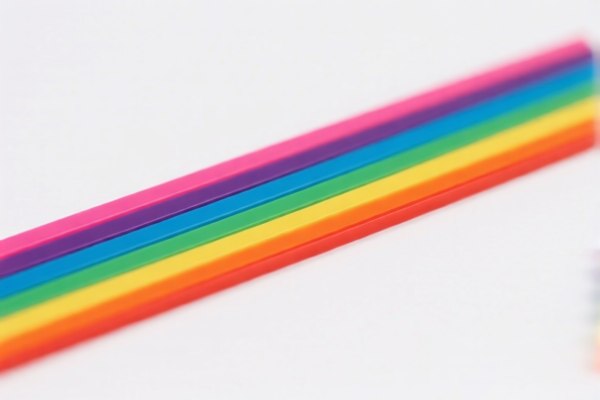
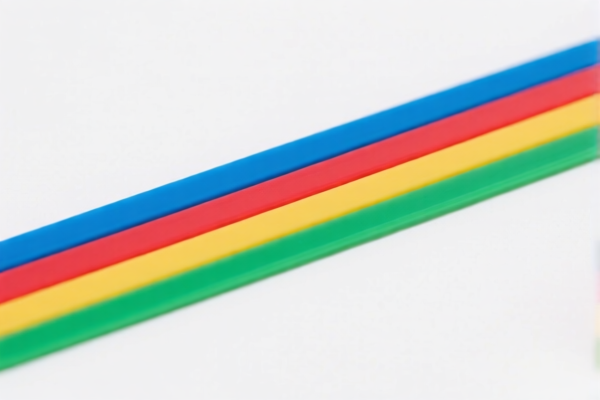
AI Analysis
🎨 Colored Wide Stripe Film: The Ultimate HS Code & Taxation Guide for US Customs
(Based on 2026 Tariff Data & Trade Regulations)
🌐 HS Code Reference & Customs Clearance Guide | 2026 Latest Tariff Analysis | Professional-Level Clearance Strategy
📌 I. Product Definition & Classification: Do You Really Understand "Colored Wide Stripe Film"?
"Colored Wide Stripe Film" is a versatile industrial material, widely used in packaging, printing, decoration, and construction. In international trade, its classification depends heavily on two critical factors: Material Composition and Physical Form.
1. Synthetic Fiber Fabrics/Processed Products: If the film is made from synthetic filament fibers (e.g., polyester, nylon) and is woven or processed into a strip-like structure, it belongs to Chapter 54.
2. Plastic Films/Plates: If the film is made from polymers (e.g., polypropylene, polyethylene) in the form of a continuous sheet or strip without fibrous weaving characteristics, it belongs to Chapter 39.
⚠️ Key Distinction Point:
- If the material is woven synthetic fiber (fabric-like) → Go to Chapter 54.
- If the material is extruded plastic (sheet/foil-like) → Go to Chapter 39.
- Color itself does not determine the HS code but may affect the sub-heading within the material category.
📦 II. HS Code Classification Details (2026 Latest Tariff Authoritative Comparison)
Based on the provided data, here are the five most relevant HS Codes for "Colored Wide Stripe Film":
| HS Code | Product Description | Material/Form Logic | Applicable Scenario |
|---|---|---|---|
5407.20.00.00 |
Woven fabrics of synthetic filament yarns, other than strip-like fabrics of heading 5404 | Synthetic Filament Fabric | Colorful wide stripes made of woven synthetic fibers (e.g., polyester strips woven into fabric). |
5407.30.10.00 |
Woven fabrics of synthetic filament yarns, strip or the like, of heading 5404 | Strip/Fabric Form | Colorful wide stripes that are technically classified as "strips" or similar woven items. |
3920.20.00.55 |
Plates, sheets, film, foil and strip, of polymers of ethylene | Plastic Film (PE) | Colorful wide stripes made of Polyethylene (PE) plastic. Fits the "film" morphology perfectly. |
3920.10.00.00 |
Plates, sheets, film, foil and strip, of polymers of ethylene | Plastic Film (PE - Primary) | General Polyethylene (PE) plastic films/stripes. A broad match for plastic-based wide stripes. |
3919.90.50.60 |
Self-adhesive plates, sheets, film, foil, tape, strip and other flat shapes, of plastics | Plastic Tape/Film | Colorful wide stripes that are self-adhesive or fall under other plastic flat shapes. |
🔍 Important Note:
- Chapter 54 codes (5407.xx) imply a textile/fabric nature. If your product is woven, use these.
- Chapter 39 codes (3920.xx,3919.xx) imply a plastic/polymer nature. If your product is extruded plastic, use these.
- Misclassification Risk: Declaring a plastic film as a synthetic fabric (or vice versa) will lead to customs detention, fines, or retroactive tax adjustments.
💰 III. 2026 Latest Tariff Rate Breakdown (Including Additional Taxes & Policy Add-ons)
✅ Applicable Country: United States (US)
✅ Origin: China (CN)
✅ Effective Date: 2025 November 10 onwards (including subsequent imports)
🎯 1. 5407.20.00.00 & 5407.30.10.00 —— Synthetic Fabric/Strip Products
| Item | Detail |
|---|---|
| Base Tariff | 0% (Ad valorem) |
| Section 301 Tariff | +25% (USITC Footnote 9903.88.01 / Related Section 301 List) |
| 122 Clause Tariff | +10% (Specific trade remedy tariff) |
| Total Rate | 35.0% |
| Tax Calculation | CIF Value × 35% |
| De Minimis Exemption | ❌ Not Applicable |
| Legal Basis Path | Base: 0% + Section 301: 25% + 122 Clause: 10% |
📌 Explanation:
- The 0% base rate is standard for many textile/fabric imports.
- However, due to Section 301 (trade war tariffs) and 122 Clause (specific product restrictions), the total burden jumps to 35%.
- This is a high-cost category for Chinese synthetic fabric exports.
🎯 2. 3920.20.00.55 & 3920.10.00.00 —— Polyethylene Plastic Films
| Item | Detail |
|---|---|
| Base Tariff | 4.2% (Ad valorem) |
| Section 301 Tariff | +25% (USITC Footnote 9903.88.01 / Related Section 301 List) |
| 122 Clause Tariff | +10% (Specific trade remedy tariff) |
| Total Rate | 39.2% |
| Tax Calculation | CIF Value × 39.2% |
| De Minimis Exemption | ❌ Not Applicable |
| Legal Basis Path | Base: 4.2% + Section 301: 25% + 122 Clause: 10% |
📌 Explanation:
- Plastic films (3920) start with a 4.2% base tariff, higher than the 0% for textiles.
- Adding the same Section 301 (25%) and 122 Clause (10%) tariffs results in a 39.2% total rate.
- Comparison: Plastic film (39.2%) is more expensive than synthetic fabric (35.0%) for this specific product type.
🎯 3. 3919.90.50.60 —— Other Plastic Films/Tapes (Self-Adhesive/Other)
| Item | Detail |
|---|---|
| Base Tariff | 5.8% (Ad valorem) |
| Section 301 Tariff | +25% (USITC Footnote 9903.88.01 / Related Section 301 List) |
| 122 Clause Tariff | +10% (Specific trade remedy tariff) |
| Total Rate | 40.8% |
| Tax Calculation | CIF Value × 40.8% |
| De Minimis Exemption | ❌ Not Applicable |
| Legal Basis Path | Base: 5.8% + Section 301: 25% + 122 Clause: 10% |
📌 Explanation:
- This category has the highest base rate (5.8%), leading to the highest total rate (40.8%).
- Only use this if your product is clearly self-adhesive or falls under "other plastics." Misusing this code is risky due to the high base tax.
🛠️ IV. Customs Clearance Practical Advice (Battle-Tested Pitfall Avoidance Guide)
✅ 1. Preparation Checklist (Non-Negotiable)
| Document | Required | Explanation |
|---|---|---|
| ✅ Product Specification Sheet | ✔️ | Must specify Material (e.g., 100% Polyester vs. 100% PP/PE), Thickness, Width, and Structure (Woven vs. Extruded). |
| ✅ Technical Drawing / Cross-Section | ✔️ | Critical to prove whether it is a woven fabric (Chapter 54) or a plastic film (Chapter 39). |
| ✅ Product Photos (Clear) | ✔️ | Show the texture (woven grid vs. smooth plastic surface). |
| ✅ Commercial Invoice | ✔️ | Clearly state: "Colored Wide Stripe Film, [Material], [Dimensions]." Avoid vague terms like "plastic strip." |
| ✅ Packing List | ✔️ | Ensure weight and dimensions match the invoice. |
✅ 2. Declaration Tips (Key Mantras)
🔥 "Material First, Form Second, Name Specific, Tax Optimize!"
| Situation | Correct Declaration | Wrong Practice |
|---|---|---|
| Woven Synthetic Fabric | HS 5407.20.00.00 or 5407.30.10.00 |
Misdeclare as plastic film → Higher tax (39.2% vs 35%) |
| Plastic Film (PE/PP) | HS 3920.20.00.55 or 3920.10.00.00 |
Misdeclare as fabric → Lower tax, but risk of penalty for false declaration |
| Self-Adhesive Tape | HS 3919.90.50.60 |
Misdeclare as non-adhesive film → Higher tax (40.8%) |
📌 Warning:
- Do not split shipments to avoid Section 301 taxes. US Customs uses AI and data analytics; split shipments trigger audits.
- Origin Declaration: Ensure the CO (Certificate of Origin) matches the HS code logic. Plastic vs. Fabric origin verification is strict.
✅ 3. Special Cases
| Situation | Handling Advice |
|---|---|
| OEM Custom Colors | Provide color standards (Pantone codes) to prove it's a standard industrial film, not a unique artistic product. |
| Mixed Materials | If the film has a plastic layer + fabric backing, consult a customs broker for composite goods classification. It may shift to Chapter 59 (Impregnated Fabrics). |
| Small Samples | Even for samples, if the value is low, ensure the HS code is correct. De minimis ($800) may apply if eligible, but Section 301 tariffs are NOT exempt for de minimis shipments from China in many cases. Check current CBP enforcement. |
🌍 V. Global Market Comparison (2026 Latest)
| Country/Region | Recommended HS Code | Total Tariff (China Origin) | Certifications | Notes |
|---|---|---|---|---|
| 🇺🇸 USA | 5407.20.00.00 / 3920.xx |
35% - 40.8% | No special certs needed for film | High tariffs due to Section 301 + 122 Clause |
| 🇨🇳 China | 5407.20.00.00 / 3920.xx |
0% - 6% | None | Low import tax, but export duties may apply |
| 🇪🇺 EU | 5407.20.00 / 3920.xx |
0% - 4.5% | REACH, RoHS | No Section 301 equivalent, much cheaper than US |
| 🇦🇺 Australia | 5407.20.00 / 3920.xx |
5% - 10% | GSR | Moderate tariffs |
| 🇯🇵 Japan | 5407.20.00 / 3920.xx |
0% - 3% | JIS | Very competitive market |
📌 Conclusion:
- The US market is the most expensive for Chinese "Colored Wide Stripe Film" due to layered tariffs.
- EU and Japan offer significantly better tariff advantages. Consider supply chain diversification if targeting the US market heavily.
📌 VI. Common Errors & Pitfalls (Lessons from Blood & Tears)
❌ Error 1: Declaring Plastic Film as Synthetic Fabric to get a lower base rate (0% vs 4.2%).
👉 Consequence: Customs lab test proves it's plastic → Back taxes + Fines + Possible seizure.
❌ Error 2: Ignoring the 122 Clause (+10%).
👉 Consequence: Underpayment of duties → Penalty of 50% of evaded tax and potential loss of importer privileges.
❌ Error 3: Vague description: "Plastic Strip."
👉 Consequence: Customs cannot determine Chapter 39 vs 54 → Delayed clearance (1-4 weeks) for further inspection.
❌ Error 4: Assuming De Minimis ($800) exempts Section 301 taxes.
👉 Consequence: CBP increasingly enforces Section 301 tariffs on de minimis shipments from China. Do not risk it.
✅ Correct Approach:
"Wide Stripe Film, 100% Polypropylene, Extruded, 50mm Width, Matte Finish, for Industrial Packaging, HS 3920.20.00.55"
🎯 VII. Conclusion: Precise Classification Saves Money!
🎯 Remember the Mantra:
🔹 "Material defines Chapter, Form defines Heading, Tariff defines Cost!"
🔹 "35% for Fabric, 39.2% for PE Film, 40.8% for Other Plastic. Choose wisely!"
📌 Pro Tip:
If your Colored Wide Stripe Film is originally produced in Vietnam, Malaysia, or Thailand, you may qualify for IEEPA Exemptions or lower Section 301 rates.
👉 Action: Apply for an Advance Ruling with US Customs (CBP) before shipment to lock in the HS Code and tax rate.
📣 Take Action Now:
📞 Contact a Licensed Customs Broker
📸 Provide Product Photos & Material Specs
📝 Request an HS Code Pre-Ruling
🚀 Clearance Smoothly, Costs Minimized, Profit Maximized!
✨ Professional Customs Clearance Starts with Accurate Classification!
💼 Every Penny Saved is Pure Profit!
Customer Reviews
About HS Code Classification
The Harmonized System (HS) is an internationally standardized nomenclature developed by the World Customs Organization (WCO) to classify traded products. Over 200 countries use the HS system as the basis for customs tariffs, trade statistics, and import/export regulations.
Each HS code follows a hierarchical structure:
- Chapter (2 digits) — Broad category of goods (e.g., Chapter 84: Machinery and Mechanical Appliances)
- Heading (4 digits) — More specific grouping within the chapter
- Subheading (6 digits) — Internationally standardized breakdown, used by all WCO member countries
- National subdivisions (8-10 digits) — Country-specific extensions for further classification, such as US HTSUS 10-digit codes
Correct HS code classification is essential for smooth customs clearance, accurate duty payment, and compliance with trade regulations. Misclassification can lead to customs delays, overpayment of duties, or penalties.
When importing from CN to US, the applicable tariff rates may include:
- Most-Favored-Nation (MFN) rate — The standard duty rate applied to WTO members
- General rate — Applied to countries without trade agreements
- Trade remedy duties — Additional tariffs such as Section 301 (anti-dumping), Section 232 (national security), or countervailing duties
The information provided on this page is for reference purposes only. For official classification, please consult with your local customs authority or a licensed customs broker.