Colorful CD Case
CN → US| HS Code | Tariff Rate | Origin | Destination | Doc |
|---|---|---|---|---|
| 3926904800 | 13.4% | CN | US | Official Doc |
| 4820500000 | 35.0% | CN | US | Official Doc |
| 3926909989 | 22.8% | CN | US | Official Doc |
| 4820900000 | 35.0% | CN | US | Official Doc |
Product Images
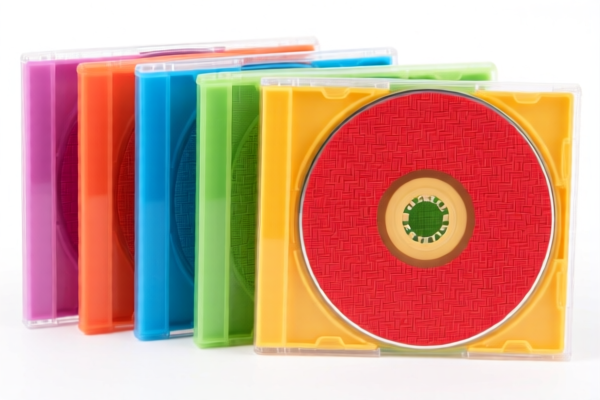
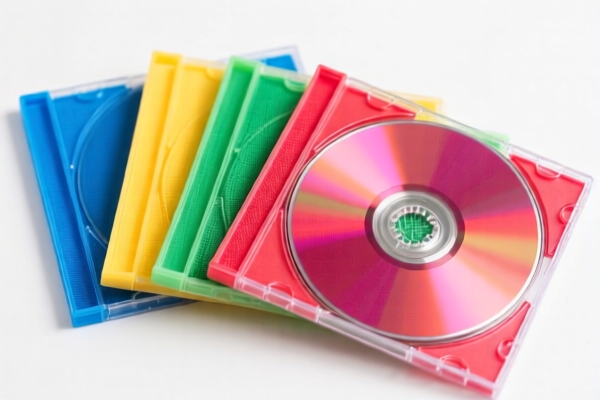
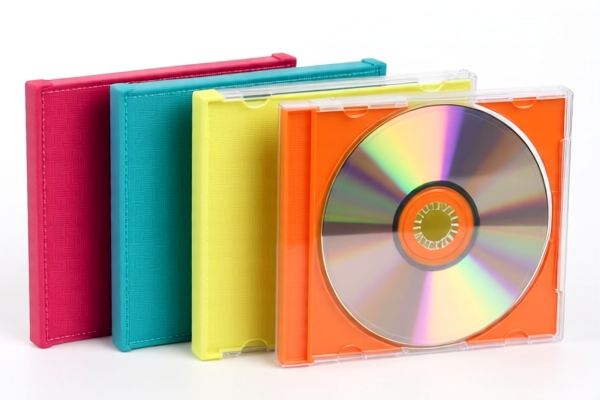
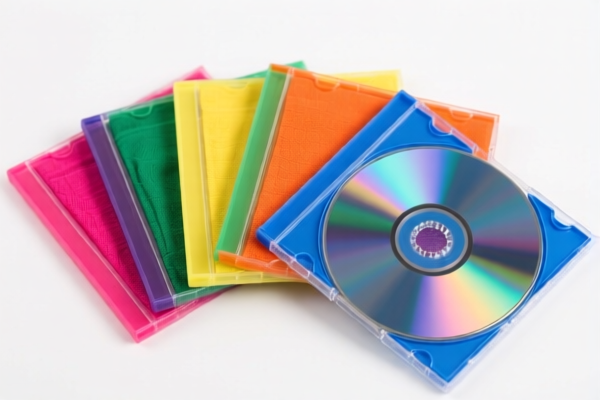
AI Analysis
📀 Colorful CD Case (CD Sleeves/Boxes)
🌐 HS Code Reference & Customs Clearance Guide | 2026 Latest Tariff Analysis | Professional Compliance Strategy
📌 I. Product Definition & Classification: Do You Really Understand "CD Cases"?
A Colorful CD Case is a storage container for optical media. In international trade, its classification depends heavily on its material composition and functional morphology. It is generally viewed through two main lenses:
Plastic Containers (3926): If the case is made of rigid plastic (polypropylene, polystyrene), it is classified as a "Plastic Article."
Paper/Board Folders (4820): If the case is made of cardboard, paperboard, or acts as a "booklet/folder" for collection, it is classified as a "Stationery/Paper Product."
⚠️ Key Distinction Point:
- If primarily Plastic and used for protection/storage → Chapter 39
- If primarily Paper/Cardboard and used as a folder/album → Chapter 48
📦 II. HS Code Classification Details (2026 Latest Tariff Authority Comparison)
Based on the provided data, the "Colorful CD Case" falls into four potential HS Codes depending on the specific material inference and customs interpretation.
| HS Code | Product Description | Application Scenario | Material Inference |
|---|---|---|---|
3926.90.48.00 |
Other plastic articles, specifically other containers/packaging | Rigid plastic CD jewel cases or colorful plastic sleeves | ✅ Plastic |
3926.90.99.89 |
Other plastic articles (miscellaneous) | Plastic cases that don't fit specific sub-categories | ✅ Plastic |
4820.50.00.00 |
Albums, logbooks, account books, etc. (Paper/Board) | Paperboard CD cases, book-style collections | ✅ Paper/Cardboard |
4820.90.00.00 |
Other stationery supplies (folders/binders) | Paper/plastic hybrid or primarily paper-based folder cases | ✅ Paper/Plastic Mix |
🔍 Key Reminder:
- Plastic cases are generally cheaper in base tariff but face varying supplementary duties depending on the specific subheading.
- Paper-based cases often have a 0% base tariff but attract significant "Section 301" and "IEEPA" add-on tariffs, making the total effective rate potentially higher than plastic alternatives.
- Customs authorities may challenge the classification if the material is ambiguous (e.g., plastic with paper labels).
💰 III. 2026 Latest Tariff Rate Breakdown (Including Supplementary Taxes & Policy Add-ons)
✅ Applicable Country: United States (US)
✅ Country of Origin: China (CN)
✅ Effective Date: 2025 November 10 onwards (including subsequent imports)
🎯 1. 3926.90.48.00 —— Plastic Articles: Other Containers/Packaging
| Item | Content |
|---|---|
| Base Tariff | 3.4% (ad valorem) |
| Section 301 Add-on | 0.0% |
| IEEPA (Section 122) Add-on | +10.0% (Specific China-related provision) |
| Total Rate | 13.4% |
| Tax Calculation | CIF Value × 13.4% |
| De Minimis Eligibility | ❌ No (High duty risk) |
| Legal Pathway | IEEPA:9903.01.24 (122 Clause) → USITC:3926.90.48.00 |
📌 Explanation:
- This is the most favorable plastic classification in terms of total tax burden.
- The "Section 301" tax is 0%, which is rare for many plastic items.
- The 10% IEEPA tax applies specifically under certain executive orders targeting Chinese imports.
- Total 13.4% is significantly lower than the paper-based alternatives.
🎯 2. 3926.90.99.89 —— Plastic Articles: Other (Miscellaneous)
| Item | Content |
|---|---|
| Base Tariff | 5.3% (ad valorem) |
| Section 301 Add-on | +7.5% |
| IEEPA (Section 122) Add-on | +10.0% |
| Total Rate | 22.8% |
| Tax Calculation | CIF Value × 22.8% |
| De Minimis Eligibility | ❌ No |
| Legal Pathway | IEEPA:9903.01.24 → USITC:3926.90.99.89 |
📌 Note:
- This is a "catch-all" plastic category.
- It incurs a 7.5% Section 301 add-on, which is lower than the 25% for some other categories.
- Total 22.8% is moderate but higher than3926.90.48.00.
- Use this only if the specific "container" sub-heading (3926.90.48.00) is rejected by customs.
🎯 3. 4820.50.00.00 —— Albums/Logbooks (Paper/Board)
| Item | Content |
|---|---|
| Base Tariff | 0.0% |
| Section 301 Add-on | +25.0% |
| IEEPA (Section 122) Add-on | +10.0% |
| Total Rate | 35.0% |
| Tax Calculation | CIF Value × 35.0% |
| De Minimis Eligibility | ❌ No |
| Legal Pathway | IEEPA:9903.01.24 → USITC:4820.50.00.00 → FOOTNOTE:301 |
📌 Critical Warning:
- Despite a 0% base tariff, the 25% Section 301 tax (Trump/Biden trade war tariffs) makes this very expensive.
- The 35% total is more than double the cheapest plastic option.
- Customs may classify a "plastic" CD case as this if it has a significant paper component, leading to unexpected costs.
🎯 4. 4820.90.00.00 —— Other Stationery (Folders/Binders)
| Item | Content |
|---|---|
| Base Tariff | 0.0% |
| Section 301 Add-on | +25.0% |
| IEEPA (Section 122) Add-on | +10.0% |
| Total Rate | 35.0% |
| Tax Calculation | CIF Value × 35.0% |
| De Minimis Eligibility | ❌ No |
| Legal Pathway | IEEPA:9903.01.24 → USITC:4820.90.00.00 |
📌 Note:
- Similar to4820.50.00.00, this applies if the CD case is viewed as a "stationery folder."
- The high 25% Section 301 tax dominates the cost structure.
- Avoid this classification if plastic alternatives are available.
🛠️ IV. Customs Clearance Practical Advice (Actionable Pitfall Avoidance Guide)
✅ 1. Document Preparation Checklist (Mandatory)
| Document | Required? | Explanation |
|---|---|---|
| ✅ Product Spec Sheet | ✔️ | Must clearly state Material (e.g., "100% Polypropylene Plastic" or "Cardboard with Plastic Window"). |
| ✅ Product Photos | ✔️ | Show the item from all angles. Highlight material texture (shiny/glossy = plastic; matte/fibrous = paper). |
| ✅ Commercial Invoice | ✔️ | Description must be precise: "Plastic CD Case" vs. "Paper CD Album." |
| ✅ Material Declaration | ✔️ | Explicitly declare % of plastic vs. paper if composite. |
| ✅ Packaging List | ✔️ | Show how items are packed to prove they are units, not loose parts. |
✅ 2. Declaration Strategy (Key Mantras)
🔥 "Material is King, Tariff Follows Material!"
| Scenario | Correct Declaration | Error to Avoid |
|---|---|---|
| Solid Plastic Case | 3926.90.48.00 (Plastic Container) |
Mislabeling as "Album" → 35% tax |
| Plastic Case with Paper Insert | 3926.90.48.00 (Plastic is primary material) |
Mislabeling as Paper → 35% tax |
| Cardboard/Paper Case | 4820.50.00.00 (Paper Album) |
Mislabeling as Plastic → 13.4% (if audited, will be penalized) |
| Hybrid (Plastic Window + Paper Cover) | Analyze primary function; usually Plastic if plastic provides structural integrity | Ambiguous description → Customs audit |
✅ 3. Special Case Handling
| Situation | Handling Advice |
|---|---|
| "Colorful" Design | Color does not affect HS code. Ensure photos show the color accurately to avoid "Misdescription" flags. |
| Bulk vs. Retail | If shipped in bulk, ensure packaging clearly indicates individual units to avoid "Parts" classification. |
| OEM Custom Orders | Provide design specs showing material layers. If plastic is the outer shell, argue for Chapter 39. |
| Sample Shipments | Even for samples, high duties (35%) apply. Consider if de minimis ($800) exemption applies (check current regulations). |
🌍 V. Global Market Comparison (2026 Update)
| Country/Region | Recommended HS Code | Effective Tariff (China Origin) | Notes |
|---|---|---|---|
| 🇺🇸 USA | 3926.90.48.00 |
13.4% | Lowest duty for plastic. Avoid Paper codes (35%). |
| 🇨🇳 China | 3926.90.99.89 |
~5-10% | Lower base duties. No Section 301/IEEPA. |
| 🇪🇺 EU | 3926.90.97 |
4.2% | No major add-on tariffs for simple plastics. |
| 🇬🇧 UK | 3926.90.99 |
4.5% | Post-Brexit tariffs align closely with EU. |
📌 Conclusion:
- The US market is the most tax-sensitive for CD cases due to Section 301 and IEEPA tariffs.
- Plastic classifications (Chapter 39) are significantly cheaper than Paper classifications (Chapter 48) in the US.
- Always prioritize the Plastic HS Code if the product is at least 50% plastic by weight or volume.
📌 VI. Common Errors & Pitfall Guide (Lessons Learned)
❌ Error 1: Calling a "Plastic CD Case" an "Album"
👉 Consequence: Customs assigns 4820.50.00.00 → 35% Tax instead of 13.4%. Loss: ~21.6% per unit!
❌ Error 2: Assuming all CD cases are Paper
👉 Consequence: If audited and proven to be plastic, you face penalties + back taxes.
❌ Error 3: Vague Description "CD Holder"
👉 Consequence: Customs officer uses discretion, often defaulting to the highest duty category or requesting additional documentation, causing delays.
❌ Error 4: Ignoring the "122 Clause" (IEEPA)
👉 Consequence: Even if Section 301 is 0%, the 10% IEEPA tax still applies to Chinese plastic imports. Always include it in cost calculations.
✅ Correct Practice:
"Plastic CD Jewel Case, Polypropylene, Clear/Colored, Without Booklet, Model XYZ"
HS Code:3926.90.48.00
Total Duty: 13.4%
🎯 VII. Conclusion: Precise Classification Saves Money!
🎯 Remember the Mantra:
🔹 "Plastic is Cheap, Paper is Expensive (in USA)!"
🔹 "Check Material First, Then Check Tariff!"
🔹 "13.4% vs 35%: The Difference is 21.6% - Don't Ignore It!"
📌 Pro Tip:
If you are importing large volumes of CD cases, consider applying for an Exclusion from Section 301 or IEEPA taxes if available, or shift sourcing to non-China origins (e.g., Vietnam, Thailand) for the plastic parts to mitigate tariff risks.
📣 Immediate Action:
📞 Contact Your Customs Broker with Material Specs.
📄 Submit Pre-Ruling for HS Code3926.90.48.00if possible.
🚀 Optimize Your Landed Cost by choosing the correct plastic classification!
✨ Professional Clearance Starts with Accurate Classification!
💼 Every Percent Counts in International Trade!
Customer Reviews
About HS Code Classification
The Harmonized System (HS) is an internationally standardized nomenclature developed by the World Customs Organization (WCO) to classify traded products. Over 200 countries use the HS system as the basis for customs tariffs, trade statistics, and import/export regulations.
Each HS code follows a hierarchical structure:
- Chapter (2 digits) — Broad category of goods (e.g., Chapter 84: Machinery and Mechanical Appliances)
- Heading (4 digits) — More specific grouping within the chapter
- Subheading (6 digits) — Internationally standardized breakdown, used by all WCO member countries
- National subdivisions (8-10 digits) — Country-specific extensions for further classification, such as US HTSUS 10-digit codes
Correct HS code classification is essential for smooth customs clearance, accurate duty payment, and compliance with trade regulations. Misclassification can lead to customs delays, overpayment of duties, or penalties.
When importing from CN to US, the applicable tariff rates may include:
- Most-Favored-Nation (MFN) rate — The standard duty rate applied to WTO members
- General rate — Applied to countries without trade agreements
- Trade remedy duties — Additional tariffs such as Section 301 (anti-dumping), Section 232 (national security), or countervailing duties
The information provided on this page is for reference purposes only. For official classification, please consult with your local customs authority or a licensed customs broker.