Colorful Garden Table and Chair Cover
CN → US| HS Code | Tariff Rate | Origin | Destination | Doc |
|---|---|---|---|---|
| 3926909940 | 22.8% | CN | US | Official Doc |
| 6307909891 | 24.5% | CN | US | Official Doc |
| 6307909887 | 24.5% | CN | US | Official Doc |
| 3926909989 | 22.8% | CN | US | Official Doc |
| 6307909884 | 24.5% | CN | US | Official Doc |
Product Images
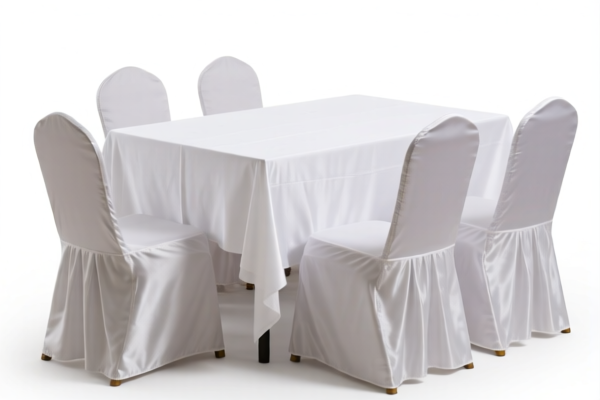
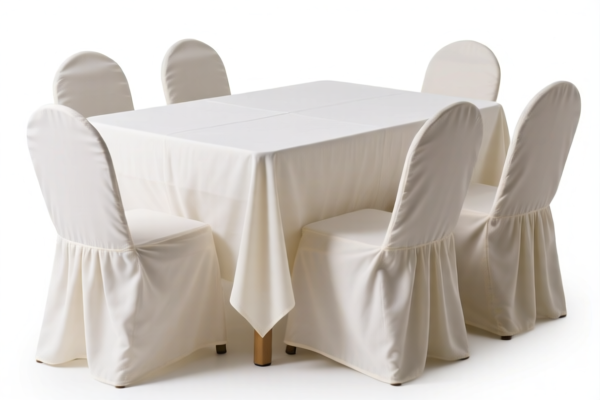
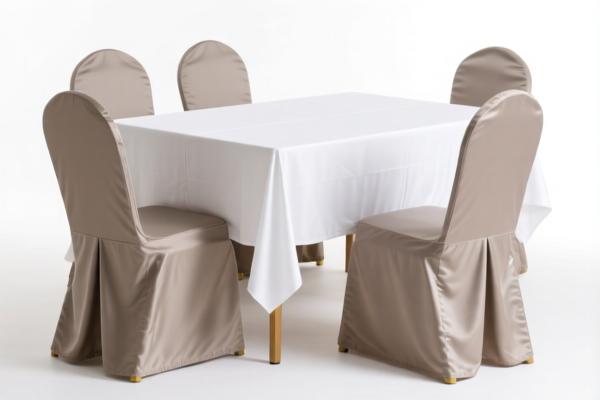
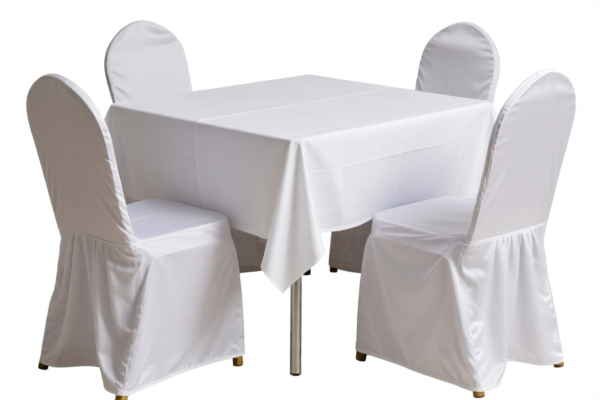
AI Analysis
🌿 Colorful Garden Table and Chair Cover
🌐 HS Code Reference & Customs Clearance Guide | 2024/2025 Latest Tariff Structure | Professional Strategy for US Imports
📌 I. Product Definition & Classification: What Are You Really Shipping?
A "Colorful Garden Table and Chair Cover" is an outdoor textile accessory designed to protect patio furniture from rain, dust, UV rays, and debris. In international trade, classification hinges on material composition and function:
- Plastic-Coated Fabric/Sheets (PVC/Vinyl): If the cover is made of fabric coated with plastic or is entirely synthetic polymer sheets, it falls under Chapter 39 (Plastics).
- Textile/Canvas/Polyster: If the cover is made primarily of woven fabric (natural or man-made fibers) without being classified as a specific technical article, it falls under Chapter 63 (Other Made-Up Articles).
⚠️ Critical Distinction:
- If the material is Plastic/PVC (even if printed/colorful) → HS 3926
- If the material is Fabric/Textile (Cotton, Polyester, Canvas) → HS 6307
📦 II. HS Code Classification Details (Based on Provided Data)
| HS Code | Product Description | Matching Logic | Total Tax Rate |
|---|---|---|---|
3926.90.99.40 |
Other articles of plastics: Protective covers, not specified elsewhere | Matches "Protective covering" made of plastic materials. Used as a residual category for plastic protective items. | 22.8% |
6307.90.98.91 |
Other made-up articles: Other finished articles | Matches "Finished articles" where material is inferred as fabric/canvas. A general residual category for textile goods. | 24.5% |
6307.90.98.87 |
Other made-up articles: Furniture movement/padding equivalents | Matches the function of "furniture protection." Functionally similar to furniture pads/covers. Material inferred as synthetic fiber. | 24.5% |
3926.90.99.89 |
Other articles of plastics: Unspecified synthetic/plastic items | Inferred as plastic or synthetic fiber if not specifically listed. Residual category for unlisted plastic goods. | 22.8% |
6307.90.98.84 |
Other made-up articles: Man-made fiber articles | Matches the material characteristic of "man-made fibers" (polyester, nylon, etc.) commonly used for outdoor covers. | 24.5% |
🔍 Key Takeaway:
- Plastic-based covers generally attract 22.8% total tax.
- Textile-based covers generally attract 24.5% total tax.
- The difference is minor (~1.7%), but the legal basis and inspection requirements differ significantly.
💰 III. Detailed Tariff Structure & Legal Basis (2024/2025)
✅ Applicable Market: United States (US)
✅ Origin: China (CN)
✅ Effective Period: Current Trade Policies (Section 301 & IEEPA)
🎯 Group A: Plastic-Based Covers (HS 3926.90.99.40 / .89)
| Component | Rate | Legal Basis | Explanation |
|---|---|---|---|
| Base Duty | 5.3% | HTSUS General Rate | Standard MFN rate for "Other articles of plastics." |
| Section 301 (Trade War) | 7.5% | USITC Footnote 9903.88.01 | Additional tariff on Chinese plastic goods. |
| 122 Clause / IEEPA | 10.0% | IEEPA 9903.01.25 | Additional tariff on specific Chinese imports under national emergency powers. |
| TOTAL RATE | 22.8% |
📌 Legal Path:
HTSUS:3926.90→FOOTNOTE:301→IEEPA:9903.01.25
🎯 Group B: Textile-Based Covers (HS 6307.90.98.91 / .87 / .84)
| Component | Rate | Legal Basis | Explanation |
|---|---|---|---|
| Base Duty | 7.0% | HTSUS General Rate | Standard MFN rate for "Other made-up articles." |
| Section 301 (Trade War) | 7.5% | USITC Footnote 9903.88.01 | Additional tariff on Chinese textile/fabric goods. |
| 122 Clause / IEEPA | 10.0% | IEEPA 9903.01.25 | Additional tariff on specific Chinese imports under national emergency powers. |
| TOTAL RATE | 24.5% |
📌 Legal Path:
HTSUS:6307.90→FOOTNOTE:301→IEEPA:9903.01.25📊 Comparison:
- Plastic covers are 1.7% cheaper in duty rates.
- However, plastic goods often face stricter environmental/chemical compliance checks (e.g., phthalates).
- Textile goods may require flammability or fiber content labeling compliance.
🛠️ IV. Customs Clearance Practical Advice
✅ 1. Documentation Checklist (Non-Negotiable)
| Document | Required | Purpose |
|---|---|---|
| Product Composition Label | ✅ | Must clearly state: "100% Polyester," "PVC Coated Canvas," etc. Crucial for HS Code selection. |
| Material Safety Data Sheet (MSDS) | ✅ | Required if plastic/polymer-based to prove chemical compliance. |
| Commercial Invoice | ✅ | Must describe as "Garden Furniture Cover," NOT "Plastic Sheet" or "Textile Piece" vaguely. |
| Packing List | ✅ | Show volume/weight accurately. |
| Photos | ✅ | Clear images of the product showing texture (fabric weave vs. plastic shine). |
| Country of Origin Certificate | ✅ | To confirm CN origin for accurate tariff application. |
✅ 2. Declaration Strategy
🔥 Golden Rule: "Match the Material, Not Just the Name!"
| Scenario | Recommended HS Code | Declaration Phrase | Risk if Wrong |
|---|---|---|---|
| PVC/Vinyl Cover | 3926.90.99.40 |
"PVC Garden Table Cover, Waterproof, UV Resistant" | Misclassification as textile → Higher duty (24.5% vs 22.8%) + Penalty |
| Polyester/Canvas Cover | 6307.90.98.91 |
"Polyester Fabric Garden Furniture Cover" | Misclassification as plastic → Duty penalty + Inspection delay |
| Mixed Material (e.g., Plastic Handle on Fabric) | 6307 (Generally) |
"Fabric Cover with Plastic Trim" | If plastic is minor, textile code usually prevails. |
⚠️ Warning:
- Do NOT simply declare "Cover" without material specification.
- If the cover has a plastic frame or grommets, these are often considered accessories and included in the main item's classification if not separately valuable.
✅ 3. Common Pitfalls & Solutions
| Pitfall | Consequence | Solution |
|---|---|---|
| Vague Description | Customs holds shipment for "Classify" | Provide material breakdown (e.g., "80% Polyester, 20% PVC Coating") |
| Confusing Plastic vs. Fabric | Duty overpayment or underpayment | Test the material: Does it stretch like plastic? Is it woven? |
| Ignoring Section 301 | Surprise bill at border | Ensure Origin: China is clearly stated. All listed codes include 7.5% + 10% surcharges. |
| Missing Chemical Compliance | Rejection for plastic goods | For 3926 codes, ensure no banned phthalates. |
🌍 V. Global Market Comparison (2024/2025)
| Market | Recommended HS Code | Total Duty (China Origin) | Key Requirement |
|---|---|---|---|
| 🇺🇸 USA | 3926.90.99.40 or 6307.90.98.91 |
22.8% - 24.5% | Section 301 + IEEPA apply. Strict labeling. |
| 🇨🇳 China | 6307.90.90.00 |
~10-13% | Import license not typically required for general goods. |
| 🇪🇺 EU | 6307.90.98 or 3926.90.98 |
0-4% (Most) | CE Marking not always required for garden covers, but REACH (chemical) compliance is mandatory. |
| 🇬🇧 UK | 6307.90.90 |
0-4% | Post-Brexit rules. No additional tariffs for many goods. |
| 🇨🇦 Canada | 6307.90.90 |
0-5% | CUSMA benefits if made in US/Mexico. China origin faces MFN rates. |
📌 Conclusion:
- The US market is the most expensive due to Section 301 and IEEPA tariffs.
- Canada and EU are more favorable for non-plastic items.
- Always calculate landed cost including the ~23% US duty + freight + insurance.
📌 VI. Final Recommendations for Sellers
-
Determine Material First:
- Is it Plastic (PVC/Vinyl)? → Use
3926.90.99.40(22.8% Duty). - Is it Fabric (Polyester/Cotton)? → Use
6307.90.98.91(24.5% Duty).
- Is it Plastic (PVC/Vinyl)? → Use
-
Optimize Declaration:
- Use precise terms: "Waterproof PVC Garden Cover" or "Heavy-Duty Polyester Canvas Cover."
- Avoid generic terms like "Plastic Sheet" or "Cloth."
-
Prepare for Inspection:
- Have material samples ready for customs verification.
- Ensure packaging clearly indicates the product type and material.
-
Cost-Benefit Analysis:
- If margin is tight, consider sourcing from Vietnam/Mexico to avoid Section 301 tariffs (if feasible).
🎯 VII. Conclusion
🎯 Key Takeaway:
🔹 "Material Dictates Code, Code Dictates Cost!"
🔹 Plastic Covers = 22.8% Total Tax
🔹 Fabric Covers = 24.5% Total Tax
🔹 Always declare clearly to avoid delays!
📌 Pro Tip:
If your product is dual-material (e.g., fabric with plastic grommets), fabric usually dominates classification unless the plastic component is structural or valuable. Consult a customs broker for Advance Rulings if unsure.
📣 Action Plan:
1. Test Material: Confirm PVC vs. Polyester.
2. Choose HS Code: Based on material.
3. Prepare Docs: Invoice, Packing List, Material Spec.
4. Declare Accurately: Be specific.
✨ Safe Shipping, Clear Customs, Happy Profits!
Customer Reviews
About HS Code Classification
The Harmonized System (HS) is an internationally standardized nomenclature developed by the World Customs Organization (WCO) to classify traded products. Over 200 countries use the HS system as the basis for customs tariffs, trade statistics, and import/export regulations.
Each HS code follows a hierarchical structure:
- Chapter (2 digits) — Broad category of goods (e.g., Chapter 84: Machinery and Mechanical Appliances)
- Heading (4 digits) — More specific grouping within the chapter
- Subheading (6 digits) — Internationally standardized breakdown, used by all WCO member countries
- National subdivisions (8-10 digits) — Country-specific extensions for further classification, such as US HTSUS 10-digit codes
Correct HS code classification is essential for smooth customs clearance, accurate duty payment, and compliance with trade regulations. Misclassification can lead to customs delays, overpayment of duties, or penalties.
When importing from CN to US, the applicable tariff rates may include:
- Most-Favored-Nation (MFN) rate — The standard duty rate applied to WTO members
- General rate — Applied to countries without trade agreements
- Trade remedy duties — Additional tariffs such as Section 301 (anti-dumping), Section 232 (national security), or countervailing duties
The information provided on this page is for reference purposes only. For official classification, please consult with your local customs authority or a licensed customs broker.