Colorful Slide (Landscape)
CN → US| HS Code | Tariff Rate | Origin | Destination | Doc |
|---|---|---|---|---|
| 3701910060 | 38.7% | CN | US | Official Doc |
| 3701910030 | 38.7% | CN | US | Official Doc |
| 3707100090 | 38.0% | CN | US | Official Doc |
| 3707903290 | 35.0% | CN | US | Official Doc |
| 3702530060 | 38.7% | CN | US | Official Doc |
Product Images
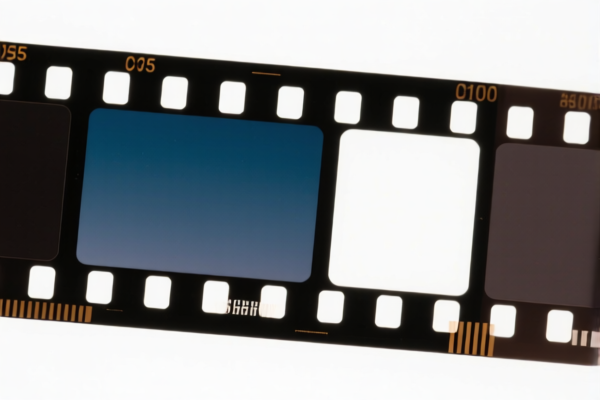
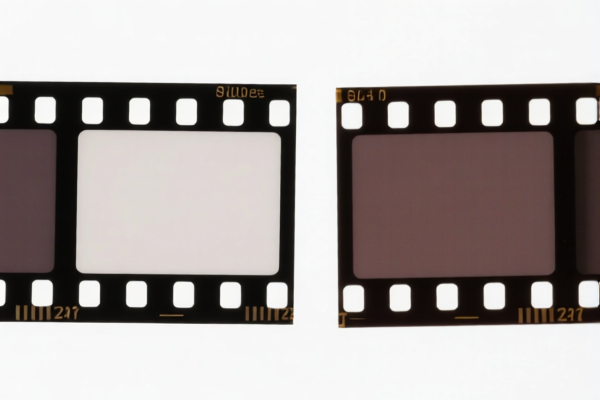

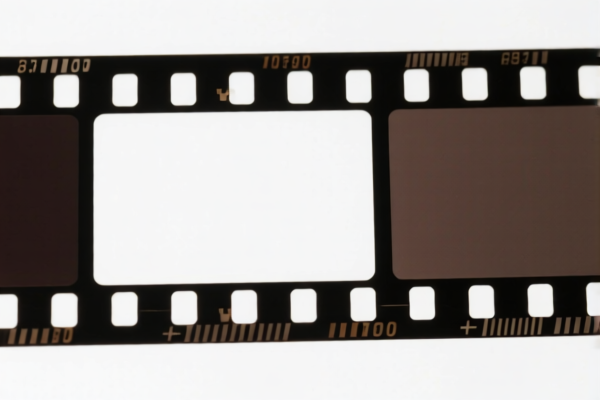
AI Analysis
🎞️ Colorful Slide Film (Landscape)
🌐 HS Code Reference & Customs Clearance Guide | 2026 Latest Tariff Analysis | Professional Clearance Strategy
📌 I. Product Definition & Classification: What Exactly Is a "Colorful Slide"?
"Colorful Slide Film" (often referred to as Ektachrome, Fujichrome, or Reversal Film) is a high-resolution color photographic film designed to produce transparent positive images (slides) rather than negative images. Unlike standard negative film, slide film has a narrower exposure latitude but offers superior color saturation and sharpness, making it ideal for professional photography, landscape art, and archival purposes.
In international trade, the classification hinges on two critical factors: 1. State of the Film: Is it exposed (already photographed) or unexposed (new rolls)? 2. Physical Format: Is it sheet film (flat), roll film (flexible), or disc/cartridge?
⚠️ Key Distinction Point:
- If the film is unexposed and in flat sheets → It is classified under Chapter 37.01 as "Photographic plate, film, paper, tissue, paperboard..."
- If the film is unexposed and in rolls → It is classified under Chapter 37.02 as "Photographic film in rolls..."
- If the film is exposed (e.g., a travelogue slide set) → It is classified under Chapter 37.07 as "Developed photographic film..."
- Note: "Slide" in trade terminology can sometimes refer to the physical format (flat sheet) or the type of image (positive). The HS codes below reflect the most common interpretations based on the provided data.
📦 II. HS Code Classification Details (2026 Latest Tariff Authority Comparison)
Based on the provided data, here are the potential HS Codes for "Colorful Slide Film," categorized by their physical state and format.
| HS Code | Product Description | Key Attributes | Tax Rate (Total) |
|---|---|---|---|
3701.91.00.60 |
Photographic Plates and Film (Unexposed, Flat) | "Color Slide Film" matches "For Color Photography"; "Slide Film" implies flat sheet format ("Other" category); No material conflict. | 38.7% |
3701.91.00.30 |
Photographic Plates and Film (Unexposed, Disc/Cartridge) | "Color Slide Film" matches "Color Photography (Multi-color)"; "Slide Film" interpreted as "Disc Film" (cartridge format); Full consistency in use and material. | 38.7% |
3702.53.00.60 |
Photographic Film in Rolls (Unexposed) | "Slide Film" explicitly matches "Slide Roll"; "Color" matches "Color"; Shape is exposed/processed roll; Material inferred as non-paper/non-textile. | 38.7% |
3707.10.00.90 |
Developed Photographic Film (Exposed) | "Color Slide" is a photographic product; Belongs to "Photosensitive Agents"; Not a specific excluded category like color negative paper; Fits "Other" category. | 38.0% |
3707.90.32.90 |
Other Developed Photographic Products (Exposed/Chemical) | "Color Slide Film" as a chemical agent for photography; Not unexposed emulsion/coupler; Fits "Other" category for used/exposed materials. | 35.0% |
🔍 Critical Analysis:
- The highest likelihood of misclassification is between Chapter 37.01/37.02 (Unexposed) and Chapter 37.07 (Exposed).
- If the product is new, blank film, it falls under3701or3702.
- If the product is pre-exposed slides (e.g., a travel deck of landscape photos), it falls under3707.
- The term "Slide" in3701.91.00.30suggests a disc/cartridge format, which is less common for traditional landscape slides (usually rolls or sheets), so verify the physical packaging carefully.
💰 III. 2026 Latest Tariff Rate Breakdown (Including Surcharges)
✅ Applicable Country: United States (US)
✅ Origin: China (CN)
✅ Effective Date: November 10, 2025 (and subsequent imports)
🎯 1. Unexposed Film (3701.91.00.60, 3701.91.00.30, 3702.53.00.60)
| Item | Details |
|---|---|
| Base Duty Rate | 3.7% |
| Section 301 Surcharge | +25.0% (USITC Footnote) |
| IEEPA Surcharge | +10.0% (122 Clause for China/HK) |
| Total Effective Rate | 38.7% |
| Calculation Base | CIF Value × 38.7% |
| De Minimis Exemption? | ❌ No (deny_de_minimis) |
| Legal Basis Path | IEEPA:9903.01.25 → IEEPA:9903.01.24 → USITC:[HS Code] → FOOTNOTE:[Section 301] |
📌 Explanation:
- Base 3.7%: Standard US MFN rate for photographic film.
- 25% Surcharge: Imposed under Section 301 of the Trade Act of 1974 against Chinese imports.
- 10% Surcharge: Imposed under IEEPA (International Emergency Economic Powers Act) for specific Chinese goods.
- Total 38.7%: This is a high-cost category. Importers must calculate landed costs meticulously.
🎯 2. Exposed Film (3707.10.00.90)
| Item | Details |
|---|---|
| Base Duty Rate | 3.0% |
| Section 301 Surcharge | +25.0% |
| IEEPA Surcharge | +10.0% |
| Total Effective Rate | 38.0% |
| Calculation Base | CIF Value × 38.0% |
| De Minimis Exemption? | ❌ No |
📌 Note: Slightly lower base rate (3.0%) due to being classified as "Developed Film," but surcharges remain identical.
🎯 3. Other Developed Products (3707.90.32.90)
| Item | Details |
|---|---|
| Base Duty Rate | 0.0% |
| Section 301 Surcharge | +25.0% |
| IEEPA Surcharge | +10.0% |
| Total Effective Rate | 35.0% |
| Calculation Base | CIF Value × 35.0% |
| De Minimis Exemption? | ❌ No |
📌 Optimization Opportunity: If the product can be legitimately classified as "Other Developed Photographic Products" (not traditional film reels/sheets), the base duty drops to 0%, saving 3.7% on the CIF value. However, this classification is stricter and requires proof that the item is not standard photographic film.
🛠️ IV. Customs Clearance Practical Advice (Risk Avoidance Guide)
✅ 1. Documentation Checklist (Mandatory)
| Document | Required | Purpose |
|---|---|---|
| ✅ Product Specification Sheet | ✔️ | Must state: "Exposed" or "Unexposed," "Color Reversal," "Landscape" (descriptive, not functional). |
| ✅ Commercial Invoice | ✔️ | Clearly describe item as "Color Slide Film" or "Developed Photographic Slides." Avoid vague terms like "Pictures." |
| ✅ Packing List | ✔️ | Detail number of rolls/sheets, weight, and dimensions. |
| ✅ Certificate of Origin (CO) | ✔️ | Required for origin verification (China). |
| ✅ Photos of Product | ✔️ | Show packaging, label, and if exposed, a sample slide content (if safe to share). |
| ✅ Import License (if applicable) | ❌ | Generally not required for photographic film, but check for specific agency restrictions. |
✅ 2. Declaration Tips (Key Strategies)
🔥 "State State Clearly: Exposed or Unexposed? Format Matches Code!"
| Scenario | Correct Declaration | Wrong Declaration | Consequence |
|---|---|---|---|
| New Blank Film Rolls | "Unexposed Color Reversal Film in Rolls" | "Photographic Slides" | Misclassification → Risk of penalties |
| New Blank Flat Sheets | "Unexposed Color Slide Film (Flat)" | "Photographic Film" | May fall under 3701.91.00.60 |
| Pre-Exposed Landscape Slides | "Developed Color Slide Film (Exposed)" | "Pictures" or "Slides" | "Pictures" may trigger scrutiny under different codes; be specific. |
| Disc/Cartridge Format | "Color Slide Film in Disc Format" | "Roll Film" | Wrong code (3701.91.00.30 vs 3702.53.00.60) → Inspection delays |
✅ 3. Special Situations
| Situation | Handling Advice |
|---|---|
| Mixed Shipments (Blank + Exposed) | Do NOT combine in one HS Code. Declare separately. Blank goes to 3701/3702; Exposed goes to 3707. |
| Landscape Content | The content ("Landscape") is irrelevant to HS classification. Focus on physical state (exposed/unexposed) and format (roll/sheet/disc). |
| Low Value Shipments | Even if under $800, De Minimis exemption does NOT apply for Chinese origin goods under Section 301/IEEPA for these categories. |
| OEM Branded Film | Provide OEM agreement if claiming brand value, but origin (China) determines surcharges. |
🌍 V. Global Market Comparison (2026 Latest)
| Country/Region | Recommended HS Code | Base Duty | Surcharge | Total Rate | Remarks |
|---|---|---|---|---|---|
| 🇺🇸 USA | 3701.91.00.60 / 3707.10.00.90 |
3.0% - 3.7% | +35% (301+122) | 35.0% - 38.7% | High barriers; strict origin rules. |
| 🇨🇳 China | 3701.91 / 3707.10 |
3.7% | 0% | 3.7% | Low duty, no surcharges. |
| 🇪🇺 EU | 3701.99 / 3707.99 |
0% - 4.5% | 0% | 0% - 4.5% | No Section 301 equivalent. |
| 🇬🇧 UK | 3701.99 / 3707.99 |
0% - 4.5% | 0% | 0% - 4.5% | Post-Brexit rules apply. |
| 🇦🇺 Australia | 3701.99 / 3707.99 |
5% | 0% | 5% | No surcharges. |
📌 Conclusion:
- USA is the most expensive market for Chinese-origin photographic film due to叠加 surcharges.
- EU, UK, and Asia-Pacific markets are significantly cheaper (0-5% total duty).
- Consider supply chain diversification if exporting to the US with high volume.
📌 VI. Common Mistakes & Pitfalls (Lessons Learned)
❌ Mistake 1: Classifying "Exposed Slides" as "Unexposed Film"
👉 Consequence: Underpayment of duty (if base rates differ) + False Declaration Penalties.
👉 Fix: Clearly label "EXPOSED" on invoice.
❌ Mistake 2: Ignoring "IEEPA 10%" Surcharge
👉 Consequence: Customs holds shipment, demands payment of 10% + interest + storage fees.
👉 Fix: Budget for 35-38.7% total landed cost, not just base duty.
❌ Mistake 3: Using "Photographic Material" as a Generic Description
👉 Consequence: CBP issues a Request for Information (RFI) for clarification, delaying clearance by 2-4 weeks.
👉 Fix: Use precise terms: "Color Reversal Film," "Developed Slides."
✅ Correct Practice:
"Product: Color Slide Film (Landscape)
State: Exposed
Format: Rolls
HS Code: 3707.10.00.90
Origin: China
Duty: 38.0%"
🎯 VII. Conclusion: Professional Classification Saves Money!
🎯 Remember These Key Points:
🔹 "Exposed vs. Unexposed Determines Chapter 37.01/02 vs. 37.07"
🔹 "Total Tax is ~35-38.7% for China Origin – Never Miss IEEPA/301"
🔹 "De Minimis Does NOT Apply – Plan for Full Duty"
📌 Pro Tip:
If you are importing large volumes (>10,000 rolls/year), consider applying for an Exclusion from Section 301 if applicable, though unlikely for standard film.
Advance Ruling (Prior Ruling) is highly recommended to confirm the exact HS Code before shipment.
📣 Immediate Action:
📞 Contact a licensed customs broker
📄 Prepare detailed product specs (Exposed/Unexposed, Roll/Sheet)
🚀 Ensure accurate HS Code declaration to avoid seizure or delays!
✨ Precision in Classification, Efficiency in Clearance!
💼 Every percentage point counts – Protect your margins!
Customer Reviews
About HS Code Classification
The Harmonized System (HS) is an internationally standardized nomenclature developed by the World Customs Organization (WCO) to classify traded products. Over 200 countries use the HS system as the basis for customs tariffs, trade statistics, and import/export regulations.
Each HS code follows a hierarchical structure:
- Chapter (2 digits) — Broad category of goods (e.g., Chapter 84: Machinery and Mechanical Appliances)
- Heading (4 digits) — More specific grouping within the chapter
- Subheading (6 digits) — Internationally standardized breakdown, used by all WCO member countries
- National subdivisions (8-10 digits) — Country-specific extensions for further classification, such as US HTSUS 10-digit codes
Correct HS code classification is essential for smooth customs clearance, accurate duty payment, and compliance with trade regulations. Misclassification can lead to customs delays, overpayment of duties, or penalties.
When importing from CN to US, the applicable tariff rates may include:
- Most-Favored-Nation (MFN) rate — The standard duty rate applied to WTO members
- General rate — Applied to countries without trade agreements
- Trade remedy duties — Additional tariffs such as Section 301 (anti-dumping), Section 232 (national security), or countervailing duties
The information provided on this page is for reference purposes only. For official classification, please consult with your local customs authority or a licensed customs broker.